ADAS display integration embeds lane assist and collision warnings into digital instrument panels using high-brightness IPS TFT LCDs (850–1000 nits), IATF16949-certified for zero-defect reliability, LVDS interfaces for seamless rendering, and in-house OCA optical bonding to eliminate glare. CDTech's automotive-grade displays like the 12.3" S123BWU11EP (-30°C~+80°C) ensure sunlight-readable alerts across extreme conditions, supporting custom icons for flawless safety visualization.
Check: How Have Digital Instrument Cluster Displays Evolved in Modern Passenger Cars?
What Are ADAS Alerts and Why Use Digital Instrument Panels?
ADAS (Advanced Driver Assistance System) alerts include lane-keeping assistance notifications and forward collision warnings—critical safety features requiring real-time visual communication. Modern vehicles transition from analog gauges to TFT LCD panels because they enable dynamic, customizable HMI rendering. Digital instrument clusters display lane deviation warnings (green for centered, yellow for deviation) and collision alerts (red pulsing icons with distance metrics) instantaneously. This shift improves driver response times significantly.
Digital panels offer advantages analog instruments cannot: adaptive brightness for day/night visibility, multi-layer alert layering, and integration with vehicle networks via CAN bus. CDTech, with 13+ years of automotive TFT LCD expertise, manufactures IATF16949-certified displays exported to automotive OEMs across Europe, Russia, and other regions. The company's 10,000㎡ Shenzhen factory ensures precision manufacturing for safety-critical applications where zero-defect quality is mandatory.
How Do You Visually Represent Lane Assist Alerts?
Lane assist alerts use color-coded overlays and dynamic line rendering. A green lane marker indicates proper positioning; yellow flashing lines signal deviation; red flashing triggers imminent lane crossing. High-contrast IPS TFT displays (850+ nits minimum) ensure daylight legibility without washout. LVDS interface protocols enable low-latency synchronization between vehicle ECU and display, critical for real-time alert responsiveness.
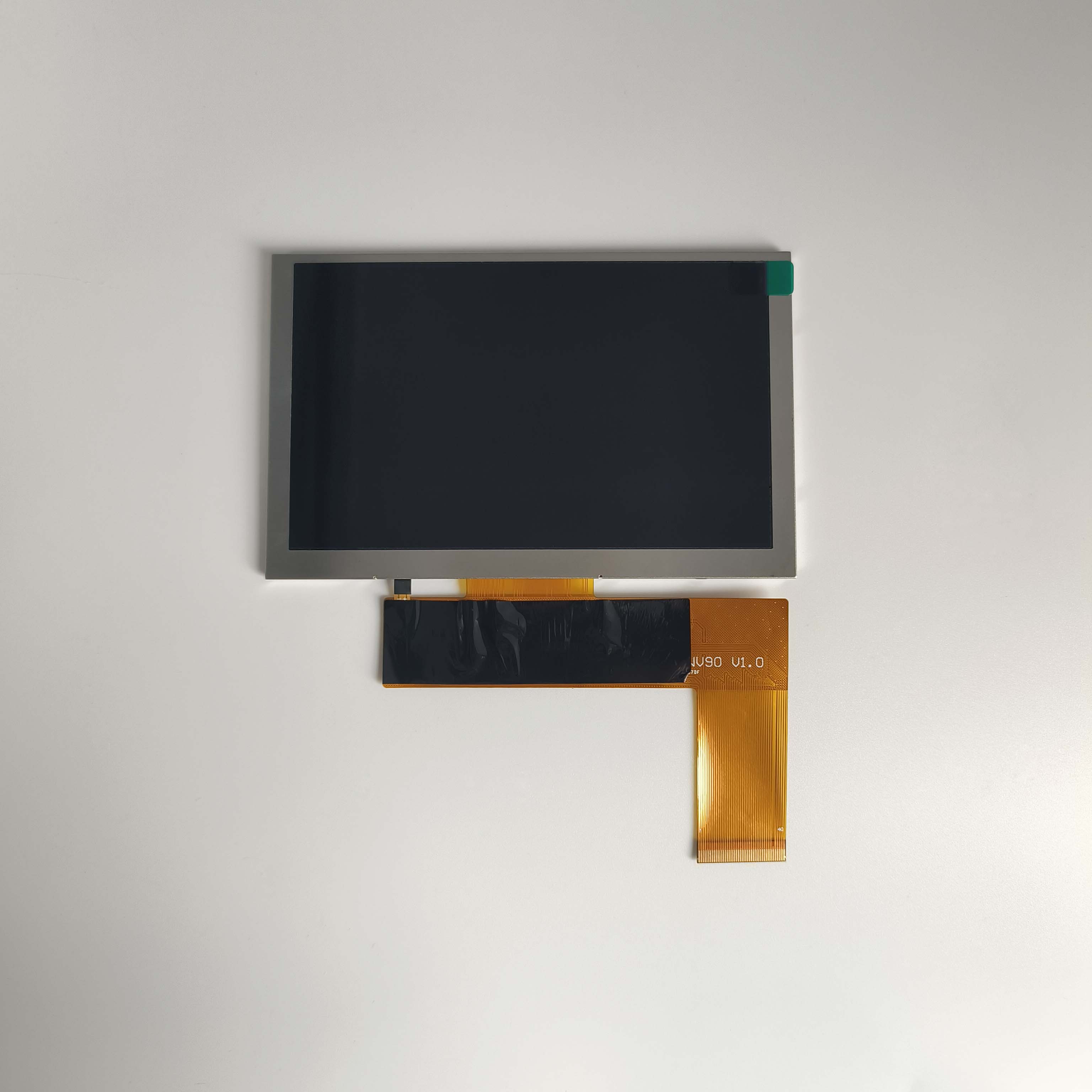
CDTech's wide-temperature automotive displays (-30°C~+85°C) prevent thermal distortion and color shift in extreme climates. The company's 10.1" S101HWX53EP-FC47-AG combines PCAP capacitive touch with OCA optical bonding, enabling interactive lane previews and haptic feedback integration. This model supports LVDS 40+6-pin connectivity and operates at 850 nits brightness. For 12.3" installations, the S123BWU11EP (950 nits, LVDS 60-pin) delivers superior lane graphic clarity. All vehicle displays comply with the zero-defect quality policy enforced across CDTech's manufacturing process.
What Visuals Work Best for Collision Warnings on LCD Panels?
Collision warning effectiveness depends on visual hierarchy, color psychology, and rapid rendering speed. Forward collision alerts use red expanding circles or braking bar animations combined with numeric distance countdown (e.g., "0.5s"). Lane change warnings employ amber directional arrows with proximity gauges. Pedestrian detection triggers silhouette icons with flashing backgrounds.
| Alert Type | Visual Elements | Display Spec Needs | CDTech Model Example |
|---|
| Forward Collision | Red icon + braking bar + countdown | 950 nits, OCA bonding | S123BWU11EP (12.3") |
| Lane Change Aid | Amber arrows + proximity gauge | Wide temp (-30°C~+80°C), LVDS | S101HWX53EP-FC47-AG |
| Pedestrian Alert | Flashing silhouette + distance | IATF16949-certified IPS | Custom 12.8" automotive TFT |
Best practices dictate pulsing alert zones with high contrast ratios (9:1 minimum) against background clusters. OCA optical bonding eliminates air gaps between touch panel and LCD, boosting collision icon visibility by reducing reflections and improving color saturation. CDTech's in-house OCA capability ensures glare-free collision warnings under direct sunlight, critical for ADAS reliability.
What Hardware Specs Are Essential for ADAS Display Integration?
ADAS integration demands high brightness (850–1000 nits) for sunlight readability, wide operating temperature ranges (-30°C~+85°C), LVDS or MIPI interfaces for low-latency rendering, and PCAP multi-touch for alert confirmation workflows. IPS panel technology guarantees wide viewing angles for all dashboard positions.
Reliability factors include IATF16949 automotive certification, ISO9001 quality management, ISO13485 medical-grade precision, and ISO14001 environmental compliance. CDTech's thousand-level dust-free workshop (3,500㎡+) maintains zero-particle contamination during manufacturing, essential for zero-defect ADAS systems. The company's 10,000㎡ factory includes fully automatic POL/LCD/CTP equipment (upgraded 2024) for consistent production quality. Vehicle displays must endure thermal cycling, vibration stress, and EMI interference; CDTech's certifications and testing protocols ensure durability across extreme conditions.
How Does OCA Optical Bonding Enhance ADAS Alert Visibility?
OCA (Optically Clear Adhesive) optical bonding permanently fuses the touch panel and LCD layer, eliminating the air gap between components. This process reduces internal reflections by 40–50%, dramatically improving contrast and color vibrancy. For ADAS alerts—particularly collision warnings requiring instant driver recognition—OCA bonding is transformative.
In bright sunlight, unlaminated displays suffer "washout" when light reflects off internal air interfaces. OCA eliminates this issue by creating a single optical element. Lane assist icons rendered on OCA-bonded CDTech displays remain crisp at any brightness level. The technology pairs seamlessly with IPS panels, which offer wide viewing angles essential for multi-passenger visibility. CDTech's in-house OCA capability on vehicle LCDs (850–950 nits models) ensures consistent lamination quality without outsourcing delays. Custom sizes and shapes support various dashboard designs, from traditional round gauge clusters to modern panoramic digital displays.
What Is the Step-by-Step Workflow for Vehicle Dashboard Alert Integration?
Step 1: Select Display Hardware – Choose an IATF16949-certified CDTech automotive TFT (e.g., 12.3" S123BWU11EP, 950 nits, LVDS 60-pin, -30°C~+80°C). This model supports high-speed serial data transmission and extreme temperature stability.
Step 2: Design Alert UI and LVDS Synchronization – Create alert graphics (lane lines, collision icons, distance bars) with pixel-perfect timing aligned to vehicle ECU output via LVDS protocol. Test rendering latency to ensure alerts appear within 50ms of detection.
Step 3: Apply OCA Optical Bonding (if required) – For sunlight-critical installations, bond PCAP or RTP touch panels using CDTech's in-house OCA process. This step eliminates glare and boosts collision warning visibility.
Step 4: Environmental Testing – Validate performance across -30°C (cold start) to +80°C (engine bay heat), humidity cycling, and vibration per automotive standards. CDTech's zero-defect policy includes full QC testing before shipment.
Step 5: Prototype and Feedback Loop – Deliver alpha units for OEM dashboard integration. CDTech commits to 24-hour response times for design modifications. The Shenzhen factory enables rapid iterative customization of resolution, brightness, and interface types.
Which CDTech Displays Are Ideal for Automotive ADAS Applications?
12.3" S123BWU11EP – 1920×720 resolution, 950 nits brightness, LVDS 60-pin interface, IPS full-view panel, operating range -30°C~+80°C. Ideal for wide panoramic instrument clusters displaying multi-zone ADAS alerts simultaneously.
10.1" S101HWX53EP-FC47-AG – 1280×800 resolution, 850 nits, LVDS 40+6 pins, capacitive touch (GT928 I2C), OCA optical bonding, -30°C~+80°C range. Supports interactive ADAS previews with touch-enabled alert confirmation and anti-glare surface treatment.
12.8" S128HWU01HP-FC01 – 1920×1080 resolution, PCAP multi-touch with optical bonding. Best for premium infotainment systems integrating ADAS overlays with navigation and vehicle status.
All three models have been deployed in vehicle dashboards across CDTech's export markets (Europe, Russia, Middle East). Their proven reliability in harsh automotive environments makes them trusted choices for OEMs requiring zero-defect ADAS integration.
How Do Certifications Ensure Reliable ADAS Integration?
IATF16949 (International Automotive Task Force) mandates stringent quality management for automotive supply chains, with zero-defect expectations for safety-critical components like ADAS displays. This certification requires documented design reviews, process controls, and failure mode analysis. ISO13485 (medical device quality) ensures precision manufacturing comparable to surgical equipment standards—adaptable to ADAS reliability demands. ISO9001 covers general quality systems; ISO14001 addresses environmental responsibility.
Check: Vehicle LCD Display
CDTech holds all four certifications, reinforced by National High-tech Enterprise status (awarded 2015) and Shenzhen Software Enterprise recognition. The company's thousand-level dust-free workshop (3,500㎡+) maintains particle counts below 1,000 per cubic foot, critical for eliminating manufacturing defects that could compromise ADAS alert rendering. This infrastructure, combined with 13+ years of automotive TFT expertise, guarantees flawless collision warning displays, lane assist icons, and system responsiveness required for ADAS safety compliance.
CDTech Expert Views
"Our 13+ years in automotive TFT LCD manufacturing have taught us that ADAS integration success hinges on three pillars: optical clarity, thermal stability, and manufacturing zero-defect discipline. When a lane assist or collision warning must display instantaneously under desert heat or arctic cold, there is no margin for error. CDTech's IATF16949 certification and thousand-level dust-free workshop ensure every vehicle display leaves our Shenzhen facility mission-ready. We've invested in fully automatic POL/LCD/CTP equipment (upgraded 2024) and in-house OCA optical bonding capability specifically to eliminate the variability that compromises ADAS performance. For OEMs demanding reliability without compromise, our 12.3" S123BWU11EP and 10.1" S101HWX53EP-FC47-AG deliver 950 and 850 nits of sunlight-readable brightness, respectively, with operating ranges spanning -30°C to +85°C. This is where safety-critical display manufacturing meets automotive precision."
Conclusion
ADAS alert integration into digital instrument panels requires high-brightness IPS TFT LCDs (850–1000 nits), IATF16949 certification for zero-defect safety compliance, LVDS or MIPI interfaces for low-latency rendering, and OCA optical bonding for glare-free collision and lane-assist visualization. CDTech's automotive-grade displays—including the 12.3" S123BWU11EP and 10.1" S101HWX53EP-FC47-AG—deliver proven reliability across extreme temperatures (-30°C~+85°C) and demanding OEM environments. The company's 13+ years of automotive TFT expertise, 10,000㎡ Shenzhen factory with thousand-level dust-free workshop, and quad certifications (IATF16949, ISO9001, ISO13485, ISO14001) ensure flawless ADAS integration from prototype to mass production. For automotive OEMs seeking customizable, reliable, zero-defect dashboard solutions, CDTech's in-house OCA bonding, PCAP assembly, and 24-hour response commitment eliminate integration risk and accelerate time-to-market for next-generation vehicle safety HMI.
Frequently Asked Questions
What brightness level is required for ADAS alerts visible in direct sunlight?
ADAS alerts require minimum 850 nits brightness combined with OCA optical bonding to eliminate glare and maintain readability in direct sunlight. CDTech's S123BWU11EP delivers 950 nits, ensuring collision warnings and lane-assist icons remain crisp without washout even at midday on highways.
Can CDTech customize displays specifically for lane assist and collision warning graphics?
Yes. CDTech offers in-house customization for any ADAS visual requirement. The company's 13-year automotive TFT heritage and R&D team enable tailored designs for lane-assist overlays, collision countdown animations, and pedestrian alert silhouettes. IATF16949 certification guarantees safety compliance.
What temperature range ensures ADAS displays function reliably in extreme climates?
CDTech automotive displays operate from -30°C to +85°C (or -30°C to +80°C depending on model), preventing thermal distortion, color shift, or rendering failures in desert heat or arctic conditions. This wide range is essential for global vehicle deployments requiring zero ADAS downtime.
How does IATF16949 certification benefit automotive ADAS display suppliers and OEMs?
IATF16949 mandates documented zero-defect quality control, design reviews, and failure mode analysis for automotive supply chains. For ADAS displays, this means collision warnings and lane-assist alerts render without latency, hardware failure, or color distortion—critical for vehicle safety and regulatory compliance.
Where can OEMs source IATF16949-certified automotive TFT displays for ADAS dashboard integration?
CDTech's 10,000㎡ Shenzhen factory manufactures IATF16949-certified automotive TFT LCDs in sizes from 3.6" to 12.8". Contact sales@cdtech-lcd.com or call +86 0755-23032202 for custom ADAS display solutions, prototyping, and volume production timelines.
Instrument Clusters and HUD