A switchable privacy LCD keeps drivers focused by electronically restricting the viewing angle so the driver cannot see passenger content, while passengers enjoy a clear wide-angle view. The LCD toggles between modes via voltage control. CDTech’s in-house OCA optical bonding ensures sunlight readability and eliminates air gaps, making the privacy effect reliable even in automotive temperature extremes.
Check: What Are the Top 5 Smart Cockpit Display Trends for 2026?
How Does Switchable Privacy LCD Technology Work in Automotive Displays?
A switchable privacy LCD uses a liquid crystal filter that changes light direction when voltage is applied. In narrow-angle mode, light is directed only toward the passenger side, keeping the display invisible to the driver. Switching to wide-angle mode shares the view. The transition is instantaneous and controlled via LVDS or RGB interface logic.
CDTech Expert Views
“At CDTech, we tune the privacy filter’s alignment to ensure less than 5° crosstalk at the driver’s position while maintaining high brightness for the passenger. Our R&D team, with over a decade of experience in TFT LCD and touch screen technology, optimizes contrast and response time specifically for automotive environments. The result: a reliable, instant-switching privacy screen that meets the strictest automotive temperature and vibration standards.”
This technology relies on careful integration of the filter layer within the LCD cell. CDTech’s glass cutting patent (2017) and fully automatic POL/LCD/CTP equipment (2024) enable precise alignment and uniform switching across the entire display area. For automotive applications, the filter must maintain its performance from -30°C to +85°C, which CDTech achieves through rigorous material selection and in-house testing.
Why Is OCA Optical Bonding Essential for Reliable Automotive Privacy Displays?
OCA optical bonding eliminates the air gap between the LCD and touch panel or cover glass, preventing condensation, ghosting, and delamination under extreme temperatures and vibration. Without bonding, the privacy filter’s performance degrades due to internal reflections and air expansion. CDTech’s in-house OCA bonding (since 2020) and fully automatic equipment ensure consistent quality in a 3,500㎡ thousand-level dust-free workshop.
| Factor | OCA Bonded (CDTech) | Air-Gap Solution |
|---|
| Sunlight readability | Excellent (>800 nits) | Poor (<500 nits) |
| Viewing angle stability | Stable from -30°C to +85°C | Shifts at high/low temperatures |
| Durability (vibration) | Passes automotive shock tests | Risk of air gap expansion |
Automotive privacy displays must endure constant vibration, temperature cycling, and direct sunlight. OCA bonding also improves sunlight readability by reducing reflections—critical when passenger content must remain invisible to the driver but bright for the passenger. CDTech’s bonding process is fully automated as of 2024, ensuring repeatable, defect-free modules.
What Are the Key Specifications for a High-Performance Automotive Privacy Display?
Key specifications include: minimum brightness of 1000 nits for daylight readability, wide operating temperature range of -30°C to +85°C (IPS panel preferred), LVDS interface for direct connection to infotainment systems, and PCAP capacitive touch with anti-glare (AG) or anti-fingerprint (AF) coating. CDTech’s S128HWU01HP-FC01 (12.8”, 1920×1080) with PCAP and OCA bonding meets these requirements.
High brightness is essential because the privacy filter reduces light transmission. CDTech offers displays with up to 1000 nits in its vehicle LCD display category, such as the S050HWV29ES (5.0”, 800×480, 1000 nits) and S123BWU11EP (12.3”, 1920×720, 950 nits). The IPS technology provides consistent colour and contrast at extreme viewing angles, which is vital for passenger enjoyment while the driver sees nothing. Interfaces like LVDS and RGB ensure compatibility with common automotive processors.
How Do CDTech’s Certifications (IATF16949 & ISO13485) Ensure Zero-Defect Privacy Displays?
IATF16949 certifies CDTech’s quality management system for automotive production, ensuring strict process control and defect prevention. ISO13485 adds medical-grade reliability, demanding even tighter tolerances. Together, they support CDTech’s “zero-defect” quality policy—every privacy display undergoes 100% optical inspection and a 48-hour burn-in test at -20°C. This prevents pixel ghosts or bonding defects that could distract the driver.
CDTech’s quad certifications (ISO9001, ISO14001, ISO13485, IATF16949) mean that every display module—including privacy-bonded units—is manufactured under rigorous, audited processes. The company’s commitment to “zero-defect” is backed by a team with over 10 years of experience in TFT LCD and touch screen industries. For safety-critical automotive privacy applications, these certifications give OEMs confidence that each module will perform reliably over the vehicle’s lifetime.
Which CDTech Products Offer Switchable Privacy for Driver Focus and Passenger Entertainment?
CDTech’s existing models can be adapted with privacy filters. The S128HWU01HP-FC01 (12.8”, 1920×1080, PCAP+OCA) is ideal for dash-mounted passenger screens. The S123BWU09NP-FC19-AF (12.3” bar-type, 1920×720, PCAP+OCA+AF) suits slim cabin consoles. The S101HWX53EP-FC47-AG (10.1”, 1280×800, 850 nits, OCA bonding, CTP I2C) works for rear-seat entertainment. The S121BWX05EP-FC10 (12.1”, 1280×800, 800 nits, CTP+OCA) is rugged for HMI touchscreens.
Check: Vehicle LCD Display
CDTech can customize size, resolution, interface, touch type, and privacy angle to OEM requirements. For example, the custom LCD display category includes options like the S101HWX34EP-FC55 (10.1”, 1280×800, 800 nits, LVDS, PCAP+OCA) and S070BWS48ED-DC85 (7.0”, 1024×600, 900 nits, RGB, PCAP). The R&D team can integrate the privacy filter as a cell-level layer, then bond with OCA to the cover glass. This flexibility allows automotive designers to implement privacy displays across different vehicle interior layouts.
How Does CDTech’s 10,000㎡ Factory Support Custom Automotive Privacy Solutions?
CDTech’s 10,000㎡ factory includes a 3,500㎡ thousand-level dust-free workshop for bonding and assembly. This facility enables rapid prototyping and low MOQ for custom sizes—bar-type, round, or dashboard LCD modules. Fully automatic POL/LCD/CTP equipment (2024) ensures precision alignment of the privacy filter and OCA bonding. Products are exported to Europe, Americas, Middle East, Russia, Japan, and Taiwan, proving global automotive qualification.
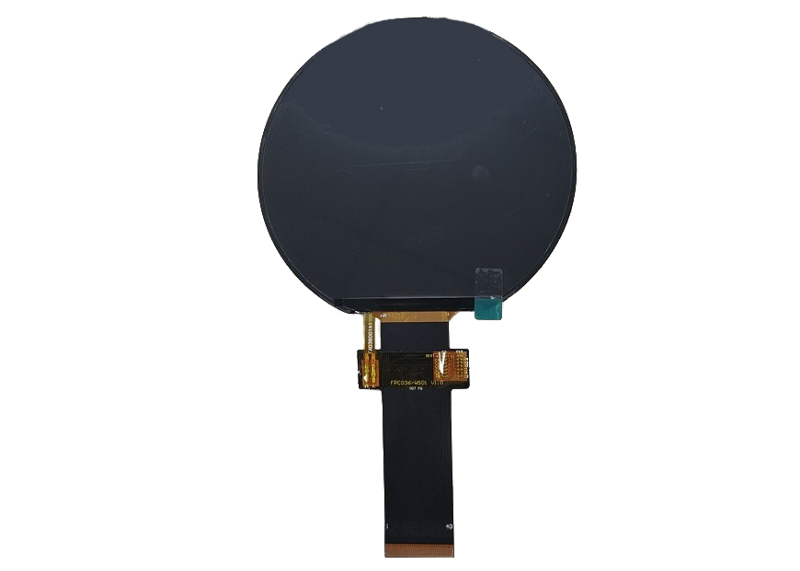
The dust-free environment is critical for privacy displays because even a single dust particle between the filter and LCD can cause visible defects. CDTech’s in-house touch panel workshop (since 2020) and glass cutting patent (2017) allow complete control over the supply chain. For custom automotive projects, the company offers tailored solutions for specific design and functional requirements—including anti-glare (AG) and anti-fingerprint (AF) treatments—with a response time commitment within 24 hours.
How Do Switchable Privacy Displays Reduce Driver Distraction Without Sacrificing Passenger Experience?
In a typical scenario, a passenger watches Netflix or follows navigation while the driver sees only a dark screen—no moving images or text. The privacy filter does not dim the display for the passenger; thanks to OCA bonding, brightness and colour remain excellent at the passenger’s viewing angle. The driver’s view is effectively blocked, eliminating the temptation to glance at distracting content.
| Position | Brightness (nits) | Contrast Ratio | Readability |
|---|
| Passenger (0° to +30°) | 1000 | 1000:1 | Excellent |
| Driver (–30° to –60°) | <10 | <50:1 | Invisible |
This performance is possible because the privacy filter redirects light with high precision. CDTech’s in-house OCA bonding and IPS panels ensure that even at extreme off-axis views, there is no colour shift or ghosting that might catch the driver’s eye. The switchable feature also allows the display to be used in shared mode (for example, when the vehicle is parked) by toggling the voltage. This dual functionality maximizes the utility of a single display, reducing cost and complexity in the cabin.
Conclusion
Switchable privacy LCD technology is the optimal solution for the dual requirement of driver safety and passenger entertainment in modern vehicles. By combining in-house OCA optical bonding, IATF16949/ISO13485 certifications, and a zero-defect manufacturing policy, CDTech delivers displays that are invisible to the driver but brilliant for the passenger—even under extreme sun or temperature conditions. Engineers and procurement managers looking for a reliable, customisable, and globally certified partner should consider CDTech as their turnkey supplier for automotive privacy displays.
Contact CDTech today at sales@cdtech-lcd.com or call +86 755-23032202 to discuss your next smart cockpit project.
Frequently Asked Questions
Q1: Can the privacy mode be turned off so both driver and passenger see the screen?
Yes, switchable privacy LCD can use a voltage toggle to switch between wide-angle (shared view) and narrow-angle (privacy) modes.
Q2: What temperature range does CDTech’s automotive privacy display support?
Standard range is –30°C to +85°C; with IPS panels and OCA bonding, performance remains stable without freezing or delamination.
Q3: How long does it take to produce a custom-sized privacy display?
Typical lead time for a new size is 6–8 weeks, thanks to CDTech’s in-house tooling and flexible production lines.
Q4: Is the privacy filter embedded in the LCD glass or added as a separate layer?
At CDTech, the privacy filter is integrated as a cell-level layer, then bonded with OCA to the cover glass/touch panel for maximum durability.
Q5: Does CDTech supply complete module (LCD + touch + bonding + interface board)?
Yes, CDTech delivers fully assembled modules, including interface boards with LVDS/RGB outputs, tested for automotive EMC standards.