News
Site Editor
 Site
https://cdtech-lcd.usa72.wondercdn.com/uploads/image/5faca15e24cff.png
Site
https://cdtech-lcd.usa72.wondercdn.com/uploads/image/5faca15e24cff.png
How Can a Curved Automotive LCD Improve Driver Reach and Reduce Eye Strain?
Views: 303
Author: Site Editor
Publish Time: 2026-05-03
Origin: Site
A curved automotive LCD improves driver reach by physically bringing the edges of the display closer to the driver, minimising torso and arm movement. It reduces eye strain by matching the natural curvature of the human eye, requiring less frequent focal adjustment. This ergonomic design also reduces glare and reflection, enhancing screen readability and overall driving safety.
Check: What Are the Top 5 Smart Cockpit Display Trends for 2026?
How Does a Curved Display Reduce Eye Strain for Drivers?
A curved display reduces the vergence‑accommodation conflict by maintaining a consistent focal distance across the entire screen, cutting the micro‑adjustments needed with flat panels. A concave radius of 1500R–1800R aligns with the eye’s natural scanning path, reducing head rotation by up to 30%. Flat screens cause peripheral distortion and off‑axis glare, increasing cognitive load and fatigue.
The science of vergence‑accommodation conflict: a curved surface lets eyes keep a constant focal distance.
A 1500R–1800R radius matches the natural scanning path, reducing head and eye rotation by up to 30%.
Flat panels create peripheral distortion and off‑axis glare, forcing head repositioning and increasing fatigue.
What Makes a Curved LCD Easier to Reach Than a Flat Screen?
A curved display wraps around the driver, bringing the far edges several centimetres closer than a flat panel of the same width. This reduces the reach distance for touch interactions by up to 30%. For example, on a 12.3‑inch curved dash display, the rightmost button can be 40 mm closer, letting the driver keep their shoulder against the seat back. CDTech can fine‑tune the curvature radius (1500R, 1800R, or custom) to match any cockpit.
Physical geometry: curved display edges are closer, reducing reach distance by up to 30%.
Practical example: 12.3‑inch curved display – rightmost button 40 mm closer than a flat equivalent.
CDTech’s custom curvature options (1500R, 1800R, or custom) ensure an ergonomic fit for any vehicle.
How Is a Reliable Curved Display Manufactured for Automotive Use?
Standard air‑gap lamination causes parallax errors and reflections on curved surfaces. CDTech uses in‑house OCA (Optically Clear Adhesive) optical bonding to fill the gap between the TFT cell and cover glass with a solid, transparent layer. This eliminates the air gap, prevents dust ingress, reduces reflectance by over 90 %, and maintains optical clarity. CDTech’s 3,500 m² thousand‑level dust‑free workshop and fully automatic POL/LCD/CTP bonding equipment (2024) ensure repeatable, high‑yield production.
CDTech Expert Views
“OCA optical bonding is non‑negotiable for curved automotive displays. Without it, parallax errors at the edges ruin touch accuracy and sunlight readability. With 13+ years of experience, our in‑house bonding process – performed in a thousand‑level dust‑free cleanroom – ensures zero‑defect optical clarity and long‑term reliability. We also hold IATF16949 certification, which gives our customers confidence that every curved module meets the strictest automotive quality standards. Our fully automatic POL/LCD/CTP bonding line, upgraded in 2024, allows us to scale from prototype to mass production without compromising yield.” – Senior Engineer, CDTech
Can Curved LCDs Perform in Extreme Temperatures and Sunlight?
Yes. Automotive environments require -30 °C to +85 °C operation plus high humidity and vibration. CDTech’s curved LCDs use wide‑temperature LC fluid and high‑brightness LED backlighting (up to 1000 nits) for sunlight readability. A proven baseline is the CDTech S123BWU11EP – a 12.3‑inch 1920×720 TFT LCD running at 950 nits with -30 °C ~ +80 °C operating range, available for custom curved adaptation.
| Parameter | Standard Curved LCD | CDTech Automotive‑Grade Curved LCD |
|---|
| Operating Temp. | -10 °C ~ +60 °C | -30 °C ~ +85 °C (option) |
| Brightness | 500–600 nits | Up to 1000 nits |
| Bonding | Air‑gap | OCA optical bonded (zero‑gap) |
| Certification | None | IATF16949 / AEC‑Q compatible |
What Custom Curved Display Options Are Available for Vehicle Interiors?
CDTech supports curved touch displays, instrument clusters, and stretched bar‑type displays (e.g., 8.8‑inch bar‑type S088AWX22EB‑DC08) adaptable to concave form factors. Customisation includes radius of curvature (convex/concave), aspect ratio, anti‑glare and anti‑fingerprint coatings, and PCAP or resistive touch. Thanks to in‑house glass cutting (patented 2017) and a dedicated engineering team, CDTech can deliver a custom curved sample for feasibility testing within 8–10 weeks.
Range: curved touch displays, instrument clusters, bar‑type (e.g., 8.8‑inch bar).
Customisation: curvature radius, aspect ratio, AG/AF coatings, PCAP/resistive touch.
Rapid prototyping: custom curved sample in 8–10 weeks – in‑house glass cutting since 2017.
How Does CDTech’s Zero‑Defect Policy Apply to Curved LCD Production?
CDTech implements 100 % visual and optical inspection for all curved modules – chromaticity, luminance uniformity, and bonding void checks. The IATF16949 certification mandates strict process control and traceability, giving automotive buyers confidence in yield and reliability. The 10,000 m² factory includes dedicated curved assembly lines for both low‑volume prototypes and high‑volume mass production, always under a zero‑defect quality philosophy.
Check: Vehicle LCD Display
How Do Curved Displays Compare to Flat Displays in Key Performance Metrics?
| Performance Metric | Flat Display | Curved Display (Automotive) | Driver Benefit |
|---|
| Reach distance (to far edge) | Baseline | Reduced by 25–40 mm | Less arm extension |
| Eye focal shift (centre to edge) | High | Low | Reduced eye strain |
| Glare/reflection at 30° off‑axis | Moderate | Low (with OCA bonding) | Better readability |
| Touch accuracy near edges | Poor | Good | Fewer missed touches |
| Integration complexity | Low | Higher (custom curvature) | Better cockpit fit |
Which Certifications Should You Look for When Sourcing an Automotive Curved LCD?
Critical certifications include IATF16949 (automotive quality management), ISO13485 (medical‑grade reliability, cross‑valued by automotive), and ISO9001/ISO14001 (baseline quality and environment). Curved manufacturing adds bonding and glass‑forming process risk, so an IATF16949‑certified supplier like CDTech – holding all four certifications – assures stringent process control and low field failure risk.
FAQ
How much harder is it to manufacture a curved automotive LCD vs. a flat one?
Curved LCDs require precise glass forming and OCA optical bonding to eliminate air gaps, adding complexity. CDTech’s in‑house bonding equipment and 13+ years of display experience allow us to manage this with high yield and zero‑defect quality control.
Can a curved display be touch‑enabled for in‑car controls?
Yes. CDTech integrates projected capacitive (PCAP) touch with curved cover glass, ensuring accurate touch registration even at the curved edges. OCA bonding is essential to prevent parallax errors.
What curvature radius does CDTech recommend for a car dashboard?
Common automotive radii are 1500R, 1800R, and custom. CDTech’s engineering team recommends the optimal radius based on driver seating position, cockpit geometry, and screen size (typically 8.8″ to 12.8″).
How does OCA bonding improve the performance of a curved display?
OCA bonding eliminates the air gap between TFT cell and cover glass, reducing internal reflections by >90 %, improving sunlight readability, and preventing dust/moisture ingress. For curved displays, it also removes parallax errors near the edges.
Does CDTech supply curved displays for EV dashboards and instrument clusters?
Yes. CDTech ships custom curved displays to EV OEMs and Tier 1 suppliers globally. The S123BWU11EP platform (12.3″, 950 nits, IATF16949) is a popular starting point for curved instrument cluster projects.
Conclusion
Curved automotive LCDs are proven ergonomic solutions that directly improve driver safety by reducing eye strain, minimising reach distance, and enhancing glare‑free readability. Technical demands require a partner with deep manufacturing expertise, certified quality systems, and in‑house OCA bonding capability. CDTech brings 13+ years of experience, a 10,000 m² factory, quad certifications (ISO9001/ISO14001/ISO13485/IATF16949), and a zero‑defect quality policy. Whether you need a custom 8.8‑inch bar‑type display for an EV concept or a high‑volume 12.3‑inch curved cluster, CDTech delivers reliable, automotive‑grade solutions.
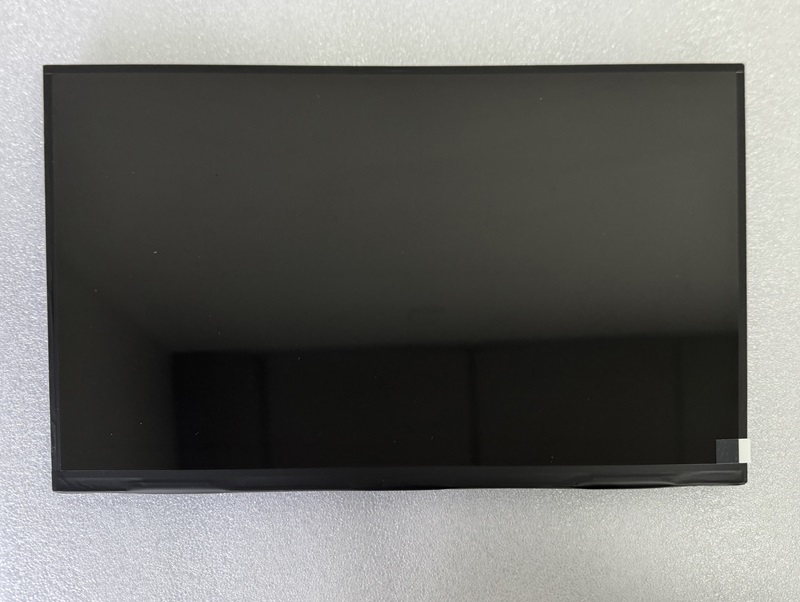
Link to Product Page: S123BWU11EP 12.3″ High Brightness Automotive LCD
Link to Technology Page: OCA Optical Bonding Process
Contact CTA: Request a Feasibility Report for Your Curved Automotive Display – Response Within 24 Hours

