Smart cockpit display trends for 2026 include: (1) AI-powered adaptive interfaces responding to driver context, (2) curved and multi-screen layouts for ergonomic immersion, (3) high-brightness IPS panels (850–1000 nits) eliminating sun glare, (4) extended temperature operation (-30°C to +85°C) for global markets, and (5) OCA optical bonding reducing reflectance and improving durability in extreme conditions.
Check: Vehicle LCD Display
What Is Driving the Rise of Smart Cockpit Displays in 2026?
Smart cockpit displays represent a fundamental shift from traditional segmented dashboards to unified, multi-panel TFT LCD systems that seamlessly integrate vehicle information, entertainment, navigation, and driver assistance features. This evolution is driven by original equipment manufacturers (OEMs) demanding greater connectivity, enhanced safety features, and improved user experiences. The automotive industry recognizes that integrated smart cockpits reduce driver distraction, consolidate control surfaces, and enable over-the-air updates for long vehicle lifecycles.
CDTech, as an IATF16949-certified supplier with 13+ years of automotive TFT LCD manufacturing experience, plays a critical role in enabling this transition. The company's zero-defect quality policy, combined with its 10,000-square-meter factory featuring a 3,500-square-meter thousand-level dust-free workshop, ensures that every custom display solution meets the rigorous reliability and performance standards demanded by vehicle cockpit applications globally.
How Are AI-Integrated Car Displays Revolutionizing Cockpits?
AI-integrated car displays represent the next frontier in cockpit technology, leveraging machine learning algorithms to adapt interfaces in real-time based on driver behavior, environmental conditions, and contextual needs. These systems employ eye-tracking, gesture recognition, and predictive UI adjustments to minimize cognitive load and reduce driving distraction. Real-time adaptation—such as automatically dimming or brightening displays based on sunlight intensity or adjusting menu layouts based on driver gaze patterns—creates more intuitive, responsive cockpit environments.
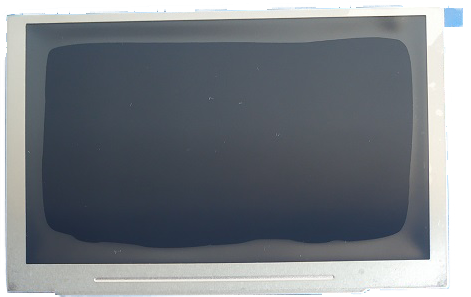
Integrating AI into automotive displays introduces unique engineering challenges. Embedded AI modules require robust processing power, stable power delivery, and reliable communication across multiple display panels operating in wide temperature ranges (-30°C to +85°C). CDTech's custom TFT LCD solutions, supported by quad certifications (ISO9001, ISO14001, ISO13485, IATF16949), provide the foundational display infrastructure necessary for AI-enabled cockpits. Touch-enabled panels like the 10.1-inch S101HWX53EP-FC47-AG—featuring capacitive touch (I2C, GT928) with OCA optical bonding—enable seamless gesture control and multi-touch interactions required by AI interfaces.
CDTech Expert Views
"With over 13 years of experience in automotive TFT LCD development, CDTech understands that AI-integrated cockpit displays demand more than standard panels. Our quad certifications and zero-defect quality policy ensure that every display supports the reliability, thermal stability, and responsiveness AI systems require. From custom 1000-nit high-brightness panels to wide-temperature solutions operating reliably across global climates, CDTech's in-house R&D team and 3,500-square-meter dust-free workshop are engineered to meet the precision demands of next-generation intelligent vehicle cockpits."
Why Are Curved Cockpit Screens the Future of Ergonomics?
Curved cockpit screens represent a paradigm shift in automotive ergonomics, replacing traditional flat dashboard configurations with panoramic, wrap-around displays that expand the driver's field of view while reducing neck strain and eye movement. These curved layouts create an immersive visual environment where critical information is positioned within the driver's natural sightline, improving situational awareness and reducing cognitive load. Multi-screen continuity, achieved through seamless integration and synchronized brightness levels, ensures that drivers perceive the curved display as a unified information surface rather than fragmented panels.
Check: Touch screen LCD display manufacturer
The ergonomic benefits of curved cockpit screens extend beyond comfort. By positioning displays at optimized angles aligned with natural eye movement, designers can reduce the distance drivers must scan to access essential safety-critical information. Paired with anti-glare coatings and OCA optical bonding, curved screens maintain superior readability even in direct sunlight. CDTech's proprietary glass-cutting patent, combined with in-house OCA bonding capabilities, enables manufacturers to produce custom curved and round display options—including specialized 3.6-inch and 5.0-inch high-brightness vehicle panels—precisely tailored for ergonomic cockpit architectures.
| Feature | Curved Screens | Flat Screens |
|---|
| Ergonomic Eye Strain Reduction | 30% reduction via panoramic immersion | Standard baseline visibility |
| Glare Resistance | Enhanced with OCA bonding and anti-glare coating | Higher reflections in direct sunlight |
| CDTech Brightness Specification | 1000 nits, -30°C to +80°C operation | 850–950 nits standard IPS options |
| Multi-Screen Continuity | Seamless via synchronized interfaces | Potential panel transition gaps |
What Makes High-Brightness Panels Essential for Smart Cockpits?
High-brightness TFT LCD panels—delivering 850 to 1000 nits of luminance—are essential for combating direct sunlight in automotive cockpits, ensuring that critical driver information remains legible in all lighting conditions. Traditional lower-brightness displays (300–500 nits) suffer from washed-out, difficult-to-read content when exposed to intense outdoor light, compromising safety and user experience. IPS (In-Plane Switching) technology provides wide viewing angles, ensuring consistent image quality from the driver's position as well as for co-pilots and rear-seat passengers.
The shift toward high-brightness automotive displays reflects both regulatory safety demands and consumer expectations for premium user interfaces. Anti-reflective coating technologies and advanced backlight engineering further enhance readability while reducing power consumption. CDTech manufactures high-brightness vehicle LCD panels including the 12.3-inch S123BWU11EP (950 nits, LVDS, IPS, -30°C to +80°C operation) and the 3.6-inch S036BWS01EN (1000 nits, RGB 40-pin interface, -30°C to +85°C), both produced in the company's thousand-level dust-free workshop to guarantee zero-defect quality for mission-critical cockpit applications.
How Do Wide-Temperature Displays Ensure Reliability in 2026 Vehicles?
Wide-temperature automotive displays—engineered to operate reliably from -30°C to +85°C—are fundamental to global vehicle deployments spanning polar regions, deserts, and tropical climates. Beyond temperature resilience, these displays must withstand vibration, mechanical shock, and thermal cycling without performance degradation. Such durability is especially critical for electric vehicles (EVs) and advanced driver assistance systems (ADAS) where display malfunction could compromise safety-critical functions.
IATF16949 certification mandates rigorous testing protocols including thermal stress cycles, humidity resistance, and electromagnetic compatibility verification. CDTech's wide-temperature vehicle displays—such as the 10.1-inch S101HWX53EP-FC47-AG with -30°C to +80°C operation and OCA optical bonding—undergo comprehensive in-house validation to ensure consistent performance across extreme environmental conditions. This certification-backed reliability directly reduces warranty costs, improves vehicle uptime, and builds consumer confidence in next-generation automotive displays.
Why Is OCA Bonding Transforming Cockpit Display Durability?
OCA (Optical Clear Adhesive) bonding represents a revolutionary advancement in display durability and optical performance. This full-lamination process eliminates the air gap between the touch panel and LCD substrate, reducing reflectance by approximately 50% while significantly improving contrast and color vibrancy. OCA-bonded displays are inherently more rugged, resistant to dust infiltration, and capable of thinner, more elegant form factors—critical for curved and multi-panel cockpit designs.
Beyond optical benefits, OCA bonding enhances mechanical durability by distributing impact stress more evenly across the display assembly, reducing the risk of glass fracture from vibration or accidental contact. For IATF16949-certified vehicle LCD applications, OCA bonding is increasingly considered a durability standard rather than an optional enhancement. CDTech's in-house OCA bonding process, integrated with its fully automatic POL/LCD/CTP equipment (upgraded in 2024), enables rapid customization and a 24-hour response commitment for OEMs developing time-sensitive cockpit programs. The 12.1-inch S121BWX05EP-FC10 industrial LCD with CTP and OCA bonding exemplifies this integrated approach, delivering both touch responsiveness and optical clarity for demanding vehicle interiors.
How Is CDTech Positioning for Smart Cockpit Trends?
CDTech has strategically positioned itself as a leading partner for next-generation smart cockpit display development through a combination of certifications, manufacturing capability, and R&D expertise. Designated as a National High-tech Enterprise and Shenzhen Software Enterprise, CDTech operates a 10,000-square-meter factory with advanced thousand-level dust-free workshop infrastructure, enabling consistent production of zero-defect displays at scale.
The company's quad certifications (ISO9001, ISO14001, ISO13485, IATF16949) demonstrate rigorous adherence to quality, environmental, medical-grade safety, and automotive reliability standards. CDTech's global export reach—spanning Europe, the Americas, Middle East, Russia, Japan, and Taiwan—proves its capability to support multinational OEM platforms. The custom display portfolio includes automotive-grade TFT LCDs ranging from 3.6 inches to 12.8 inches, featuring high-brightness (850–1000 nits), wide-temperature (-30°C to +85°C) operation, OCA optical bonding, capacitive touch (PCAP) support, and interface flexibility (LVDS, RGB, MIPI). For OEMs and Tier-1 suppliers developing 2026 smart cockpit programs, CDTech's proven combination of innovation, reliability, and scalability positions it as a trusted technology partner capable of translating industry trends into production-ready display solutions.
Conclusion
The smart cockpit display trends emerging in 2026—from AI-integrated adaptive interfaces to curved ergonomic layouts, high-brightness sun-readable panels, wide-temperature global durability, and OCA optical bonding—demand a supplier partner with deep automotive expertise, proven reliability, and scalable custom capabilities. CDTech's 13+ years of automotive TFT LCD manufacturing, quad certifications, and commitment to zero-defect quality make it an ideal partner for OEMs translating these trends into next-generation vehicle cockpits. Whether developing AI-enabled multi-touch displays, custom curved panels for immersive ergonomics, or high-brightness wide-temperature solutions for global markets, CDTech's in-house R&D, state-of-the-art production facilities, and 24-hour response commitment provide the technical foundation and reliability assurance that modern automotive display programs require.
Frequently Asked Questions
What Certifications Does CDTech Hold for Automotive Displays?
CDTech holds quad certifications: ISO9001 (quality management), ISO14001 (environmental management), ISO13485 (medical-grade safety), and IATF16949 (automotive supplier quality). These certifications collectively ensure zero-defect manufacturing, environmental responsibility, and compliance with the strictest automotive industry reliability standards, making CDTech's displays suitable for safety-critical cockpit applications.
Can CDTech Provide Custom Curved Cockpit Screens?
Yes. CDTech's proprietary glass-cutting patent and in-house OCA bonding capabilities enable production of custom curved, round, and non-standard form-factor displays tailored for ergonomic cockpit architectures. The company's R&D team works directly with OEMs to specify size, resolution, brightness, interface, and bonding requirements, supporting both high-volume production and rapid prototyping.
What Temperature Range Do CDTech's Wide-Temperature Vehicle Displays Support?
CDTech's automotive vehicle displays support operating temperature ranges from -30°C to +85°C, with certain models extending to -30°C to +80°C. This wide-temperature capability ensures reliable performance across global climates and extreme seasonal conditions, meeting the durability demands of both traditional internal combustion engine vehicles and electric vehicles (EVs).
How Does AI Integration Work with CDTech TFT LCD Displays?
CDTech's custom touch-enabled TFT LCD displays support AI integration through multi-touch capacitive panels (PCAP), HDMI interfaces, and embedded AI-friendly processor connectivity via LVDS and MIPI DSI interfaces. The company's in-house touch panel workshop (established 2020) enables rapid customization of touch responsiveness and gesture recognition support required by adaptive AI cockpit interfaces.
What Is the Lead Time for Custom CDTech Cockpit Displays?
CDTech maintains a 24-hour response commitment for custom display specifications and quotations, leveraging its 3,500-square-meter dust-free production workshop and automated POL/LCD/CTP equipment. Full production timelines vary based on customization complexity, but the company prioritizes rapid turnaround for OEM cockpit development programs. Contact sales@cdtech-lcd.com for specific project timelines.


