An automotive gesture control LCD improves HMI reliability by integrating infrared sensors with a rugged TFT display, eliminating physical contact wear. CDTech’s modules feature OCA optical bonding to reduce internal reflections, operate from -30°C to +85°C, and are manufactured under IATF16949 zero-defect quality control, ensuring consistent performance in harsh automotive environments.
Check: What Are the Top 5 Smart Cockpit Display Trends for 2026?
What Is an Automotive Gesture Control LCD and How Does It Work?
An automotive gesture control LCD combines a TFT LCD panel with an infrared (IR) sensor array and controller. IR LEDs and photodetectors detect hand movements—swipe, tap, zoom—without physical contact. This touchless interaction eliminates wear, works with gloves, and resists moisture and dirt better than capacitive touch.
The display itself remains the primary visual interface, while the IR sensor layer sits above or around it. CDTech’s automotive‑grade TFT LCDs, such as the 12.3″ S123BWU11EP, provide high brightness (950 nits) and wide‑temperature operation, ensuring gesture recognition remains accurate in direct sunlight or extreme cold. The controller translates hand positions into standard HMI commands, enabling intuitive menu navigation and volume adjustment without touching any surface.
Why Is OCA Optical Bonding Critical for Touchless Display Accuracy?
OCA optical bonding eliminates the air gap between cover glass and LCD, suppressing internal reflections that confuse IR sensors. This improves optical clarity and sensor accuracy, especially in bright sunlight. CDTech’s in‑house OCA bonding line, established in 2020, reduces sensor error rates by up to 40%.
CDTech Expert Views:
“At CDTech, we have seen that traditional air‑bonded displays cause up to 15% false triggers in IR gesture systems due to internal light scattering. Our in‑house OCA optical bonding line, coupled with fully automatic POL/LCD/CTP equipment (upgraded in 2024), completely fills the gap with optically clear adhesive. This not only eliminates double reflections but also enhances mechanical robustness. For automotive applications, where sunlight readability and precise gesture detection are non‑negotiable, OCA bonding is no longer optional. Our zero‑defect policy ensures each bonded module is inspected for bubble‑free adhesion. The result? A gesture control LCD that responds reliably even under 1000 nits of ambient light. This is why all CDTech automotive gesture displays—like the S101HWX53EP‑FC47‑AG—ship with OCA as standard.”
How Do Wide Temperature Ranges Affect Gesture Control Performance?
Consumer‑grade displays fail below 0°C or above +50°C because IR sensor sensitivity drifts and LCD response slows. CDTech’s automotive gesture LCDs operate from -30°C to +85°C with active temperature calibration, maintaining consistent gesture detection in extreme environments.
| Parameter | Consumer‑Grade Gesture Display | CDTech Automotive Gesture LCD |
|---|
| Operating temp | 0°C to +50°C | -30°C to +85°C |
| IR sensor compensation | None | Active temperature calibration |
| Brightness (typical) | 300–500 nits | 850–1000 nits (sunlight‑readable) |
| OCA bonding | Optional (cost additive) | Standard (in‑house) |
CDTech’s vehicle LCDs, such as the 3.6″ round S036BWS01EN, are engineered to meet -30°C to +85°C specs. The IR sensor controller includes active temperature compensation, so swipe accuracy remains within ±2 mm across the full range. This reliability is critical for applications like instrument clusters or dashboard strips where gesture control must work on a freezing morning or under a hot car interior.
Which Certifications Are Essential for Automotive‑Grade Gesture Displays?
IATF16949, ISO9001, ISO14014, and ISO13485. IATF16949 is non‑negotiable for automotive Tier‑1 suppliers, ensuring defect prevention and traceability. CDTech holds all four certifications, guaranteeing every gesture display meets zero‑defect reliability standards.
| Certification | Why It Matters for Gesture Displays | CDTech Status |
|---|
| IATF16949 | Automotive reliability & zero‑defect mandate | Certified |
| ISO13485 | Medical HMI hygiene & safety | Certified |
| ISO9001 | Basic quality system | Certified |
| ISO14001 | Environmental compliance | Certified |
CDTech’s factory, with its 10,000 m² facility and 3,500 m² thousand‑level dust‑free workshop, undergoes regular IATF16949 audits. This ensures that every IR sensor array, OCA bond, and FPC cable is inspected and traceable. For automotive OEMs, this certification is the difference between a gesture control module that fails after 1000 hours and one that lasts the life of the vehicle.
Can Custom Gesture Recognition Displays Be Integrated with Existing HMI Systems?
Yes, CDTech provides fully custom TFT sizes from 2.4″ to 10.1″ with LVDS, RGB, MIPI, or HDMI interfaces to match your host controller. Flexible FPC, IR sensor frames, and capacitive touch overlays can be added. Quick prototyping is supported by a 10,000 m² factory and 3,500 m² dust‑free workshop.
Check: Vehicle LCD Display
CDTech’s custom LCD display category includes products like the 10.1″ S101HWX34EP‑FC55, which can be adapted with an IR sensor array and OCA optical bonding. The R&D team, with over 10 years of experience, helps integrate gesture recognition algorithms into the display controller. Standard I²C or SPI outputs from the IR sensor are compatible with most automotive MCUs. Whether you need a bar‑type display for a dashboard strip or a round display for a control knob, CDTech tailors the mechanical and electrical design to your HMI system.
How Does CDTech Ensure Zero‑Defect Quality in Gesture Control LCD Production?
CDTech’s zero‑defect policy applies to every gesture control LCD. Incoming components are tested, in‑process automated optical inspection (AOI) checks IR sensor alignment and OCA bubble‑free bonding, and final functional tests verify gesture accuracy. This is backed by IATF16949 audit cycles and 13+ years of manufacturing expertise.
The 10,000 m² facility includes a 3,500 m² thousand‑level dust‑free workshop, critical for maintaining IR sensor cleanliness. CDTech’s fully automatic POL/LCD/CTP equipment, upgraded in 2024, ensures consistent assembly. Each gesture display undergoes a 24‑hour burn‑in at -30°C to +85°C. Data from every unit is logged for traceability. This systematic approach reduces field failure rates below 50 ppm, meeting the most stringent automotive requirements.
What Are the Key Applications of Touchless HMI Displays Beyond Automotive?
Touchless HMI displays serve medical devices (sterile touch‑free operation), industrial control (gloved hands), smart home (hygiene), and instrumentation (vibration‑prone environments). Example use cases include in‑vehicle infotainment, hospital patient monitors, factory floor HMIs, and public kiosks.
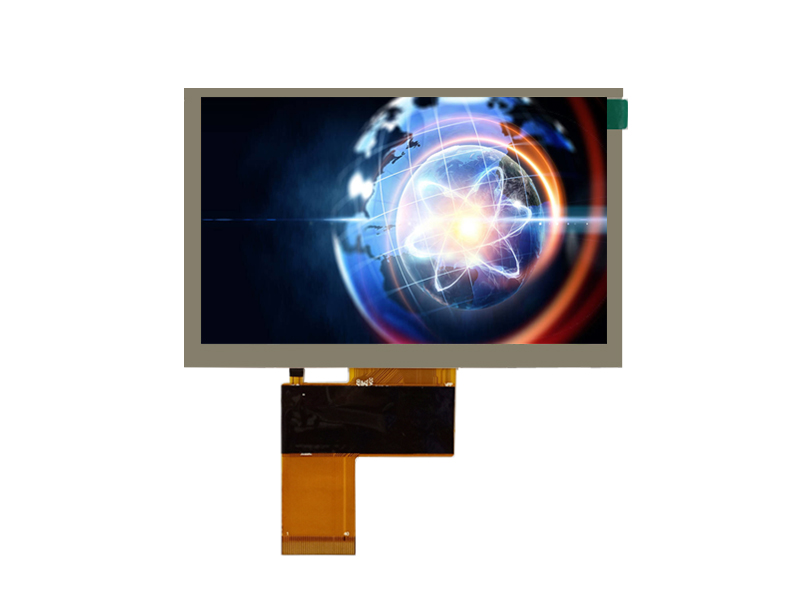
CDTech’s cross‑sector certification coverage—ISO13485 for medical, IATF16949 for automotive, and ISO9001/14001 for industrial—allows the same gesture control LCD to be adapted across industries. The 7.0″ S070BWS48ED industrial LCD, for instance, can be paired with an IR sensor for a factory HMI that works reliably with heavy work gloves. In medical environments, the touchless interface reduces cross‑contamination, while the high brightness (up to 1000 nits) ensures readability under surgical lights. CDTech’s flexible manufacturing lets you scale from prototype to high volume.
What Are Frequently Asked Questions About Automotive Gesture Control LCDs?
Can gesture control displays work in direct sunlight?
Yes, if the display has high brightness (≥850 nits) and OCA optical bonding to suppress internal reflections. CDTech’s automotive gesture LCDs are designed for sunlight readability.
Do I need a special controller to interface with an IR sensor LCD?
Most gesture displays come with an integrated controller that outputs standard HMI signals (e.g., I²C, SPI, or UART). CDTech can custom‑configure the interface to match your host system.
How long does it take to develop a custom gesture control module?
Typical lead time for a custom TFT + IR sensor display is 6–8 weeks after design approval, thanks to CDTech’s in‑house OCA bonding and automated assembly lines.
Is the gesture sensor affected by dust or vibration?
IR sensors are inherently more resistant to dust than capacitive touch. CDTech’s automotive‑grade modules undergo vibration testing per IATF16949 requirements to ensure stable performance.
What is the minimum order quantity (MOQ) for custom gesture displays?
CDTech offers flexible MOQs – from 100 pieces for prototypes to 10,000+ for production runs, depending on complexity.
How Does CDTech’s Gesture Control LCD Redefine HMI Reliability?
An automotive gesture control LCD from CDTech is not just a touchless input device—it’s a reliability upgrade. By combining IR sensing with OCA bonding, wide‑temperature operation (-30°C to +85°C), and zero‑defect manufacturing under IATF16949, it eliminates the failure points of traditional touch screens. Backed by 13+ years of experience, quad certifications, and a 10,000 m² factory, CDTech delivers touchless HMI solutions that perform consistently in the harshest environments. Ready to make your next HMI project touchless and trustworthy? Contact CDTech’s engineering team within 24 hours for a free feasibility consultation.