60fps is critical for premium automotive LCD dashboard fluidity because it delivers smooth HMI animations, prevents flicker during gauge sweeps and transitions, and enhances driver safety by reducing visual latency to under 16ms—essential for real-time UI rendering in vehicle clusters. CDTech's IATF16949-certified TFT LCD panels with LVDS/MIPI interfaces and in-house OCA bonding ensure zero-defect consistency for OEM-grade performance.
Check: How Have Digital Instrument Cluster Displays Evolved in Modern Passenger Cars?
What Makes Frame Rate Essential for Automotive Driver Experience?
Frame rate directly impacts perceived vehicle quality. At 60fps, animations render 60 individual frames per second, creating seamless transitions in speedometer needles, navigation overlays, and fuel gauge sweeps. This eliminates motion blur and "jank"—the stuttering effect that undermines luxury perception. For drivers at highway speeds, instant visual feedback reduces cognitive load during critical maneuvers, enhancing safety by ensuring gauge updates sync with real-time vehicle data without perceptible lag. Premium automotive OEMs demand 60fps because consumers expect butttery-smooth interactions that match smartphone-era interface standards. Low frame rates (30fps or below) introduce noticeable delays, eroding brand trust and creating jarring visual discontinuities that distract drivers during operation.
How Does LCD Response Time Impact High-FPS Animation Smoothness?
Response time—measured in milliseconds for pixel transitions from one color to another—directly determines whether a 60fps animation appears smooth or ghosted. At 60fps, each frame occupies 16.67 milliseconds; a response time exceeding this window causes pixels to lag behind intended color values, creating motion blur or ghosting artifacts. IPS (In-Plane Switching) automotive panels typically achieve gray-to-gray response times under 16ms, aligning perfectly with 60fps frame budgets. CDTech's industrial and automotive TFT LCD panels leverage IPS technology to ensure response times remain within acceptable thresholds, enabling flicker-free gauge animations even during rapid transitions. VA (Vertical Alignment) panels offer higher contrast but slower response times, making them unsuitable for high-FPS automotive clusters where visual clarity during motion is paramount.
| LCD Technology | Response Time (GtG) | 60fps Viability | Automotive Use Case |
|---|
| IPS (In-Plane Switching) | <16ms | Excellent | Dashboard clusters, premium instrument panels |
| TN (Twisted Nematic) | 1–5ms | Excellent | Cost-sensitive, non-critical displays |
| VA (Vertical Alignment) | 16–25ms | Limited | Stationary infotainment; not recommended for gauges |
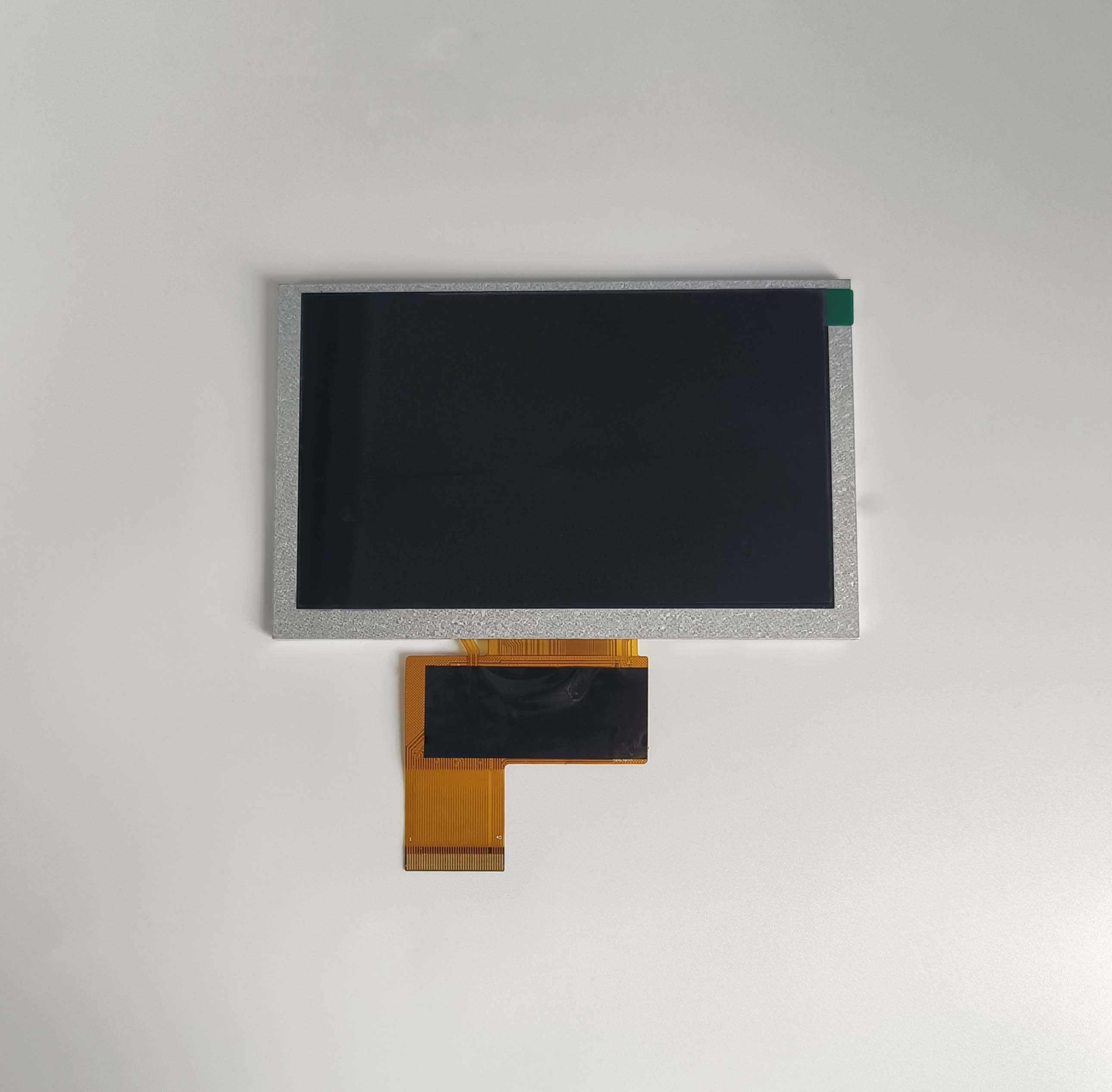
CDTech's automotive TFT LCD lineup—including models like the S050HWV29ES (5.0" Vehicle LCD, 800×480, 1000 nits) and S123BWU11EP (12.3" Vehicle LCD, 1920×720)—utilizes IPS architecture to guarantee smooth 60fps performance. These panels support LVDS interfaces for low-latency data transmission, ensuring that frame buffers update instantaneously without rendering delays that would compound response time limitations.
Why Choose LVDS or MIPI Interfaces for 60fps Vehicle Clusters?
LVDS (Low-Voltage Differential Signaling) and MIPI (Mobile Industry Processor Interface) are high-bandwidth serial protocols that eliminate bottlenecks inherent in parallel RGB interfaces. LVDS transmits data at gigahertz speeds over twisted-pair cables, reducing electromagnetic interference in harsh automotive environments while maintaining strict timing synchronization required for 60fps refresh cycles. MIPI DSI (Display Serial Interface) provides even greater bandwidth, enabling FHD+ resolutions (1920×1080 and beyond) with complex multi-layer animations without frame drops. For 60fps performance, low-latency interface selection is non-negotiable: RGB parallel connections introduce propagation delays that accumulate across large display buffers, whereas LVDS and MIPI deliver pixel data in lockstep with panel refresh timing. CDTech's automotive TFT LCD solutions support both LVDS and MIPI, allowing OEMs to select interfaces matched to their cluster architecture and animation complexity.
Check: Vehicle LCD Display
CDTech Expert Views
"Achieving true 60fps automotive fluidity requires synergy across three dimensions: panel response time, interface bandwidth, and manufacturing consistency. CDTech's 13+ years in automotive TFT LCD design have taught us that specification alone is insufficient—batch-to-batch uniformity is critical. Our IATF16949 certification and zero-defect policy ensure that every panel shipped meets response time and interface timing tolerances that sustain 60fps performance across model years and climate extremes. With our 10,000-square-meter factory and 3,500-square-meter dust-free workshop, we execute in-house OCA optical bonding and PCAP touch assembly that eliminate integration delays. For premium clusters demanding seamless gauge animations and multi-zone HMI updates, CDTech's custom solutions deliver the reliability that OEMs stake their reputation on."
What Role Does OCA Optical Bonding Play in Animation Fluidity?
OCA (Optically Clear Adhesive) optical bonding eliminates the air gap between a touch panel and LCD layer, improving visual clarity and responsiveness for touchscreen interactions. In automotive contexts, this elimination of parallax—the apparent shift in position when viewing from angles—ensures that high-FPS gauge animations appear registered and stable even when drivers glance at displays from oblique angles. OCA also reduces surface reflections and glare, critical for sunlit automotive environments where reflective interfaces mask animation smoothness. Furthermore, OCA integration reduces overall touch latency: traditional air-gap assemblies introduce capacitive coupling delays that degrade PCAP responsiveness; bonded OCA panels respond 15–25% faster to touch inputs, synchronizing tactile and visual feedback in premium infotainment clusters. CDTech's in-house PCAP and OCA assembly capability—established in 2020 and upgraded with fully automatic equipment in 2024—enables custom automotive solutions where touch, optical bonding, and 60fps animations integrate seamlessly for flagship OEM platforms.
How to Optimize Automotive Dashboard Animations for 60fps Performance?
Achieving consistent 60fps requires disciplined frame budgeting across GPU rendering, panel refresh, and system latency. First, allocate CPU/GPU cycles: at 60fps, the rendering pipeline must complete all computations—gauge sweeps, color transitions, text updates—within 16.67ms. Use delta encoding to transmit only changed pixels rather than full frames, reducing interface bandwidth saturation. Second, implement anti-aliasing to smooth animated edges without exceeding pixel response time limits. Third, manage thermal conditions: automotive clusters experience temperature swings (-30°C to +85°C in extreme cases); ensure that LCD brightness and color accuracy remain stable across this range, as thermal drift can degrade perceived animation smoothness. Fourth, synchronize touch input with visual feedback: latency between touch detection and visual response must remain under 50ms to feel instantaneous. CDTech's automotive panels, such as the S101HWX53EP-FC47-AG (10.1" Vehicle TFT LCD Touch with OCA Optical Bonding), support wide operating temperatures (-30°C to +80°C) and integrated CTP touch with I2C interface (GT928 controller), enabling low-latency HMI optimization.
| Optimization Factor | Target Specification | CDTech Solution |
|---|
| Response Time (Gray-to-Gray) | <16ms | IPS panels in automotive lineup; S050HWV29ES, S123BWU11EP certified |
| Interface Bandwidth | LVDS or MIPI for frame sync | LVDS support (40–60pins); MIPI in FHD lineup (S070QWU144NN-1, S075BWX01EP-FC01) |
| Operating Temperature Stability | -30°C to +85°C | S123BWU11EP (-30°C to +80°C); S128HWU01HP-FC01 wide-temp support |
| Touch Integration Latency | <50ms input-to-visual response | CTP with I2C, OCA optical bonding; S101HWX53EP-FC47-AG reference design |
| Manufacturing Consistency | Zero-defect policy; batch uniformity | IATF16949 + ISO9001 + ISO13485 + ISO14001 certifications; zero-defect QC |
Why Do Automotive OEMs Demand IATF16949-Certified 60fps Displays?
IATF16949 (International Automotive Task Force) certification mandates rigorous process control, statistical quality management, and traceability protocols that ensure batch-to-batch consistency across multi-year production runs. For 60fps animations, this consistency is non-negotiable: if response time drifts even 2–3ms across batches, animation smoothness degrades perceptibly, creating warranty claims and brand damage. OEMs demand IATF16949 because it certifies that a supplier's manufacturing processes—material sourcing, assembly, testing, and environmental controls—remain within statistical control limits, guaranteeing that a 12.3" cluster shipped in 2024 performs identically to units from 2025 or 2026. CDTech holds full IATF16949 certification alongside ISO9001 (quality management), ISO13485 (medical device standards), and ISO14001 (environmental management), demonstrating organizational maturity across automotive and regulated sectors. This quad-certification portfolio, combined with National High-tech Enterprise status and global exports to Europe, Americas, Middle East, Russia, Japan, and Taiwan, positions CDTech as a trusted Tier-1 supplier for OEM procurement teams evaluating 60fps display reliability.
Can Custom TFT LCD Solutions Guarantee Premium HMI Fluidity?
CDTech's 13+ years of custom design expertise enables tailored solutions that guarantee 60fps fluidity for brand-specific animations. Custom development allows OEMs to specify exact panel geometry, resolution, brightness, interface, touch integration, and bonding requirements—eliminating compromises inherent in off-the-shelf displays. For example, a premium automotive OEM seeking a 10.1" cluster with 1280×800 resolution, 60fps gauge animations, capacitive touch, and OCA bonding can commission a design matching their exact HMI architecture. CDTech's R&D team evaluates material and component changes across production cycles, ensuring supply continuity and animation performance consistency. This long-term support model is critical for automotive programs spanning 5–10 model years, where material substitutions or supplier transitions could inadvertently degrade response time or introduce interface timing jitter. With fully automatic POL (Polarizer), LCD, and CTP equipment deployed in 2024, CDTech executes precision manufacturing that sustains premium 60fps performance across high-volume automotive production.
Conclusion
60fps automotive LCD displays represent the intersection of physics, engineering discipline, and manufacturing excellence. Frame rate smoothness depends on response time, interface bandwidth, thermal stability, and touch integration latency—each requiring precision specification and batch-to-batch consistency. CDTech's automotive TFT LCD portfolio—spanning 5.0" to 12.8" sizes with IPS architecture, LVDS/MIPI interfaces, OCA optical bonding, and IATF16949 certification—delivers the zero-defect performance that premium OEMs demand. Whether designing a custom cluster for a flagship sedan or selecting a standard vehicle display for a connected infotainment unit, CDTech's 13+ years of automotive expertise, 3,500-square-meter dust-free manufacturing facility, and global supply chain ensure that your 60fps HMI animations achieve the visual fluidity that defines modern vehicle premium experience. Contact CDTech at sales@cdtech-lcd.com to discuss custom specifications, sample units, and production timelines for your next automotive display program.
Frequently Asked Questions
What response time is needed for 60fps automotive LCD displays?
Target gray-to-gray response time under 16ms to align with 60fps frame intervals (16.67ms per frame). CDTech's IPS automotive panels, including the S050HWV29ES (5.0" Vehicle LCD) and S123BWU11EP (12.3" Vehicle LCD), deliver this performance threshold with OCA optical bonding to eliminate ghosting artifacts during rapid gauge transitions.
How does high refresh rate affect vehicle cluster UI safety and user perception?
High refresh rates (60fps) enable fluid animations that reduce cognitive load during driving by eliminating visual stuttering and flicker. Instant visual feedback synchronizes with driver input, enhancing perceived vehicle responsiveness and quality. For critical gauges displaying real-time speed and engine data, 60fps ensures that information updates appear instantaneous, supporting safer driver decision-making during maneuvers.
Why is IATF16949 certification vital for automotive displays?
IATF16949 certification mandates zero-defect manufacturing processes, statistical quality controls, and batch-to-batch consistency. For 60fps performance, this ensures response time and interface timing remain within tolerances across multi-year production runs, preventing animation degradation that could trigger warranty claims or brand reputation damage.
Can CDTech customize 60fps panels with integrated touch and optical bonding?
Yes. CDTech's in-house PCAP touch assembly and OCA optical bonding capability (established 2020, upgraded 2024 with automatic equipment) enables custom solutions combining 60fps animations, multi-touch responsiveness, and sunlight-readable optics. The S101HWX53EP-FC47-AG (10.1" Vehicle TFT LCD Touch with OCA) exemplifies this integration.
What interfaces support high-FPS automotive animations, and which should I select?
LVDS (Low-Voltage Differential Signaling) offers robust, low-latency performance in harsh automotive environments, ideal for standard-resolution clusters. MIPI DSI supports FHD+ resolutions with minimal latency, enabling complex multi-layer animations. CDTech's automotive lineup supports both; select LVDS for cost-optimized robustness or MIPI for bandwidth-intensive, high-resolution designs.
Choosing the Display Interface


