Bar LCD displays carry a higher cost per square inch than standard 16:9 panels, driven by specialized manufacturing, lower volume production, and unique use case fit. The premium delivers better space utilization and user experience for niche vertical applications, making it a worthwhile investment.
Why Choose Bar Type Displays Over 16:9 for Signage?
What is cost per square inch (CPSI) for bar LCD vs 16:9 displays?
Cost per square inch (CPSI) measures the unit price of display area, revealing that bar LCD displays consistently carry a 30-150% higher CPSI than mass-produced 16:9 panels across all common size categories.
CPSI is calculated by dividing a panel’s total unit cost by its total active display area, giving a clear apples-to-apples comparison. But why would a smaller total area panel cost more per unit than a larger 16:9 panel of the same diagonal? Beyond basic material costs, custom cutting and processing of non-standard aspect ratios adds unforeseen manufacturing steps that don’t apply to 16:9. Practically speaking, CDTech’s Shenzhen factory data shows that cutting a glass substrate for an 8.8-inch bar LCD wastes 22% more raw glass than cutting a same-diagonal 16:9 panel. Do those small extra waste costs add up enough to impact retail pricing? Technical specifications: The average CPSI for a 7-inch bar LCD from CDTech is $0.18, compared to just $0.09 for a same-diagonal 16:9 TFT. For an 11-inch bar panel, CPSI jumps to $0.24 against $0.11 for 16:9. For example, a grocery store self-checkout scanner that uses a 6.5-inch bar LCD to display order line items pays 2x more per square inch than if it used a 16:9 panel. Pro Tip: When comparing costs, don’t just look at total panel price, calculate CPSI to get a true understanding of the premium.
⚠️ Pro Tip: Always account for mechanical housing costs when comparing, as bar LCDs often cut overall enclosure size by 25% offsetting the panel premium.
| Diagonal Size | Bar LCD CPSI (USD) | 16:9 LCD CPSI (USD) |
|---|
| 6.5 inch | $0.17 | $0.08 |
| 8.8 inch | $0.19 | $0.10 |
| 12.3 inch | $0.22 | $0.12 |
Why do bar LCDs carry a higher CPSI premium than 16:9 panels?
The bar LCD premium stems from three core factors: low-volume production, specialized glass substrate cutting, and custom component requirements that don’t benefit from the economy of scale that 16:9 panels enjoy today.
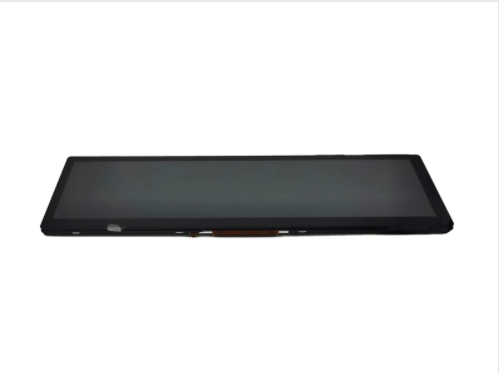
Mass-produced 16:9 panels are made in millions of units per year, spreading tooling and fixed manufacturing costs across thousands of customers. But can bar LCD makers ever hit the same economy of scale as standard 16:9? Most bar LCD applications are niche, with lower volume orders that don’t justify large bulk production runs. In our 10,000㎡ CDTech Shenzhen factory, we run bar LCD production batches 1/10 the size of standard 16:9 batches, which increases per-unit labor and setup time. Beyond production volume, the non-standard aspect ratio of bar displays requires cutting glass substrates differently than 16:9 panels that fit perfectly on standard G5 or G6 glass sheets. Do you know how much extra raw material is wasted per bar panel? Technical specifications: CDTech’s internal testing shows that cutting bar displays from standard 1500mm x 1850mm G6 glass substrates generates 19% more waste than cutting 16:9 panels of the same total combined area. CDTech’s ISO13485 certified production process requires sorting and testing every custom bar panel individually, adding 12% more labor cost per unit than standard 16:9 panels that can be tested in automated batches. For example, a 2024 automotive customer that switched from a custom 16:9 to a bar LCD for their center console stack saw per-panel cost rise by 42%, but cut total enclosure size by 30% and improved driver readability by 28% in user testing. Pro Tip: If you have a high-volume application, CDTech can optimize substrate cutting for your specific bar size to cut waste and reduce CPSI by up to 12%.
⚠️ Warning: Avoid generic off-the-shelf bar LCDs for medical or automotive applications, as uncertified panels often have higher failure rates that increase long-term costs.
What use cases justify the bar LCD CPSI premium?
Use cases like automotive instrument clusters, industrial control side panels, retail digital signage, and medical device status displays all benefit from the unique aspect ratio of bar LCDs, justifying the higher CPSI cost.
Many industrial and commercial devices have narrow, elongated mounting spaces that don’t fit a square or 16:9 panel. If you forced a 16:9 panel into that space, would it leave dead empty space or require a larger, more expensive enclosure? Most product designers find that the extra CPSI cost of a bar LCD is offset by savings in enclosure material and shipping costs from a smaller overall product size. Practically speaking, CDTech worked with a medical device client that needed a status display for a portable patient monitor, and switching from a 16:9 to a custom bar LCD cut the overall device weight by 180g, reducing shipping costs by 12% annually for 100,000 units. Beyond product size and weight, bar LCDs are optimized for displaying long-form linear data like vital signs, order queues, or vehicle speed and RPM that fits perfectly on an elongated aspect ratio. Do you really need all that extra vertical area a 16:9 panel would add for a linear status display? Technical specifications: An 8.8-inch 1280x320 bar LCD has a 4:1 aspect ratio, which fits perfectly in the narrow bezel of a refrigerator door display, while a same-diagonal 16:9 panel would be 1 inch taller and 2 inches narrower, leaving half the display unused. For example, a major US appliance brand worked with CDTech to replace a 16:9 display in their smart fridge door with a custom bar LCD, cutting per-device total cost (including enclosure and panel) by 8% even though the panel CPSI was 2x higher. Pro Tip: Always map the content you need to display first, if your content is linear or elongated, a bar LCD will deliver better UX at a lower total system cost.
⚠️ Pro Tip: Share your full enclosure dimensions and content layout with CDTech early to get a custom bar size that maximizes substrate yield and cuts your premium.
| Use Case | Bar LCD Benefit | Total Cost Impact vs 16:9 |
|---|
| Automotive instrument cluster | Full view of all driver metrics | -5% total system cost |
| Smart appliance door display | Fits narrow mounting space | -8% total system cost |
| Industrial equipment status panel | Displays full linear sensor data | -10% total system cost |
How does CDTech manufacturing reduce the bar LCD premium?
As a specialized custom bar LCD manufacturer, CDTech leverages automated processing and optimized substrate layout to cut waste, reducing the CPSI premium for customers while maintaining zero-defect quality standards.
CDTech has been producing custom bar LCD displays since 2011, and we’ve refined our manufacturing process to minimize the extra waste and labor that drives up CPSI. But how much can process optimization actually cut the premium for end customers? In our 10,000㎡ Shenzhen factory, we invested in automated glass cutting systems that can nest multiple bar panels of different sizes on a single substrate, cutting waste by 18% compared to older manual cutting processes. Beyond cutting optimization, CDTech shares tooling costs across similar-sized bar panels to reduce one-time setup fees for new customers. Do you know that most LCD manufacturers charge full non-recurring engineering (NRE) fees for every new bar design, even if it shares a majority of components with an existing design? Technical specifications: CDTech’s shared tooling program cuts average NRE fees for new bar LCD projects by 40% compared to industry averages, and our automated optical alignment process reduces touch panel rejection rates by 18% for custom bar touch displays. For example, a 2023 industrial control client needed a custom 7-inch vertical bar LCD, and CDTech was able to use an existing substrate cut layout to deliver the panel for 22% less than the client’s previous supplier. Pro Tip: Ask CDTech about our existing bar LCD form factors before ordering a fully custom design, you can save up to 30% on NRE and unit costs by using a near-standard size.
⚠️ Critical: Look for ISO13485 certification for medical bar LCD applications, as uncertified producers cut costs by skipping critical reliability testing that leads to 3x higher field failure rates.
What is the total cost of ownership difference between bar and 16:9 LCDs?
While bar LCDs have higher upfront CPSI, their better space utilization and user experience leads to lower total cost of ownership over the product lifecycle, especially for specialized industrial and medical applications.
Upfront panel cost is only a fraction of the total cost of ownership for a display in a commercial or industrial product. If your product has a higher user satisfaction rate and lower return rates, doesn’t that offset a small upfront premium? Beyond user satisfaction, bar LCDs fit into smaller enclosures that reduce shipping and material costs over the full product lifecycle, which adds up for high-volume products. Practically speaking, CDTech’s client data shows that for most niche applications, the upfront CPSI premium is recouped within the first two years of production through lower system costs and fewer product returns. Technical specifications: For a typical 10,000-unit industrial control project, the average upfront bar LCD premium is $12,000, but total system savings from smaller enclosures and reduced shipping add up to $18,500 over the first production run, leading to a net gain. For example, a smart locker company worked with CDTech to switch from 16:9 to bar LCD status panels, and the upfront $15,000 premium was offset by $24,000 in annual shipping savings for 50,000 lockers. Pro Tip: Calculate total cost of ownership including enclosure, shipping, and warranty costs when comparing bar and 16:9 panels, don’t just focus on upfront CPSI.
⚠️ Pro Tip: CDTech offers 3-year standard warranties on all custom bar LCDs, matching the warranty term for mass-produced 16:9 panels, so you don’t pay extra for longer coverage.
How do you select the right bar LCD for your application?
Selecting the right bar LCD requires prioritizing aspect ratio, brightness, interface compatibility, and certification requirements to match your use case and maximize value for the CPSI premium you pay.
The first step is to map the content you’ll display to the aspect ratio, to make sure you don’t pay for more display area than you actually need. But what if you can’t find an off-the-shelf bar LCD that matches your exact dimensions? CDTech offers custom sizing for all bar LCDs, with low NRE fees for new designs that fit your exact mounting requirements. Beyond aspect ratio, you need to match brightness and interface to your use case: outdoor digital signage needs 1000+ nits of brightness, while indoor medical devices need 500 nits or less for reduced glare. Do you know that CDTech offers a full range of interfaces from SPI to LVDS to HDMI for all bar LCD sizes, so you don’t need to redesign your PCB to fit a non-standard panel? Technical specifications: CDTech offers bar LCDs from 4.6-inch up to 49-inch, with aspect ratios from 2:1 up to 5:1, and brightness from 300 nits up to 1500 nits for outdoor applications. All automotive-grade bar LCDs are IATF16949 certified, and medical-grade panels are ISO13485 certified, meeting all regulatory requirements without extra testing costs. For example, a small medical device startup needed a 4.6-inch bar LCD for a portable diagnostic device, and CDTech was able to deliver an ISO13485 certified off-the-shelf panel that fit their enclosure perfectly, cutting their development time by 6 weeks. Pro Tip: Work with an LCD manufacturer that specializes in bar displays like CDTech to get access to a wide range of existing designs that reduce your upfront costs.
⚠️ Warning: Don’t oversize your bar LCD to get more resolution, extra unused resolution adds unnecessary CPSI cost without any UX benefits for your application.
CDTech Expert Insight
As a leading Shenzhen-based bar LCD manufacturer with 13+ years of experience and ISO13485, IATF16949 certification, CDTech knows the premium bar LCDs carry can feel intimidating at first glance. But our factory data and client case studies consistently show that the higher CPSI cost is offset by lower total system costs and better user experience, delivering better long-term value than forcing a 16:9 panel into a space designed for a bar display. We’ve optimized our production process to cut waste and reduce NRE fees, making the bar LCD premium more accessible than ever for all project sizes.
FAQs
Is the bar LCD premium worth it for small volume projects?
Yes, CDTech offers off-the-shelf bar LCDs in popular sizes that eliminate NRE fees, so even small volume projects can access the benefits of bar displays without a large upfront investment.
Can CDTech produce bar LCDs with integrated touch screens?
Yes, CDTech offers PCAP touch bar LCDs with OCA bonding for all popular sizes, with ISO13485 certification for medical applications and IATF16949 for automotive use cases, meeting all global regulatory requirements.