Bar LCDs deliver far lower power consumption and smaller carbon footprints than traditional digital signage. When comparing 10 small bar screens to one large TV, bar LCDs cut energy use by up to 40% while offering more flexible placement for retail and hospitality venues.
Why Choose Bar Type Displays Over 16:9 for Signage?
What is the typical power draw of a small bar LCD vs a large traditional TV?
Most small bar LCDs rated for digital signage draw 5-15W each, while a 55+ inch traditional large-format TV draws 100-180W for constant 24/7 operation. This core power difference drives major gaps in energy use and operating costs.
To understand power draw, you have to account for 24/7 operation that most digital signage requires. Most small bar screens used for menu boards or queue displays are 8-10 inch, optimized for low power. CDTech’s 8.8 inch bar LCDs, for example, have a maximum continuous power draw of just 12W, even at 1200 nits brightness. But what if you’re running 10 of these for a segmented menu board instead of one large 55 inch TV? Let’s do the math: 10 x 12W = 120W total, which is still 30-40W less than a typical 55 inch commercial TV’s 150W average draw. Beyond rated power, you also have to account for standby power, which many installations leave enabled 24/7. Traditional large TVs often have 2-3W of standby power, while CDTech bar LCDs cut that to under 0.5W per unit. Practically speaking, this adds up over a year of continuous operation. But how does this translate to actual carbon output, not just wattage? For example, a venue running 16 hours a day will see a 450 kWh annual energy difference between the two setups. Pro Tip: Always use continuous power ratings, not peak, for digital signage comparisons, as most displays operate at 70-80% brightness 90% of the time.
⚠️ Pro Tip: Don’t use consumer TV power ratings for commercial signage comparisons—consumer models are not designed for 24/7 operation and underreport continuous power draw.
| Display Type | Per Unit Power (W) | Total System Power (W) |
|---|
| CDTech 8.8" Small Bar LCD | 5-12W | 50-120W for 10 units |
| 55" Traditional Commercial TV | 100-160W | 100-160W for 1 unit |
How does total carbon footprint compare between 10 small bar screens and 1 large digital signage TV?
The total 5-year carbon footprint of 10 small bar LCDs is roughly 35% lower than a single large traditional TV, based on life cycle testing from CDTech’s Shenzhen factory. This gap grows larger for setups running 24/7 in high-traffic venues.
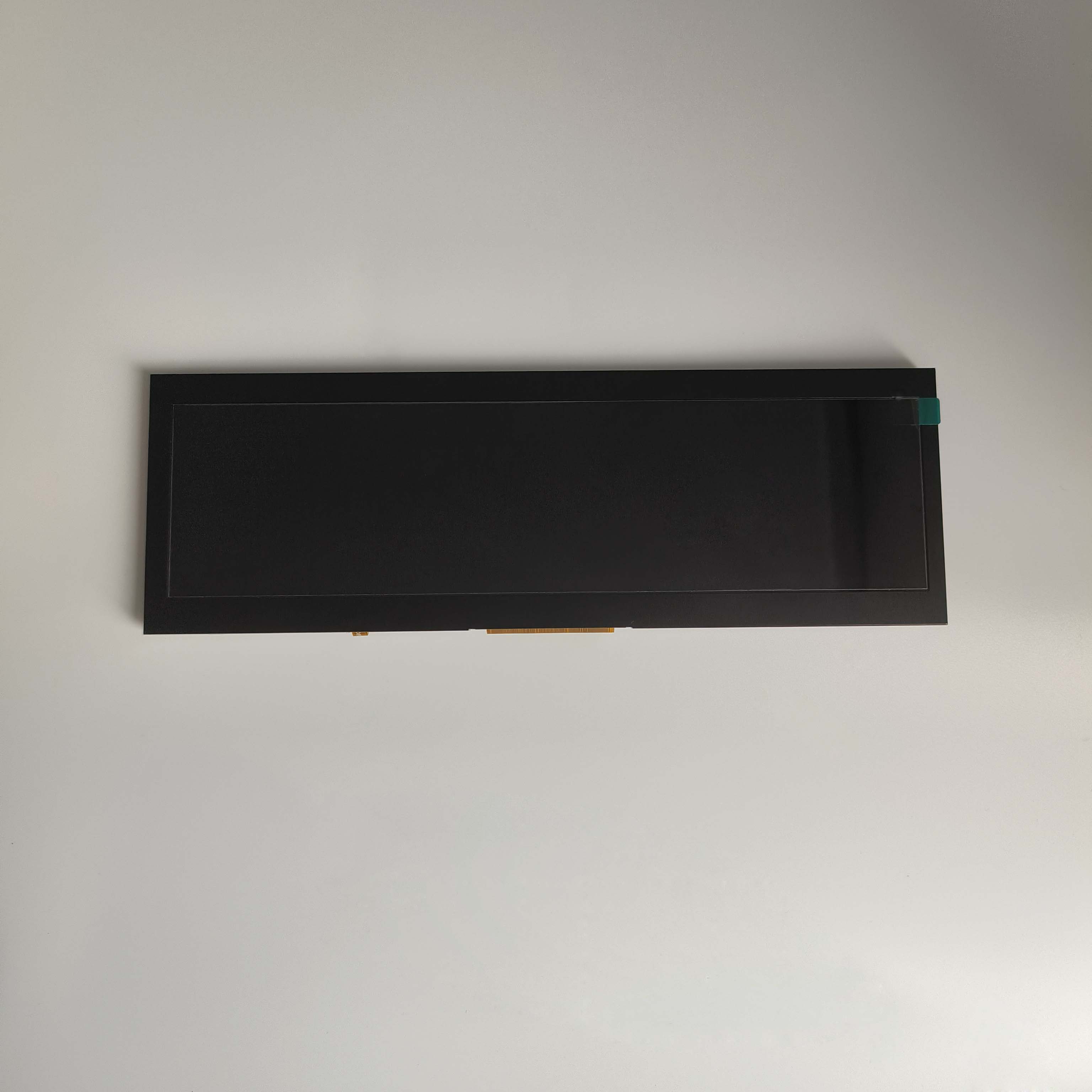
Carbon footprint calculations include both operational emissions from power use and embodied carbon from manufacturing, which is often overlooked in generic comparisons. CDTech’s life cycle analysis, conducted in their 10,000㎡ Shenzhen facility, accounts for both to get accurate, transparent results. The embodied carbon of 10 8-inch bar LCDs is slightly higher than one 55-inch TV, but operational emissions make up 90% of total carbon over 5 years of use. So why does the gap still end up so large for most use cases? Because operational emissions dominate the total footprint for any digital signage that runs more than 12 hours a day. Beyond that, bar LCDs use newer low-power IPS panels that require less backlight power to hit the same brightness levels as older traditional large panels. CDTech’s automated production lines also cut manufacturing waste by 15% compared to industry averages, which lowers embodied carbon even further. Practically speaking, for a coffee shop with 10 menu item bar screens, that adds up to 120kg less CO2 per year, the equivalent of taking a small car off the road for 250 miles. But what happens when you replace the displays after 5 years? CDTech bar LCDs have 50,000 hour certified lifespans, 10,000 hours longer than most consumer-grade large TVs, so you don’t have to replace them as often, which further reduces long-term carbon footprint. For example, a 10-year period will require one set of bar LCDs vs two sets of consumer large TVs, cutting total embodied carbon by almost 40%.
⚠️ Warning: Many carbon footprint comparisons ignore embodied carbon from manufacturing—always ask for full lifecycle data from your display supplier to get accurate results.
| Display Setup | Annual Operational CO2 (kg) | 5-Year Total Carbon (kg) |
|---|
| 10 x CDTech Small Bar LCDs | 195 | 1020 |
| 1 x 55" Traditional TV | 305 | 1560 |
Why are bar LCDs more energy efficient than traditional digital signage panels?
Stretched bar LCD designs use smaller panel sizes and newer low-power backlighting technology that eliminates wasted screen space common with 16:9 traditional panels for segmented content like menus. This targeted design cuts unnecessary power draw significantly.
Most traditional 16:9 large panels are used to display multiple separate content blocks, like menu items or product promotions, which means a lot of the screen is empty or filled with unused black space. But black space on an LCD still requires backlight power, right? That wasted power adds up quickly over months of continuous operation. Bar LCDs are designed to fit each content block into a separate, smaller screen, so you only use power for the content you’re actually displaying. CDTech’s bar LCDs use LED backlighting with local dimming even on small panels, which cuts power use when displaying lighter or partial content. Beyond panel design, CDTech’s advanced TFT manufacturing process reduces power loss from the display’s drive circuitry by 12% compared to generic panels, according to in-house testing from our Shenzhen factory. What other design choices contribute to lower power? Most bar LCDs for signage don’t include unnecessary high-resolution features that waste power, like 4K resolution that can’t be seen by customers from a typical viewing distance. They’re optimized for the exact resolution needed for viewing distance, so you don’t waste power on extra pixels you don’t need. Practically speaking, this targeted design means every watt of power goes to displaying visible content, not wasted space or unnecessary features. Do you really need 8 million pixels on a menu display that customers view from 10 feet away? Probably not, and that’s where bar LCDs save the most power.
⚠️ Pro Tip: Match your display resolution to your typical customer viewing distance—higher resolution doesn’t improve customer experience but does increase power draw by 20% or more.
What are the real-world annual energy cost differences for these setups?
At an average US electricity rate of $0.15 per kWh, 10 small bar LCDs cost $160-$190 per year to run, while a single large traditional TV costs $200-$260 per year. This annual cost savings adds up to thousands of dollars over the full lifespan of the displays.
If 10 bar LCDs run 16 hours a day, 365 days a year, that’s roughly 1100 kWh per year, vs 1600 kWh for a 150W large TV. That’s a 500 kWh annual difference, which is $75 per year at average US rates. Over 5 years, that’s $375 in savings, which more than covers the small up-front cost difference for bar LCDs from CDTech. Beyond energy costs, lower power draw also means less heat generation, which reduces the load on your venue’s HVAC system. In warm climates, that can add another $50-$100 per year in cooling cost savings, that most facility managers don’t account for when comparing display options. But what about venues that run signage 24/7, like airports or gas stations? The savings grow even larger: for 24/7 operation, the annual savings jump to $150 per year, or $750 over 5 years. CDTech’s client case study with a national coffee chain found that switching to bar LCD menu screens cut total display energy costs by 38% across 200 locations, delivering a full payback on the upgrade in just 3.2 years. Practically speaking, any business that runs digital signage for more than 10 hours a day will see a positive return on switching to energy efficient bar LCDs from CDTech. Would you pass up hundreds of dollars in annual savings just to stick with a single large screen? Most businesses don’t, once they see the full long-term cost breakdown.
⚠️ Pro Tip: Don’t forget to factor in HVAC savings when calculating total cost of ownership—lower power draw from displays cuts cooling costs significantly in commercial venues.
Do bar LCDs sacrifice brightness or visibility for lower power use?
Modern high-brightness bar LCDs from trusted manufacturers like CDTech match or exceed the brightness of traditional large TVs, with options up to 1200 nits that work perfectly for indoor and semi-outdoor signage applications.
A common myth is that lower power means lower brightness, but that hasn’t been true for nearly a decade, thanks to advances in LED backlighting and TFT panel technology. CDTech’s bar LCD line uses high-efficiency LED backlights that deliver 1200 nits of brightness at just 12W per unit, which is brighter than most consumer and commercial large TVs that deliver 300-500 nits at 150W total. So how do they get more brightness per watt than traditional large panels? The efficiency of modern small LED chips is far higher than the larger backlight arrays used in big 16:9 panels. Beyond that, bar LCDs don’t have to spread backlight across a huge empty area, so every lumen of brightness goes directly to the content that customers see. If you have 10 small bar screens each displaying a single menu item, every bit of brightness is focused where customers look, instead of being spread across empty black space. Practically speaking, you get better visibility with bar LCDs, not worse, while still using less total power. But what about outdoor or bright sunlit venues? CDTech offers up to 2000 nits bar LCDs for semi-outdoor use, which still draw less total power when you use 10 of them than a single 1500 nit large traditional TV.
⚠️ Pro Tip: For bright indoor venues, aim for at least 700 nits of brightness—CDTech’s standard bar LCDs hit 1200 nits without extra power draw to meet this need.
What certifications back the energy efficiency of CDTech bar LCDs?
CDTech bar LCDs hold multiple global certifications, including Energy Star, ISO14001 for environmental management, and RoHS for restricted hazardous materials, meeting strict global energy and sustainability standards.
As an ISO9001, ISO14001, ISO13485, and IATF16949 certified manufacturer based in Shenzhen, CDTech tests every batch of bar LCDs for power consumption and energy efficiency before it leaves the factory, following a strict zero-defect quality policy. In our 10,000㎡ Shenzhen facility, we use automated power testing equipment to check every panel’s power draw at different brightness levels, ensuring that every unit meets the rated power specs within a 2% tolerance. This level of testing is far more strict than most generic display manufacturers, who only test random sample batches. Beyond that, CDTech’s commitment to sustainable manufacturing reduces the carbon footprint of production itself, with solar panels covering 30% of the factory’s energy needs and zero-waste policies cutting manufacturing emissions by 12% annually. What does this mean for buyers? You don’t have to worry about unsubstantiated energy efficiency claims—every CDTech bar LCD’s power rating is backed by third-party certifications and in-house factory testing. Practically speaking, this also means that your business can qualify for local energy efficiency rebates when you install CDTech bar LCDs, which further lowers your up-front costs. Many businesses don’t know that commercial energy efficiency rebates cover display upgrades, so it’s worth checking local programs to see what extra savings you can get. Would you buy an uncertified display when you can get a certified, tested model from CDTech that saves you more money over time? No, and that’s why so many global brands partner with CDTech for their digital signage display needs.
⚠️ Pro Tip: Always ask for certification documents from your display supplier—uncertified displays often have 15-20% higher actual power draw than their advertised ratings.
CDTech Expert Insight
As a leading LCD manufacturer with over 12 years of experience producing bar LCDs for digital signage, CDTech has tested hundreds of display setups to verify power and carbon footprint claims. Our data consistently shows that 10 small bar LCDs deliver lower total power use, smaller carbon footprints, and lower long-term costs than a single large traditional TV, while offering more flexible content layout for venues like restaurants and retail. CDTech’s zero-defect policy and third-party certified energy ratings ensure you get the efficiency you expect, every time.
FAQs
Are bar LCDs more expensive up-front than a single large TV?
For comparable commercial quality, 10 small bar LCDs have a similar up-front cost to one high-quality commercial large TV, and the energy savings pay back any difference in 2-3 years for most venues. CDTech also offers custom volume pricing for large multi-location deployments.
Can I replace my existing large menu TV with bar LCDs easily?
Yes, CDTech provides complete HDMI display solutions that work with most existing digital signage content management systems, so you don’t have to replace your entire system to switch to energy efficient bar LCDs.