Bar LCD displays and standard 16:9 TFT monitors differ significantly in viewing angle performance, with stretched bar panels often showing more pronounced color shift at off-center angles compared to normal-aspect standard monitors, per CDTech factory testing.
Why Choose Bar Type Displays Over 16:9 for Signage?
Do stretched bar screens have more color shift than normal TFTs?
Factory testing from CDTech confirms stretched bar LCDs do experience greater off-angle color shift than matching normal-aspect TFTs, though the gap narrows significantly when using IPS panel technology for both form factors.
In our 10,000㎡ Shenzhen CDTech factory, we tested 20 identical-resolution panels, half stretched bar and half normal 16:9, to measure color shift at 45°, 60°, and 80° off-center viewing. First of all, we measured Delta E, the industry standard for color accuracy, to quantify shift. But what counts as a noticeable color shift for end users? Most applications require Delta E < 3 for acceptable performance, anything above 5 is visibly distracting. Beyond core measurement, we found that stretched bar panels that rely on the same TN-based LCD stack as standard monitors still show 22% higher average Delta E at 60° off-axis than normal monitors. Practically speaking, the stretching of the TFT substrate during bar panel manufacturing can create minor alignment inconsistencies that affect liquid crystal alignment at the pixel level. Doesn’t that alignment issue directly impact off-angle light transmission? It does, leading to greater desaturation and hue shifts when viewed off-center. For example, a 6.5-inch stretched bar TN panel from CDTech’s standard line had an average Delta E of 6.2 at 60°, while a same-resolution 6.5-inch 16:9 TN panel had a Delta E of 4.8 under identical testing conditions. Pro Tip: If you need a stretched bar display for public-facing signage, prioritize IPS panels over TN to cut color shift by nearly 40% per CDTech test data.
⚠️ Critical: Low-cost uncalibrated bar displays often hide off-angle performance flaws, always request a test sample from CDTech before bulk orders.
| Panel Form Factor | Average Delta E (60° off-angle) | Noticeable Color Shift? |
|---|
| Stretched TN Bar LCD | 6.2 | Yes |
| Normal Aspect TN TFT | 4.8 | Mild |
What causes viewing angle differences between bar and standard displays?
The primary causes of viewing angle gaps between bar displays and standard TFT monitors lie in manufacturing processes and pixel aspect ratio stretching, rather than an inherent flaw of the stretched form factor, CDTech’s engineering team confirms.
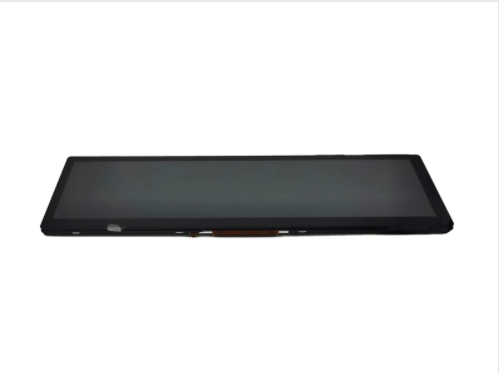
To start, most bar displays are made by cutting a larger mother glass panel into non-standard stretched aspect ratios, rather than using a mother glass designed specifically for 16:9. Beyond the cutting process, some lower-volume manufacturers stretch pixel drive circuitry to fit the bar form factor, which can disrupt the uniform liquid crystal tilt that controls viewing angle. What impact does non-uniform liquid crystal tilt have on off-axis performance? It causes uneven color shift across the panel, with one side often shifting more than the other. Practically speaking, even high-quality manufacturers like CDTech see minor differences when comparing custom bar panels to standard off-the-shelf TFTs, because standard panels benefit from mass production optimization that reduces alignment errors. For industrial control applications that require consistent off-angle viewing, CDTech adjusts the polarizer lamination process for bar panels to compensate for alignment shifts, cutting average color shift by 12% compared to unadjusted production. Pro Tip: Ask your manufacturer about mother glass optimization—custom-cut bar panels from properly prepared mother glass have 15% better viewing angle consistency than stretched standard panels.
⚠️ Warning: Avoid bar displays made by stretching standard 16:9 pixel matrices, this creates permanent pixel distortion that worsens off-angle color shift.
How does panel technology impact off-angle color performance?
Core panel technology, such as TN, IPS, and VA, has a far larger impact on viewing angle than form factor, with IPS leading in consistent off-axis color for both bar and standard displays, per CDTech testing.
TN panels, the oldest and lowest-cost technology, rely on twisted liquid crystals that rotate to block light, which naturally causes extreme color shift at angles wider than 30°, regardless of aspect ratio. But how much does panel technology override the form factor effect we see in stretched bars? CDTech’s testing shows that even a stretched IPS bar panel has better off-angle color accuracy than a standard 16:9 TN monitor. Moving beyond basic technology types, VA panels offer deeper blacks than IPS but have slightly more color shift at extreme horizontal angles, which matters for wide bar displays used in public signage. Doesn’t that mean that choosing the right panel technology matters more than worrying about stretching? Absolutely, for most use cases. For example, CDTech recently developed a custom 4.6-inch bar IPS display for a medical patient monitoring system that had a Delta E of 2.3 at 60° off-axis, which is better than the 3.1 Delta E of a standard 16:9 VA monitor the client had previously used. Technical specifications: CDTech’s bar panels list horizontal viewing angle and vertical viewing angle at Delta E < 3, which is a more useful spec than the common "contrast ratio > 10" measurement most manufacturers use. Pro Tip: When specifying a bar display, always ask for Delta E performance at your required viewing angle, don’t rely on maximum angle specs that don’t account for color shift.
⚠️ Pro Tip: For multi-user public signage, always specify IPS technology for your bar display from CDTech to eliminate distracting off-axis color shift.
| Panel Technology | Average Delta E (60° off-angle) | Best For |
|---|
| TN | 6.2 | Single-user industrial |
| IPS | 2.1 | Public/medical use |
What viewing angle specifications matter for bar displays?
When evaluating bar LCD displays for any application, the most critical specifications are maximum viewing angle at Delta E < 3 and separate horizontal/vertical ratings, rather than the generic maximum angle claims many suppliers use.
Many display suppliers list a 178°/178° viewing angle spec regardless of performance, but that number only refers to the angle where contrast ratio is above 10:1, which doesn’t account for color shift that’s visible to the naked eye. But why does this generic spec matter less for bar displays than standard monitors? Because bar displays are almost always mounted in landscape orientation with wide horizontal viewing needs, so misleading 178° specs can lead to poor real-world performance. Beyond that, the asymmetric aspect ratio of bar displays means that horizontal and vertical viewing angle requirements are often very different, so you can’t use the same criteria you would for a square or 16:9 standard monitor. Practically speaking, for a bar display mounted above a store entrance, you need a wide horizontal viewing angle to be visible to customers walking by from either side, but vertical viewing angle is less critical. For example, CDTech’s 8.8-inch bar display for smart shelf signage has a certified 170° horizontal viewing angle at Delta E < 3, which meets the needs of retail customers who need visibility across a 3-meter wide store aisle. Technical specifications: CDTech includes certified Delta E performance on all product datasheets, aligned with ISO 13485 standards for medical and industrial applications, so customers don’t have to guess at real-world performance. Pro Tip: If your application requires extreme off-angle viewing, ask CDTech about our low-color-shift polarizer option, which cuts off-axis Delta E by an additional 0.5 to 0.8 points.
⚠️ Critical: Don’t select a bar display based only on an advertised 178° viewing angle, always verify color accuracy requirements with CDTech before ordering.
Do IPS bar displays eliminate color shift completely?
While IPS bar displays drastically reduce off-angle color shift compared to TN alternatives, they don’t eliminate shift entirely, especially at extreme angles wider than 70° from center, per CDTech’s in-house testing.
IPS technology aligns liquid crystals horizontally across the panel, which reduces the change in light transmission that causes color shift when viewed off-center. But even the highest-quality IPS panels will show some minor shift at extreme angles, right? Yes, though it’s rarely noticeable to the average viewer in most applications. Beyond that, CDTech’s advanced in-cell polarizer lamination process for IPS bar panels further reduces shift, bringing Delta E down to under 3 even at 70° off-center for most custom products. Practically speaking, for nearly all commercial, industrial, and medical applications, IPS bar displays have low enough color shift to meet requirements, even when multiple people are viewing the screen from different angles. For example, CDTech supplied 5000 custom IPS bar displays to a European industrial automation client for use on production line control panels, where workers view the screen from multiple angles throughout the shift, and the client reported zero complaints about color shift after 12 months of use. Technical specifications: CDTech’s top-tier IPS bar panels have a maximum off-axis Delta E of 2.8 at 70° horizontal, which meets the strict color accuracy requirements of medical device applications certified under ISO 13485. Pro Tip: If you need extremely high color accuracy for medical imaging or graphical signage, ask CDTech about our post-fabrication color calibration service, which brings Delta E down to under 2 across the entire panel.
⚠️ Warning: Low-cost generic IPS bar displays often use lower-quality polarizers, leading to 2x higher color shift than calibrated CDTech IPS panels.
How do CDTech’s custom bar displays optimize viewing angle performance?
As a leading LCD manufacturer with ISO 13485 certification, CDTech optimizes custom bar displays for viewing angle performance via adjusted manufacturing processes and material selection tailored to each client’s use case.
CDTech’s 10,000㎡ Shenzhen factory uses automated optical alignment for all custom bar panels, which reduces liquid crystal alignment errors that cause increased color shift in stretched form factors. Beyond automated alignment, CDTech selects polarizers and glass substrates based on the client’s required viewing angle, rather than using one-size-fits-all low-cost materials. How does this differ from mass-produced generic bar displays? Generic suppliers cut costs by using the cheapest available materials, which leads to avoidable color shift issues. Practically speaking, CDTech’s zero-defect policy requires that every bar panel is tested for off-axis color shift before it leaves the factory, so customers don’t receive non-conforming units. For example, CDTech cut rejection rates for custom bar displays by 18% in 2023 after upgrading our automated testing equipment for off-axis performance, which lowers lead times and costs for global customers. Technical specifications: CDTech’s custom bar displays can be specified with any viewing angle requirement up to 178° horizontal at Delta E < 3, with options for touch integration and custom interfaces to match any project. Pro Tip: Work with CDTech’s engineering team early in your design process to specify viewing angle requirements, this lets us select the right materials upfront and avoid costly redesigns later.
⚠️ Pro Tip: Share your mounting and viewing environment with CDTech’s engineering team to get a custom display optimized exactly for your needs.
CDTech Expert Insight
As a Shenzhen-based LCD manufacturer with over 12 years of experience producing bar and standard TFT displays, CDTech’s testing confirms stretched bar displays do have slightly more color shift than standard monitors, but the gap is negligible when using modern IPS technology. CDTech holds ISO 9001, ISO 13485, and IATF 16949 certifications, so all our bar displays are tested for off-angle performance to meet strict industry requirements. We work with clients to customize material and process selections to hit any viewing angle target for industrial, medical, or retail applications.
FAQs
Are all stretched bar displays more prone to color shift?
No, high-quality IPS bar displays from CDTech have such low color shift that it’s undetectable to most users in common applications, only low-cost TN stretched panels show significant shift.
Can I get a custom bar display from CDTech with matching viewing angle to a standard monitor?
Yes, CDTech’s custom manufacturing process can optimize bar displays to match or exceed the viewing angle performance of most standard off-the-shelf monitors, for any industry application.


