An industrial grade FHD display meets rigorous testing standards like vibration per MIL-STD-810, thermal shock cycles from -30°C to +85°C, EMI per IEC 61000-4, and carries certifications including IATF16949 and ISO13485. These prove durability in harsh environments, ensuring no performance loss unlike consumer displays.
Check: New Products
Why Do "Industrial Grade" Claims Matter—And How Are They Verified?
Industrial grade claims matter because they verify displays endure vibration, heat, and EMI in 24/7 operations from -30°C to +85°C, unlike consumer panels limited to controlled settings. Verification uses IEC standards, MIL-STD-810, and certifications like CDTech's ISO9001, ISO14001, ISO13485, and IATF16949 for third-party proof and zero-defect quality.
Consumer displays fail under stress, causing OEM warranty costs, while FHD panels with high pixel density face greater thermal stress on TFT layers. CDTech's quad certifications ensure transparent testing, distinguishing verified ruggedness from vague marketing labels.
Consumer displays suit 8–12 hours/day; industrial ones handle continuous harsh conditions.
Unverified claims lead to high replacement expenses.
CDTech's framework supports FHD reliability across automotive and medical uses.
How Do Vibration Testing Protocols Ensure FHD Display Reliability?
Vibration testing per MIL-STD-810H Method 514.8 uses sine/random sweeps from 5–500 Hz to confirm FHD displays tolerate 8–10G acceleration without dead pixels or brightness loss. CDTech's IATF16949 compliance tests solder joints, polarizers, and backlights for 10-year lifespans in vehicles and machinery.
FHD challenges include stress on dense pixels and bonding layers. Pass criteria demand zero defects and stable performance post-test. CDTech exceeds baselines for automotive products like the 12.3" S123BWU11EP with LVDS interface.
| Test Type | Frequency Range | Duration | FHD Pass Criteria | Application |
|---|
| Sine Sweep | 5–500 Hz | 2 hours | <2% brightness variance | Industrial machinery, vehicles |
| Random Vibration | Broad spectrum | 4 hours | Zero dead pixels post-test | Heavy equipment, rugged systems |
| Shock (Half-sine) | 10–18G | 3 pulses | Display remains functional | Automotive crash tolerance |
What Thermal Shock Testing Reveals About Industrial FHD Display Durability?
Thermal shock testing via IEC 60068-2-14 cycles rapid shifts like -30°C to +85°C, checking LCD viscosity, solder stress, and OCA bonding. FHD panels pass with ΔE <3 color accuracy and no delamination, vital for CDTech's wide-temp displays like S101HWX53EP-FC47-AG.
High pixel density amplifies risks; OCA bonding from CDTech's 2017 glass-cutting patent enhances resilience by reducing stress points. Tests simulate storage to operation extremes in industrial and vehicle settings.
Cycles mimic -20°C to +70°C environments.
OCA improves resistance by 40–60% over air-gap designs.
CDTech's 2024 equipment validates custom FHD panels quickly.
How Does EMI Testing Protect FHD Displays in High-Interference Environments?
EMI testing per IEC 61000-4 ensures FHD displays resist 20V/m fields without flicker or signal loss from LVDS lines and backlights. CDTech's IATF16949-compliant setup uses shielding like Faraday cages for stability near motors or RF sources in automotive applications.
Check: Touch screen LCD display manufacturer
FHD vulnerability stems from high-speed signals; tests prevent ghosting in welding or vehicle ECU proximity. CDTech's 2024 upgrades integrate EMI with other protocols for comprehensive validation.
Shielding includes ferrite cores and PCB designs.
FHD requires faster response than lower resolutions.
Ensures reliability in power-heavy industrial networks.
What Role Do Certifications (ISO13485, IATF16949) Play in Defining Industrial Grade?
Certifications like ISO9001 ensure quality repeatability, ISO14001 environmental compliance, ISO13485 medical reliability, and IATF16949 automotive zero-defect standards. CDTech's quad certifications validate system-wide testing for FHD displays in safety-critical uses, beyond single-unit checks.
They require calibrated equipment, training, and audits by bodies like TÜV, proving batch consistency for sectors like medical and vehicles.
| Certification | Focus Area | FHD Display Relevance | Industries Served |
|---|
| ISO9001 | Process quality | Batch-level consistency | All industrial sectors |
| ISO14001 | Environmental management | Sustainable disposal of test units | Manufacturing-heavy regions |
| ISO13485 | Medical device safety | Sterility, biocompatibility, reliability | Healthcare, surgical suites |
| IATF16949 | Automotive excellence | Zero-defect, design FMEA, supply chain | Vehicles, autonomous systems |
How Does OCA Optical Bonding Enhance Industrial FHD Display Testing Resilience?
OCA bonding uses clear adhesive to eliminate air gaps, boosting vibration, thermal, and EMI resistance via monolithic structure. CDTech's in-house capability in its 3,500㎡ dust-free workshop ensures >92% transmittance and strong adhesion post-tests for products like S121BWX05EP-FC10.
The 2017 glass-cutting patent prevents edge stress; tests confirm salt-spray durability. OCA reduces failures by 35–50% in automotive and medical FHD panels.
Uniform stress distribution aids thermal shock.
Enhances metallic frame EMI shielding.
CDTech automates OCA for custom FHD validation.
CDTech Expert Views
"Our 3,500㎡ dust-free workshop and quad-certification framework enable custom FHD displays to pass automotive-grade testing (IATF16949) reliably. The key differentiator is our proprietary OCA glass-cutting patent combined with 2024 auto-equipment for integrated vibration, thermal, and EMI validation—catching defects before they reach the field." – CDTech Quality Assurance Team
What Does a Complete Industrial FHD Testing Protocol Look Like in Practice?
A complete protocol sequences electrical checks, environmental stress (vibration/thermal), EMI, and QA over 6–8 weeks. CDTech's zero-defect method uses FAI, batch sampling (AQL 1.0), and HALT to cut field failures >95% with full traceability.
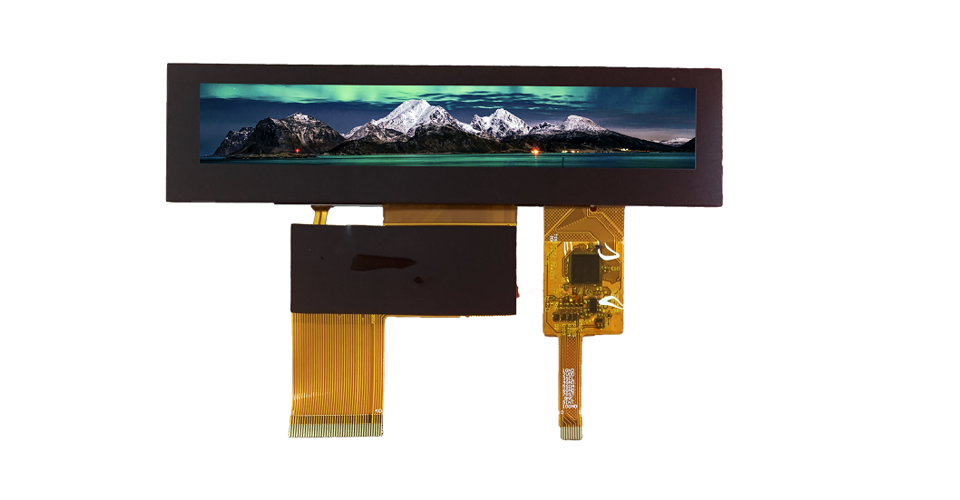
Customization adds sterility for medical or FMEA for automotive, ensuring reliability for displays like the 12.1" industrial LCD with OCA.
FAI verifies designs pre-production.
HALT simulates 10-year life in weeks.
Documentation includes root-cause analysis.
How to Choose an Industrial Grade FHD Display Supplier You Can Trust?
Choose suppliers with visible certifications, test reports, and case studies like CDTech's 13+ years, National High-tech status, and exports to Europe, Americas, and beyond. Verify ISO-calibrated labs and in-house OCA/EMI capabilities for quick iterations.
Red flags include unproven claims; CDTech offers custom protocols and 24-hour responses for trusted partnerships.
Request audit factory certifications.
Review multi-market references.
CDTech excels in application-specific testing.
Conclusion
Industrial grade FHD displays earn the label through proven vibration, thermal shock, EMI testing, and certifications like CDTech's ISO9001, ISO14001, ISO13485, IATF16949. High pixel demands pair with OCA bonding and zero-defect policies for harsh automotive, medical, industrial use. CDTech's factory, patents, and expertise deliver reliable solutions reducing OEM risks.
Ready to specify? Contact CDTech at +86 0755-23032202 (WhatsApp: +8613556818296) or sales@cdtech-lcd.com. Visit www.cdtech-lcd.com for certified products.
FAQs
What's the difference between "industrial grade" and "commercial grade" FHD displays?
Commercial-grade suit 8–12 hours/day controlled settings with basic IEC tests. Industrial-grade endure 24/7 extremes (-30°C~+85°C), vibration (MIL-STD-810), EMI, verified by IATF16949/ISO13485, with 5–10 year warranties and reports. CDTech certifies for harsh apps.
Is an FHD display always better than a lower-resolution industrial display?
No; FHD (1920×1080) fits detail-heavy medical/automotive needs but demands rigorous testing due to pixel stress. Lower res like WXGA save costs for controls. CDTech tailors testing for both, e.g., 12.3" 1920×720 vehicle panels.
How often should industrial FHD displays be retested after manufacturing?
Production includes FAI and sampling; retest field units only if degraded or stressed. Annual OEM checks on inventory advised. CDTech supplies shelf-life data for extremes.
Can I request custom testing protocols for my specific FHD display application?
Yes; CDTech designs per environment (e.g., higher G-forces, salt-spray), aligning with IATF16949/ISO13485. Development takes 2–4 weeks—contact sales with details.
Why does OCA bonding matter for industrial FHD displays undergoing thermal shock testing?
OCA eliminates air gaps for even stress, resisting delamination in -30°C~+85°C cycles better by 40–60%. CDTech's patent ensures clarity post-test, key for vehicle/medical reliability like S101HWX53EP-FC47-AG.


