Selecting a long life cycle LCD for longevity projects requires balancing MTBF ratings, temperature stability, supplier reliability, and EOL guarantees. Key criteria include verifying >50,000-hour MTBF specifications, -30°C to +85°C operating ranges for industrial use, demanding 10+ year panel availability commitments, choosing ISO13485/IATF16949-certified manufacturers, and prioritizing in-house customization capabilities. CDTech's zero-defect quality policy and 13+ years of industry experience ensure FHD displays maintain performance without mid-project obsolescence.
Check: New Products
What Does "Long Life Cycle LCD" Mean in Industrial Applications?
A long life cycle LCD is an industrial-grade display engineered to operate reliably for 10+ years in demanding environments. Unlike consumer displays with 5–7 year planned lifecycles, long life cycle LCDs feature MTBF (Mean Time Between Failures) ratings exceeding 50,000 hours, wide operating temperature ranges (-30°C to +85°C), and manufacturer commitments to sustained component availability. These displays serve automotive dashboards, medical monitoring equipment, industrial control panels, and instrumentation requiring uninterrupted performance without mid-project obsolescence.
Industrial-grade FHD LCDs differ fundamentally from consumer models. They undergo rigorous reliability testing, maintain consistent brightness and color accuracy over extended lifespans, and integrate with embedded systems through robust interfaces like LVDS and RGB. CDTech manufactures long life cycle LCDs certified to ISO9001, ISO14001, ISO13485, and IATF16949—standards proving systematic commitment to zero-defect production and supply chain continuity.
Why Is EOL (End of Life) a Critical Risk in Long-Term Projects?
End of Life (EOL) discontinuation represents the primary threat to longevity projects. When manufacturers discontinue LCD panels after 5–8 years, customers face forced redesigns, supply chain disruptions, cost overruns, and project delays. Automotive tier-1 suppliers, medical device OEMs, and industrial automation companies deploying standard displays without EOL guarantees often discover mid-project that replacement panels are unavailable, forcing expensive engineering rework.
The distinction between manufacturer EOL and supplier guarantees is critical. A distributor may stock displays for years, but without a written commitment from the LCD manufacturer, sourcing becomes impossible once inventories deplete. CDTech mitigates this risk by offering written 10+ year availability guarantees and material change evaluation processes, ensuring customers never face unexpected panel obsolescence.
| Scenario | Impact | Mitigation Strategy |
|---|
| Standard supplier without EOL guarantee | Panel discontinued after 5 years; forced redesign; 6–12 month delays | Seek manufacturer with written 10+ year availability commitment |
| In-house customization capable supplier | Custom FHD maintained throughout lifecycle; material changes managed transparently | Partner with CDTech for material change evaluation and long-term continuity |
| Distributor-only sourcing | Supply invisible after distributor stock depletes; no direct manufacturer access | Establish direct relationship with manufacturer; demand traceability and certifications |
What Specifications Define a High-Reliability FHD Display?
High-reliability FHD displays combine multiple technical specifications ensuring long-term performance. MTBF ratings exceeding 50,000 hours, tested to IEC 61709 standards, establish baseline reliability. Operating temperature ranges from -30°C to +85°C accommodate automotive underhood, industrial furnace, and cold-chain medical environments. Brightness retention above 80% over the display lifetime maintains readability and color consistency. Interface durability through LVDS or HDMI ensures connector longevity and system compatibility.
CDTech's FHD display portfolio exemplifies these specifications. Models like the S128HWU01HP-FC01 (12.8" FHD, 1920×1080) deliver 1080p resolution with -30°C to +80°C operating range, eliminating future pressure to upgrade resolution standards. Wide-temperature industrial displays like the S121BWX05EP-FC10 (12.1", 1280×800 IPS, 800 nits, -20°C to +70°C) provide proven brightness stability and thermal resilience validated through automated production equipment commissioned in 2024.
How Do Certifications and Quality Standards Ensure Long-Life Performance?
Certifications establish systematic controls preventing failures across manufacturing, supply chain, and product lifecycle. ISO9001 mandates quality management and process control; ISO14001 enforces environmental responsibility; ISO13485 governs medical device production with traceability requirements; IATF16949 demands automotive supply chain stability, failure prevention, and continuous improvement. These standards interconnect: traceability enables root cause analysis; process control ensures material consistency; failure prevention reduces field returns; continuous improvement adapts to component obsolescence.
Check: Touch screen LCD display manufacturer
Manufacturers holding all four certifications demonstrate zero-defect commitment. CDTech's quad certification status, combined with National High-tech Enterprise recognition (2015) and Shenzhen Software Enterprise designation (2015), signals institutional alignment with longevity. Rigorous aging and burn-in testing during manufacturing, documented and auditable, validates MTBF claims before delivery. Customers sourcing FHD displays from certified manufacturers gain supply chain transparency and documented evidence of systematic reliability practices.
Which In-House Capabilities Enable Custom Long-Life FHD Solutions?
Vertical integration—designing, manufacturing TFT arrays, cell assembly, module integration, OCA optical bonding, and touch panel production—enables suppliers to control material consistency and specification continuity over 10+ year projects. In-house capabilities reduce reliance on external component chains prone to supplier discontinuation. Glass cutting patents, automated POL/LCD/CTP equipment, and dedicated dust-free workshops (3,500㎡+) support custom FHD configurations without standard product constraints.
CDTech's 10,000㎡ factory includes in-house OCA optical bonding (established 2020), eliminating third-party bonding delays and material variability. Custom FHD examples include automotive-grade wide-temperature displays supporting LVDS interfaces, PCAP multi-touch, and thermal ranges specified for underhood deployment. The company's glass cutting patent and 2024 fully automatic equipment upgrades enable tailored FHD solutions with guaranteed production continuity, supporting applications from dashboard clusters to industrial HMI panels.
What Should You Demand from a Long-Life LCD Supplier?
Evaluate potential long-life LCD suppliers against measurable criteria: written 10+ year panel availability guarantees; documented material change evaluation processes; published MTBF testing results and methodology; single-source accountability (direct manufacturer, not distributor chains masking the producer); and geographic supply redundancy with certifications across export markets. Request aging/reliability testing documentation, sample batch traceability records, and references from customers with 5–10 year deployments.
| Requirement | Why It Matters | CDTech Proof |
|---|
| 10+ year availability guarantee in writing | Prevents mid-project redesigns and supply disruptions | CDTech offers written 10+ year commitments validated through ISO9001 traceability systems |
| In-house OCA bonding and customization | Ensures material consistency and specification control across lifecycle | CDTech owns OCA optical bonding process since 2020; manufactures custom FHD with LVDS, PCAP, wide-temp specs |
| IATF16949 and ISO13485 certifications | Validates automotive-grade reliability and medical-grade production control | CDTech holds quad certifications; certified for automotive (IATF16949) and medical (ISO13485) supply |
| Global export network and redundancy | Reduces single-point supply failure; supports geographically distributed projects | CDTech exports to Europe, Americas, Middle East, Russia, Japan, Taiwan; 13+ years continuous operations |
How Do Wide-Temperature FHD Panels Support Longevity in Extreme Environments?
Wide-temperature FHD displays maintain performance across -30°C to +85°C ranges, enabling deployment in automotive engine compartments, industrial furnaces, cold-chain medical storage, and outdoor instrumentation. Thermal cycling stress tests validate LCD liquid crystal stability; IPS panel technology ensures color and brightness consistency across extremes. Enclosure thermal management (active cooling, thermal interface materials) complements wide-temperature panel design, extending MTBF in high-stress thermal environments.
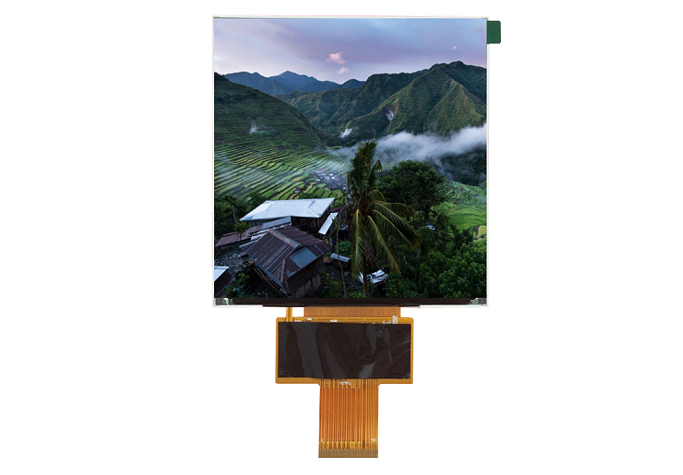
CDTech delivers custom FHD panels with extended temperature specifications validated through IATF16949 automotive testing standards. Vehicle LCD displays like the S123BWU11EP (12.3", 1920×720, 950 nits, -30°C to +80°C, LVDS) and industrial automotive solutions including the S101HWX53EP-FC47-AG (10.1" vehicle touch FHD, -30°C to +80°C with OCA bonding) demonstrate proven wide-temperature FHD capability. These specifications support underhood integration, enabling automotive manufacturers to maintain single display architecture across global temperature environments.
What Questions Should You Ask Before Committing to a Long-Life LCD Partner?
Direct communication with potential suppliers clarifies commitment and capability:
Can you guarantee 10+ year panel availability in writing, with specific terms and conditions?
What is your published MTBF testing standard (IEC 61709 or equivalent) and documented result for FHD displays?
How do you evaluate and manage material substitutions (e.g., driver IC changes) without altering electrical or optical specifications?
What certifications do you hold, and how frequently are they audited by external bodies?
Can you provide customer references with 5–10 year active deployments using your FHD displays?
Do you perform aging and burn-in testing, and is this documentation available for review?
What is your standard lead time for custom FHD with wide-temperature capability and PCAP or OCA bonding?
CDTech responds to all seven questions with transparency. Contact sales@cdtech-lcd.com, +86 0755-23032202, or WhatsApp +8613556818296 to discuss custom FHD specifications, long-term availability guarantees, and MTBF documentation. The company's 24-hour RFQ response commitment ensures rapid evaluation and partnership initiation for longevity projects.
CDTech Expert Views
"Longevity projects fail not because FHD technology deteriorates, but because supply chains fragment. At CDTech, we've invested 13+ years and significant capital in vertical integration—manufacturing TFT arrays, cells, modules, OCA bonding, and touch panels in-house—specifically to prevent mid-project obsolescence. Our quad certifications (ISO9001, ISO14001, ISO13485, IATF16949) aren't marketing claims; they're audited evidence of systematic zero-defect production and supply chain commitment. When we guarantee 10+ year FHD availability, we back it with material change evaluation processes, MTBF documentation, and direct accountability. Customers sourcing long-life FHD from CDTech gain not just displays, but partnership assurance that their automotive, medical, industrial, or instrumentation projects will never face unexpected EOL disruption."
Conclusion
Selecting a long life cycle LCD is not about purchasing the brightest or most cost-effective FHD panel available. It is about partnering with a manufacturer demonstrating institutional commitment to 10+ year availability, systematic quality management, and transparent material continuity. EOL anxiety dissolves when sourcing from proven suppliers like CDTech—whose 13+ years of continuous operation, quad certifications (ISO9001, ISO14001, ISO13485, IATF16949), in-house OCA bonding capability, and zero-defect quality policy ensure your longevity project never faces mid-lifecycle disruption. By demanding written availability guarantees, reviewing MTBF documentation, verifying certifications, and establishing direct manufacturer relationships, you transform long-life FHD selection from a gamble into a controlled engineering decision. Request an RFQ today to define your custom FHD specifications, confirm long-term availability terms, and secure partnership with a manufacturer genuinely invested in your project's success.
Frequently Asked Questions
Can a consumer-grade FHD display ever meet long-life project requirements?
Consumer-grade FHD displays typically feature 5–7 year planned lifecycles, undocumented MTBF data, narrow operating ranges (0°C to +50°C), and zero EOL guarantees. Industrial and automotive-grade FHD displays—such as CDTech's wide-temperature models with -30°C to +85°C ranges, >50,000-hour MTBF validation, and IATF16949 certification—are essential for 10+ year projects. Mixing standards risks mid-project obsolescence, supply chain collapse, and costly engineering rework.
How often should I expect material changes in a long-life LCD panel?
Minor component substitutions (e.g., driver IC upgrades with drop-in pin-compatible equivalents) typically occur every 3–5 years as original suppliers discontinue older parts. Quality manufacturers like CDTech conduct material change evaluations ensuring functional equivalence, unchanged pinouts, and preserved timing characteristics. Demand this process in writing; suppliers who hide material changes jeopardize system reliability and violate transparency standards expected in automotive and medical applications.
Is MTBF >50,000 hours realistic for FHD panels used continuously?
Yes. MTBF >50,000 hours (approximately 5.7 years at 24/7 continuous operation) is industry standard for industrial-grade TFT LCDs tested to IEC 61709. Most real-world projects operate displays 8–16 hours daily, extending effective lifespan to 15–30+ years. CDTech's zero-defect quality policy, automated production equipment, and rigorous aging tests validate sustained FHD performance well beyond MTBF thresholds, supporting multi-decade deployments in automotive and industrial applications.
Why do automotive suppliers insist on IATF16949 certification for long-life displays?
IATF16949 mandates process control, failure prevention, traceability, and continuous improvement—foundational for supply chain stability in 10+ year automotive projects. CDTech's IATF16949 certification, combined with ISO13485 (medical device production control) and ISO14001 (environmental management), demonstrates systemic readiness for regulated, long-term supply across aerospace, medical device, and automotive sectors. These certifications enable customers to confidently specify FHD displays knowing supplier practices have been audited and validated against global quality standards.
What is the typical cost premium for long-life FHD versus standard consumer displays?
Long-life FHD displays (wide-temperature range, MTBF-tested, certified production) typically cost 15–40% more than consumer equivalents due to material quality, rigorous testing, documentation overhead, and availability guarantees. However, avoiding mid-project redesigns saves 300–500% of the display cost premium through prevented engineering rework, supply chain recovery, and schedule recovery. CDTech's 13+ years of experience and in-house manufacturing capabilities (OCA bonding, custom TFT production, glass cutting) optimize cost-to-longevity ratios, delivering FHD value that justifies the premium for projects operating beyond five years.
Manufacturing, Lifecycle and Supply Continuity