LCD Screen Compatibility Analysis for Device Models
Views: 295Author: Site EditorPublish Time: 2026-10-03Origin: Site
A replacement panel that matches the size and resolution of the original can still fail on the bench. Compatibility in displays is decided by five or six independent properties, and a substitution that matches only the visible ones produces a product that boots, shows an image, and then fails on timing, brightness or connector orientation. A short structured analysis removes most of that risk before a sample is ordered.
What has to match for a panel to be compatible?
Six properties, not two.
Compatibility requires the active area and outline, the connector and pinout, the timing and interface, the supply and drive requirements, the optical performance and the qualification evidence to match, not just the size.
The visible properties are the ones buyers check first and the ones least likely to cause a failure, because a panel with the wrong resolution is obvious immediately. The expensive mismatches are electrical and mechanical: a pinout that is mirrored, a timing parameter outside the host's range, a backlight that needs a different current, a connector that sits on the other side of the tail, or a drive rail the existing supply cannot produce. Each of those produces a board that needs a change, and each is detectable from documents before anything is purchased. The analysis is therefore a document comparison exercise that takes an hour rather than a week.
How is a compatibility analysis structured?
Six checks in a fixed order.
The analysis runs from the outline inwards: mechanical fit, then connector and pinout, then timing and interface, then supply and drive, then optics, and finally the qualification evidence for the specific model.
Working in that order means the cheapest failures are found first. A panel that does not fit the opening is rejected before anyone studies its timing table, and a panel that fits but cannot be driven by the existing host is rejected before a sample is built. The order also mirrors the cost of being wrong: a mechanical mismatch costs an enclosure change, an electrical mismatch costs a board change, and an optical mismatch may cost only a firmware adjustment. Recording the checks in one table makes the analysis repeatable across models and gives a buyer something to hand to a supplier when asking for a cross-reference.
The table also becomes the record for the next substitution. Each completed row says what was compared, what the source document was and what the answer was, so a later candidate can be assessed against the same structure instead of from the beginning. In practice this reduces the second analysis to a review of the rows that changed, which is usually the timing and the optics, and it makes a supplier's cross-reference claim verifiable rather than persuasive. For a device that will be supported for many years, that record is worth more than the first replacement itself, because it is what allows the third and fourth substitutes to be qualified without repeating the whole exercise.
Which checks fail most often?
Pinout, timing and backlight current.
The six compatibility checks and what each failure costs.
Check
What is compared
Cost of a mismatch
Mechanical
Active area, outline, mounting, connector position
Enclosure or bezel change
Connector and pinout
Pitch, orientation, pin assignment, tail
New cable or board revision
Timing and interface
Pixel clock, blanking, lane count, protocol
Firmware or host change, or unusable
Supply and drive
Rail voltages, current, inrush, sequencing
Supply redesign
Optics
Luminance, uniformity, colour, viewing cone
Firmware tuning or a rejected sample
Qualification
Operating range, vibration, humidity, life
Field failures after release
The table also explains why a compatibility claim from a supplier should be evidenced rather than accepted. A claim that names only the first two rows covers the cheapest failures and leaves the expensive ones unexamined, and the buyer discovers the rest at bring-up. Asking a supplier to complete the table for the proposed part, with the source of each figure, converts a claim into a checkable document, and the measurement rows follow the publications of the International Commission on Illumination with traceability practice from NIST.
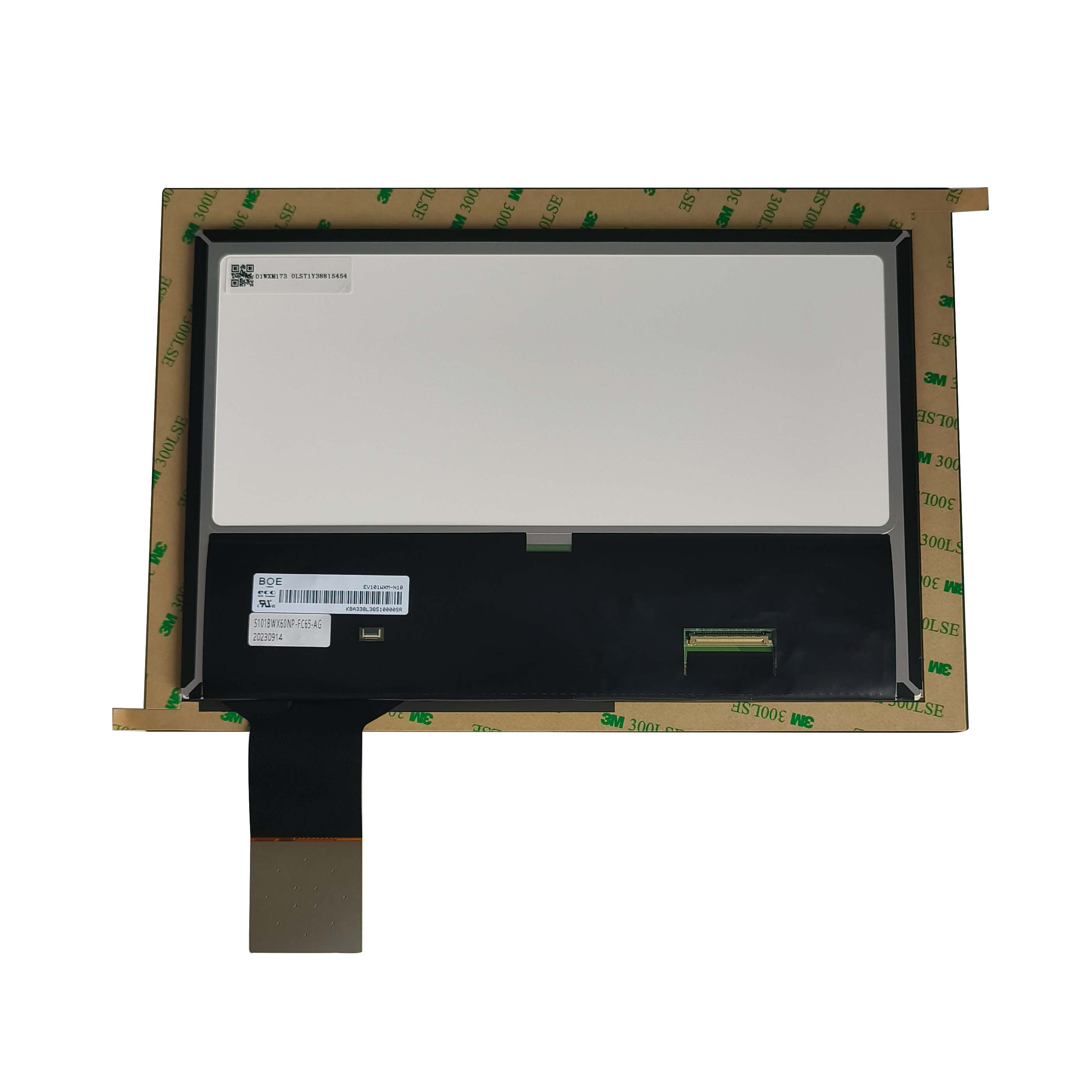
A candidate replacement module. The outline and active area are the first check, and the cheapest to verify before anything is ordered. Source: CDTech industrial display range.
How does sourcing change when compatibility is the requirement?
Documents first, samples second.
When the goal is to keep an existing device running, the sourcing exercise is a document comparison rather than a new design, so the relationship with a supplier is about evidence and availability rather than about customisation.
Three practical differences follow. The specification you send is the original panel's data plus the host's constraints, not a wish list, because a substitute has to fit an existing design rather than improve it. The evidence you ask for is the completed check table with sources, including the qualification figures for the replacement model. And availability becomes the central commercial topic, because a device that is out of production still has to be supported for years and the replacement itself needs a lifecycle of its own. Accreditation frameworks such as the International Accreditation Forum and ILAC are where the scope of a supplier's test reports can be checked, and the workmanship expectations for any rework follow IPC practice.
Common misreadings of a compatibility claim
Three claims do not survive a check.
The first is a size match quoted without the active area, which hides a difference in the visible region. The second is a pinout match quoted by pin count alone, which hides a mirrored or reordered assignment. The third is a timing match quoted from a similar model rather than from the specific part number and revision.
A fourth claim is subtler and worth naming: some cross-reference lists are built by comparing parameters only, without an electrical test, so two panels appear interchangeable on paper while one requires a different drive voltage or a different start-up sequence. Where a substitution is intended to keep a device in service, the difference between a paper match and a verified match is the difference between a one-day change and a returned batch, and the verified version costs one sample and a bring-up session to establish. That session also produces the evidence that makes the next substitution cheaper.
What should you verify before committing to a model?
Bring-up on the real host, not a bench supply.
Before committing, drive the candidate panel from the production host over the production cable, and confirm the image is stable at both temperature extremes and through a power-cycle sequence.
Three supporting checks catch the remaining risk. Confirm the backlight current against the existing supply rather than against a laboratory source, because an inrush or sequencing difference can produce a fault that only appears in the field. Confirm the connector orientation visually and, where possible, mechanically, since a mirrored pinout can be assembled successfully and fail intermittently. Confirm that the panel's identification and the qualification evidence are recorded against the device model, so a future replacement can be evaluated against the same conditions. Where the device carries a safety marking, the context for the display subassembly follows IEC 62368-1.
Long-term availability for a replacement programme
Every substitute needs its own lifecycle.
A replacement panel solves today's problem and creates tomorrow's, because the substitute has a production window of its own and a device kept in service for years may need more than one generation of panel.
The lifecycle plan should therefore record the approved substitutes as a list rather than a single part, with the check table completed for each, an end-of-life notice period for each in writing, and a last-time-buy or second-source arrangement for the one currently in production. Where two candidates pass the same checks, qualifying both while the first is in healthy supply is cheaper than qualifying the second after a notice arrives. Recording the measured evidence for each candidate against the device model means a future substitution can be compared rather than re-tested from scratch, which is what turns a compatibility exercise into a maintainable process rather than a recurring project.
FAQ
What makes an LCD screen compatible with a device model?
Six properties have to match: mechanical fit, connector and pinout, timing and interface, supply and drive requirements, optical performance and the qualification evidence for the specific model. A size match alone leaves the expensive mismatches unchecked.
Can I replace a panel with a higher resolution one?
Usually not directly. A higher resolution changes the pixel clock, so the host, the interface and often the connector have to change with it. Where the goal is to keep an existing device in service, a parameter match is worth more than an upgrade.
How do I verify a pinout before ordering?
Compare the pin assignment table, not just the pin count, and check the connector orientation visually. A mirrored or reordered assignment can be assembled and then fail intermittently, which is harder to diagnose than a connector that simply does not fit.
Does a compatible panel need re-qualification?
Yes, at least to the level the device requires. The check table should be completed with measured evidence for the substitute, and the result recorded against the device model so a future replacement can be evaluated against the same conditions.
Next step
Send the original panel data, the host constraints and the device model to CDTech; the reply will state which current panel matches the required checks and what evidence can be provided for the substitution.