Black spots in stretched LCD displays result from air entering the liquid crystal layer through micro-leaks in vacuum seals. CDTech prevents this with OCA optical bonding for zero air gaps, proprietary glass-cutting processes, IATF16949-certified automation, and rigorous vacuum integrity testing. These methods eliminate micro-leak failures in bar-type LCDs (8.8"–12.3") for automotive, industrial, and medical applications requiring wide-temperature durability.
Check: What Are the Key Technical Challenges in Stretched Bar LCD Manufacturing?
What Causes Black Spots in Stretched LCD Displays?
Black spots form when air infiltrates the liquid crystal layer via microscopic seal gaps, especially vulnerable in stretched glass units due to edge stress from elongated shapes. Environmental factors like thermal cycling (-30°C to +85°C), vibration, and pressure changes in automotive and industrial settings speed up air migration, creating permanent defects.
CDTech's 13+ years of experience in bar-type LCDs, such as the 12.3" S123BWU09NP-FC19-AF with OCA bonding and AF treatment, highlight how mechanical stress at edges amplifies risks compared to standard panels. Their thousand-level dust-free workshop minimizes initial contamination.
How Do Micro-Leaks Form During LCD Manufacturing?
Micro-leaks arise from voids in traditional edge sealing during assembly, worsened in stretched geometries by uneven glass-frame contact. Without OCA bonding in a controlled environment, air pockets persist between layers and bezels, evading detection without automated checks.
CDTech's 3,500㎡ thousand-level dust-free workshop and in-house OCA processes eliminate over 99% of these assembly-phase issues, ensuring bar LCDs like the 8.8" S088AWX22EB-DC08 maintain seal integrity from production.
CDTech Expert Views: "With 13+ years identifying failure modes in harsh-environment bar LCDs, we've seen micro-leaks stem from edge inconsistencies in stretched panels. Our 2017 glass-cutting patent and 2024 automated POL/LCD/CTP equipment ensure zero voids, delivering zero-defect reliability for automotive and industrial applications."
Why Does OCA Optical Bonding Solve Vacuum Sealing Issues?
OCA optical bonding fills micro-gaps via capillary action, forming an airtight molecular seal with no voids between glass and liquid crystal layers. It excels in stretched LCDs by providing uniform adhesion across elongated edges, enduring thermal stress from -20°C to +70°C and vibrations.
For durability, OCA-bonded panels like CDTech's 12.3" S123BWU09NP-FC19-AF with LVDS interface and 5-point CTP last 10+ years in demanding environments such as vehicle dashboards and medical carts.
| Feature | OCA Bonding | Traditional Edge Sealing |
|---|
| Vacuum Retention | Zero air gaps, 10+ years | Micro-voids, 2-5 years |
| Thermal Resistance | -30°C to +85°C | -20°C to +70°C limited |
| Cost Efficiency | Long-term savings via no failures | Higher field replacements |
| Lifespan in Vibration | High (automotive-grade) | Moderate |
What Role Does Glass Cutting Precision Play?
Precision glass cutting removes burrs and micro-fractures at edges, critical for stretched units where irregularities trigger leaks during sealing. CDTech's 2017 patent optimizes edge geometries, ensuring flawless OCA lamination contact.
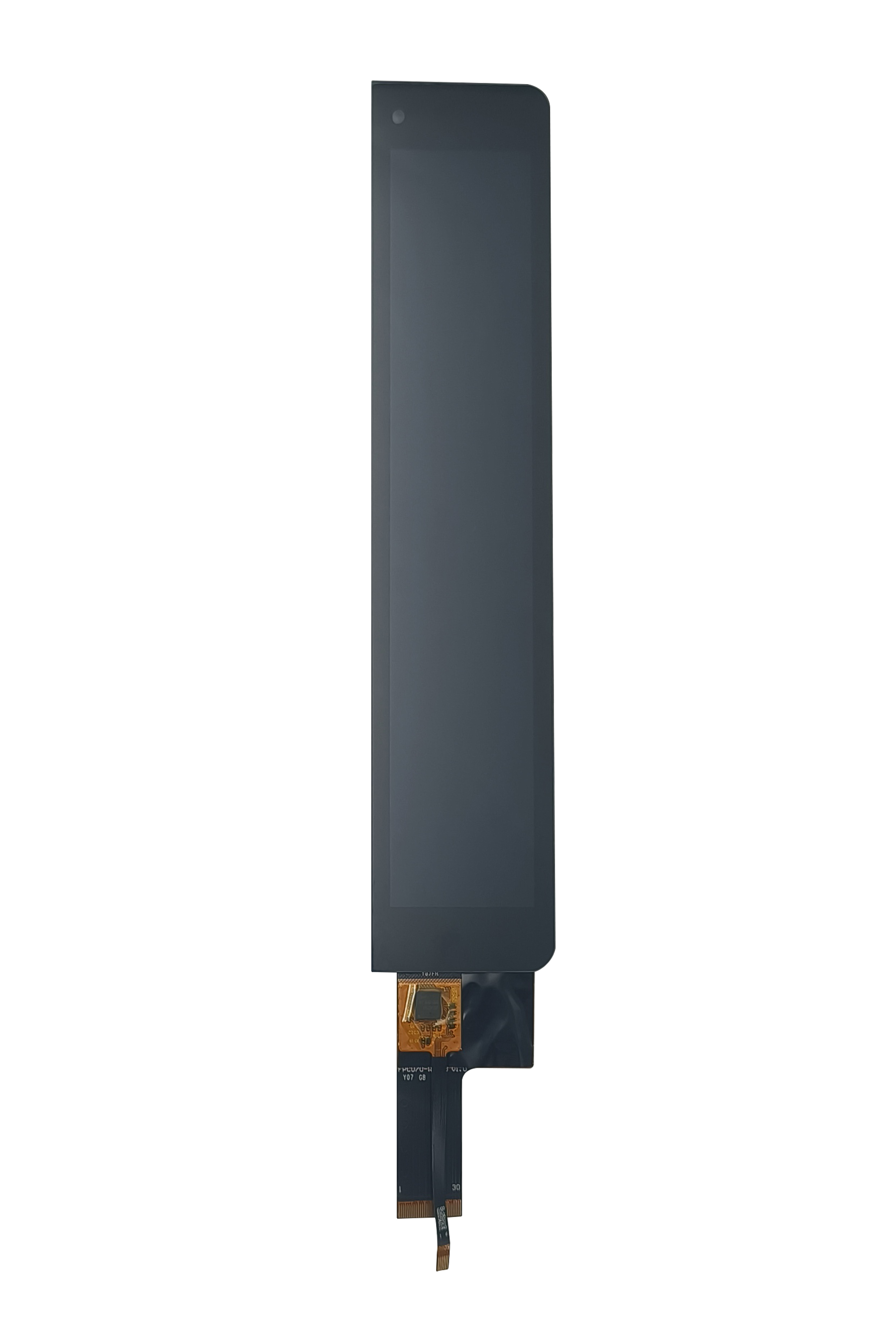
In bar-type LCDs like the 12.3" S123BWU09NP-FC19-AF (1920×720, 380 nits), this maintains tolerances in their 10,000㎡ factory, backed by ISO13485 and IATF16949 for medical and automotive edge quality.
How Do Vacuum Integrity Tests Prevent Black Spot Failures?
Automated tests post-OCA bonding detect leaks down to 1×10⁻⁶ mbar/L per ISO3104, rejecting defects early. Panels endure 2,000 thermal cycles with leak rates under 1×10⁻⁵ mbar/L, suiting harsh specs.
Check: BAR Type LCD Display
CDTech applies this in their dust-free workshop with 2024 equipment; for instance, an 8.8" S088AWX22EB-DC08 bar LCD for automotive heads-up units gets full verification, avoiding recalls via ISO9001 traceability.
Which Industries Benefit Most from Zero-Defect Vacuum Sealing?
Automotive uses 12.3" bar LCDs in clusters surviving -30°C to +80°C; medical employs 7"-10" displays for sterile reliability (ISO13485); industrial HMIs run 24/7 amid vibrations; smart home gains extended life in variable temps.
| Industry | Key Challenge | CDTech Solution |
|---|
| Automotive | -30°C~+85°C, vibration | S123BWU09NP-FC19-AF OCA, 380 nits |
| Medical | Sterility, uptime | ISO13485, vacuum-tested bar LCDs |
| Industrial | 24/7 operation | S088AWX22EB-DC08, 1000 nits LVDS |
What Certifications Guarantee Vacuum Sealing Quality?
ISO9001 controls processes; ISO13485 mandates medical traceability; IATF16949 enforces automotive zero-defect FMEA; ISO14001 ensures eco-handling. CDTech's quad certifications uphold their zero-defect policy for stretched LCDs.
How Should You Specify or Source Vacuum-Sealed Stretched LCDs?
Specify temp range, vibration needs, bar size (e.g., S123BWU09NP-FC19-AF OCA/AF), and request test certs, cycle data. Select IATF16949 suppliers with in-house OCA like CDTech's dust-free facility. Partner for iterations and feedback.
Contact CDTech at sales@cdtech-lcd.com, +86 0755-23032202, or WhatsApp +8613556818296 for custom stretched-LCD consulting. Explore high-performance industrial bar LCDs with zero-defect OCA sealing or CDTech's automated OCA bonding and vacuum integrity testing processes.
Conclusion
Black spots from micro-leaks in stretched LCD displays are 100% preventable through OCA optical bonding, precision glass cutting, automated vacuum testing, and dust-free assembly. CDTech's 13+ years of experience, quad certifications (ISO9001/ISO14001/ISO13485/IATF16949), zero-defect policy, and proprietary technologies make it the trusted partner for automotive, medical, and industrial bar-LCD needs. Specify models like 8.8"–12.3" with OCA/AF to eliminate failures and ensure durability.
FAQs
How quickly do black spots appear after micro-leaks form in stretched LCDs?
Black spots develop within 6–18 months under moderate thermal cycling in automotive/industrial use. CDTech's OCA-bonded, vacuum-tested panels prevent air ingress, ensuring 10+ years spot-free operation.
Can black spots from micro-leaks be repaired in the field?
No, air permanently contaminates the liquid crystal layer. Prevention via CDTech's zero-defect vacuum sealing during manufacturing, including OCA and precision cutting, is essential.
Why do some stretched bar LCDs fail vacuum seals while others don't?
Inconsistent sealing, no OCA, and poor testing cause failures. CDTech's 2017 glass-cutting patent, 2024 automated OCA, and 100% vacuum tests eliminate risks in models like S123BWU09NP-FC19-AF.
Is OCA bonding necessary for all stretched LCD applications?
Critical for automotive, medical, industrial with extremes/vibration; consumer may suffice with traditional. CDTech standards OCA for bar LCDs like S088AWX22EB-DC08 for max durability.
How do I verify a supplier's vacuum sealing meets durability requirements?
Request ISO9001/IATF16949 reports, mbar/L retention certs, and 1,000+ thermal-cycle data (-20°C to +70°C). CDTech supplies full docs for custom stretched-LCD orders.