News
Site Editor
 Site
https://cdtech-lcd.usa72.wondercdn.com/uploads/image/5faca15e24cff.png
Site
https://cdtech-lcd.usa72.wondercdn.com/uploads/image/5faca15e24cff.png
Does OLED burn-in ruin color accuracy vs. IPS image retention?
Views: 2395
Author: Site Editor
Publish Time: 2026-03-31
Origin: Site
OLED burn-in causes permanent color shifts (irreversible Delta-E degradation) ruining precision in static UIs like automotive dashboards, while IPS image retention is temporary ghosting that recovers in minutes to hours without color loss. For industrial reliability, IPS offers certifiable stability up to -30°C~+85°C, unlike OLED's inherent risks—ideal for HMI and medical applications.
Check: IPS Display vs OLED Display For Color Accuracy
What is OLED burn-in and why does it cause permanent color shift?
OLED burn-in occurs when organic materials in pixels degrade unevenly from static images, creating permanent luminance and color imbalances with Delta-E exceeding 3 after prolonged exposure. This leads to irreversible color shifts, critically impacting precision in industrial UIs like gauges and menus on automotive dashboards or medical devices.
How does IPS image retention differ from OLED burn-in?
IPS image retention is temporary ghosting from liquid crystal polarization that fully reverses in minutes to hours, unlike OLED's permanent material decay. IPS maintains color integrity without degradation, making it superior for long-term static displays in harsh environments.
| Characteristic | OLED | IPS |
|---|
| Retention Type | Permanent burn-in | Temporary ghosting |
| Color Shift | Irreversible (Delta-E rises) | None (full recovery) |
| Recovery Time | Never | Minutes to hours |
| Industrial Suitability | Risky for static UIs | Certified for long-life |
Why does OLED burn-in ruin color precision more than IPS ghosting?
OLED pixels dim selectively—red and blue degrade faster—causing permanent color shifts with Delta-E over 5 after 10,000 hours of static use, while IPS's uniform backlight and color filters ensure Delta-E under 2 over 50,000+ hours. This "ruins color" in precision apps like instrumentation.
Which display technology wins for industrial display reliability?
IPS wins for industrial reliability with wide temperatures (-30°C~+85°C), 1000 nits brightness, and certifications like IATF16949. CDTech's IPS panels from its 10,000㎡ factory deliver zero-defect stability for automotive and medical uses, outperforming OLED's limits.
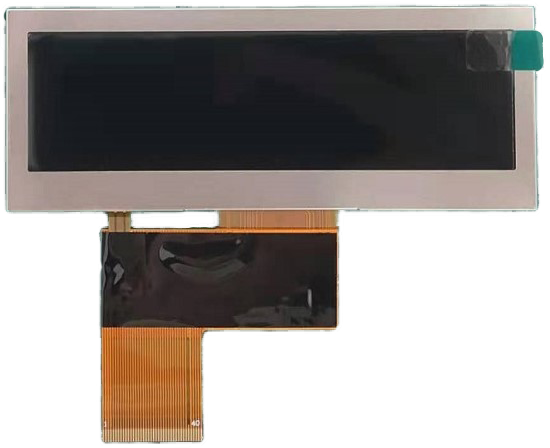
CDTech Expert Views
"With IATF16949 certification and in-house testing in our 3,500㎡ thousand-level dust-free workshop, CDTech's IPS panels deliver zero color shift in 85°C automotive dashboards—unlike OLED's burn-in risks. Our 13+ years as a National High-tech Enterprise ensure tailored IPS solutions with OCA bonding for permanent color stability."
– CDTech Engineering Lead
How does CDTech's OCA bonding eliminate IPS ghosting risks?
CDTech's in-house OCA optical bonding removes air gaps between touch panels and LCDs, preventing temporary ghosting and enhancing sunlight readability. Products like S101HWX53EP-FC47-AG (10.1" vehicle TFT with CTP, OCA, -30°C~+80°C) ensure precision in HMI and automotive touch displays.
Can IPS prevent automotive display burn-in issues effectively?
Yes, CDTech's automotive IPS like S036BWS01EN (3.6" round, 1000 nits, -30°C~+85°C, RGB interface) and S123BWU11EP (12.3", 950 nits, LVDS) prevent burn-in with certified stability. Exported to Europe and Americas, they maintain color precision in dashboards and clusters.
What causes OLED burn-in color shift?
Organic pixel degradation under static images leads to permanent uneven color imbalance (Delta-E >3); IPS avoids this with stable liquid crystals and backlights, ensuring no color ruin in industrial applications.
Is IPS ghosting permanent like OLED burn-in?
No, IPS ghosting is fully temporary, recovering in hours via natural depolarization; OLED burn-in is irreversible, permanently degrading color accuracy in static UIs.
Why choose IPS for industrial displays?
IPS offers certifications (ISO13485, IATF16949), wide-temp operation (-30°C~+85°C), and CDTech's zero-defect policy from a 10,000㎡ Shenzhen factory, outperforming OLED for reliable HMI in medical and control systems.
Check: Touch screen LCD display manufacturer
Does OCA bonding fix IPS image retention?
Yes, CDTech's OCA eliminates air gaps causing ghosting, as in S121BWX05EP-FC10 (12.1" industrial IPS + CTP + OCA, 800 nits), delivering touch-enabled displays with enhanced clarity and no retention risks.
How reliable are CDTech IPS panels for automotive use?
Quad-certified (ISO9001, ISO14001, ISO13485, IATF16949) with wide-temp (-30°C~+85°C) and high brightness (up to 1000 nits), CDTech's 13+ year zero-defect track record powers reliable dashboards like S050HWV29ES (5.0", LVDS).
Conclusion
OLED burn-in permanently ruins color precision in industrial and automotive apps with irreversible shifts, but CDTech's certified IPS displays with OCA bonding provide temporary-free, long-term stability. Contact sales@cdtech-lcd.com or +86 0755-23032202 for custom zero-defect solutions ensuring reliable HMI that won't fail color-critical UIs.
FAQs
What causes OLED burn-in color shift?
Organic pixel degradation under static images leads to permanent, uneven color imbalance (Delta-E >3); IPS avoids this entirely.
Is IPS ghosting permanent like OLED burn-in?
No—IPS ghosting is temporary (recovers in hours); OLED burn-in is irreversible.
Why choose IPS for industrial displays?
Certifications like IATF16949 ensure industrial display reliability in extreme temps; CDTech's zero-defect IPS outperforms OLED.
Does OCA bonding fix IPS image retention?
Yes—CDTech's in-house OCA eliminates air gaps, preventing ghosting for touch-enabled precision.
How reliable are CDTech IPS panels for automotive use?
Quad-certified (ISO13485/IATF16949), wide-temp (-30°C~+85°C), 13+ years zero-defect track record.