Copyright © 2020-2021 Shenzhen CDTech Electronics LTD. All rights reserved. Site Map Powered by iwonder.cn

display / touch / bonding solutions
display / touch / bonding solutions
An ATM is not a kiosk with a card reader bolted to it. It stands in daylight, is touched by hundreds of hands a day, is opened by a technician who has twenty minutes and a queue behind him, and has to keep dispensing cash until its depreciation schedule ends.
Three constraints decide the panel rather than the diagonal: noon sunlight on the fascia, a service visit measured in minutes, and a backlight that never fully switches off. At the 7 to 15 inch sizes used in cash recyclers, size rarely determines whether the machine reads at noon or repairs at midnight.
About 20,000 to 60,000 lux on the fascia in direct sun.
A screen recessed under a canopy sees far less, while an east or west facing machine catches low sun that no anti-glare surface can fully neutralise.
The figure that matters is measured at the glass, not read from a weather file. A horizontal surface under a clear summer sky takes about 100,000 lux at midday, a vertical south-facing fascia roughly half, and an east or west facing machine at eight in the morning can collect 40,000 to 60,000 lux almost perpendicular to the glass.
Measure with a lux meter at the glass during the worst hour of the worst month, in the final orientation. That single number drives the luminance target, the coating and the bezel geometry, and it belongs in the requirements as a lux figure rather than the phrase sunlight readable.
The 1000-nit figure is a capability, not a duty point. A panel lives at a few hundred nits and reaches full output only while the sun is on the fascia.
Reflected ambient sets the requirement: illuminance E in lux reflects off the glass with diffuse reflectance rho, adding a veiling luminance of E x rho / pi. For a target contrast ratio C:
At 40,000 lux, 4 percent reflectance and a 3:1 target, that gives about 1019 nits; anti-reflective glass at 1.5 percent lowers it to 382, which is cheaper than raising the backlight.
Average draw follows the hours: five hours at 2.4 W and nineteen at 0.6 W average near 1 W, plus a heat load the sealed cabinet carries.
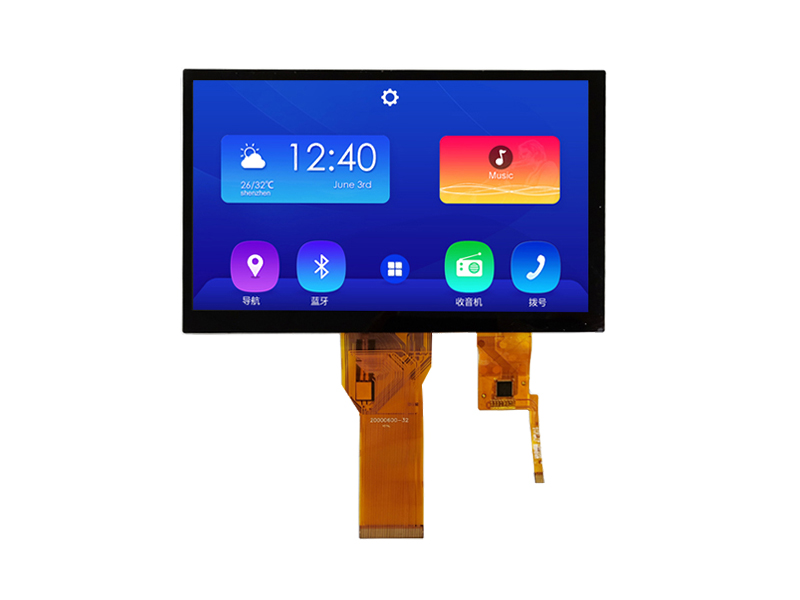
Vandal glass sets the first limit. A 6 to 10 mm chemically strengthened sheet is normal on a street-facing fascia, and mutual capacitance falls steeply with overlay thickness, so the sensor is laminated to the glass rather than left behind an air gap that would lose most of the coupling.
The cash-slot bezel is harder. The aperture and its steel surround sit inside the sensor field and de-tune the nearest electrodes. Pattern the sensor around the aperture, keep 10 to 15 mm clear of metal, and use differential sensing with frequency hopping so dispenser steppers do not register as touches. Bond the bezel to chassis ground at one point, and treat the front as an EMC problem, because reader, dispenser and display share one enclosure under 47 CFR Part 15. The guide to touchscreen integration covers tuning for thick overlays.
It spends on-axis light to buy off-axis rejection.
A louvre film can cut transmission by a third while narrowing the viewing cone, so the panel must be re-brightened and the touch stack recalibrated for the changed dielectric.
Banks ask for it because the balance is visible from the queue. It rejects light outside a cone of about 30 degrees and pays with a 25 to 40 percent loss of on-axis transmission, so a 1000-nit panel delivers 600 to 750 nits to the customer.
A 0.1 to 0.3 mm louvre layer adds dielectric above the sensor and, applied as a separate sheet with trapped air, varies coupling locally; that shows as edge non-linearity and drift as the assembly warms. Louvre pitch can also beat against the pixel grid and show moire. Specify the film before bonding, laminate it, and calibrate with it in place.
Bonding trades optical performance against serviceability, and cannot wait for tooling release. The four methods differ less in optics than in what happens when a panel fails two hundred kilometres from the depot.
| Method | Field-openable | Optical cost | Re-seal on site | Fits |
|---|---|---|---|---|
| Full OCA lamination | No, destroys the stack | Lowest reflection | Not possible | Sealed fascias, depot repair |
| Liquid OCR | No, cured solid | Very low, fills gaps | Not possible | Large glass, curved bezels |
| Frame tape | Yes, with a suction tool | One internal reflection | New tape, ten minutes | Field-swappable modules |
| Gasket air gap | Yes, screws only | Two reflections, fog risk | New gasket | Indoor lobbies |
Perimeter tape usually wins: most of the reflection benefit, a module that lifts out with a suction cup, and a new tape ring to reseal. Full lamination stays correct where the fascia is sealed for life and serviced from the rear.
Through-wall machines are serviced from the room behind the wall, lobby machines from the front, and that fact reorders the stack. In a through-wall unit the technician reaches the display from inside, past the note transport and above the dispenser.
Work outward from the wall: chassis, carrier bracket, panel, sensor, vandal glass, bezel. Front access means panel and sensor leave as one unit; rear access means the glass stays sealed to the fascia while the module withdraws backwards. Both need a harness loop long enough to lay the module on a shelf and a connector that mates blind. The usual late surprise is a connector that points at the dispenser, unreachable with the module fitted. The modules in the industrial LCD display range differ in where that connector exits.
By removing adhesive, loose parts and manual calibration.
Ten minutes is realistic when the replacement carries its own calibration data and the machine holds no setting that has to be typed in by hand.
Vet the design against that list before tooling release. Each failed item gives the technician a reason to improvise, and improvisation at a cash machine turns a swap into a callout.
At the bezel edge, where glass meets metal.
Centre-screen contrast can meet its target while the border in the customer's view washes out under a bright sky, which reads as a failed display.
Three mechanisms cause it. A polished bezel throws skylight across the top rows. Sunlight entering the cut edge of the cover glass travels inside it and emerges as a bright frame. A black border that is too narrow, or printed on the inner face, leaves clear glass that behaves as a light guide.
The fixes are mechanical and cheap if designed early: a matte blackened bezel set 2 to 3 mm below the glass, an opaque border of at least 5 mm, a dark gasket, and a fascia tilted 3 to 5 degrees down so the sky's reflection falls above the customer's eye line.
A cash recycler is sealed against dust and water, to an enclosure rating of the kind catalogued by NEMA, because notes carry both, and a fan is not an option: it would pull paper dust into the note scanner's optical path. Everything the display dissipates stays inside, and solar gain on a dark fascia pushes internal air above outside temperature. A panel rated for a 70 degC surface can run at the edge of its range in 35 degC shade.
Two moves keep it inside ratings. A gap pad and aluminium carrier conduct heat from the module into the chassis. A documented derating curve lets the controller step backlight current down above a threshold, with hysteresis so the display does not hunt. Ask for that curve as a deliverable, checked against industrial display design guidance for the enclosure class.
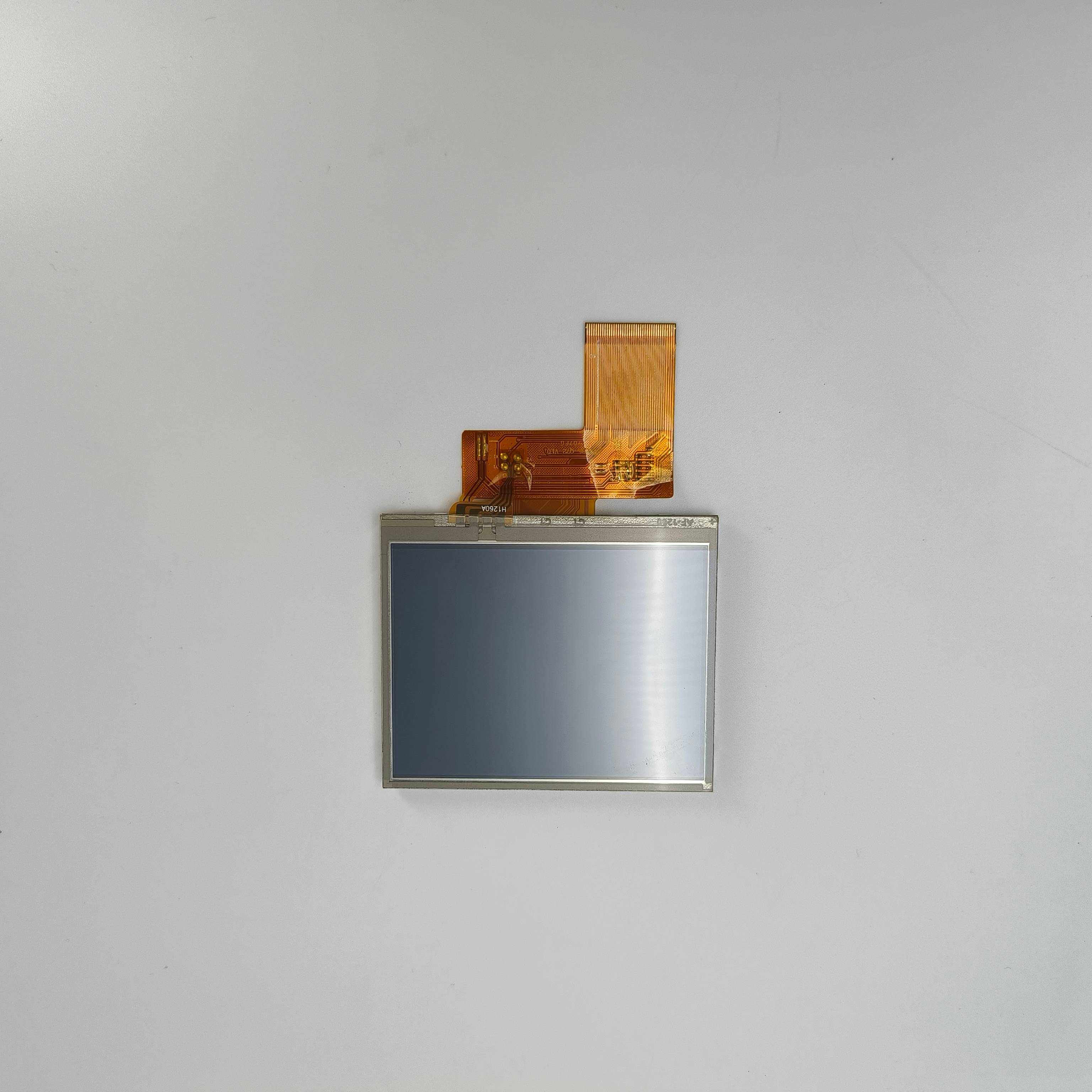
Seven years of continuous service is about 61,000 hours, and the wear falls on the backlight, the polariser and the connector, so a specification written around those three parts outlasts one written around resolution.
Ask for the panel roadmap in writing: a seven-year machine needs a supply plan and a form-fit-function successor named before the first unit ships. Ask as well for luminance and colour to be measured on the assembled front, against a published ISO method; a bare-panel figure is not the number the customer sees. Assembly-level safety files, such as a UL Solutions or CSA Group approval, sit outside the panel ratings and need their own schedule.
Next step. If the fascia specification is still moving, CDTech can review the design ambient, the reflectance of the proposed front glass and the service access route against the modules in this size bracket, and say plainly where a lower-brightness part would meet the same target. There is no obligation.
How bright must an ATM display be?
Bright enough to hold a 3:1 contrast ratio at the worst ambient hour, which is a calculation rather than a round number. Work out reflected veiling luminance from the measured lux, the front-surface reflectance and the contrast target, then add margin for end-of-life backlight decay. In practice a 1000-nit panel behind 1.5 percent anti-reflective glass covers most shaded and partly shaded sites, while a machine in direct afternoon sun with plain 4 percent glass needs roughly double that at beginning of life. Quote both figures.
Which touch technology suits outdoor banking?
Projected capacitive, bonded to the back of the vandal glass, is the practical choice for a street-facing machine. It has no moving parts, works through 6 to 10 mm of strengthened glass when the sensor is laminated rather than gapped, and tolerates rain and cleaning. Surface acoustic wave is a poor fit outdoors because water and dirt disturb the wave path, and resistive touch cannot work through an overlay at all. Whichever sensor is chosen, the controller needs differential sensing and frequency hopping to reject the dispenser motors.
How is the display serviced in the field?
As a module, not as a panel. The field-replaceable unit should be the panel, sensor and bracket together, held by four captive screws and one keyed connector, with brightness curves and touch calibration stored in the machine rather than in the module. Perimeter tape instead of full lamination keeps the swap possible without replacing the vandal glass. A ten-minute visit is realistic when the replacement arrives calibrated and the technician needs one tool. Anything that requires a laptop, a shim set or a second person turns the visit into a callout.
Is privacy film required on an ATM?
It is rarely a legal requirement, but it is often a bank security preference because the screen is visible from the queue. Where it is fitted, treat it as part of the optical stack from the start. A louvre film costs 25 to 40 percent of on-axis brightness, so the panel or the coating has to compensate, and the film must be laminated and included in the touch calibration. Adding it after the fascia is tooled usually means a dimmer screen, a recalibration and, in the worst case, visible moire against the pixel grid.
By continuing to use the site you agree to our privacy policy Terms and Conditions.