Copyright © 2020-2021 Shenzhen CDTech Electronics LTD. All rights reserved. Site Map Powered by iwonder.cn

display / touch / bonding solutions
display / touch / bonding solutions
A fire alarm control panel is the one display in a building that must work when nothing else does. The mains has failed, the battery has carried the system for a day, the corridor is dark, the lobby has smoke in it, and someone needs to know which zone is in alarm.
The constraints run in an unusual order: average power on a sealed battery first, worst-case legibility second, certification evidence third. Brightness and colour come last, and on that ordering a monochrome module often wins.
The cap lands near 0.5 W, far below any colour TFT.
A sealed 7 Ah battery derated for ageing leaves roughly 54 Wh, and the rest of the panel takes most of it before the display is even counted.
Standby duration comes from the power supply standard: a long quiescent period plus a shorter alarm-load period.
With C 7 Ah, V 12 V, an ageing factor of 0.8 and 80 percent depth of discharge, usable energy is about 54 Wh. If the rest of the panel draws 1.8 W for 24 hours, it takes 43 Wh and leaves 0.45 W for the display. A 10.1 inch TFT at 500 nits draws roughly 3.5 W, eight times over; a 5.7 inch monochrome FSTN module at 0.35 W fits.
The worst case is not sunlight. It is a dark room with smoke in it, emergency lighting at a fraction of normal level, and an operator whose eyes have not adapted. Smoke attenuates the screen's light and scatters it back as a veil, lowering contrast while luminance stays low.
Brightness then becomes a liability: a panel at 500 nits in a hazy lobby glares, destroys dark adaptation and lights up the smoke. What the application wants is low luminance, high contrast, large characters and a front face that wipes clean, sealed to the IEC 60529 method against soot and cleaning. Read the requirement as a range: legible at 1 to 5 nits in a dark corridor, legible under 200 to 400 lux of emergency lighting, never a glare source at either end.
Where the screen is always on and the budget is a battery.
For a panel that is always powered, quiescent draw decides more than colour or resolution: a battery that has to last a day is sized in milliamps, not in pixels.
| Metric | Monochrome FSTN, transflective | 10.1 inch colour TFT |
|---|---|---|
| Draw, backlight on | 0.2 to 0.4 W | 3 to 5 W |
| Draw, backlight off | 0.01 to 0.05 W | Not readable |
| Ambient-light readability | Reflective mode, no backlight | Backlight must beat ambient |
| Night readability | 5 to 20 nits is enough | Dims into low contrast |
The table is not an argument against colour, only against paying for it with the battery. Where a panel must show floor plans or a graphical event list, a TFT earns its place, but then the power budget reopens. The comparison of LCD panel technologies covers the viewing-angle side.
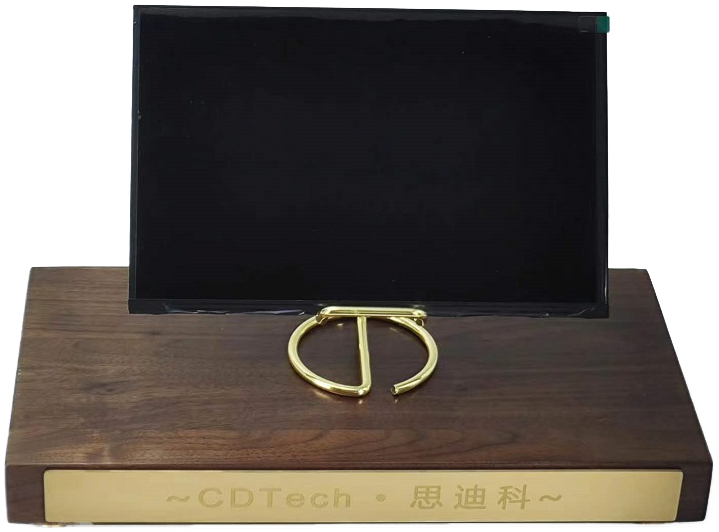
Every backlight has a silent failure mode. An open LED string turns the screen dark without raising anything. A driver failing short leaves the panel drawing current with no light. A firmware fault can latch the backlight at full brightness and flatten the battery in a day.
The rule is that the alarm state must not depend on the display. Hardwired LEDs, driven from the same latch as the sounder circuit, carry alarm, fault and disablement independently of the LCD and its firmware. Monitor backlight current against a window and the driver status pin, and fail to the low level rather than the high one. Driver switching noise is one more radiator inside the envelope tested under 47 CFR Part 15.
Functional evidence, not a panel datasheet.
The control equipment is assessed as a system, so the assessor asks how the display behaves in each indicated state rather than what its data sheet claims.
The EN 54 series covers control and indicating equipment and its power supply, and it is concerned with what the panel indicates. The questions are about evidence: can alarm, fault and disablement be shown unambiguously, and what happens when the display itself fails?
Environmental and EMC tests then apply to the assembly. The module is a component inside the equipment under test, so its behaviour during those tests matters. A supplier declaration of operating range and EMC performance supports the file; in North America the control unit is listed to UL 864 by a body such as UL Solutions, and the Canadian equivalent by CSA Group.
Legibility is a number your team writes, because the standard will not write it for you. Start from geometry: the reading distance, the character height it demands, and the contrast that survives the worst ambient. Twelve arcminutes of character height is comfortable, which at one metre is about 3.5 mm and at three metres about 10.5 mm for a lobby repeater.
Contrast sets the rest. For an LCD it is measured between light and dark states at a given viewing angle and temperature, by a method documented against a published ISO geometry, and it falls both off axis and below about 0 degC. Write three lines: 3:1 at 30 degrees off axis at the lowest operating temperature, a minimum character height for the stated distance, and a luminance range covering a dark corridor and a daylit lobby.
Because the critical actions must work through gloves.
Silence, reset and silence-buzzer are physical controls with a defined feel, and a touch layer between the operator and those functions adds a failure mode for no gain.
A touch sensor needs calibration, a controller, a power rail and a clean, dry surface. In a smoke-filled lobby the surface is neither, and a gloved hand is the input a capacitive sensor handles worst. The layer also costs contrast through an extra bond and a cover glass, and adds a scan current to a budget that is already tight.
Where configuration needs a rich interface, the usual pattern is a service port or a laptop, with the panel display reserved for indication. Keys with detents and a key switch for access keep the safety-critical surface simple.
Three small loads share one budget. A display heater for a cold riser or plant room can draw 1 to 3 W, more than the whole display allowance and enough to flatten a battery overnight. A dimming circuit that never falls to its night level wastes the same energy slowly. The fault LED costs a few milliwatts and is never the problem.
The heater rule: mains only, thermostatically switched, disabled on battery. If the display is specified for the real minimum temperature, commonly -20 degC in unheated spaces, the heater becomes a warm-up aid rather than a continuous load; the harsh-environment display guide covers the condensation side of the same problem. Dimming must then be specified as a curve - night level, ambient threshold and PWM frequency - because a backlight below a few hundred hertz flickers in peripheral vision.
Fire panels are specified for twenty years, but the display is not a twenty-year component in the way a transformer is. Electrolytic capacitors in the backlight boost driver dry out, halving their life for every ten degrees. LEDs lose output and shift colour. Polariser films yellow under heat and ultraviolet, and elastomer connectors creep after repeated thermal cycles.
The response is to remove what cannot last rather than to demand a twenty-year warranty. Prefer no electrolytic capacitor in the backlight path, or an external replaceable driver. Keep the display away from the standby charger, the hottest spot in most enclosures, and treat the module as serviceable with a documented interval. Then ask for the roadmap in writing, because a twenty-year product needs a panel still in production or a successor identified early.
Put these to the design team before the BOM is frozen, and record the evidence behind each answer, because the answer with no evidence is where the schedule fails.
Closing all eight survives the assessor and the first battery replacement; closing seven is waiting for a site visit.
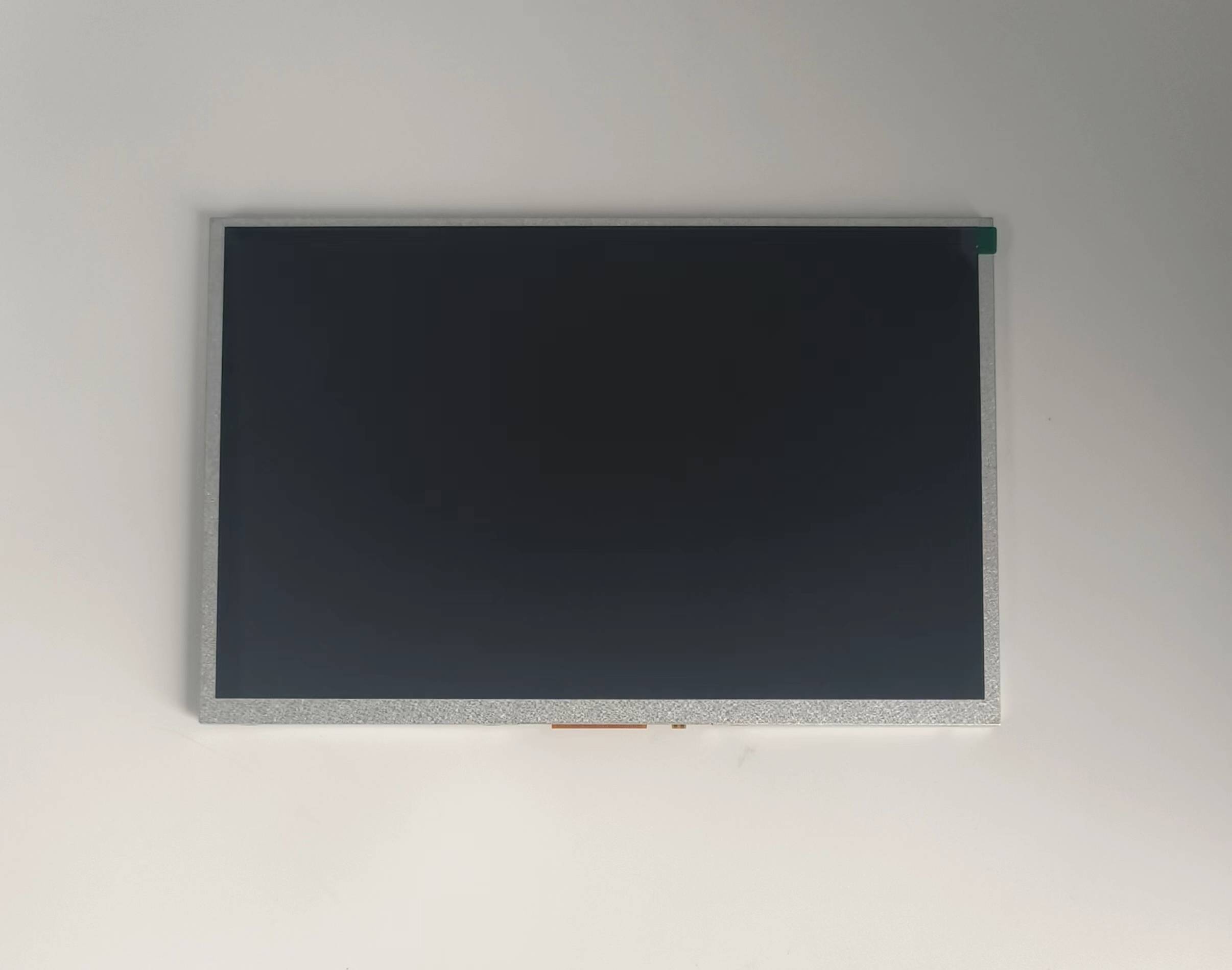
Next step. If the standby budget and the legibility target are pulling in different directions, CDTech can run the numbers against the monochrome and colour modules in the relevant size bracket, including the transflective options, and set out where each one lands. There is no obligation.
How much power can a fire panel display draw?
Less than most design teams assume, because the number is set by the battery rather than by the panel. Work the budget backwards from usable battery energy after ageing, subtract the quiescent load of the rest of the system over the full standby period, and divide what remains by that period. On a typical 7 Ah battery that leaves a few tenths of a watt for the display. A monochrome module with a modest backlight fits; a 10 inch colour TFT does not, unless the battery or the standby strategy changes.
Is a monochrome display still preferred?
For indication-only panels it usually is, on power and on supply life rather than on cost. A transflective monochrome module is readable in ambient light with the backlight off, needs only a few nits at night, and stays readable if the backlight fails. Colour earns its place when the panel must show floor plans, multi-language text or a long graphical event list, and at that point the power budget has to be reopened rather than stretched. The decision should follow the content, not the fashion.
Does the display fall under EN 54 assessment?
The display module is not certified on its own; the control and indicating equipment is assessed as a system, and the module is a component inside it. That means its behaviour during the temperature, humidity, vibration and EMC tests matters, and its failure modes become part of the evidence. A supplier declaration of operating range and EMC performance supports the technical file. Do not describe a module as EN 54 certified, because no such certificate exists for a display alone.
How is legibility specified for an emergency panel?
By writing three measurable lines rather than by asking for a bright screen. Set a minimum contrast ratio measured at the worst viewing angle and the lowest operating temperature, a minimum character height for the actual reading distance, and a luminance range that covers both a dark corridor and a daylit lobby without glare. Twelve arcminutes of character height at the reading distance is a workable starting rule. Each of the three can be tested on the assembled front, which is what an assessor will ask for.
By continuing to use the site you agree to our privacy policy Terms and Conditions.