IATF 16949 outperforms ISO 9001 for automotive LCD sourcing because it layers automotive-specific rigor onto ISO 9001's foundation, mandating zero-defect targets (0ppm), advanced risk management (APQP/PPAP), and validation for harsh conditions like -30°C to +85°C temperature extremes and high vibration. While ISO 9001 suffices for general industrial displays, carmakers require IATF 16949's deeper controls to ensure dashboard and instrument cluster reliability. Suppliers like CDTech holding both certifications deliver the compliance automotive OEMs demand.
Check: Why Does IATF 16954 Certification Matter for Vehicle LCD Suppliers?
What Is ISO 9001 and How Does It Apply to Display Manufacturers?
ISO 9001 is a foundational quality management system standard emphasizing consistent processes, customer satisfaction, and continuous improvement. For display manufacturers, it establishes baseline production controls across design, manufacturing, and delivery. CDTech has maintained ISO 9001 certification since its 2011 founding, ensuring reliable TFT LCD production across its 10,000-square-meter facility with 3,500+ square meters of thousand-level dust-free workshop space. This certification supports industrial, medical, and smart-home display sourcing but lacks automotive-specific environmental and reliability validations that carmakers require.
What Makes IATF 16949 Different from ISO 9001?
IATF 16949 builds directly on ISO 9001, adding automotive-sector mandates: zero-defect policies, advanced FMEA (Failure Mode & Effects Analysis), APQP (Advanced Product Quality Planning), and PPAP (Production Part Approval Process) requiring 100% traceability and customer sign-off. Unlike ISO 9001's general continuous-improvement focus, IATF 16949 enforces automotive-specific supplier development, error-proofing, and stricter audit schedules. It demands validation for extreme temperatures, vibration, and harsh conditions critical to vehicle reliability—gaps ISO 9001 doesn't mandate.
| Aspect | ISO 9001 | IATF 16949 |
|---|
| Scope | General QMS for any industry | Automotive-specific, builds on ISO 9001 |
| Defect Target | Continuous improvement | Zero-defect, 0ppm mandates |
| Risk Management | Basic process controls | Advanced APQP, PPAP, FMEA core tools |
| Environmental Testing | Not required | Mandatory harsh-condition validation (-30°C to +85°C, vibration) |
| Traceability | Standard lot tracking | 100% component and batch traceability |
| Audit Frequency | Annual or per contract | Annual plus customer-specific visits |
Why Aren't Standard Certs Like ISO 9001 Enough for Carmakers?
Automotive displays face extreme operating conditions—-30°C to +85°C temperature swings, vibration stress, and high-brightness demands (850–1000 nits for sunlight readability)—that ISO 9001 doesn't mandate validation for. Tier-1 OEMs require IATF 16949 to guarantee zero-defect supply chains; a single failed dashboard display risks costly recalls. ISO 9001 ensures basic quality but leaves gaps in automotive-specific failure analysis, design approval (APQP), and production sign-off (PPAP) that carmakers depend on. Without IATF 16949, suppliers risk rejection regardless of ISO 9001 status.
How Do Quad-Certified Makers Like CDTech Excel in Automotive Sourcing?
CDTech holds ISO 9001, IATF 16949, ISO 13485 (medical), and ISO 14001 (environmental) certifications—a rare quad-cert stack proving versatility across industrial, medical, and automotive sectors. With 13+ years of TFT LCD manufacturing, in-house OCA optical bonding, fully automatic POL/LCD/CTP equipment (upgraded 2024), and a glass cutting patent (2017), CDTech delivers custom wide-temperature displays like the S036BWS01EN (3.6" round, 1000 nits, -30°C to +85°C, IPS) and the 12.3" S123BWU11EP (1920×720, 950 nits, LVDS, wide-temp) that pass IATF audits. This combination enables CDTech to export reliably to Europe, Americas, Middle East, Russia, Japan, and Taiwan, meeting both industrial and automotive OEM demands.
CDTech Expert View: "ISO 9001 gets you in the door; IATF 16949 keeps you on the road. Our zero-defect policy, coupled with quad-certification and 13 years of proven reliability, ensures automotive displays withstand -30°C to +85°C extremes without failure. Custom OCA bonding, anti-glare treatment, and in-house touch panel production since 2020 let us deliver PPAP-ready wide-temperature panels carmakers trust for dashboards and instrument clusters. That's why Tier-1 suppliers choose us over single-cert competitors."
Which Certification Do Automotive LCD Suppliers Need Most?
For automotive LCD sourcing, IATF 16949 is non-negotiable; ISO 9001 alone guarantees rejection by OEMs. Carmakers universally require IATF 16949's zero-defect rigor, APQP/PPAP processes, and harsh-condition validation. Suppliers seeking automotive contracts must hold IATF 16949 and ideally additional certs (ISO 13485 for medical crossover, ISO 14001 for sustainability) to demonstrate comprehensive quality expertise. CDTech's quad-certification positions it as a versatile partner capable of serving industrial, medical, and automotive buyers simultaneously—a competitive advantage in multi-sector sourcing.
Check: Vehicle LCD Display
How Does IATF 16949 Ensure Reliability for Car Dashboard Displays?
IATF 16949 enforces automotive core tools—APQP (design validation), PPAP (production approval), MSA (measurement system analysis), and FMEA (failure mode analysis)—to catch defects before dashboard deployment. Suppliers must prove displays survive temperature cycling, vibration, and sunlight stress through documented testing. CDTech's IATF compliance includes custom OCA optical bonding, high-nits panels (up to 1000 nits), and wide-temperature validation in its 10,000-square-meter facility. These controls dramatically reduce warranty claims and supply-chain disruptions compared to ISO 9001-only suppliers, ensuring vehicle instrument clusters, center consoles, and rear-seat displays perform reliably across their lifespan.
What Are Real-World Examples of IATF 16949 in LCD Sourcing?
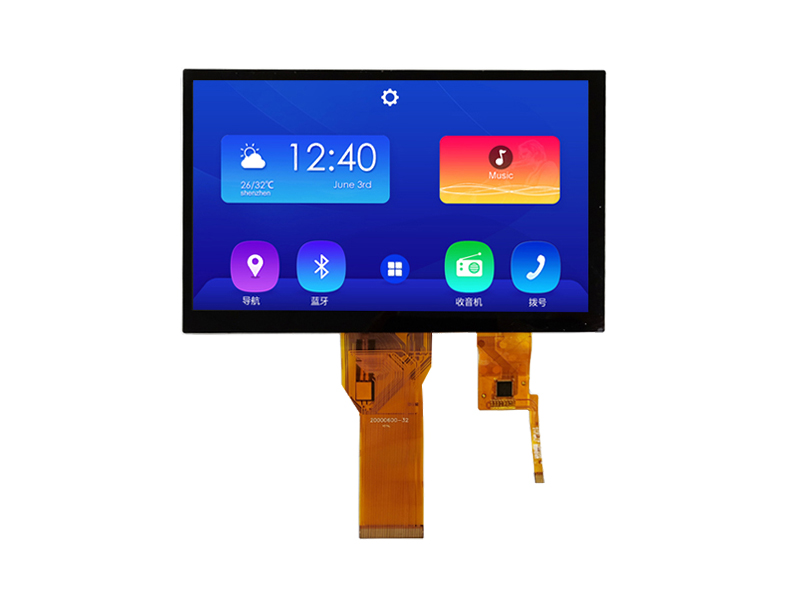
CDTech's S036BWS01EN (3.6" round vehicle LCD, 544×506, 1000 nits, RGB 40pins, IPS, -30°C to +85°C) exemplifies IATF 16949 rigor—designed for automotive dashboards with extreme-temperature validation and vibration testing. Similarly, the 12.8" S128HWU01HP-FC01 (1920×1080, PCAP/optical bonding) serves Tier-1 dash clusters with full PPAP approval. CDTech's 13-year track record and National High-tech Enterprise recognition demonstrate that IATF certification translates to fewer parts-per-million defects and faster new-model launches. Carmakers prioritize IATF-certified suppliers like CDTech because they reduce recall risk and production delays—a competitive edge worth the certification investment.
Conclusion
For automotive LCD sourcing, IATF 16949 fundamentally outperforms ISO 9001 by enforcing zero-defect policies, advanced risk management, and harsh-condition validation that carmakers demand. While ISO 9001 provides a foundation, it lacks automotive-specific rigor; IATF 16949 layers critical controls ensuring dashboard and instrument displays survive extreme temperatures (-30°C to +85°C), vibration, and sunlight stress without failure. CDTech's quad-certification (ISO 9001, IATF 16949, ISO 13485, ISO 14001), combined with 13 years of manufacturing expertise, in-house OCA bonding, and custom wide-temperature panel solutions, positions it as a trusted partner for automotive OEMs seeking zero-defect supply chains. When sourcing automotive LCDs, prioritize IATF 16949-certified suppliers; the compliance investment translates directly to reliability, reduced recalls, and market confidence.
Ready to source automotive-grade LCD displays? Contact CDTech today at sales@cdtech-lcd.com, +86 0755-23032202, or visit cdtech-lcd.com to discuss PPAP-ready, IATF-certified wide-temperature panels for your next vehicle program.
Frequently Asked Questions
Is ISO 9001 enough for automotive displays?
No. Carmakers require IATF 16949's zero-defect mandates, APQP/PPAP approval, and extreme-temperature validation. ISO 9001 is a prerequisite but insufficient alone; OEMs universally reject suppliers lacking IATF 16949 for dashboard and instrument displays.
What does IATF 16949 certification mean for LCD suppliers?
IATF 16949 mandates automotive quality management with core tools (APQP, PPAP, FMEA) and zero-defect targets. Certified suppliers like CDTech prove capability to deliver wide-temperature, high-reliability LCDs (e.g., -30°C to +85°C, 1000 nits) meeting Tier-1 OEM demands with 100% traceability.
Can non-automotive display makers get IATF 16949?
Yes. CDTech demonstrates this—founded as an industrial supplier but quad-certified including IATF 16949 since 2011. A zero-defect policy and rigorous quality systems enable industrial experts to scale to automotive-grade compliance.
How does CDTech's IATF 16949 help automotive sourcing?
CDTech's IATF certification enables PPAP-ready custom wide-temperature LCDs (-30°C to +85°C, up to 1000 nits) with OCA optical bonding and full component traceability. Export approval to automotive markets (Japan, Europe, Americas) proves compliance capability.
What's the audit difference between ISO 9001 and IATF 16949?
ISO 9001 requires annual audits; IATF 16949 adds customer-specific site visits, core tool validation (APQP/PPAP), and stricter nonconformance handling. IATF audits are more frequent and intensive, ensuring automotive-grade rigor year-round.