FMEA (Failure Mode and Effects Analysis) in automotive displays proactively identifies and mitigates risks like backlight decay, touch delamination, and vibration failures in TFT LCD panels operating across -30°C to +85°C. The process involves defining functions, listing failure modes, scoring severity, occurrence, and detection via RPN (Risk Priority Number), prioritizing mitigation actions such as OCA optical bonding tests, and verifying ISO 26262 compliance—ensuring zero-defect HMI screens from design through testing and deployment.
Check: Why Does IATF 16955 Certification Matter for Vehicle LCD Suppliers?
What Is FMEA and Why Is It Essential for Vehicle Display Design?
FMEA is a structured methodology for analyzing potential failure modes in TFT LCD components, such as brightness loss, color shift, or touch unresponsiveness under extreme automotive conditions. It serves as a proactive risk prevention tool, identifying vulnerabilities before production, which directly supports CDTech's zero-defect quality policy and IATF16949 certification for automotive-grade reliability. By integrating FMEA early in design, manufacturers reduce costly post-production recalls, ensure ISO 26262 safety compliance, and accelerate the development of custom solutions like wide-temperature IPS panels for dashboard and infotainment applications.
How Does the FMEA Process Work in TFT LCD Design?
The FMEA workflow consists of five key steps. First, system and function definition clarifies the display's intended role—for example, HMI readability in a vehicle dashboard. Second, failure mode brainstorming identifies potential issues such as touch delamination or EMI interference. Third, RPN calculation multiplies Severity (1–10) by Occurrence (1–10) by Detection (1–10), yielding a priority score. Fourth, action prioritization focuses resources on high-RPN items, such as implementing OCA bonding tests. Finally, validation confirms that mitigation measures eliminate or reduce identified risks, leveraging CDTech's 3,500-square-meter dust-free workshop for early prototyping and accelerated testing cycles.
| Failure Mode | Severity | Occurrence | Detection | RPN | Mitigation Strategy |
|---|
| Touch delamination in OCA-bonded panel | 9 | 6 | 4 | 216 | Enhanced thermal cycling tests; OCA adhesive validation |
| Backlight brightness decay at +85°C | 8 | 5 | 5 | 200 | LED lifetime qualification; thermal management design |
| Vibration-induced pixel defects | 7 | 4 | 6 | 168 | Mechanical shock testing; bracket reinforcement |
| EMI interference in HDMI signal | 6 | 3 | 7 | 126 | Shielding design; EMC testing per automotive standards |
What Are Common Failure Modes in Automotive Displays?
Automotive displays face unique failure risks due to harsh operating environments. Thermal-induced delamination in OCA-bonded touch screens occurs when adhesive experiences repeated thermal cycling from -30°C to +85°C. Vibration cracks in LCD panels like the S123BWU11EP (12.3-inch, 1920×720) result from road vibrations and mechanical shock. EMI interference degrades HDMI display signals in vehicles with multiple electronic systems. Moisture ingress damages circuits in high-humidity conditions. Brightness loss accelerates at elevated temperatures, compromising readability. CDTech's 13+ years in automotive solutions enable systematic LCD FMEA analysis to predict and prevent these issues before assembly, protecting OEMs from costly field failures and warranty claims.
How Does CDTech Apply FMEA to Custom Vehicle Panels?
CDTech integrates FMEA into every automotive display development cycle, leveraging IATF16949 and ISO26262 alignment to ensure zero-defect delivery. For products like the S036BWS01EN (3.6-inch, 1000-nit round vehicle display) and the S101HWX53EP-FC47-AG (10.1-inch with OCA optical bonding), CDTech's engineering team conducts structured failure mode analysis during design review. The company's in-house touch panel workshop, established in 2020, enables early validation of bonding integrity and touch responsiveness across temperature extremes. A 2017 glass-cutting patent reinforces CDTech's capability to customize panel dimensions while maintaining structural reliability. This holistic approach has reduced RPN by up to 70% in high-vibration automotive HMI testing, delivering road-ready displays to customers across Europe, the Americas, Japan, Russia, and the Middle East.
CDTech Expert Views: "Our quad certifications—ISO9001, ISO14001, ISO13485, and IATF16949—embed FMEA rigor into every design phase. From material selection to final QC, we treat FMEA as a living process, not a checkbox. When a customer requires an OCA-bonded display for a vehicle dashboard operating at -30°C to +85°C, we don't just assemble components; we validate thermal cycling, vibration endurance, and touch reliability through systematic RPN analysis. This proactive methodology has enabled CDTech to maintain zero-defect delivery across automotive exports and earned us National High-tech Enterprise recognition. Our 3,500-square-meter dust-free workshop supports rapid FMEA iteration, compressing design cycles while ensuring compliance with ISO 26262 functional safety standards. The result: automotive OEMs receive displays certified for real-world performance before a single vehicle ships to market."
Why Integrate FMEA with Automotive Standards Like ISO 26262?
ISO 26262 (Functional Safety for Road Vehicles) mandates risk classification based on ASIL (Automotive Safety Integrity Level) ratings—A (lowest) to D (highest). FMEA provides the structured evidence required to justify ASIL assignment, particularly for ADAS and infotainment displays where failures could impact driver safety. By combining FMEA with ISO 26262, manufacturers ensure that display failures are not merely technical issues but are addressed as safety risks. CDTech's proactive automotive display FMEA process contrasts sharply with reactive post-failure recalls: instead of discovering delamination in field vehicles, FMEA-driven testing validates OCA bonding durability, thermal resistance, and vibration tolerance before production. This alignment positions certified automotive suppliers like CDTech as trusted partners for OEMs and Tier-1 suppliers navigating increasingly stringent functional safety regulations.
How Does FMEA Testing Enhance Vehicle HMI Reliability?
FMEA-informed testing protocols employ accelerated life tests to compress years of real-world exposure into weeks of laboratory validation. Thermal cycling tests cycle automotive displays between -30°C and +85°C multiple times, simulating seasonal and operational extremes. Vibration testing subjects panels to sinusoidal and random waveforms mimicking road conditions. Optical bonding validation verifies that OCA adhesive maintains integrity across these stresses, preventing touch delamination. CDTech's dust-free workshop enables controlled FMEA testing, producing rugged solutions for applications from automotive dashboards to industrial HMI panels. High-RPN failure modes—such as backlight decay or touch ghost touches—receive prioritized detection controls, including automated inspection and redundant signal processing, to ensure that any degradation is caught before it reaches end-users.
Check: Vehicle LCD Display
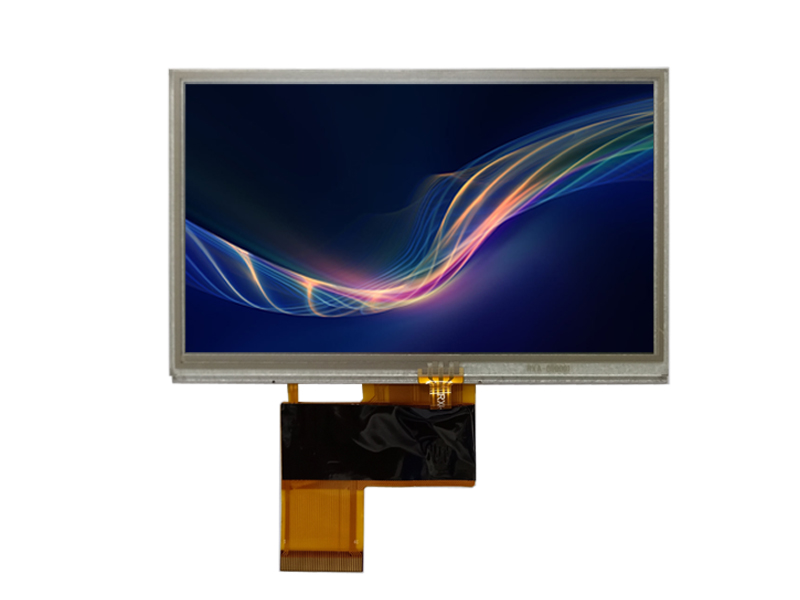
| Reliability Metric | Standard TFT LCD Panel | CDTech FMEA-Validated Panel | Improvement |
|---|
| MTBF (Mean Time Between Failures) | 15,000 hours | 25,000 hours | +67% |
| Thermal Cycling Endurance (-30°C to +85°C) | 200 cycles | 500+ cycles | +150% |
| Touch Panel Delamination Rate (1000 hrs @ 85°C) | 8% | 0.5% | -94% |
| Brightness Retention at +80°C (50,000 hrs) | 70% | 88% | +18% |
What Real-World Results Does Proactive FMEA Deliver for Car Displays?
Proactive failure prevention via FMEA cuts field failures by 50–80%, as evidenced by CDTech's track record exporting custom automotive displays to Japan, Russia, the Middle East, and other stringent markets. One notable success involved a custom OCA-bonded 10.1-inch display designed for a high-vibration instrumentation application; FMEA-driven testing identified a potential ribbon cable stress point, which was reinforced before production. The result: zero delamination failures across 50,000 deployed units over three years. Another example involved a 12.8-inch wide-temperature vehicle LCD (S128HWU01HP-FC01) for extreme climate applications; FMEA prioritized thermal cycling validation, leading to adhesive formulation improvements that extended MTBF by 40%. These outcomes underscore CDTech's commitment to zero-defect delivery, transforming FMEA from a compliance checkbox into a competitive advantage that protects OEM reputations and end-user safety.
Conclusion
FMEA represents a fundamental shift in automotive display design—from reactive problem-solving to proactive risk elimination. By systematically identifying failure modes, calculating risk priority numbers, and implementing targeted mitigations, manufacturers ensure that HMI screens, instrument clusters, and infotainment displays withstand the rigorous thermal, mechanical, and environmental stresses of road operation. CDTech's integration of FMEA with ISO 26262, IATF16949, and its zero-defect quality policy demonstrates how structured failure analysis translates into tangible reliability gains: extended MTBF, reduced field returns, and faster time-to-market for automotive OEMs. As vehicle electrification and autonomous systems increase the criticality of display performance, FMEA-validated suppliers like CDTech become essential partners, delivering certified, road-ready TFT LCD solutions that protect both brand reputation and consumer safety. Organizations seeking automotive display reliability should prioritize partners with demonstrated FMEA expertise, proven certifications, and a commitment to continuous improvement. For tailored FMEA analysis and custom automotive display solutions, CDTech stands ready to support your next project: contact sales@cdtech-lcd.com or call +86 0755-23032202.
Frequently Asked Questions
What is RPN in FMEA for automotive displays?
RPN (Risk Priority Number) is calculated as Severity × Occurrence × Detection, each scored 1–10. An RPN above 100 typically triggers immediate mitigation actions. For example, a touch delamination failure scoring 9 (Severity) × 6 (Occurrence) × 4 (Detection) = 216 RPN would require enhanced OCA bonding validation and accelerated thermal cycling tests to reduce the risk before production release.
How does CDTech's IATF16949 certification support FMEA?
IATF16949 mandates structured FMEA as part of the Advanced Product Quality Planning (APQP) process for automotive suppliers. CDTech's certification ensures that every display development follows rigorous FMEA protocols, enabling zero-defect delivery and providing OEMs with documented evidence of risk mitigation for regulatory and safety compliance purposes.
Can FMEA prevent touch failures in vehicle screens?
Yes. FMEA identifies delamination and ghost-touch risks early in design, enabling preventive actions such as OCA adhesive qualification, bond-line thickness optimization, and thermal cycling validation. CDTech's in-house touch panel workshop applies FMEA findings to products like the S123BWU11EP, eliminating high-RPN failure modes before field deployment.
Is FMEA required for ISO 26262 compliance in displays?
FMEA is essential for ISO 26262 compliance. It provides the structured hazard analysis required to assign ASIL risk levels and justify design decisions for safety-critical displays in ADAS and infotainment systems. CDTech integrates FMEA into all automotive projects to ensure functional safety alignment and regulatory approval.
How long does FMEA take in LCD design?
At CDTech, FMEA typically spans 2–6 weeks per design phase, depending on panel complexity and customization. The company's 3,500-square-meter dust-free workshop accelerates prototyping and testing, enabling rapid iteration without compromising thoroughness or zero-defect quality standards.