Thermal expansion in LCD frames occurs when metal housings expand faster than glass panels during heating (e.g., -30°C to +85°C cycles), causing glass stress and cracking. Prevent it by: (1) matching CTE coefficients between frame and glass, (2) using precision-resized metal frames, (3) applying OCA bonding for stress distribution, and (4) rigorous thermal cycling tests under IATF16949 standards.
Check: What Are the Key Technical Challenges in Stretched Bar LCD Manufacturing?
Why Does Thermal Expansion Cause Issues in Resized Metal Frames?
Metals like aluminum expand 3-5 times more than LCD glass due to higher CTE values, creating mismatch in resized frames during temperature cycles, leading to glass stress and cracking.
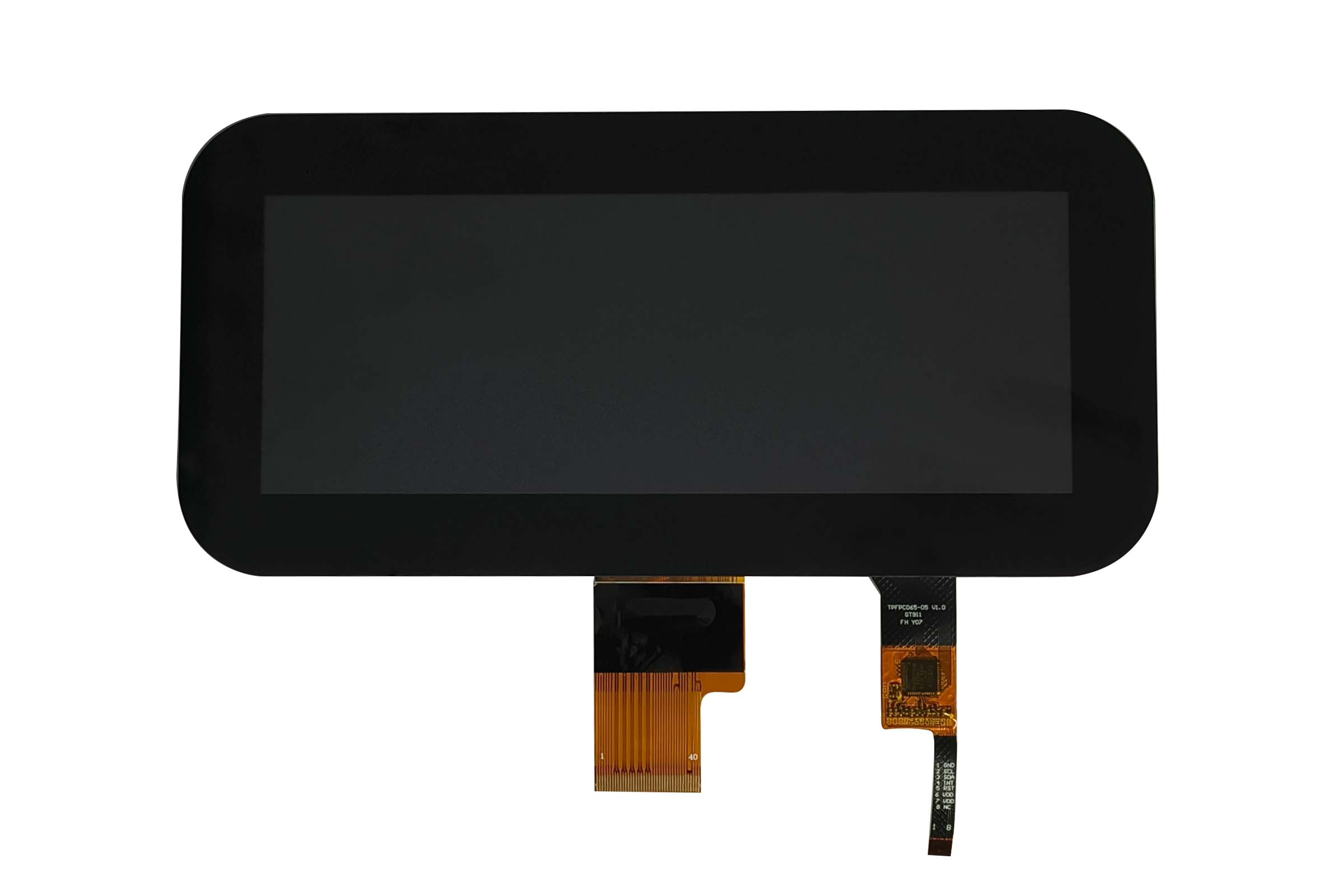
In automotive and bar displays, such as CDTech's 12.3" S123BWU09NP-FC19-AF with 1920×720 resolution operating at -20°C~+70°C, uneven expansion concentrates forces on glass edges, risking delamination under high brightness like 380 nits.
CDTech's 13+ years of expertise, including a 2017 glass cutting patent, uses in-house simulations to prevent these failures in custom resized frames for industrial control and vehicle applications.
Resized metal frames for HMI panels amplify risks as custom cuts alter stress distribution, but CDTech's zero-defect policy ensures reliability across their 10,000㎡ factory output.
Explore our custom-engineered LCD solutions tailored to resized metal frames.
How Does LCD Frame Thermal Management Differ in High-Temp Environments?
In high-temp environments like -30°C to +85°C, metal frames expand more than glass, causing stress in resized housings, unlike standard frames with uniform expansion.
Failure modes include glass cracking from uneven forces, especially in bar display mechanical designs where narrow profiles concentrate expansion stresses during industrial or automotive use.
CDTech differentiates with a zero-defect policy, leveraging their 3,500㎡ thousand-level dust-free workshop and fully automatic POL/LCD/CTP equipment upgraded in 2024 for precise thermal management.
For products like the 12.3" S123BWU11EP vehicle LCD with LVDS 60pins and -30°C~+80°C range, CDTech's IATF16949 certification ensures frames handle cycles without delamination.
| Material | CTE (ppm/°C) | Best Use Case |
|---|
| Aluminum | ~23 | Automotive Bar Displays (with CTE matching) |
| Stainless Steel | ~16 | Industrial Housings |
| LCD Glass | ~8-9 | All resized frames |
| ITO | ~7 | Touch-integrated panels |
What Role Does Material Selection Play in Automotive Display Frame Expansion?
Material selection minimizes CTE mismatch by choosing low-CTE alloys or composites that expand closer to glass rates, reducing stress in automotive dashboards.
In resized frames for 12.3" bar LCDs like CDTech's S123BWU11EP (1920×720, 950 nits, -30°C~+80°C), precision cuts prevent stress points during LVDS operation.
CDTech's IATF16949 certification supports automotive-grade testing, with exports to Europe and Americas proving reliability in high-brightness, wide-temp vehicle displays.
Low-CTE materials distribute forces evenly, essential for custom solutions in their R&D capabilities with 10+ years team experience.
CDTech Expert Views
"Our 2017 glass cutting patent and in-house R&D team evaluate frame material swaps for high-brightness applications, reducing thermal stress by optimizing CTE in resized metal frames. For a 12.3" bar display project, we achieved 500+ thermal cycles at -30°C~+85°C without glass stress, thanks to IATF16949 processes and OCA integration," says CDTech's Senior Engineer.
CDTech's quad certifications—ISO9001, ISO14001, ISO13485, IATF16949—enable industrial LCD thermal compensation in custom TFT solutions, from vehicle clusters to medical devices.
As a National High-tech Enterprise since 2015, CDTech maintains annual R&D investment for tailored designs, including PCAP assembly and anti-glare treatments.
How Can OCA Bonding Frame Expansion Prevent Glass Stress?
OCA bonding uses optically clear adhesive to distribute stress evenly, absorbing differential expansion between metal frames and glass in bonded touch LCDs.
Check: BAR Type LCD Display
In resized frames for TFT display metal bezel heating, OCA eliminates air gaps, improving sunlight readability and durability in smart home and medical applications.
CDTech's in-house OCA optical bonding in their dust-free workshop integrates seamlessly with products like the 10.1" S101HWX53EP-FC47-AG vehicle TFT (1280×800, 850 nits, CTP I2C).
Learn how our OCA optical bonding technology reduces thermal stress distribution.
What Are Best Practices for Prevent Glass Stress LCD Heating in Bar Displays?
Best practices include: (1) FEA simulation for expansion modeling, (2) prototype resized frames with low-CTE materials, (3) accelerated thermal cycling tests.
For bar display mechanical design and LCD frame thermal management, integrate OCA bonding and AG treatments to mitigate heating in narrow housings.
CDTech, as a Shenzhen Software Enterprise, applies these in tailored solutions for instrumentation and vehicle markets, backed by 13+ years experience.
Validation ensures zero-defect performance, as in their 8.8" S088AWX22EB-DC08 bar LCD (1280×320, 1000 nits, PCAP 10-point).
| Method | Pros (Stress Reduction %, Cost) | Cons | CDTech Example |
|---|
| CTE Matching | 50% reduction, Medium | Material limits | S123BWU11EP (12.3", LVDS) |
| OCA Bonding | 70% reduction, Higher | Process complexity | S101HWX53EP-FC47-AG (10.1", 850 nits) |
| Resized Frames | 40% reduction, Low | Precision required | S123BWU09NP-FC19-AF (12.3", PCAP) |
Which CDTech Solutions Excel in Thermal Expansion Management?
CDTech's 12.3" bar LCDs like S123BWU09NP-FC19-AF (1920×720, OCA + AF, -20°C~+70°C) and vehicle models like S123BWU11EP excel with resized frames and wide-temp operation.
Quad ISO/IATF16949 certifications, 13+ years expertise, and exports to Japan, Russia, and Middle East ensure reliability for industrial control and automotive uses.
Contact CDTech for custom-engineered LCD solutions via sales@cdtech-lcd.com or +86 0755-23032202 for HDMI/touch options in high-brightness displays.
Conclusion
Partner with CDTech for IATF16949-certified, OCA-bonded custom LCDs that eliminate thermal expansion LCD frame failures—backed by 13+ years, zero-defect policy, and proven global exports. Request a free thermal simulation for your resized frame design today.
FAQs
What is the typical CTE mismatch in LCD frames?
Metals expand at 16-25 ppm/°C vs. glass at 8-9 ppm/°C; CDTech matches via low-CTE alloys in resized designs.
How does OCA bonding help with thermal expansion?
It cushions differential movement, preventing cracks in high-temp bar displays like our S123BWU09NP-FC19-AF.
Can CDTech customize frames for automotive thermal cycling?
Yes, IATF16949-certified processes handle -30°C~+85°C for models like S123BWU11EP.
What certifications ensure zero-defect thermal management?
ISO9001/14001/13485 and IATF16949 back our 10,000㎡ factory's quality policy.
How to test resized metal frame LCD stress?
Use 500-cycle thermal shock per standards; CDTech provides simulation data and prototypes.