Passive LCD Displays: Where a Simple Matrix Still Wins
Views: 263Author: Site EditorPublish Time: 2026-09-30Origin: Site
A passive LCD display keeps appearing in new designs for the same reason it survived the first forty years of flat panels: it costs less, draws less and fails less often when the content never changes. The engineering question is not whether a colour TFT is better in general, but whether the product needs anything a simple matrix cannot deliver. Getting that wrong costs money in one direction and forces a redesign in the other.
What does the term passive LCD display actually cover?
A passive matrix LCD with no switch at each pixel.
The term covers segmented panels, character modules and small graphic panels driven by row and column electrodes, where each pixel is addressed by the voltage at the intersection rather than by its own transistor.
Because there is no thin film transistor at the pixel, the panel needs fewer process steps, fewer driver channels and no storage capacitor per pixel. That is the source of both the cost advantage and the limits. A passive LCD display is usually monochrome or a small number of colours, is driven with a duty ratio that keeps the multiplex count low, and is chosen where a number, a status or a short label is the whole interface. The same construction appears as reflective, transflective or backlit, which changes the power and light behaviour while leaving the addressing scheme unchanged.
Buyers frequently meet the family through a utility meter, a bench instrument, a thermostat or a vending machine panel; the panel is small, the information is fixed, and the display has to work for a decade without service.
Where does it sit in a display specification?
In the drive and addressing line, not the optical line.
A specification that states passive or active addressing is stating how the pixels are switched; brightness, contrast, viewing cone and colour are separate requirements that the addressing scheme constrains rather than defines.
Practically, the addressing choice sets four other entries in the same document. The duty or multiplex ratio follows from it, and that ratio caps the contrast a passive panel can reach. The driver and controller selection follows, because a passive panel needs common and segment drivers rather than a source and gate driver chain. The interface follows, usually a simple serial or parallel bus rather than a high-speed differential link. The power budget follows as well, since the absence of a backlight in a reflective build removes the largest single load.
Writing the specification in that order keeps the addressing decision where it belongs, in the architecture section, and stops it drifting into the optical section where it is usually argued about after the sample arrives.
How does a passive matrix differ from the nearest alternative?
One transistor per pixel, and everything that follows.
An active matrix puts a switch and a storage capacitor at every pixel, which isolates the pixel between refreshes; that single difference removes crosstalk, allows a high multiplex ratio and makes colour, video and dense graphics practical.
The consequence is a clean division of labour. A passive matrix suits fixed or slow content, small sizes, low power and the lowest unit cost, and it is comfortable at moderate operating temperatures with a modest viewing cone. An active matrix suits anything with colour, motion, a menu system, images or a touch interface that changes, and it tolerates a far wider range of content at the price of a backlight, a heavier thermal load and a larger bill of materials. The engineering detail behind that split, including how crosstalk and multiplex ratio interact, sits in the CDTech blog's comparison of active and passive LCD displays, and it is worth reading before the architecture is fixed rather than after.
Specification points that decide the outcome
Six entries carry most of the risk.
For a passive design the entries that decide whether the product works are the duty ratio, the contrast at that duty and at the lowest operating temperature, the viewing cone at a stated contrast, the response at that temperature, the drive scheme and the backlight arrangement. Those six interact: raising the duty to fit more rows reduces the contrast, and lowering the temperature slows the response until the panel needs a different drive or a wider tolerance.
Passive matrix versus active matrix on the entries that reach the specification.
Entry
Passive matrix
Active matrix
Switch at the pixel
None
Thin film transistor plus storage capacitor
Practical content
Segments, characters, simple graphics
Colour, motion, dense graphics, touch
Contrast behaviour
Falls as the multiplex ratio rises
Set by the liquid crystal, not the addressing
Power without a backlight
Microamps to low milliamps
Backlight dominates the budget
Typical failure route
Driver output, connection, glass
Backlight ageing, driver, bonding
Unit cost at small size
Lowest
Higher, plus a backlight and a controller
The table is a starting point, not an answer: the duty and temperature columns have to be filled in for the actual part, because two passive panels of the same size can differ by a factor of two in usable contrast.
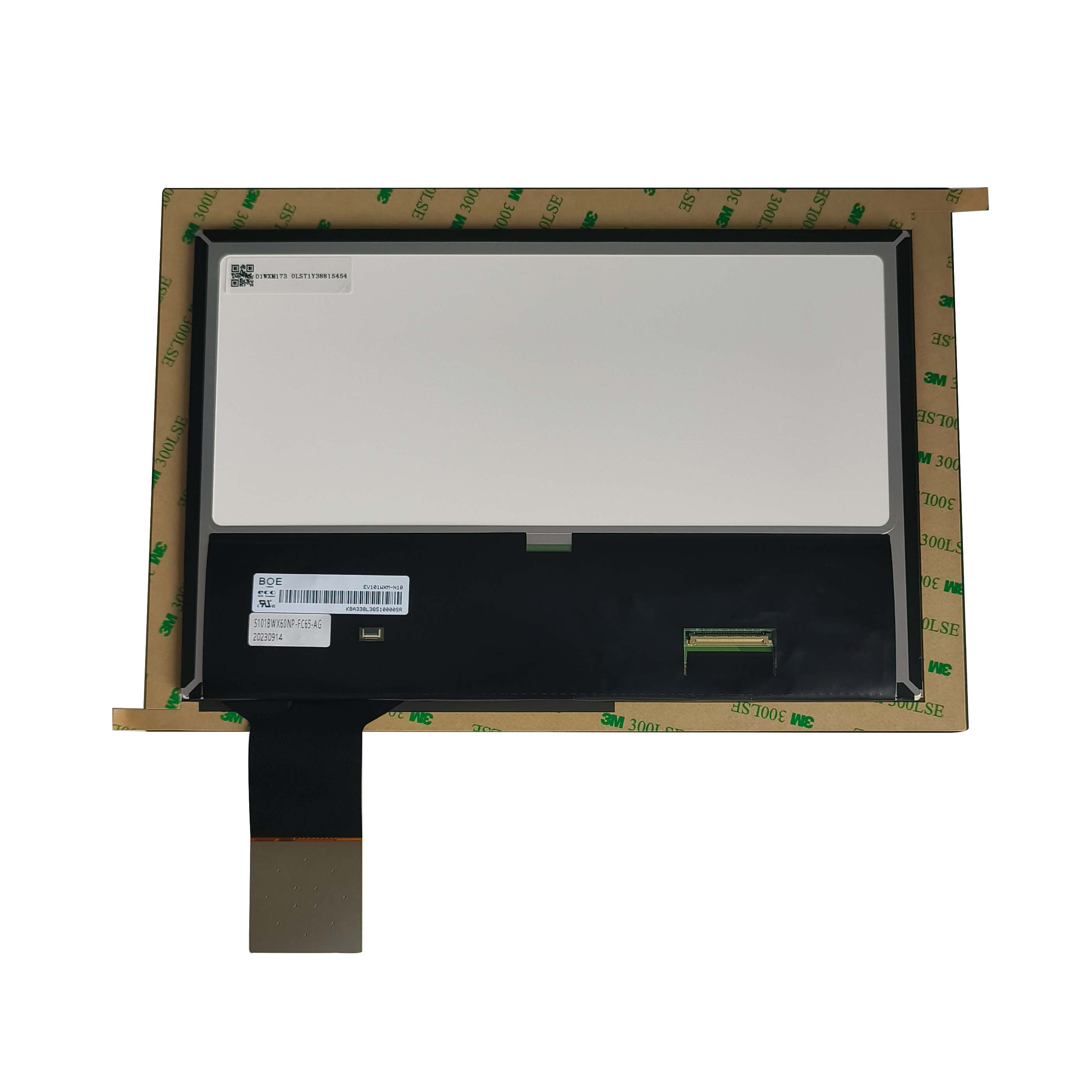
A matrix module beside the class of product where the addressing decision is made. The passive option is evaluated on duty, contrast at temperature and drive scheme, not on resolution alone. Source: CDTech display range.
How does sourcing change with the choice?
Fewer suppliers, but far more stable tooling.
Passive panels come from a smaller supplier base than colour TFT modules, because the volumes and margins sit with a handful of specialist fabs; in exchange the designs change rarely, so a panel qualified once tends to stay available. Panel supply and capacity movements are tracked by research houses such as TrendForce, which is a more useful input to an annual availability review than a supplier's own assurances.
That has two practical consequences for a buyer. First, the commercial conversation is about tooling and minimum order rather than about chasing the newest panel, since a custom segment pattern carries a one-off artwork and mask charge that only makes sense against a defined annual volume. Second, the risk profile is different from a colour module: the panel is unlikely to be superseded, but a custom pattern, a driver or a backlight part can still be discontinued, and those are the items to list in the availability plan. Where the product needs a specific pattern, the custom LCD display range covers sizes, interfaces, cover glass and backlight options, and the news section carries the application notes that surround the choice.
Common misreadings in datasheets and quotes
Four numbers are routinely compared incorrectly.
The first is contrast, which is meaningless without the duty ratio and the temperature it was measured at. The second is response time, which is quoted at 25 degrees in most summaries and gets slower as the temperature falls. The third is viewing angle, where a figure without a stated contrast ratio at that angle cannot be compared across suppliers. The fourth is the backlight figure, where a brightness value tells you nothing about the current the panel will draw unless the drive condition is attached.
A quotation that omits those four conditions is not necessarily wrong; it is simply not comparable. The fastest way to make two offers comparable is to send both suppliers the same conditions table and ask for the panel figures at the low-temperature corner as well as at room temperature, which is also where the cheapest offers usually become more expensive. The vocabulary for those measurements is defined by bodies such as the International Commission on Illumination, and instrument traceability follows the conventions published by NIST.
What should you verify before design freeze?
Sample behaviour at both temperature extremes.
Before the design freezes, verify the panel in the enclosure at the lowest and highest operating temperature, with the production drive scheme and the production firmware, and record the contrast and response at each corner.
Three further checks belong in the same review. Confirm the duty ratio in the datasheet matches the one the driver will actually use, because engineers frequently raise the scan rate to reduce flicker and lose contrast without noticing. Confirm the mechanical stack, since a passive panel is often bonded to a front glass or held by a bezel that changes the apparent contrast. Confirm the connector and cable are rated for the assembly method, because a fine-pitch tail is the part most likely to be damaged on a hand-assembled line, and the workmanship expectations for that joint are published by IPC. Static control during assembly follows the programme set out by the EOS/ESD Association, and the safety context for the finished equipment is set by IEC 62368-1. A specification review at this stage costs a day; discovering the same issues after tooling costs a programme.
Long-term availability: planning past the first build
The lifecycle plan matters more than the first price.
Passive panels are usually the most stable display type on the market, but stability is not the same as permanence, and the parts around the panel age faster than the glass. A workable plan names the panel, the driver, the backlight and the connector separately, and states for each what the supplier will do when it reaches end of life: a formal EOL notice period, a last-time-buy quantity held against the forecast, and a documented second-source or form-fit-function alternative.
Where a custom segment pattern is involved, the artwork belongs in the same plan, because the tooling is the item that cannot be second-sourced quickly. Buyers who ask for the notice period in writing before the first purchase order avoid the two expensive outcomes: a redesign triggered without warning, and a last-time-buy placed at a quantity nobody can justify. A second-source qualification started while the first panel is healthy is far cheaper than one started after the notice arrives, and it is the single control that keeps a long-life instrument buildable.
FAQ
What are the two types of LCD displays?
The split that matters commercially is passive matrix and active matrix. A passive matrix addresses each pixel by the row and column voltage with no switch at the pixel; an active matrix adds a thin film transistor and a storage capacitor at every pixel, which allows colour, motion and dense graphics.
Are passive LCD displays still used?
Yes, and they are still designed into new products. Utility meters, thermostats, bench instruments, medical pumps and vending machines use them because the content is fixed, the power budget is small and the panel has to run for a decade without service.
What are the drawbacks of a passive LCD display?
Contrast falls as the multiplex ratio rises, so the display cannot carry dense graphics or video; colour is limited; the viewing cone is narrower than a good in-plane colour panel; and response slows at low temperature. Each limit is workable if the content stays simple.
Is a passive LCD display cheaper than a colour TFT?
At small sizes and low volumes, almost always. The panel needs fewer process steps and fewer driver channels, and a reflective build removes the backlight entirely. The comparison changes if the product needs colour, graphics or touch, because those requirements pull the design back to an active matrix.
Next step
Send the duty ratio, the operating temperature range and the content the display has to show to CDTech; the reply will state which passive or active construction meets it, at what contrast, and what the availability plan for that part looks like.