Medical LCD Displays: What Changes When the Product Is Clinical
Views: 234Author: Site EditorPublish Time: 2026-10-02Origin: Site
The first medical display specification most teams write is a standard industrial one with a compliance paragraph appended. The paragraph is easy; the consequences are not. A clinical product changes what the display must evidence, how tightly it must be controlled, how long it must remain available and how any change to it has to be documented. Those four consequences reach the panel choice, the firmware and the purchase order.
What changes when a display becomes clinical?
Evidence, control, traceability and lifetime.
A clinical programme adds four obligations around the same panel: documented evidence for the claims made, tighter control of the parts and processes that affect performance, traceability of what was actually built, and a supply plan long enough to cover the device's service life.
None of those changes the physics of the display, which is why a medical LCD display can be built from a competent industrial module. What changes is the record. A supplier that can state how a panel is inspected, how a backlight change is notified, how units are identified and how long the part will remain available is doing most of the work a clinical buyer needs. The panel datasheet is a starting point rather than the deliverable, and the difference between a display that is merely compliant and one that is supportable shows up at the first change notice.
Which requirements come from the standard and which from the application?
Fewer from the standard than teams expect.
The equipment standard sets safety, and the quality system sets process control; nearly everything a designer thinks of as a medical display requirement is actually an application requirement derived from how the device is used and cleaned.
That distinction decides who owns each line. The safety of the equipment as a whole is set by the applicable standard for medical electrical equipment, with IEC 60601-1 the usual reference, and the risk-management and process expectations sit with the quality system. The application requirements are the ones a buyer writes: the viewing distance and the smallest feature the clinician must read, the ambient light in the room, the cleaning agents the front must tolerate, the number of disinfection cycles, the alarm visibility and the behaviour when the display is used in dimmed night conditions. Those requirements are what make one clinical display different from another, and they belong in the specification rather than in a checklist appended to it.
How does the clinical use case change the panel choice?
Contrast and consistency before pixel count.
A clinical reader is looking for a small difference across a large area, so contrast consistency, grey-level behaviour and stability over time matter more than the headline resolution or colour gamut.
A panel with a high pixel count and poor uniformity makes that task harder than a lower-resolution panel with a tight tolerance across the screen and between units. The front stack then matters as much as the panel, because a bonded anti-glare front controls the reflections that would otherwise reduce the contrast the reader depends on, and the bonding method determines whether the display survives the cleaning regime. Where the display is used to present grayscale imagery rather than text, the mapping between the image data and the panel's response becomes part of the specification, and the engineering method behind that mapping is set out in the CDTech blog's material on grayscale and panel selection for medical displays.
The specification block a clinical programme adds
Six entries beyond the industrial set.
A clinical specification adds the viewing task, the ambient conditions, the cleaning and disinfection regime, the alarm and night-mode behaviour, the traceability requirement and the change-control expectation to the ordinary optical and mechanical block.
What the clinical block adds, and who it protects.
Entry
Typical statement
What it protects
Viewing task
Smallest feature, distance, ambient light
Legibility of the clinical reading
Cleaning regime
Agents used and cycle count
Front surface and bonding integrity
Night mode
Maximum luminance in dim conditions
Patient rest and clinician dark adaptation
Traceability
Unit identification per assembly
Field investigation and recalls
Change control
Notification before any qualified item changes
Validation status of the device
Availability
Notice period and last-time-buy terms
Service life of the instrument
The table is also the agenda for the supplier conversation, because each row corresponds to a question the supplier should answer in writing rather than in a meeting. Measurement conventions for the optical rows come from the publications of the International Commission on Illumination, and traceability expectations follow NIST practice.
How does the supply chain change for a regulated build?
Every qualified item becomes a controlled item.
In a regulated programme the panel, the backlight, the bonding material and the firmware parameters are all qualified items, so a change to any of them is a change to the device documentation even when the display still works.
That is why the change-notification clause matters more than the certificate. A supplier holding a quality system certificate can still substitute a backlight bin or an adhesive without telling the customer, and that substitution can invalidate an optical validation the customer paid for. The practical controls are a written notification requirement for any change to a qualified item, a sample from every notified change for re-verification, and a document trail that links the unit identification on the instrument to the panel and materials used. Quality and environmental management systems such as ISO 9001, ISO 14001 and ISO 13485 underpin that process; a certificate demonstrates that a system exists, and the notification clause is what makes the system work for a specific device.
Common misreadings in medical display quotes
Four claims are made loosely.
The most common are a supplier claiming a certificate that belongs to a different product line or site, quoting the luminance of a bare panel that the assembled device cannot reproduce, treating a cleaning test on bare glass as evidence for a bonded front, and describing a planned certification as held.
Each is easy to detect with a written question. Which certificate, held by which legal entity, covering which production site and which product line, valid for what period. Which configuration was measured, bare panel or assembled module, under which ambient condition and after what warm-up. Which agent and how many cycles for the cleaning claim. And for a certification described as in progress, what the target date is and whether the supplier will commit to it in the contract. Those four questions cost nothing and remove most of the risk from a medical display quotation.
What should you verify before design freeze?
The assembled front under clinical conditions.
Before freezing, verify the assembled display in the production enclosure at the clinical viewing conditions, including the dim-room setting, the cleaning regime and the alarms, with the firmware build that will ship.
Three supporting checks belong in the same review. Confirm the luminance and uniformity figures against the measured data rather than the datasheet, because the front stack reduces both. Confirm the cleaning and disinfection cycles on the bonded front, not on bare glass, since the failure mode is usually at the bond line or in the surface coating. Confirm the traceability method produces usable records at the production rate, because an identification scheme that works in a laboratory can slow a line to the point where operators work around it. Assembly and inspection expectations for the electronics follow IPC workmanship practice, and electrical safety context follows IEC 62368-1 where it applies to the display subassembly.
Long-term availability and change control
The service life sets the requirement.
A clinical instrument is usually supported for many years, so the display's lifecycle plan has to cover the device's service life rather than the buyer's production window, and the plan has to be documented before the first purchase order.
Three controls make that workable. First, a written end-of-life notice period that gives enough time to place a last-time-buy and to qualify an alternative. Second, a second-source qualification started while the original panel is healthy, covering the panel, the backlight and the bonded front as separate items. Third, a documented change-control clause naming every qualified item and requiring re-verification samples when any of them changes. Together they turn an availability question into a documented process, which is what a regulated programme needs, and they are also the reason medical display sourcing is slower than industrial sourcing for the same panel.
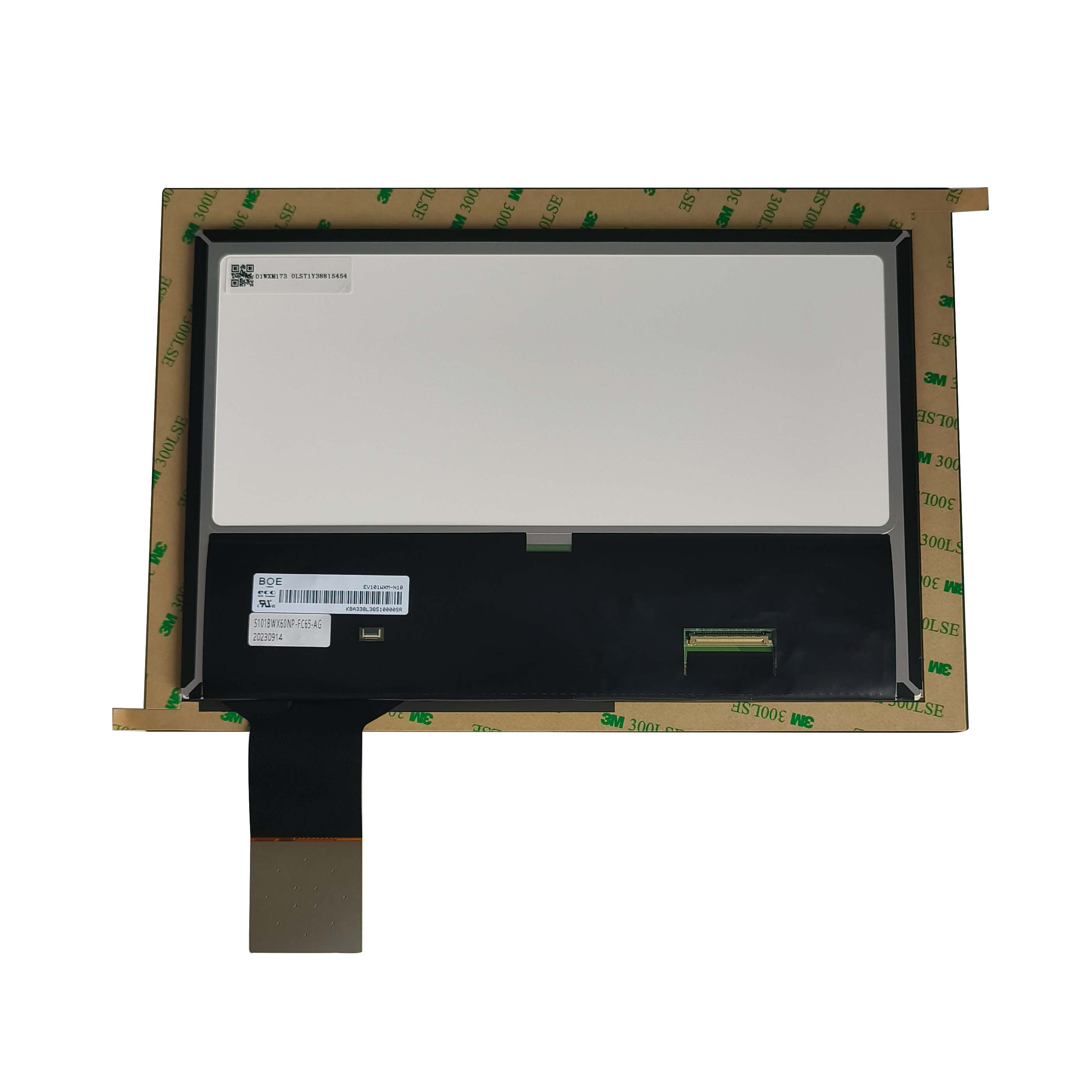
A module prepared for a clinical evaluation. Luminance and uniformity are confirmed on the assembled unit rather than from the bare panel datasheet. Source: CDTech custom display range.
FAQ
What makes a display a medical LCD display?
Usually the application requirements and the documentation around it rather than the panel itself. The display has to meet the viewing, cleaning, alarm and dim-room needs of the device, and the programme has to control and trace every qualified item through the product's service life.
Does a medical display need IEC 60601-1 certification?
The standard applies to the medical electrical equipment, not to the panel as a component. A supplier can describe how its module supports the equipment manufacturer's testing, but the compliance statement belongs to the finished device and to its notified body or regulatory pathway.
Can a standard industrial panel be used in a clinical device?
Yes, provided the assembled display meets the application requirements and the programme controls the qualified items. The panel is one input; the front stack, the firmware, the traceability and the change-control clause decide whether the build is supportable.
How long should a medical display supplier guarantee availability?
Long enough to cover the device service life, which for most instruments means a notice period in writing and a last-time-buy arrangement rather than an indefinite promise. Ask for the notice period, the last-time-buy terms and a named form-fit-function alternative.
Next step
Send the viewing task, the cleaning regime, the expected service life and the traceability requirement to CDTech; the reply will state which panel, bonding and front treatment combination supports the programme and what the change-control terms cover.