Move from semi-custom to full custom LCD displays when annual volumes exceed 10,000 units, semi-custom lead times surpass 12–16 weeks, or proprietary features like OCA bonding and PCAP touch demand integration. At this inflection point, full custom reduces unit costs by 20–35% while maintaining certifications like IATF16949 and ISO13485. CDTech's zero-defect policy and 10,000㎡ factory ensure reliable scaling for industrial, automotive, and medical applications.
Check: When to Choose Semi-Custom vs. Full Custom LCD Modules?
Why Do LCD Projects Need a Scaling Strategy?
Manufacturing LCD displays follows a predictable evolution. Prototyping and pilot runs (under 500 units) rely on semi-custom or standard panels—fast to market but inflexible. As volumes climb toward 5,000–10,000 units annually, semi-custom constraints emerge: fixed form factors, limited interface options, extended lead times of 12–16 weeks, and certification gaps that complicate automotive or medical deployments.
Ignoring scaling triggers three critical risks. First, supply chain vulnerability widens when you depend on a supplier's standard catalog rather than dedicated tooling. Second, lead-time delays compound during growth phases, potentially costing market share. Third, industry certifications like IATF16949 (automotive) or ISO13485 (medical) demand supplier stability and process control that semi-custom arrangements cannot guarantee.
CDTech, established in 2011 as a national high-tech enterprise, has guided hundreds of clients through this transition. With over 13 years of TFT LCD, touch screen, and display manufacturing expertise, CDTech's 10,000㎡ factory—including a 3,500㎡ thousand-level dust-free workshop—scales seamlessly from prototype batches to 50,000+ unit annual runs. The company's quad certifications (ISO9001, ISO14001, ISO13485, IATF16949) and zero-defect quality policy eliminate re-qualification risks during volume migration.
What Are the Key Differences Between Semi-Custom and Full Custom LCDs?
Semi-custom LCDs modify existing standard panels: a supplier stocks base modules and adjusts interfaces, brightness, or touch options to fit your spec. This reduces development cost and lead time—ideal for 500–5,000 unit runs. Full custom LCDs, by contrast, begin with your exact size, resolution, interface (RGB, LVDS, MIPI), brightness, and bonding (OCA optical bonding, PCAP multi-touch) requirements, resulting in dedicated tooling and production workflows.
| Metric | Semi-Custom (500–5K units) | Full Custom (10K–50K+ units) |
|---|
| Cost per Unit | $25–$45 (500 units) | $18–$32 (50K units, 20–35% savings) |
| Lead Time | 12–16 weeks | 8–12 weeks (with CDTech's 24-hour response) |
| Flexibility | Limited: standard sizes, interfaces | Full: custom glass cutting, MIPI, OCA bonding, PCAP assembly |
| Certification Support | May require workarounds | Seamless IATF16949, ISO13485 compliance from day one |
| Supply Risk | High (catalog dependency) | Low (dedicated tooling, Shenzhen-based backup) |
CDTech's in-house capabilities—including touch panel production (launched 2020), OCA optical bonding, anti-glare treatment, and patented glass cutting (2017)—enable full custom solutions without outsourcing delays. The firm's quad certifications mean that scaling from 500 to 50,000 units requires no supplier re-qualification, a decisive advantage for automotive and medical device manufacturers.
When Does Volume Trigger the Switch to Full Custom?
Three inflection points signal readiness for full custom transition. First, at 5,000–10,000 annual units, semi-custom lead times and MOQ rigidity begin eroding competitiveness; custom development costs amortize favorably. Second, at 10,000–25,000 units, ROI on tooling becomes positive within 12–18 months. Third, at 50,000+ units, full custom is mandatory for cost leadership and supply security.
Minimum order quantities (MOQs) vary by complexity. Standard displays (RGB interface, no touch) may require MOQs of 5,000–10,000 units; displays with PCAP multi-touch and OCA bonding typically demand 10,000–20,000 units to justify tooling. CDTech's 3,500㎡ dust-free workshop, upgraded with fully automatic POL/LCD/CTP equipment in 2024, handles these volumes without delays or quality drift, enabling rapid scaling from pilot to mass production without process re-engineering.
Industry-specific drivers accelerate the transition. Automotive clients scaling dashboards or center consoles need IATF16949 compliance from prototype to 50,000-unit production—a seamless path only CDTech's certified full custom workflow provides. Medical device makers preparing for FDA or CE marking similarly benefit from ISO13485 continuity across all volumes.
How Do You Calculate ROI for Custom LCD Scaling?
ROI calculation for full custom scaling hinges on three variables: development cost, unit cost savings, and break-even volume. Assume CDTech quotes a full custom 12.3-inch automotive TFT LCD with OCA bonding at a development fee of $15,000 and semi-custom cost of $32/unit versus full custom at $22/unit. The $10/unit savings breaks even at 1,500 units; at 50,000 units, cumulative savings total $500,000 minus $15,000 dev fee = $485,000 net benefit.
Extend the formula to include tooling and certification amortization. If tooling costs $25,000 and certification validation (IATF16949) adds $8,000, total custom investment is $48,000. At $10/unit savings, break-even reaches 4,800 units—typically achieved within 6–12 months at automotive scale. Beyond that threshold, every unit sold yields pure margin improvement.
Additional ROI levers include reduced defect rates (CDTech's zero-defect policy) and accelerated time-to-market. In-house OCA bonding and PCAP assembly eliminate outsourcing delays; CDTech's 24-hour response commitment means prototype iterations compress from weeks to days. For a product targeting a 12-month market window, this acceleration alone justifies custom investment by securing first-mover advantage.
Which Certifications Matter Most During Scale-Up?
Certification priorities depend on your target industry. Automotive manufacturers require IATF16949 (formerly TS16949)—a quality management standard mandating supplier process control, defect tracking, and supply-chain resilience. Medical device makers need ISO13485 (medical device quality management) plus relevant regulatory approvals (FDA 510(k), CE marking). Industrial control and smart-home segments typically require ISO9001 and ISO14001 for general quality and environmental compliance.
CDTech holds all four certifications simultaneously: ISO9001, ISO14001, ISO13485, and IATF16949. This breadth means scaling from 500 to 50,000 units incurs zero re-certification overhead. Your compliance officer can audit once and trust continuity across production tiers. In contrast, outsourced or multi-supplier strategies demand separate qualification for each partner, introducing cost, timeline, and defect liability risks.
Procurement teams also benefit from CDTech's in-house integration of touch screens, OCA bonding, and anti-glare coatings. When critical sub-processes remain outsourced, supply chain fragmentation can trigger certification failures. CDTech's 10,000㎡ Shenzhen facility consolidates these workflows, ensuring defect accountability and traceability across all 50,000+ unit runs without third-party liability disputes.
What Does a Real Scaling Case Study Look Like?
Consider an automotive infotainment manufacturer initially producing 500 units annually using a semi-custom 12.3-inch TFT LCD. Lead times stretched to 16 weeks; brightness uniformity (800 nits semi-custom stock) fell short of the 950-nit target for high-sunlight cabins. The supplier's standard LVDS interface limited future integration of custom CTP touch controls.
At year two, production forecast climbed to 50,000 units. Scaling remained on semi-custom offerings, but costs and delays forced a pivot. CDTech partnered with the manufacturer to develop a full custom 12.3-inch vehicle LCD (S123BWU11EP equivalent) with 1920×720 resolution, 950 nits, LVDS interface, and wide temperature operation (-30°C to +80°C). Development took 8 weeks; production tooling was completed in parallel.
Results: unit cost dropped from $32 to $21 (34% savings), lead time compressed to 10 weeks, and IATF16949 compliance was confirmed from day one—eliminating re-qualification risk. Within 18 months, the custom investment was fully amortized; by year three at 50,000 units, the client captured $550,000 in cumulative margin improvement while achieving superior display performance and on-time delivery.
How Can CDTech Support Your Custom LCD Scaling Plan?
CDTech's scaling support begins with a free technical assessment. Provide your current volume, target growth roadmap, required certifications, and display specs (size, resolution, brightness, interface, touch type). CDTech engineers respond within 24 hours with a scaling timeline, ROI estimate, and full custom quote. For automotive or medical projects, CDTech's application specialists confirm IATF16949 or ISO13485 compatibility upfront, eliminating surprises.
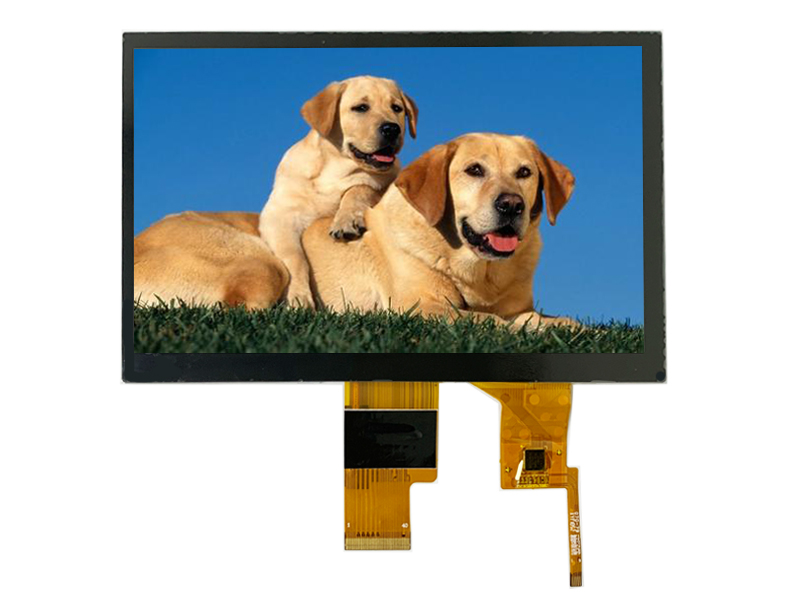
Check: Custom LCD Display
Next steps include prototype development using CDTech's in-house capabilities: glass cutting, OCA optical bonding, PCAP or CTP touch integration, and anti-glare or anti-fingerprint treatment. Samples are ready in 4–6 weeks; design refinements iterate rapidly. Once approved, production tooling launches in parallel—a dual-track approach that compresses full custom timelines to 8–12 weeks.
Volume-based pricing tiers ensure you pay fairly at every stage. At 500 units, semi-custom pricing applies. At 5,000–10,000 units, custom development costs are amortized, and per-unit pricing declines 15–25%. At 50,000+ units, full economies of scale activate, unlocking 25–35% unit cost reductions versus semi-custom. CDTech's global exports to Europe, Americas, Middle East, Russia, Japan, and Taiwan demonstrate proven logistics and compliance across markets.
Contact CDTech today: WhatsApp +8613556818296, phone +86 0755-23032202, or email sales@cdtech-lcd.com. Request a free LCD scaling checklist and ROI calculator to evaluate your transition readiness. Partner with CDTech's certified, zero-defect expertise to scale confidently from 500 to 50,000 units without supply chain risks.
CDTech Expert Views
"The inflection point for custom LCD scaling sits between 10,000 and 15,000 annual units. Below that, semi-custom offers agility; above it, full custom delivers margin and performance. What clients often miss is the certification angle. If you're shipping to automotive or medical markets, custom development with IATF16949 or ISO13485 built in from day one saves months of re-qualification later. Our in-house OCA bonding and touch panel production, added in 2020 and upgraded with full automation in 2024, mean we compress prototype-to-production timelines to 8–12 weeks—half what outsourced models require. We've guided clients from 500-unit pilots to 50,000-unit annual runs without a single certification hiccup. The key is partnering early and treating scaling as a planned journey, not a crisis." — CDTech Engineering & Operations Team
Conclusion
Scaling custom LCD displays from 500 to 50,000 units is not an ad-hoc decision but a strategic inflection requiring clear volume thresholds, ROI analysis, and certified supplier partnership. The data is clear: at 10,000–25,000 annual units, full custom solutions begin delivering 20–35% unit cost reductions, accelerated lead times, and compliance certainty that semi-custom arrangements cannot match.
CDTech's 13+ years of TFT LCD manufacturing, quad certifications, in-house touch and bonding capabilities, and zero-defect quality policy position the company as the ideal partner for this transition. Whether your application is automotive, industrial control, medical, or smart home, CDTech's proven scaling pathway—backed by exports to global markets—ensures you reach 50,000+ units with cost, compliance, and performance advantages intact.
The question is not whether to scale custom, but when. If your current volumes exceed 5,000 units or your roadmap targets 10,000+ units within 12 months, now is the time to engage CDTech for a free scaling assessment and ROI analysis. Download the CDTech LCD Scaling Checklist today and take the first step toward margin-accretive, certified custom display manufacturing.
Frequently Asked Questions
What is the typical MOQ for full custom TFT LCDs?
Full custom MOQs typically start at 5,000–10,000 units, depending on complexity (interface type, touch integration, OCA bonding). Simple displays with standard RGB interfaces may require lower MOQs; displays with PCAP multi-touch and optical bonding usually demand 10,000–20,000 units to justify tooling. CDTech offers flexible volume tiers to match your scaling roadmap.
How long does full custom LCD development take?
CDTech compresses full custom development to 8–12 weeks, including prototyping, design refinement, and production tooling. In-house OCA bonding, touch integration, and fully automatic equipment (upgraded 2024) eliminate outsourcing delays. Semi-custom or outsourced workflows often exceed 16–20 weeks, making CDTech's timeline a competitive advantage for time-sensitive launches.
Does scaling affect certifications like IATF16949?
No. CDTech's quad certifications (ISO9001, ISO14001, ISO13485, IATF16949) apply uniformly across all production volumes from 500 to 50,000+ units. Scaling requires no re-qualification, eliminating delays and costs associated with multi-supplier compliance. This continuity is a key advantage for automotive and medical manufacturers.
When is custom cheaper than semi-custom?
At 10,000–25,000 annual units, full custom typically becomes cost-competitive as development expenses amortize. Unit prices drop 20–35% compared to semi-custom due to optimized tooling and dedicated production workflows. ROI break-even occurs around 4,800–6,000 units, usually achieved within 6–12 months at automotive or industrial scale.
Can CDTech handle automotive LCD custom manufacturing?
Yes. CDTech holds IATF16949 certification and manufactures automotive-grade TFT LCDs with wide temperature ranges (-30°C to +85°C), high brightness (850–1000 nits), OCA optical bonding, and PCAP touch integration. Proven global exports and zero-defect quality assurance make CDTech a reliable partner for automotive infotainment, instrument clusters, and center console displays scaling to 50,000+ units annually.
Manufacturing, Lifecycle and Supply Continuity