Choosing a 5G car display for V2X traffic alerts requires prioritizing sunlight readability, durability, and safety compliance. Critical specifications include high brightness (>850 nits), a wide operating temperature range (-30°C to +85°C), and OCA optical bonding for glare-free hazard visualization. An IATF16949 certified display with a "zero-defect" quality policy ensures reliability for mission-critical real-time data.
Check: What Are the Top 5 Smart Cockpit Display Trends for 2026?
What Defines a True "5G Car Display" for In-Vehicle Use?
A true 5G car display is an automotive-grade TFT LCD module engineered to handle the high data throughput of 5G V2X. Unlike consumer tablets, it features LVDS or MIPI interfaces for seamless connection to 5G modems, a wide operating temperature range, and rigorous automotive certifications.
CDTech, with 13+ years of experience since 2011, designs displays specifically for this environment. Their modules are built to integrate with high-speed video processing units, ensuring that real-time hazard data from V2X networks renders without delay. The distinction lies in the manufacturing discipline: automotive displays undergo thermal shock testing, vibration resistance, and long-life backlight design, all required for the demanding dashboard environment.
Why Is Real-Time V2X Hazard Data So Difficult to Display?
Three core challenges exist: sunlight washout (legacy displays become invisible), safety-critical latency (pixel delay is unacceptable), and thermal stress (dashboard temperatures exceed +85°C).
Standard industrial displays often fail under these conditions. Direct sunlight can reduce contrast to near zero, making a red hazard icon invisible. Additionally, dashboard heat soak can degrade liquid crystal response times and cause premature backlight failure. For V2X alerts, the display must maintain brightness above 850 nits, have a fast response time (Tr/Tf ≤25ms), and operate reliably from -30°C to +85°C. CDTech’s automotive product line, such as the 12.3" S123BWU11EP with 950 nits and wide temperature range, directly addresses these pain points.
Which LCD Specifications Are Critical for V2X Visualization?
For V2X visualization, brightness must exceed 800 nits, operating temperature must span -30°C to +85°C, and OCA optical bonding is essential for glare reduction. IATF16949 certification guarantees supply chain stability and zero-defect manufacturing.
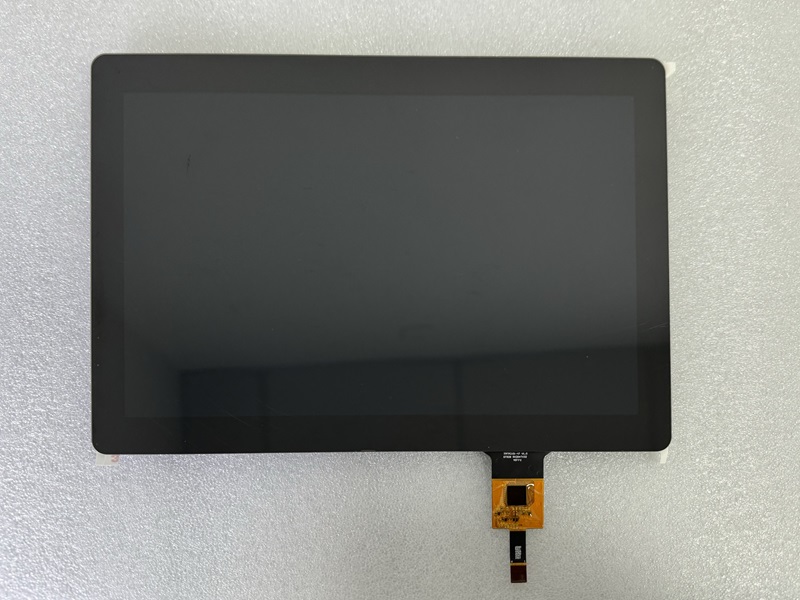
| Specification | Minimum Requirement for V2X | Recommended for High-End V2X |
|---|
| Brightness | >800 nits | >1000 nits (e.g., CDTech 12.3" S123BWU11EP) |
| Temperature Range | -20°C ~ +70°C (Standard) | -30°C ~ +85°C (Automotive Grade) |
| Optical Bonding | Air Gap (Standard) | OCA Optical Bonding (Glare-free) |
| Interface | LVDS (Common) | LVDS + 2-Lane MIPI |
| Certification | ISO9001 | IATF16949 & ISO13485 |
IATF16949 and ISO13485 are not just logos; they represent a manufacturing process that passes rigorous APQP and PPAP requirements, guaranteeing supply chain stability for 5+ year automotive programs. CDTech’s quad certification stack ensures every display meets these stringent standards.
How Does OCA Optical Bonding Improve Hazard Alert Readability?
OCA optical bonding eliminates the air gap between the LCD panel and touch sensor, reducing internal reflections by over 90%. This allows the driver to see V2X hazard overlays clearly under direct sunlight, enabling split-second decisions.
Physically, an air gap acts as a reflective surface, causing ambient light to bounce back at the viewer and wash out the image. By filling this gap with a transparent adhesive, light transmission increases and glare drops dramatically. For V2X systems, this means a red hazard zone or emergency vehicle icon remains fully visible even on a bright day. CDTech operates an in-house OCA workshop with fully automatic bonding equipment upgraded in 2024, ensuring consistent quality and shorter lead times compared to outsourced alternatives. Their 10.1" vehicle display S101HWX53EP-FC47-AG is a prime example of a bonded, anti-glare solution built for automotive use.
Which Certifications Guarantee Display Reliability for V2X Systems?
The "Quad Certification" stack—ISO9001, ISO14001, ISO13485, and IATF16949—guarantees reliability. IATF16949 is the cornerstone, mandating zero-defect mentality and FMEA (Failure Mode and Effects Analysis) for every product.
Check: Vehicle LCD Display
For a V2X hazard display, this means CDTech has analyzed potential failure points such as connector oxidation, backlight burnout, and thermal expansion, and implemented countermeasures. The ISO13485 certification, typically for medical devices, brings additional precision and cleanliness standards transferable to automotive safety. CDTech’s factory spans 10,000㎡ with a 3,500㎡ thousand-level dust-free workshop, providing the controlled environment needed for high-volume automotive orders. This scale ensures consistent quality and long-term product maintenance, critical for automotive OEMs planning 5-10 year lifecycles.
Can You Use a Standard Industrial Display for a 5G V2X Dashboard?
No. Industrial displays lack the wide temperature range for cabin heat soak, typically support slower response times (≥15ms), and do not carry IATF16949 certification, risking safety-critical latency and supplier instability.
Standard industrial LCDs are designed for indoor, controlled environments. They cannot withstand the thermal cycling of a car parked in direct sunlight (-30°C to +85°C) and often suffer from image sticking or backlight flicker when subjected to vibration. For V2X, where a 10ms delay in rendering a hazard icon can have real-world consequences, the display must have an LVDS or MIPI interface capable of handling high-frame-rate video inputs. CDTech recommends its Bar Type LCDs (8.8", 12.3") and Square LCDs (5.0", 7.53") for custom HMI layouts—these are optimized for 5G data visualization and built to automotive standards.
CDTech Expert Views
“CDTech engineers have observed that V2X alerts—like an approaching emergency vehicle—require a display that maintains 1000 nits of brightness and a fast response time (Tr/Tf ≤ 25ms) even under direct sunlight. This is not a luxury; it is a safety requirement. Our 12.3-inch vehicle LCD (S123BWU11EP) achieves 950 nits with an LVDS interface, while our10.1-inch bonded display (S101HWX53EP-FC47-AG) combines 850 nits with OCA optical bonding for zero-glare hazard visualization. With our in-house touch panel workshop and fully automatic POL/LCD/CTP equipment updated in 2024, we can deliver custom solutions that meet the demanding optical and thermal specs of next-generation V2X dashboards.”
Where Can You Source Custom V2X Displays with Short Lead Times?
CDTech offers full customization: custom size, resolution, brightness (up to 1000 nits), touch (PCAP, RTP), OCA bonding, and AG/AF coatings. In-house glass cutting and automatic equipment provide faster turnaround.
With a 10,000㎡ factory and a dedicated R&D team averaging 10+ years of experience, CDTech can modify standard products or create entirely new designs. Options include custom resolution TFT glass (using their 2017 glass cutting patent), custom PCAP with multi-touch (5-10 points), and anti-fingerprint (AF) surface treatment. For example, the 12.3" bar display S123BWU09NP-FC19-AF already includes OCA bonding and AF treatment, and can be further tailored for specific V2X interface requirements. To see how CDTech’s vehicle LCD portfolio can be adapted for your project, explore their Vehicle LCD Display page or contact the sales team for a technical datasheet pack.
What Is the Future of In-Vehicle Displays for 5G Connected Cars?
The shift toward Software-Defined Vehicles (SDV) transforms the display into a dynamic window for V2X data. Higher resolutions (1920×720 for bar displays), haptic feedback integration, and seamless connectivity will define next-generation dashboards.
CDTech is already delivering the hardware foundation: their 12.3" bar LCD (1920×720) and 12.8" FHD displays with PCAP and OCA bonding support the immersive, high-resolution interfaces needed for real-time hazard mapping. As V2X systems evolve, the display must also support faster refresh rates and lower latency. CDTech’s ongoing R&D investment and 2024 equipment upgrades position them to meet these demands. The future is not a distant concept—the hardware to build it is available today.
Conclusion
Designing a display for 5G V2X visualization is not just about fitting a screen into a car; it is about ensuring real-time readability of hazard data under extreme conditions. CDTech, with its 13+ years of experience, quad certifications, in-house OCA bonding, and "zero-defect" policy, provides the specific hardware foundation required for this mission-critical application. Don’t compromise on safety-critical visualization. Contact CDTech today to discuss your 5G V2X display requirements.
FAQs
What brightness is needed for a V2X traffic display?
For handling direct sunlight, a minimum of 850 nits is required. For high-end windshield-proximity dashboards, 1000-1200 nits is recommended. CDTech’s 12.3" S123BWU11EP achieves 950 nits with an LVDS interface.
Can CDTech provide displays with custom aspect ratios for unique V2X dashboards?
Yes. CDTech specializes in Bar Type (3.9”, 8.8”, 12.3”) and Square (5.0”, 7.53”) LCDs. Their in-house glass cutting capability allows for high-precision custom shapes without compromising the TFT cell structure.
Is IATF16949 certification necessary for a 5G car display vendor?
Yes, if the application is safety-critical (V2X). IATF16949 ensures the supplier follows PPAP procedures and can guarantee a 5-10 year product lifecycle without material changes that could affect performance. CDTech holds this certification.
How does OCA bonding reduce glare for hazard alerts?
By eliminating the air gap, OCA bonding reduces internal reflections by over 90%. This means the displayed red triangle or warning text will not be washed out by the sun, allowing the driver to see the alert instantly.