News
Site Editor
 Site
https://cdtech-lcd.usa72.wondercdn.com/uploads/image/5faca15e24cff.png
Site
https://cdtech-lcd.usa72.wondercdn.com/uploads/image/5faca15e24cff.png
How Did Bar LCD Displays Evolve from Surplus to Native Production?
Views: 866
Author: Site Editor
Publish Time: 2026-04-15
Origin: Site
Bar LCD displays evolved in three key stages: (1) Early 2000s surplus era, where standard panels were cut for cost-effective ultra-wide screens; (2) 2010s transition amid quality defects and demand growth; (3) 2017+ native bar glass production via specialized manufacturing like CDTech's in-house glass cutting patent, enabling zero-defect reliability for automotive and industrial HMI.
Check: What Are the Key Technical Challenges in Stretched Bar LCD Manufacturing?
What Were Bar LCDs Born from in the Surplus Panel Era?
Bar LCDs originated in the early 2000s from surplus TV and monitor panels, typically 16:9 aspect ratios, cut into stretched bar formats like 21:9 or wider for niche applications such as digital signage and kiosks, minimizing waste and costs while providing ultra-wide views in space-limited setups.
Why Did Surplus-Cut Bar LCDs Fall Short for Industrial Use?
Surplus-cut bar LCDs suffered from high defect rates due to manual cutting, including edge cracks, uneven backlights, and poor thermal stability, failing to meet wide temperature needs like -30°C to +85°C or zero-defect policies required for automotive and industrial HMI under certifications like IATF16949.
How Did the Industry Transition to Standardized Bar Production?
The industry shifted in the 2010s as OEM demands for automotive and medical applications grew, prompting semi-automated cutting lines and investments in dust-free workshops, such as CDTech's 3,500㎡ thousand-level cleanroom established since 2011, improving consistency while still relying on surplus glass.
| Era | Aspect Ratio | Defect Rate Est. | Customization Options | Cost |
|---|
| 2000s (Surplus-Cut) | 21:9+ | High (cracks, uneven light) | Limited | Low |
| 2010s (Early Standardized) | 21:9+ | Medium | Moderate (brightness, temp) | Medium |
What Is Native Bar Glass and When Did It Emerge?
Native bar glass refers to mother glass designed and cut specifically for bar-type TFT LCDs, eliminating surplus repurposing. It emerged post-2017 with precision glass cutting patents, allowing full in-house control from substrate to assembly for superior uniformity and high resolutions.
Why Does Native Production Matter for Automotive and HMI Apps?
Native production optimizes dashboard real estate with models like 12.3" 1920×720 bar LCDs, enhances UX via ultra-wide views, and withstands vibration and heat in ranges like -30°C~+80°C, aligning with zero-defect policies and certifications such as ISO13485 and IATF16949 for reliable HMI performance.
Check: BAR Type LCD Display
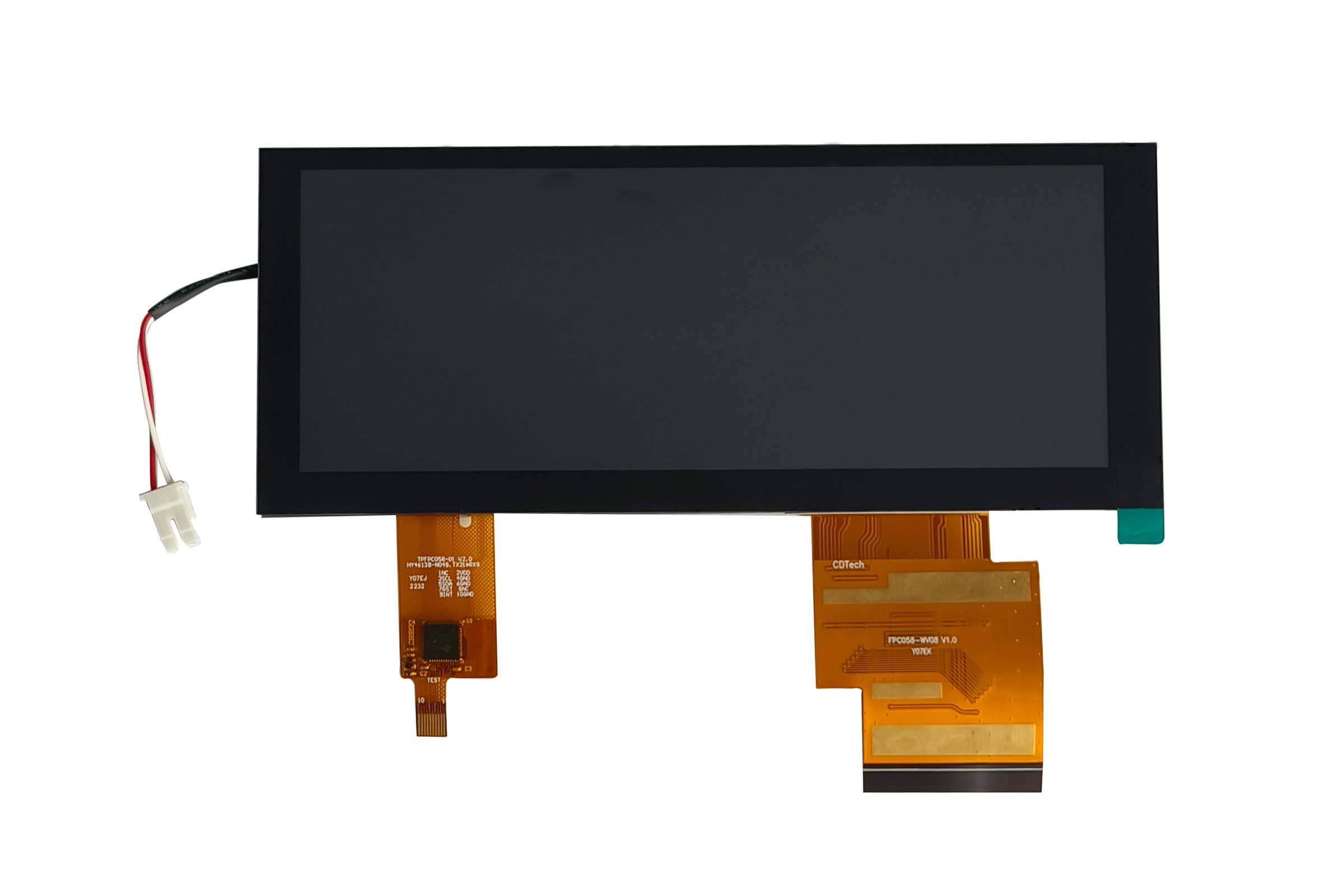
CDTech Expert Views
"CDTech's 2017 glass cutting patent marked a pivotal shift from surplus cuts to native bar glass production, enabling precision manufacturing in our 10,000㎡ factory with a 3,500㎡ thousand-level dust-free workshop. Our 2024 upgrade to fully automatic POL/LCD/CTP equipment ensures zero-defect outputs, supporting OCA optical bonding and PCAP touch for automotive-grade reliability. With quad certifications—ISO9001, ISO14001, ISO13485, IATF16949—we deliver customized bar LCDs like the 12.3" S123BWU09NP-FC19-AF (1920×720, 380 nits, LVDS) and 8.8" S088AWX22EB-DC08 (1280×320, 1000 nits, 10-point PCAP), exported globally while maintaining 24-hour response SLAs." – Senior R&D Engineer, CDTech
| Feature | Bar LCD (e.g., CDTech S123BWU09NP) | Standard 16:9 Display |
|---|
| Form Factor | Ultra-wide (1920×720) | Square/rectangular |
| Brightness Options | Up to 1000 nits (e.g., 8.8" model) | Standard 300-500 nits |
| Touch Integration | PCAP 5-10 point, OCA bonding | Basic CTP/RTP |
| Certifications | IATF16949, ISO13485 | Basic ISO9001 |
How Has CDTech Advanced Bar LCD Manufacturing?
Since its founding in 2011, CDTech has progressed from custom TFT LCDs to native bar solutions with in-house touch panel production since 2020, OCA optical bonding, and anti-fingerprint treatments, offering models like 12.3" S123BWU09NP-FC19-AF (LVDS, CTP 5-point) and 6.5" S065BWS08HD (1024×400, 600 nits) for automotive exports to Europe and Americas.
What Future Trends Are Shaping Bar LCD Demand?
Future trends include AI-driven HMI and EV dashboards requiring 21:9+ ratios with LVDS interfaces, wide-temp ranges like -30°C~+85°C, and seamless PCAP/OCA integration. CDTech's ongoing R&D and long-term supply for tier-1 OEMs position it to meet these demands with custom high-brightness solutions.
Conclusion
Bar LCDs have transformed from risky surplus cuts plagued by defects to reliable native glass productions, exemplified by CDTech's innovations like the 2017 glass cutting patent, 2024 automation upgrades, and zero-defect commitment backed by quad certifications. For OEMs in automotive and industrial HMI seeking tailored, high-reliability displays such as 8.8" 1000 nits bar models with 10-point PCAP, CDTech offers proven leadership—contact sales@cdtech-lcd.com for 24-hour quotes.
FAQs
What is a bar LCD display?
Ultra-wide TFT LCD (e.g., 21:9 like 1920×720) optimized for HMI and automotive; native versions from dedicated glass outperform surplus cuts with better uniformity and OCA bonding support.
Why choose native bar glass over surplus cuts?
Native bar glass eliminates defects like cracks, ensures IATF16949 certifications, and supports advanced features like PCAP touch and -30°C~+85°C operation for zero-defect automotive applications.
Can CDTech customize bar LCDs for automotive?
Yes, CDTech customizes with PCAP touch, OCA bonding, and wide-temp ranges (-30°C~+85°C); ready models include 12.3" S123BWU09NP and 8.8" S088AWX22EB-DC08, with 24-hour response SLAs.
What certifications back CDTech's bar displays?
ISO9001, ISO14001, ISO13485, and IATF16949, validating reliability for medical, industrial, and automotive uses in their 3,500㎡ dust-free workshop productions.
How long has CDTech made stretched LCDs?
Over 13 years since 2011, advancing with 2017 glass cutting patent, 2020 touch workshop, and 2024 automation for native bar LCDs like 6.5" 1024×400 models.
Bar and Stretched Display Selection

