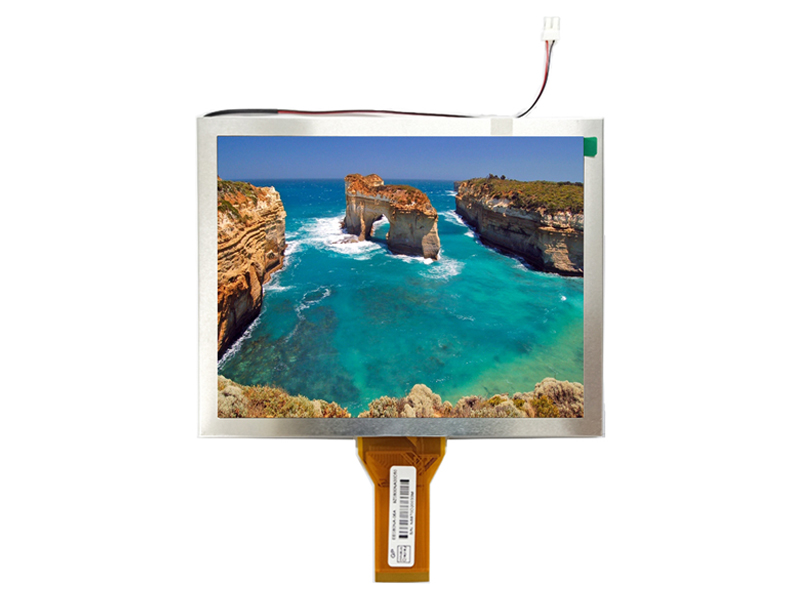
Industrial control systems have become an essential part of modern
manufacturing, automation, energy management, transportation, and smart
equipment operation. Whether in factory production lines, CNC machinery, medical
devices, or intelligent monitoring systems, operators rely heavily on display
interfaces to monitor equipment status, manage operating parameters, and respond
to system alarms in real time. As industrial automation continues to develop,
the requirements for display performance, reliability, and user interaction are
becoming increasingly demanding.
Among the many display technologies available today, TFT LCD displays have
become one of the most widely used solutions in industrial control systems.
Their popularity comes from a combination of clear image quality, stable
performance, long service life, flexible customization, and cost efficiency.
Compared with older display technologies, TFT LCD modules are capable of
delivering a more modern and efficient operating experience while maintaining
the durability required for industrial environments.
Clear Visual Performance Improves Industrial Operation
One of the most important reasons TFT LCD displays are widely adopted in
industrial control systems is their excellent visual performance. Industrial
operators often need to monitor complex data, production processes, equipment
status indicators, and graphical control interfaces for long periods of time. A
display with poor visibility can easily lead to operational errors, reduced
efficiency, and increased downtime.
TFT LCD technology uses thin-film transistors to control each individual
pixel, allowing the display to provide sharper images, richer colors, faster
response times, and better contrast compared with traditional LCD solutions.
This makes it easier for operators to read data accurately and quickly, even
when the interface contains detailed graphics or multiple monitoring
windows.
In many industrial environments, lighting conditions can be challenging.
Some systems operate in bright factories with strong overhead lighting, while
outdoor equipment may face direct sunlight exposure. Industrial TFT LCD displays
are therefore designed with features such as high brightness, anti-glare
coatings, wide viewing angles, and optical bonding technology to ensure clear
visibility under different environmental conditions.
For industrial control systems, visual clarity directly affects operational
efficiency. When operators can quickly identify alarms, process changes, or
equipment abnormalities, the entire production process becomes more stable and
efficient.
Strong Compatibility With Modern Human-Machine Interfaces
Modern industrial equipment increasingly relies on Human-Machine Interface
systems, commonly known as HMIs. These systems allow operators to interact
directly with machines through graphical interfaces instead of relying solely on
traditional buttons, switches, or indicator lights. TFT LCD displays have become
a core component of modern HMI design because they support advanced graphics,
touch interaction, and flexible interface layouts.
Compared with older monochrome displays, TFT LCD modules allow equipment
manufacturers to create more intuitive and visually organized control systems.
Operators can navigate menus, monitor machine status, adjust settings, and
access diagnostic information more efficiently through graphical interfaces.
This not only improves operational convenience but also reduces training time
for new personnel.
Touchscreen integration has further increased the popularity of TFT LCD
displays in industrial applications. Many industrial TFT displays now support
resistive or projected capacitive touch technology, allowing operators to
control equipment directly through the screen. Capacitive touch technology, in
particular, offers smoother operation, higher durability, and support for
multi-touch functions. Even in industrial environments where gloves are
required, specially designed touch panels can still maintain reliable
performance.
As smart factories and Industry 4.0 systems continue to expand,
user-friendly interfaces are becoming more important than ever. TFT LCD displays
provide the flexibility and graphical capability needed for these advanced
industrial systems.
Reliable Performance in Harsh Industrial Environments
Industrial environments are often much more demanding than consumer
applications. Equipment may be exposed to dust, vibration, humidity, oil
contamination, electromagnetic interference, and extreme temperatures. For this
reason, industrial-grade TFT LCD displays are designed with enhanced durability
and long-term stability.
Many industrial TFT LCD modules support wide operating temperature ranges,
allowing them to function reliably in both extremely cold and high-temperature
environments. This is especially important for outdoor control systems,
transportation equipment, energy storage systems, and heavy industrial
machinery.
Long operational lifespan is another critical advantage. Industrial systems
often run continuously for many hours every day, and in some cases operate 24
hours a day without interruption. Industrial TFT LCD displays typically use
durable LED backlighting systems with long service lives, helping reduce
maintenance frequency and replacement costs.
In addition, industrial TFT modules are often designed with reinforced
structures and stable electrical performance to withstand vibration and unstable
power conditions. These characteristics help ensure consistent display operation
in demanding environments where reliability is essential.
For industrial manufacturers, stable display performance is not simply a
convenience. A reliable display interface can directly reduce downtime, improve
safety, and maintain production continuity.
Flexible Sizes and Customization Support Different Industrial Needs
Industrial control systems vary greatly depending on the application. Some
devices require compact displays for handheld equipment, while others need
larger screens for centralized monitoring systems. One of the major strengths of
TFT LCD technology is its flexibility in size and customization.
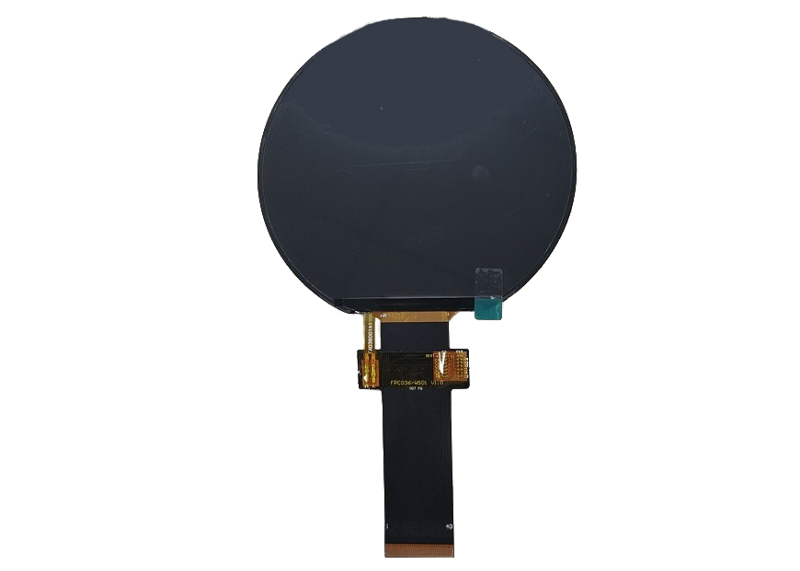
TFT LCD modules are available in a wide range of sizes, from small displays
used in portable testing instruments to large-format screens used in factory
automation systems and industrial terminals. This flexibility allows
manufacturers to choose display solutions that match the physical design and
functional requirements of their equipment.
In addition to screen size, industrial TFT LCD displays can also be
customized in many other ways. Manufacturers often require specific brightness
levels, interface types, touch panel integration, protective glass, or
wide-temperature support based on the operating environment of the equipment.
TFT LCD technology supports these customization requirements very well, making
it easier for equipment manufacturers to develop specialized industrial
products.
Interface compatibility is another important advantage. Industrial TFT
displays support multiple communication interfaces such as RGB, LVDS, MIPI, SPI,
HDMI, and VGA, allowing them to integrate easily with various industrial
processors and embedded systems.
This flexibility is particularly valuable because industrial equipment
usually has long development cycles and long service lifetimes. Stable product
availability and compatibility help manufacturers reduce redesign costs and
maintain long-term system consistency.
Energy Efficiency and Cost Advantages Support Large-Scale Industrial
Use
Energy efficiency has become increasingly important in modern industrial
system design. Many factories and industrial facilities are working to reduce
energy consumption while maintaining high operational performance. TFT LCD
displays offer relatively low power consumption compared with older display
technologies, especially when combined with LED backlighting systems.
Lower power consumption not only reduces operating costs but also decreases
heat generation inside industrial equipment. Reduced heat helps improve overall
system stability and can simplify thermal management design.
For portable industrial equipment or battery-powered monitoring devices,
power efficiency becomes even more important. TFT LCD technology provides a
practical balance between performance and energy consumption, making it suitable
for a wide range of industrial applications.
Cost efficiency is another reason why TFT LCD displays remain highly
popular. While industrial-grade TFT displays may cost more than basic display
solutions initially, their long lifespan, stable performance, and relatively low
maintenance requirements provide strong long-term value. In industrial
environments where equipment downtime can be extremely expensive, reliability
often matters more than simply reducing initial hardware costs.
At the same time, TFT LCD technology has a mature global supply chain and
extensive manufacturing experience, helping maintain reasonable production costs
and component availability. This balance between performance, durability, and
affordability makes TFT LCD displays a practical choice for many industrial
equipment manufacturers.

Expanding Applications in Smart Industry
Today, TFT LCD displays are used across almost every industrial sector. In
manufacturing automation, they are widely integrated into PLC control systems,
robotic equipment, CNC machines, and production monitoring systems. In energy
industries, TFT displays are commonly found in solar power equipment, energy
storage systems, EV charging stations, and smart grid control devices.
Medical equipment also relies heavily on industrial TFT LCD technology
because of its ability to display detailed information clearly and accurately.
Transportation systems, agricultural automation equipment, marine navigation
devices, and industrial IoT terminals all benefit from the stability and
graphical capabilities of TFT LCD displays.
As Industry 4.0 continues to develop, industrial systems are becoming more
intelligent, connected, and data-driven. Modern industrial software platforms
increasingly require advanced graphical interfaces capable of displaying
real-time monitoring data, system diagnostics, production analytics, and remote
management functions. TFT LCD displays provide the visual performance necessary
to support these advanced industrial applications.
Although newer technologies such as OLED continue to develop, TFT LCD
technology remains highly competitive in industrial markets because of its
proven reliability, lower cost, long lifespan, and excellent adaptability to
harsh operating environments.
Conclusion
TFT LCD displays have become one of the most important display technologies
in industrial control systems because they offer a strong combination of image
quality, reliability, flexibility, energy efficiency, and long-term cost
performance. Their ability to support modern HMI systems, operate reliably in
demanding environments, and adapt to different industrial applications makes
them an ideal solution for automation equipment and intelligent control
systems.
As industrial automation continues to evolve toward smarter and more
connected operations, the role of high-performance industrial displays will only
become more important. TFT LCD technology continues to provide a stable and
practical foundation for modern industrial equipment, helping manufacturers
improve operational efficiency, user experience, and overall system
reliability.
Industrial HMI Selection and Lifecycle