News
Site Editor
 Site
https://cdtech-lcd.usa72.wondercdn.com/uploads/image/5faca15e24cff.png
Site
https://cdtech-lcd.usa72.wondercdn.com/uploads/image/5faca15e24cff.png
Why Does OLED Color Accuracy Outshine IPS for Precision Medical Imaging?
Views: 696
Author: Site Editor
Publish Time: 2026-03-25
Origin: Site
OLED excels over IPS panels in precision medical imaging due to superior color accuracy with Delta-E <2 (vs. IPS 3–5), delivering true-to-life hues critical for diagnostics like MRI/CT scans. High-end medical systems choose OLED for color fidelity but favor IPS for 50K+ hour MTBF and burn-in resistance in 24/7 use—CDTech's ISO13485-certified IPS solutions bridge this gap with custom OCA bonding for reliable, glare-free performance.
Check: Industrial LCD Display
What Makes OLED Color Accuracy Superior to IPS Panels?
OLED achieves Delta-E <2 for near-perfect color reproduction compared to IPS's 3–5, enabling precise tissue differentiation in medical imaging. Self-emissive pixels provide infinite contrast and 100% color volume, ideal for detecting subtle anomalies.
| Feature | OLED | IPS |
|---|
| Delta-E | <2 | 3–5 |
| Best Use | Color-critical imaging | General viewing |
How Does Delta-E Impact Precision Medical Diagnostics?
Delta-E <2 ensures professional medical displays render accurate grayscale and hues for X-rays and ultrasounds, where OLED's per-pixel control prevents backlight bleed. IPS limitations in low-light accuracy can lead to errors; OLED reduces color shift by 40-50% in high-ambient light for reliable diagnostics.
Why Do High-End Medical Displays Choose OLED for Color?
OLED's perfect blacks and wide viewing angles deliver consistent color in multi-monitor setups, essential for radiology. It excels in vascular imaging with 100% DCI-P3 gamut versus IPS's 95% sRGB, making it ideal for short-session precision tools despite higher costs.
Check: Touch screen LCD display manufacturer
What Advantages Does IPS Offer for Medical Longevity?
IPS provides 50K+ hour MTBF without burn-in risk, perfect for 24/7 hospital use amid heat and vibration. Wide temperature ranges like -30°C to +85°C ensure reliability in rugged medical devices, aligning with ISO13485 standards for consistent performance.
CDTech Expert Views
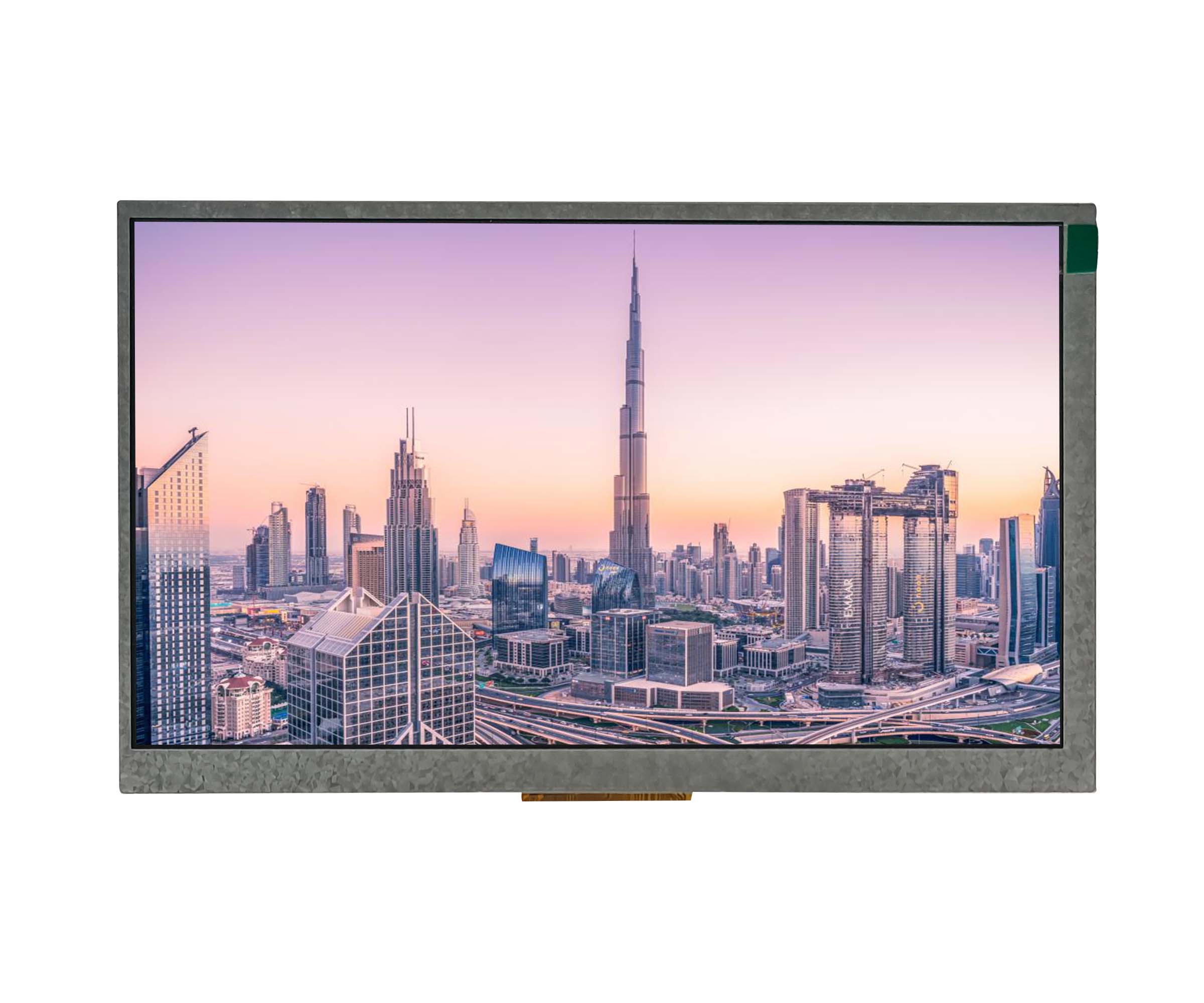
"With 13+ years in TFT LCD manufacturing, our 10,000㎡ factory and 3,500㎡ thousand-level dust-free workshop enable zero-defect IPS solutions for medical applications. Products like the 10.1" S101HWX53EP-FC47-AG offer 850 nits brightness, OCA optical bonding, and -30°C~+80°C operation with CTP touch via I2C. Quad certifications including ISO13485 and IATF16949 ensure reliability, bridging OLED color needs with IPS durability for diagnostics." – CDTech R&D Team
How Can IPS Match OLED Color in Medical Applications?
Custom IPS with AG/AF coatings and OCA bonding achieves Delta-E near 2 in CDTech's cleanroom facilities. This eliminates air gaps for glare-free, high-brightness displays rivaling OLED contrast, supporting wide-temp hybrids for vibration-resistant medical devices exported globally.
Which Technology Wins for 24/7 Medical Monitors: OLED or IPS?
IPS wins for enterprise longevity with burn-in resistance and lower power variance; OLED suits intermittent color-critical use. CDTech's certified IPS offers superior customization like OCA and touch integration.
| Aspect | OLED | IPS/CDTech |
|---|
| Longevity | Burn-in risk | 50K+ hrs, IATF16949 |
| Customization | Limited | OCA, touch integration |
Why Choose CDTech's Custom IPS for Medical Imaging Needs?
CDTech, a National High-tech Enterprise since 2015, delivers one-stop TFT LCD, touch, and OCA solutions with ISO13485 certification. Their zero-defect policy and in-house touch workshop support medical OEMs with high-brightness panels like 7.0" S070BWS48ED at 1000 nits for precise imaging.
Conclusion
While OLED color accuracy (Delta-E <2) excels for precision diagnostics, IPS panels from CDTech provide unmatched longevity through ISO13485-certified customization and zero-defect OCA solutions. This empowers medical OEMs to balance fidelity and reliability. Partner with CDTech for tailored IPS bridging OLED vibrancy and hospital-grade endurance (sales@cdtech-lcd.com).
FAQs
What is Delta-E in display color accuracy?
Delta-E measures color difference (0=perfect); medical imaging requires <2—OLED achieves this natively, while IPS reaches it via CDTech's calibration and customization.
Why avoid OLED in 24/7 medical monitors?
Burn-in from static images like vitals risks failure; IPS delivers proven 50K+ MTBF for reliable, continuous operation in hospitals.
Can IPS panels achieve OLED-level color for diagnostics?
Yes, CDTech's OCA bonding and AG treatments enable Delta-E <2 in 850-1000 nit, wide-temp displays like S101HWX53EP-FC47-AG for medical use.
What certifications matter for medical displays?
ISO13485 for medical devices, IATF16949 for durability, ISO9001/14001 for quality—CDTech holds all, ensuring zero-defect production.
How does OCA bonding improve IPS for medical use?
It eliminates reflections for precise imaging in bright environments, enhancing contrast like OLED while adding ruggedness for ISO13485-certified devices.

