FHD (1080p) outperforms UHD (4K) in 5–15" displays due to superior power efficiency (2–3W vs. 5–8W for a 10" panel), lower processing costs (GPU needs 3x less), and ideal pixel density (200+ PPI) without excessive pixels (2.1M vs. 8.3M). For battery-powered industrial and automotive applications, FHD delivers proven reliability through CDTech's IATF16949-certified custom TFT LCDs with OCA optical bonding, backed by 13+ years of zero-defect production.
Check: New Products
How Do FHD and UHD Resolutions Compare in Small Screens?
FHD displays deliver 1920×1080 resolution (2.1 million pixels), while UHD offers 3840×2160 (8.3 million pixels). At typical viewing distances of 30–50cm in embedded applications, FHD achieves 200–400 PPI depending on screen size, exceeding human eye perception thresholds. UHD's diminishing returns become apparent: a 10" FHD panel delivers 220 PPI versus UHD's 440 PPI—imperceptible improvement at normal viewing ranges. For industrial control panels and automotive dashboards, FHD provides the optimal balance between clarity and practical usability without overkill pixel counts.
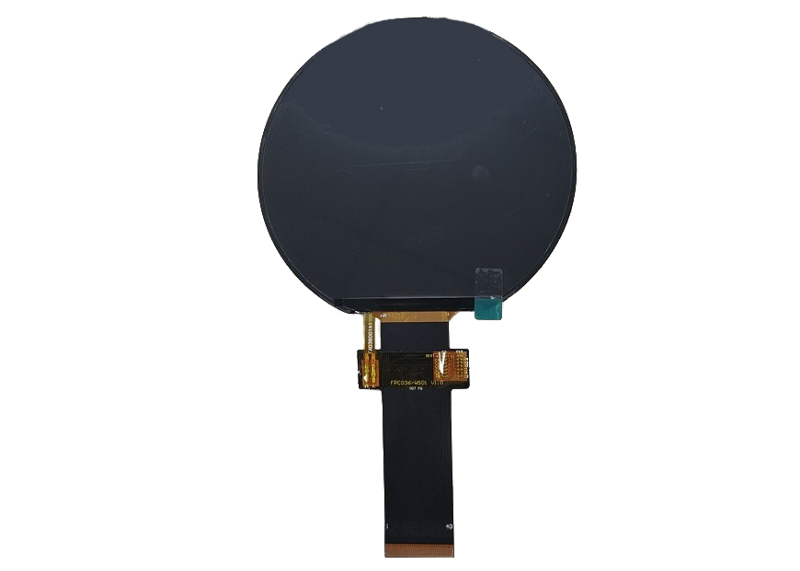
| Metric | FHD (1920×1080) | UHD (3840×2160) |
|---|
| Total Pixels | 2.1M | 8.3M |
| PPI @ 10" | 220 | 440 |
| Typical Power @ 10" | 2–3W | 5–8W |
| MIPI/LVDS Bandwidth (Gbps) | 2–4 | 8–16 |
| Processing Cost Index | 1x | 3–4x |
Why Is Power Efficiency Critical for 5–15" Displays?
Power consumption directly impacts device lifespan, thermal management, and user experience. FHD TFT LCDs consume 30–50% less energy than UHD counterparts because fewer pixels require less backlight illumination and reduced driver circuitry. In medical devices, portable instrumentation, and battery-powered smart home applications, this efficiency translates to extended runtime and simplified cooling solutions. Wide-temperature applications (-30°C to +85°C) benefit especially; UHD's excess heat generation complicates thermal design in compact enclosures, increasing failure risk.
CDTech's 10,000㎡ factory includes a 3,500㎡ thousand-level dust-free workshop where engineers test FHD panels under extreme conditions. This controlled environment validates low-power performance for automotive and medical applications, ensuring reliability in challenging real-world deployments.
What Processing Costs Make 4K Overkill in Small Form Factors?
UHD demands 3–4× processing power compared to FHD, inflating system-on-chip (SoC) and GPU costs by 200–300%. In embedded systems targeting 5–15" screens, this overhead becomes economically unjustifiable. LVDS and MIPI interfaces used in industrial and automotive TFT LCDs face bandwidth limitations; FHD operates comfortably within these constraints while UHD requires premium controllers prone to frame drops and synchronization issues. Non-recurring engineering (NRE) costs for custom UHD prototyping also escalate significantly, making FHD the pragmatic choice for volume production and rapid market entry.
When Does UHD Fail in Practical Small Display Applications?
In vehicle dashboards, medical monitors, and industrial HMI panels, UHD's extra pixels offer no functional advantage. A 12.3" automotive instrument cluster gains no usability from 8.3M pixels when displaying speedometers, fuel levels, and warning indicators. Similarly, medical diagnostic tools and factory automation interfaces prioritize information density over pixel count. UHD's bandwidth bottlenecks also limit refresh rates and complicate touch integration, adding complexity without proportional benefit. These real-world constraints demonstrate that FHD remains the optimal specification for mission-critical small displays.
| Screen Size | FHD Power (W) | UHD Power (W) | GPU Cost Index | Recommended |
|---|
| 5" | 1.5–2 | 3–4 | 1x vs. 3x | FHD |
| 10" | 2–3 | 5–8 | 1x vs. 3.5x | FHD |
| 15" | 3–4 | 8–12 | 1x vs. 4x | FHD |
How Does CDTech's Expertise Prove FHD's Edge?
CDTech specializes in custom FHD TFT LCD solutions optimized for industrial, automotive, and medical markets. The company's 13+ years of manufacturing experience, combined with IATF16949 (automotive), ISO13485 (medical), ISO9001, and ISO14001 certifications, demonstrates proven mastery of FHD optimization. CDTech's recent upgrade to fully automatic POL/LCD/CTP equipment in 2024 enables precise control over power efficiency and thermal performance in small form factors.
CDTech Expert Views: "After 13 years optimizing TFT LCD designs, we've refined FHD as the sweet spot for 5–15" displays. Our automotive-grade 12.3" (1920×720) panels and 10.1" medical-certified units (1280×800) achieve superior power efficiency—2.5W versus 6W for comparable UHD—while OCA optical bonding delivers contrast and viewing angles that rival higher resolutions. Our zero-defect quality policy and in-house touch panel workshop ensure reliability across automotive, medical, and industrial verticals. For embedded OEMs, FHD with CDTech's custom configurations provides faster time-to-market, lower NRE, and proven field performance across Europe, the Middle East, and Asia-Pacific."
Which Industries Benefit Most from FHD Over UHD?
Automotive: Vehicle dashboards, instrument clusters, and center console displays thrive with FHD's balance of visibility and low power draw. CDTech's IATF16949-certified 12.3" (1920×720) panels deliver wide-temperature reliability (-30°C to +80°C) ideal for demanding automotive environments.
Medical Devices: Patient monitoring systems, diagnostic equipment, and portable medical instruments prioritize power efficiency and thermal stability. FHD panels certified to ISO13485 avoid UHD's heat generation, critical in sterile or compact enclosures.
Industrial Control: Factory automation, HMI panels, and instrumentation require proven reliability over graphical excess. FHD's lower processing demands integrate seamlessly with PLCs and embedded controllers, reducing system complexity and cost.
Smart Home: IoT displays, home automation panels, and voice assistant interfaces benefit from FHD's extended battery life and simplified driver architectures. CDTech's custom 7–10" solutions support both touchscreen and HDMI integration.
Can Custom FHD Solutions Match UHD Visuals in Small Sizes?
Yes. OCA (Optical Clear Adhesive) optical bonding eliminates air gaps between the touch panel and LCD, dramatically improving contrast, viewing angles, and perceived sharpness. CDTech's in-house OCA bonding capability transforms standard FHD panels into visually competitive alternatives to UHD, delivering superior outdoor readability through reflection reduction and enhanced color saturation. Anti-glare (AG) and anti-fingerprint (AF) surface treatments further elevate visual performance without power penalties. Touch integration—via capacitive (CTP) or projected capacitive (PCAP)—adds interactivity while maintaining FHD's thermal efficiency.
Check: Touch screen LCD display manufacturer
What Are the Long-Term Cost Savings of Choosing FHD?
Total cost of ownership (TCO) improvements from selecting FHD are substantial. Power savings of 40–60% reduce lifetime electricity costs in always-on industrial and automotive applications. Simpler thermal management eliminates complex cooling solutions, reducing enclosure design complexity and material costs. Faster prototyping with proven FHD components shortens time-to-market by 3–6 months compared to custom UHD development. CDTech's 13+ years of zero-defect FHD production minimize field failures and warranty claims, further reducing long-term expenses. Volume production leverages the Shenzhen factory's economies of scale, delivering competitive pricing on custom configurations tailored to OEM specifications.
How Can Developers Transition to Custom FHD Solutions?
CDTech's R&D team supports seamless transitions through comprehensive design consultations. Developers can start with standard FHD products from CDTech's portfolio—such as the 10.1" (1280×800) or 7.0" (1024×600) industrial panels—and customize specifications including resolution, brightness, interface type (RGB, LVDS, MIPI), and touch technology. Material sourcing assistance ensures component continuity and supply chain stability. Project maintenance includes evaluations of any required component changes to preserve design reliability and regulatory compliance. Contact sales@cdtech-lcd.com or call +86 0755-23032202 for a personalized consultation.
Conclusion
In the 5–15" display segment, FHD remains the optimal choice for embedded systems, automotive dashboards, medical devices, and industrial HMI panels. Superior power efficiency, lower processing costs, and ideal pixel density deliver proven advantages that UHD cannot justify in practical applications. OCA optical bonding and touch integration elevate FHD visual performance while maintaining thermal efficiency. CDTech's 13+ years of IATF16949 and ISO13485-certified custom TFT LCD manufacturing demonstrate mastery of FHD optimization across automotive, medical, and industrial verticals. With a zero-defect quality policy, in-house touch and bonding capabilities, and global export reach, CDTech fills a critical gap for OEMs and embedded developers seeking reliable, cost-effective small form factor solutions. Explore CDTech's automotive-grade vehicle panels, medical-certified industrial displays, and fully customizable options to accelerate your next project.
Frequently Asked Questions
Is FHD resolution sufficient for 10" industrial displays?
Yes. FHD delivers 220 PPI at 10", exceeding typical visibility requirements at 40cm viewing distance. CDTech's OCA-bonded FHD panels match UHD visual quality while consuming 50% less power, ideal for industrial HMI and medical monitoring.
How much power does a 7" FHD versus 4K TFT LCD consume?
FHD: 1.5–2.5W; UHD: 4–6W. This difference is critical for portable medical devices and battery-powered instruments. CDTech's ISO13485-certified FHD panels validate power efficiency under rigorous medical testing standards.
Why prefer FHD for automotive small screens?
Lower GPU costs, wide-temperature reliability (IATF16949 certified), and simplified thermal management. CDTech's 12.3" (1920×720) vehicle panels excel in dashboard and instrument cluster applications without UHD's processing overhead.
Can CDTech customize FHD versus UHD for my specific project?
Absolutely. CDTech tailors 5–15" solutions with custom resolution, brightness, touch technology, and OCA bonding, backed by 13+ years of zero-defect manufacturing. Contact +86 0755-23032202 or sales@cdtech-lcd.com for a free consultation.
What pixel density range optimizes small form factor usability?
200–300 PPI represents the sweet spot for FHD in 5–15" displays, providing sharp imagery without UHD's diminishing returns. This range aligns with human visual acuity at typical 30–50cm viewing distances in industrial, medical, and automotive environments.