News
Site Editor
 Site
https://cdtech-lcd.usa72.wondercdn.com/uploads/image/5faca15e24cff.png
Site
https://cdtech-lcd.usa72.wondercdn.com/uploads/image/5faca15e24cff.png
Why Does 4K Display Signal Loss Occur Over Long Cables? (And Why 1080p Wins at 10m)
Views: 3981
Author: Site Editor
Publish Time: 2026-04-17
Origin: Site
4K display signal loss over long cables happens due to high bandwidth demands (18Gbps+ for HDMI/DP) causing attenuation, crosstalk, and EMI beyond 5-10m on copper cables. 1080p vs 4K long cable reliability favors FHD (e.g., LVDS interfaces) which sustains signal integrity up to 15m+ without extenders—ideal for industrial/automotive displays like CDTech's IATF16949-certified wide-temp panels.
Check: Is FHD or 4K Better for 15-Inch Industrial Displays?
What Causes Signal Degradation in 4K Transmissions?
4K transmissions degrade over long cables because they require ~18Gbps bandwidth (HDMI 2.0/DP 1.2), leading to rapid attenuation in twisted-pair copper beyond 10m. High-frequency signals amplify crosstalk and EMI in unshielded runs, while skin effect and dielectric loss worsen signal quality compared to lower-data FHD.
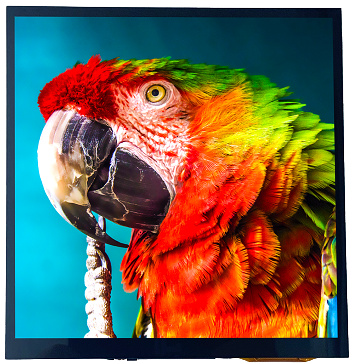
Why Is HDMI Signal Integrity a Challenge Over 10m Cables?
HDMI signal integrity fails over 10m cables due to TMDS clock jitter and equalization breakdowns in passive cables beyond 5-7m for 4K@60Hz. Insufficient shielding or thick AWG 24+ gauging causes ghosting, color shifts, or blackouts, as confirmed in real-world tests where consumer cables unreliable past 10m without active boosters.
How Does DisplayPort 4K Signal Degradation Compare to HDMI?
DisplayPort offers higher bandwidth tolerance than HDMI but faces similar copper cable limits, with packet loss causing 4K signal degradation over distance. Both protocols struggle beyond 10m on passive cables for 4K, unlike FHD which extends reliably; industrial LVDS/eDP avoids these issues in embedded systems.
| Protocol | Resolution | Max Passive Cable Length | Failure Modes |
|---|
| HDMI 2.0 | 4K@60Hz | 5-7m | Jitter, ghosting, blackouts |
| DisplayPort 1.4 | 4K@60Hz | 7-10m | Packet loss, crosstalk |
| HDMI/DP | FHD (1080p) | 15m+ | Minimal attenuation |
CDTech Expert Views
"With 13+ years testing LVDS FHD panels in 10m+ automotive harnesses, CDTech leverages our 10,000㎡ factory, 3,500㎡ thousand-level dust-free workshop, and zero-defect policy to deliver custom cable-matched solutions. Panels like the 12.3" S123BWU11EP (1920×720, 950 nits, LVDS 60pins, -30°C~+80°C) ensure signal integrity in harsh environments without 4K's bandwidth pitfalls." – CDTech R&D Team
Why Is 1080p More Reliable for Displays Mounted 10m Away?
1080p excels for 10m displays due to lower ~3-6Gbps bandwidth (LVDS), resisting attenuation and needing less equalization than 4K's 18Gbps+. This maintains integrity in EMI-heavy setups like vehicles or factories, making FHD ideal for HMI panels in industrial control or dashboards without artifacts.
What Role Do Interfaces Like LVDS Play in Long-Distance Reliability?
LVDS enhances long-distance reliability via point-to-point low-voltage differential signaling, minimizing noise and EMI for FHD over 10m+. It avoids high-resolution cable loss in wide-temp panels (-30°C~+85°C), as in CDTech's 12.3" S123BWU11EP (950 nits, LVDS) or 10.1" S101HWX53EP (850 nits, LVDS, OCA bonding).
Check: FHD Display
How Can Industrial and Automotive Displays Overcome These Challenges?
Industrial and automotive displays overcome challenges with custom LVDS FHD panels, OCA optical bonding reducing reflections for sunlight readability, and IATF16949 certifications ensuring zero-defect quality. CDTech's 2024 automatic POL/LCD/CTP equipment in dust-free workshops tailors 12.8" S128HWU01HP-FC01 for stable long-cable vehicle use.
When Should You Choose FHD Over 4K for Long-Cable Applications?
Choose FHD over 4K for long-cable apps when prioritizing reliability/cost over pixel density—FHD sustains 10m+ without fiber/extenders in industrial/automotive settings. CDTech's export-proven quad ISO-certified panels to Europe/Americas excel here, balancing performance with signal stability.
| Factor | FHD (1080p) | 4K |
|---|
| Bandwidth | 3-6Gbps (LVDS) | 18Gbps+ (HDMI/DP) |
| Max Cable Length | 15m+ reliable | 5-10m max passive |
| Reliability in EMI | High (differential signaling) | Low (high freq. loss) |
| Cost for 10m Runs | Lower, no extenders | Higher, needs boosters |
| CDTech Use Case | Vehicle dashboards, HMI | Not recommended long-dist. |
Conclusion
For 10m+ displays, 1080p trumps 4K in long cable reliability thanks to lower bandwidth and robust LVDS interfaces, sidestepping attenuation headaches. CDTech's IATF16949-certified wide-temp FHD panels—like 12.3" S123BWU11EP with 950 nits and OCA options—deliver zero-defect performance, custom bonding, and 13+ years expertise for industrial, automotive, and medical apps. Contact sales@cdtech-lcd.com for tailored solutions.
FAQs
What is the max HDMI cable length for reliable 4K?
Passive HDMI limits 4K to 5-7m; beyond 10m, active/fiber is needed—FHD LVDS reaches 15m reliably for industrial/automotive use.
Why does 4K suffer more signal loss than 1080p over long cables?
4K's 18Gbps+ bandwidth amplifies attenuation, crosstalk, and EMI; 1080p's lower data rate preserves integrity up to 15m on copper cables.
Can CDTech provide custom FHD displays for 10m vehicle dashboards?
Yes, IATF16949-certified wide-temp LVDS panels like 12.3" S123BWU11EP (1920×720, 950 nits, -30°C~+80°C) with OCA bonding ensure zero-defect long-cable performance.
What certifications back CDTech's signal-reliable displays?
ISO9001, ISO14001, ISO13485, IATF16949—supporting quality for industrial, medical, and automotive exports from their 10,000㎡ factory.
How does LVDS improve long-distance display reliability?
LVDS uses differential signaling to reject noise/EMI, enabling reliable FHD over 10m+ in harsh environments versus HDMI/DP's high-frequency vulnerabilities.
Signal Integrity, Harnesses and System Qualification

