News
Site Editor
 Site
https://cdtech-lcd.usa72.wondercdn.com/uploads/image/5faca15e24cff.png
Site
https://cdtech-lcd.usa72.wondercdn.com/uploads/image/5faca15e24cff.png
Which Wins: IPS vs PLS for Industrial Reliability?
Views: 635
Author: Site Editor
Publish Time: 2026-03-25
Origin: Site
IPS outperforms PLS for industrial reliability due to superior production stability across array, cell, and module processes, ensuring consistent 178° viewing angles and long-term supply chain support. Samsung's PLS, an IPS evolution, matches viewing angles but risks variability in manufacturing and EOL disruptions, making certified IPS ideal for harsh environments like automotive HMIs. CDTech's IATF16949/ISO13485 IPS panels deliver zero-defect reliability.
Check: Industrial LCD Display
What Is IPS Panel Technology?
IPS (In-Plane Switching) is a mature TFT LCD technology using horizontal electric fields for wide 178°/178° viewing angles, stable color reproduction, and low power in industrial applications. It involves array process (TFT formation via photoresist coating, exposure, etching), cell process (LC filling, sealing), and module process (backlight assembly, IC bonding). CDTech's 10,000㎡ factory with 3,500㎡ dust-free workshop supports wide-temp IPS (-30°C~+85°C) under zero-defect policy.
What Is PLS Display Technology?
PLS (Plane-to-Line Switching) is Samsung's 2011 IPS evolution using vertical electric fields for equivalent 178° viewing angles and cost efficiencies. It shares array/cell/module processes but optimizes LC alignment and ITO deposition for higher transmittance. As a Samsung-centric "IPS clone," PLS introduces supply chain risks for industrial users reliant on consistent production.
How Did PLS Evolve from IPS Technology?
PLS evolved from IPS (LG-led since 1990s) as Samsung's cost-competitive response, refining polyimide rubbing and LC dispensing for wide-angle panels. Both use 5-7 array repeats (cleaning, coating, exposure, etching), but PLS tweaks cell sealing for high-volume yields. IPS offers broader multi-vendor ecosystem for industrial customizations like OCA bonding at CDTech.
Check: Touch screen LCD display manufacturer
| Feature | IPS (Mature Standard) | PLS (Samsung Evolution) |
|---|
| Electric Field | Horizontal (In-Plane) | Vertical (Plane-to-Line) |
| Key Process Innovation | Stable polyimide alignment | Enhanced LC spreading in vacuum |
| Manufacturing Maturity | Multi-vendor, 20+ years | Samsung-centric since 2011 |
| Industrial Yield | High consistency (ISO-certified) | Variable due to proprietary tweaks |
Which Offers Better Viewing Angles: IPS or PLS?
Both IPS and PLS achieve 178°/178° (H/V) viewing angles via aligned LC molecules after polyimide coating and rubbing, but IPS delivers more consistent batch performance. In industrial HMIs like vehicle dashboards, IPS excels without color shift, as verified in module testing. PLS matches specs but shows variability in color filter deposition.
Why Does IPS Excel in Production Stability for Industrial Use?
IPS excels via standardized processes: array (TFT/CF etching 5x), cell (vacuum sealing/LC fill), module (FPC bonding/aging) for lower defect rates. CDTech's 3,500㎡ dust-free workshop and 2024 automatic POL/LCD/CTP lines ensure zero-defect IPS output, certified ISO9001/ISO14001/ISO13485/IATF16949. PLS risks EOL disruptions from Samsung reliance.
CDTech Expert Views
With 13+ years specializing in IPS for industrial, medical, and automotive applications, CDTech prioritizes production stability. Our IATF16949-certified panels like the S036BWS01EN (3.6" round, 544×506, 1000 nits, -30°C~+85°C, RGB interface) and S101HWX53EP-FC47-AG (10.1", 1280×800, 850 nits, OCA bonding, CTP touch) demonstrate superior wide-temp reliability. In-house OCA optical bonding, AG/AF treatments since our 2020 Touch Panel workshop, and zero-defect policy outperform PLS optical limits in sunlight-readable HMIs. Global exports to Europe and Americas confirm supply chain resilience.
How Do IPS and PLS Impact Industrial Supply Chains?
IPS reduces disruptions via multi-supplier maturity; CDTech's Shenzhen hub supports custom volumes with stable array/cell yields. PLS Samsung dominance risks shortages in CF/LC processes, critical for wide-temp OEMs. For IATF16949 automotive compliance and EOL support, choose IPS.
Which Is Best for Extreme Industrial Environments?
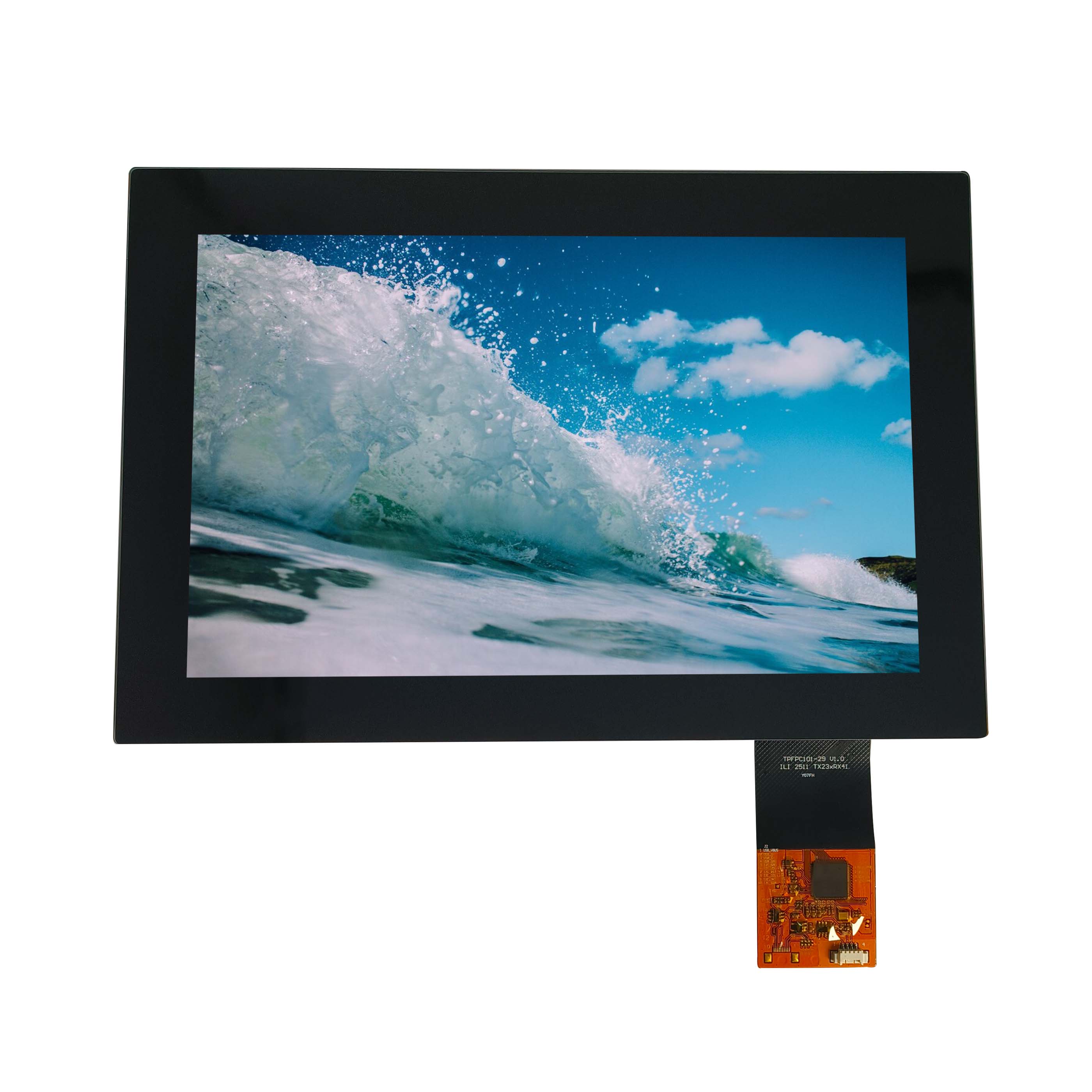
IPS wins in extreme environments with proven -30°C~+85°C operation via robust module assembly (backlight/PCBA) and OCA enhancements, as in CDTech's S123BWU11EP (12.3", 1920×720, 950 nits). PLS lacks extensive data on bonding compatibility and shows higher variability in harsh testing.
Conclusion
IPS triumphs over PLS for industrial reliability through proven manufacturing stability, consistent 178° viewing angles, and resilient supply chains—backed by CDTech's 13+ years, quad certifications (ISO9001, ISO14001, ISO13485, IATF16949), zero-defect policy, and in-house customizations like OCA bonding. Engineers should prioritize IPS for mission-critical HMIs; explore CDTech solutions like S036BWS01EN for spec-matched reliability. Contact CDTech today for tailored IPS panels.
FAQs
What is a PLS display?
Samsung's IPS-like tech using Plane-to-Line Switching for 178° angles, evolved for cost but with production risks.
IPS vs PLS viewing angles?
Both 178°/178°, but IPS offers consistent batch performance via mature LC alignment.
Is PLS more reliable than IPS for industrial LCDs?
No, IPS provides superior stability and supply chain maturity; PLS risks Samsung dependency.
Best panel for industrial displays?
IPS for certified reliability; CDTech's IATF16949 models excel in automotive/medical.
Does CDTech offer PLS panels?
CDTech focuses on stable IPS with custom OCA for zero-defect industrial solutions.

