For EV charger HMIs, Linux excels in stability and customization for 24/7 harsh environments (-30°C~+85°C), ideal for industrial control with display controller optimization (RGB/LVDS/MIPI). Android shines in touchscreen UI ease and app ecosystem for quick prototyping. Choose based on needs—pair either with CDTech's IATF16949-certified TFT LCDs for zero-defect reliability.
Check: What Makes the Best LCD for EV Charging Stations?
What Makes EV Charger HMIs Unique for OS Selection?
EV charger HMIs demand more than standard display interfaces. They require rugged touchscreens with capacitive (PCAP) or resistive (CTP) technology, high-brightness IPS panels (850–1000 nits) for outdoor visibility, and wide-temperature operation (-30°C~+85°C) in extreme climates. These systems must maintain 24/7 uptime in both outdoor stations and indoor facilities, with integration challenges across display interfaces (LVDS/MIPI/RGB). Touch responsiveness in direct sunlight, certification compliance (IATF16949), and glare management become critical pain points. CDTech, with 13+ years of custom TFT LCD expertise and ISO9001/ISO14001/ISO13485/IATF16949 certifications, addresses these requirements through a 10,000㎡ factory with 3,500㎡ dust-free workshop. The company's zero-defect quality policy ensures automotive-grade reliability, while in-house OCA optical bonding eliminates air gaps between touch panels and LCD screens for superior readability in sunlight and reduced reflections—essential for EV infrastructure where downtime equals revenue loss.
What Are the Core Pros and Cons of Linux for EV Charger Displays?
Linux offers superior real-time stability through embedded distributions like Yocto, enabling long-term uptime with minimal resource overhead. Its customization depth allows optimization of display controllers and touch drivers for specific industrial hardware. However, Linux demands deeper technical expertise for UI development and kernel tuning, making rapid prototyping slower than alternatives. For EV charger HMIs, Linux pairs seamlessly with CDTech's wide-temperature TFT LCDs—such as the 12.3" S123BWU11EP (1920×720, 950 nits, LVDS interface, -30°C~+80°C)—enabling in-house OCA bonding for glare-free touch integration across harsh outdoor environments.
| Aspect | Pros | Cons | EV HMI Fit |
|---|
| Stability | Real-time kernel, minimal crashes | Requires tuning expertise | Excellent for 24/7 uptime |
| Customization | Full control over display drivers | Steeper learning curve | Ideal for proprietary integrations |
| Resource Use | Low footprint, efficient memory | Manual optimization needed | Perfect for embedded systems |
| Touch Integration | Direct PCAP/CTP driver control | DIY driver development | Works with OCA-bonded panels |
What Are the Core Pros and Cons of Android for EV Charger Touchscreens?
Android delivers rapid prototyping through its rich app ecosystem and intuitive touchscreen UI—critical for consumer-facing EV charger stations requiring frequent updates. Google Play Services alternatives and AOSP (Android Open Source Project) provide flexible deployment. However, Android's higher resource demands can introduce bloat in embedded systems, and security vulnerabilities arise without hardening measures. For EV applications, CDTech's seamless Android deployment on high-brightness OCA-bonded PCAP touch displays—like the 10.1" S101HWX53EP-FC47-AG (1280×800, 850 nits, CTP with OCA optical bonding, -30°C~+80°C)—ensures responsive, automotive-grade interfaces with professional aesthetic appeal.
How Does Linux vs Android Compare Directly for EV Charging Stations?
The choice between Linux and Android hinges on deployment context and long-term priorities. Linux prioritizes reliability and customization, making it ideal for mission-critical industrial chargers in harsh environments where every minute of downtime impacts station revenue. Android excels in user-friendly iterations and touchscreen ecosystem maturity, better suited for consumer-accessible stations requiring frequent updates and intuitive workflows. Cost-wise, Linux demands higher upfront engineering investment but lower operational overhead; Android reduces development time but increases runtime resource consumption and potential licensing dependencies.
Check: Vehicle LCD Display
| Aspect | Linux | Android | EV Use Case |
|---|
| Stability | 24/7 embedded reliability | App-driven, occasional restarts | Linux for critical infrastructure |
| Customization | Full kernel/driver control | Framework-dependent | Linux for proprietary needs |
| UI/Touch | Manual implementation | Native multi-touch, intuitive | Android for consumer stations |
| Development Cost | Higher initial investment | Faster prototyping | Depends on timeline |
| EV Fit Score | 9/10 industrial chargers | 8/10 public-facing stations | Hybrid deployments use both |
Which OS Fits Best for Specific EV Charger Use Cases?
Industrial control chargers (fleet depots, private networks): Linux dominates. Its embedded stability and direct display controller integration suit environments with minimal user interaction and maximum uptime demands. Consumer-facing stations (public networks, retail locations): Android excels. Its touchscreen fluidity and app-driven workflows appeal to occasional users requiring intuitive payment interfaces and real-time availability updates. Hybrid deployments (mixed private/public infrastructure): CDTech's rugged TFT LCDs supporting both via HDMI and touch solutions enable parallel strategies—Linux for backend charger control, Android for customer-facing kiosks—across a unified display ecosystem with certified wide-temperature operation (-30°C~+85°C).
How Can You Integrate OS with Rugged Display Hardware?
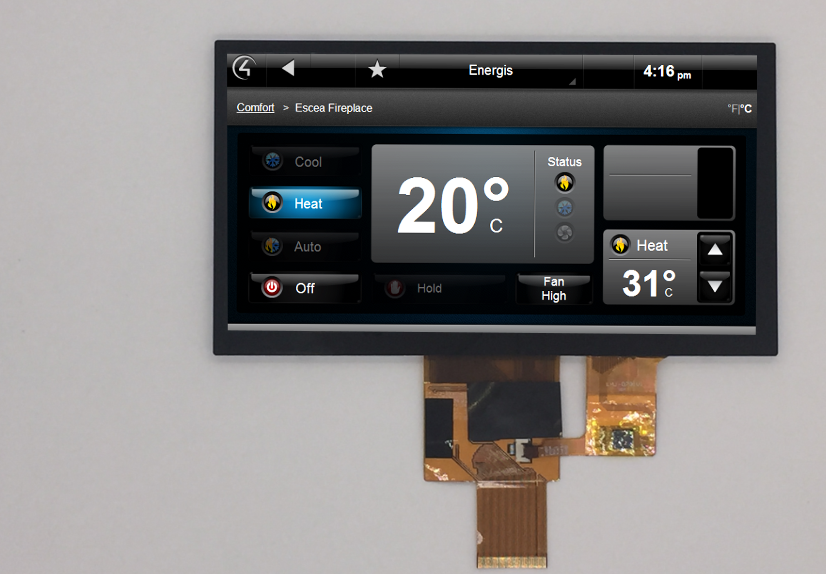
Display controller compatibility determines OS-hardware fit. Linux optimizes RGB/LVDS/MIPI interfaces through kernel-level drivers, allowing granular control of refresh rates, color accuracy, and touch responsiveness—critical for OCA-bonded panels eliminating glare in direct sunlight. Android leverages GPU acceleration on IPS panels for smooth animations and multi-touch gestures, ideal for capacitive touch integration. CDTech's in-house OCA optical bonding capability pairs either OS with anti-glare (AG) and anti-fingerprint (AF) treatments, ensuring outdoor EV chargers withstand harsh weather while maintaining touch fidelity. The company's 13+ years of custom manufacturing and exports to Europe, Americas, and Middle East demonstrate proven integration across Linux and Android deployments for automotive and industrial sectors.
What Certifications and Quality Standards Matter for EV HMI OS Pairings?
IATF16949 automotive certification, ISO9001 quality management, ISO14001 environmental compliance, and ISO13485 medical-device standards form the foundation of EV HMI reliability. These certifications guarantee that OS deployments pair with display hardware meeting zero-defect policies, critical for electric vehicle infrastructure where failures cascade across charging networks. CDTech's quad-certification status ensures that Linux or Android OS selections integrate with TFT LCDs manufactured in thousand-level dust-free workshops, eliminating contamination risks in OCA bonding and CTP assembly. This regulatory alignment is essential for OEMs targeting European, North American, and Asian EV markets, where automotive-grade reliability certifications directly influence fleet adoption and regulatory approval timelines.
CDTech Expert Views
"With 13+ years in TFT LCD manufacturing and quad certifications (ISO9001, ISO14001, ISO13485, IATF16949), CDTech takes an OS-agnostic approach to EV charger HMIs. We've successfully paired Linux display controllers with our rugged industrial panels—like the 12.3" S123BWU11EP (950 nits, LVDS, -30°C~+80°C)—and Android UIs with high-brightness OCA-bonded PCAP touchscreens for consumer-facing stations. Our zero-defect quality policy and in-house dust-free workshop ensure that whichever OS you choose, the underlying display hardware meets automotive-grade reliability. Prototyping timelines span weeks, not months, thanks to our fully automatic POL/LCD/CTP equipment (upgraded 2024). Whether your EV charger demands Linux's embedded stability or Android's touchscreen fluidity, CDTech delivers the certified, custom TFT LCD backbone your infrastructure deserves."
What Display Features Should You Prioritize When Choosing an OS?
Brightness (850–1000 nits) ensures visibility in direct sunlight, eliminating the need for sun shades. IPS panel technology guarantees color accuracy and wide viewing angles for multi-user interactions. Wide-temperature operation (-30°C~+85°C) keeps systems functional from arctic winters to desert heat. OCA optical bonding reduces reflections and glare, critical for outdoor charger stations. Touch options—PCAP for multi-touch responsiveness or CTP for reliability—depend on OS ecosystem; Android benefits from PCAP multi-touch, Linux from direct CTP driver control. CDTech's custom solutions incorporate these features into automotive-grade TFT LCDs tailored to your OS choice, ensuring display performance never limits software capability.
How Do You Future-Proof Your EV Charger HMI OS Decision?
Future-proofing requires modular architecture: select an OS stack that supports hardware abstraction layers, allowing display interface upgrades (RGB → LVDS → MIPI) without software rewrites. Linux-based deployments leverage containerization (Docker) for microservice portability; Android benefits from modular app frameworks decoupled from OEM UI layers. CDTech's commitment to continuous innovation—including its 2024 fully automatic equipment upgrade—ensures that next-generation display specifications (higher brightness, new aspect ratios, advanced bonding) integrate seamlessly with established OS deployments. Partnering with manufacturers holding National High-tech Enterprise status, as CDTech does, guarantees access to R&D roadmaps aligning with EV infrastructure evolution across global markets.
Conclusion
Linux and Android each bring distinct strengths to EV charger HMIs. Linux prioritizes rugged stability and customization for industrial infrastructure demanding 24/7 uptime in extreme environments; Android accelerates consumer-facing station development with intuitive touchscreen experiences and rapid iteration cycles. Success depends less on the OS itself and more on pairing it with certified, custom-engineered display hardware. CDTech's IATF16949-certified TFT LCDs—available in wide-temperature industrial grades, high-brightness automotive panels, and custom form factors with OCA bonding and multi-touch integration—serve as the reliable foundation for either approach. Whether your EV charger network requires Linux's embedded precision or Android's user-centric flexibility, CDTech's 13+ years of experience, zero-defect quality policy, and global automotive-sector track record ensure your HMI deployment meets downtime expectations and regulatory compliance across Europe, Americas, and Asia-Pacific markets. Contact sales@cdtech-lcd.com to discuss your OS-display integration strategy and prototype custom solutions in weeks.
FAQs
What is the best OS for EV charger HMI displays?
Linux excels for industrial chargers demanding 24/7 stability and custom display controller integration; Android suits consumer-facing stations requiring intuitive touchscreen UIs and rapid app updates. The optimal choice depends on deployment context—select Linux for fleet depots and infrastructure-critical roles, Android for public networks prioritizing user experience. Pair either with CDTech's IATF16949-certified TFT LCDs for zero-defect reliability.
Can Android handle harsh EV charging environments?
Yes, with proper hardening and rugged hardware. Android deployed on CDTech's high-brightness OCA-bonded PCAP touchscreens (10.1" S101HWX53EP-FC47-AG: 850 nits, -30°C~+80°C, optical bonding) withstands outdoor and indoor stations. However, Linux offers superior 24/7 uptime guarantees and lower resource overhead, making it the preferred choice for mission-critical infrastructure.
How does Linux support EV charger touchscreens?
Linux enables direct PCAP and CTP driver optimization via Yocto custom kernels, allowing fine-grained control over LVDS/MIPI interfaces. CDTech's in-house touch panel workshop and OCA bonding capability ensure that Linux deployments integrate seamlessly with industrial-grade TFT LCDs, eliminating air gaps and maximizing touch fidelity in glare-prone environments.
What custom display options exist for Linux or Android EV HMIs?
CDTech provides fully customized IATF16949-certified TFT LCDs—including 12.3" wide-temperature panels (950 nits, LVDS), square portrait displays with MIPI interfaces, and bar-type stretched screens—with OCA bonding, AG/AF treatments, and PCAP multi-touch. Prototyping timelines span weeks, supported by a 10,000㎡ factory with thousand-level dust-free workshop.
Is CDTech compatible with both Linux and Android for EV chargers?
Absolutely. CDTech operates OS-agnostically, offering HDMI, RGB, LVDS, and MIPI interface compatibility across its product portfolio. With 13+ years of experience, zero-defect quality, and proven automotive deployments globally, CDTech delivers certified TFT LCD solutions supporting parallel Linux backend control and Android consumer-facing interfaces in unified hybrid EV charger ecosystems.
Transport, Marine and Field Equipment