News
Site Editor
 Site
https://cdtech-lcd.usa72.wondercdn.com/uploads/image/5faca15e24cff.png
Site
https://cdtech-lcd.usa72.wondercdn.com/uploads/image/5faca15e24cff.png
Which Is Better for Industrial Touch Screens: Capacitive or Resistive?
Views: 1616
Author: Site Editor
Publish Time: 2026-04-04
Origin: Site
For industrial touch screens, resistive touch (RTP) excels in harsh environments with glove, water, and oil compatibility, while capacitive touch (PCAP) offers superior precision and multi-touch for clean HMIs. CDTech's IATF16949-certified solutions provide custom PCAP or RTP options with zero-defect reliability from our 10,000㎡ factory.
Check: Industrial LCD
What Are Capacitive and Resistive Touch Technologies?
PCAP is projected capacitive touch that detects finger capacitance for multi-touch gestures, ideal for modern UIs in industrial control panels. RTP is resistive touch using pressure to connect layers, supporting stylus or gloved input for rugged factory automation. CDTech integrates these in-house for TFT LCDs with LVDS interfaces, certified to ISO9001 and ISO14001.
How Do Capacitive and Resistive Touchscreens Compare in Key Features?
Capacitive touch provides higher clarity with 85%+ transmittance and multi-touch support, while resistive offers lower cost and better impact resistance. Both endure -30°C~+85°C temperatures. CDTech's 3,500㎡ dust-free workshop ensures zero-defect assembly for industrial and automotive TFT LCDs like the S121BWX05EP-FC10 with CTP and OCA.
| Feature | Capacitive (PCAP) | Resistive (RTP) |
|---|
| Transparency | 85%+ | 75-80% |
| Durability | High (with OCA) | Superior impact |
| Cost | Higher | Lower for volume |
| Touch Points | 5-10 multi-touch | Single touch |
| Interfaces | I2C, MIPI | RGB |
Which Touch Technology Works Best with Gloves in Industrial Settings?
RTP excels with thick or oily work gloves in factories, preventing input failures common with standard PCAP. PCAP works with thin latex gloves or custom variants. CDTech's IATF16949-certified RTP solutions, like the S080QSV28ND-DR11 8.0" industrial LCD, suit vehicle and instrument panels in glove-heavy environments.
CDTech Expert Views – How Does CDTech Test Touch in Real Industrial Conditions?
"With 13+ years since our 2011 founding, CDTech simulates glove, oil, and water conditions in our 3,500㎡ thousand-level dust-free workshop. Our 2020 touch panel workshop and 2024 fully automatic POL/LCD/CTP lines ensure reliability. For example, the S121BWX05EP-FC10 12.1" industrial LCD with CTP and OCA bonding maintains sensitivity across -20°C~+70°C. Quad certifications—ISO9001, ISO14001, ISO13485, IATF16949—guarantee zero-defect performance for exports to Europe and Americas."
Check: Touch screen LCD display manufacturer
— CDTech R&D Team, National High-tech Enterprise
Can These Technologies Handle Water, Oil, and Contaminants Effectively?
RTP resists oil and water via sealed layers, ideal for wet factory floors or medical devices. PCAP needs OCA bonding or coatings for spills but shines in cleanrooms. CDTech's custom PCAP/RTP in 10,000㎡ facility, like S101HWX53EP-FC47-AG with OCA, passes contamination tests for smart home and instrumentation.
What About Precision and User Experience in Precision Tasks?
PCAP offers high precision with 10-point multi-touch for detailed HMI navigation in industrial control. RTP provides single-touch accuracy for basic inputs but lacks gestures. CDTech's Shenzhen Software Enterprise expertise enables hybrid customizations, as in the S088AWX22EB-DC08 8.8" BAR LCD with 10-point PCAP for automotive-grade tasks.
Capacitive vs Resistive – Industrial Use-Case Breakdown
Choose RTP for glove/oil-heavy factories and PCAP for precision clean HMIs. CDTech tailors both with wide-temp specs like -30°C~+85°C. Explore industrial LCDs at CDTech Industrial LCDs.
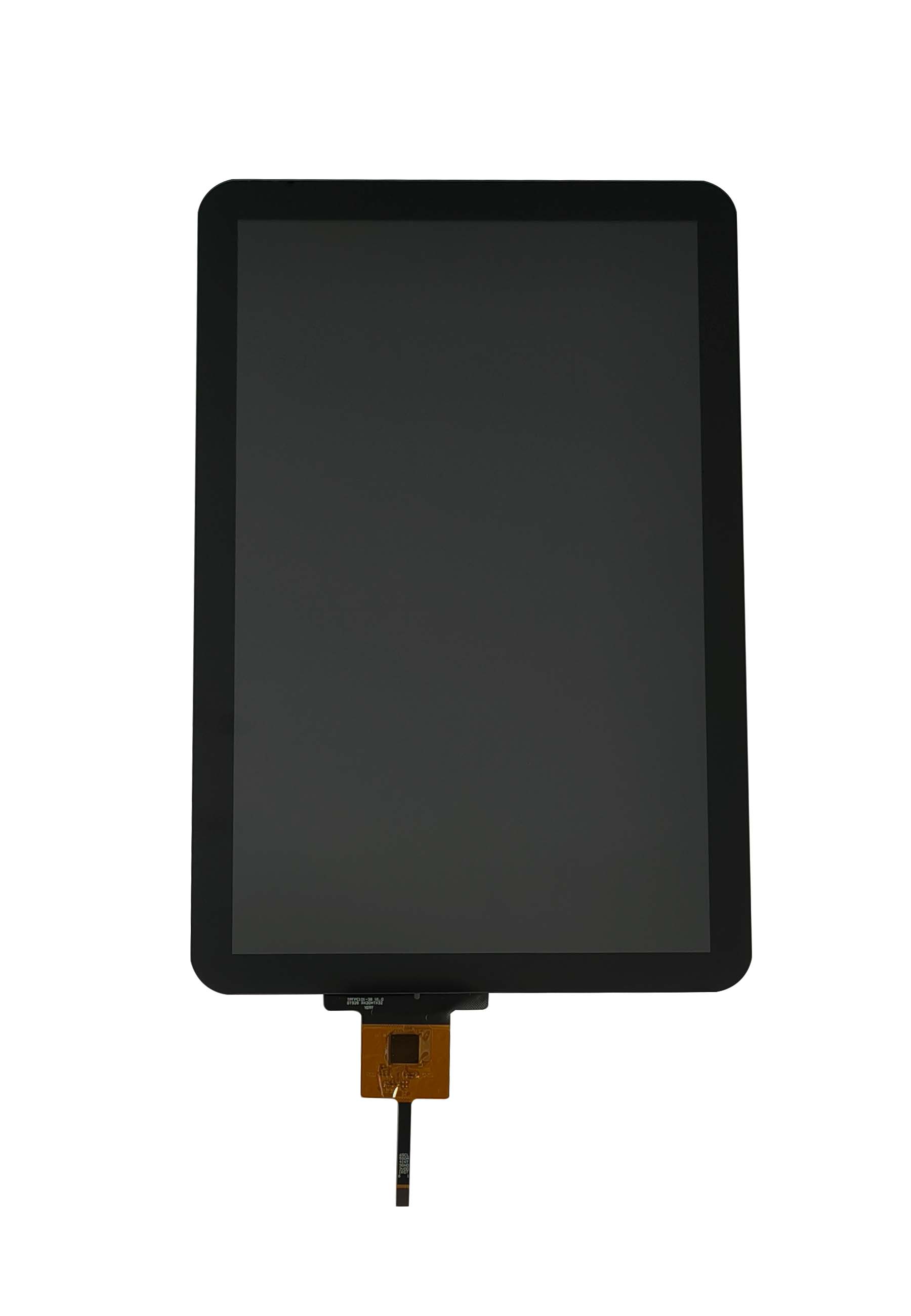
| Use Case | Best Choice | CDTech Example |
|---|
| Gloves/Oily Factory | RTP | S080QSV28ND-DR11 (8.0" RTP) |
| Water/Contaminants | RTP | S080QSV28ND-DR11 RGB |
| Precision HMI | PCAP | S121BWX05EP-FC10 (12.1" CTP/OCA) |
| Clean Automation | PCAP | S088AWX22EB-DC08 (10-pt PCAP) |
| Wide-Temp Vehicle | Both | S101HWX53EP-FC47-AG (-30°C~+80°C) |
Which Should You Choose for Your Industrial HMI Project?
Select RTP for rugged, cost-effective glove/oil use; PCAP for premium multi-touch precision. CDTech offers one-stop customization with LVDS/RGB/MIPI interfaces and zero-defect policy. Contact sales@cdtech-lcd.com or +86 0755-23032202 for IATF16949-certified prototypes from our Shenzhen factory.
Conclusion
Neither capacitive nor resistive touch is universally better for industrial use—opt for RTP in glove/oil-heavy factories or PCAP for precision HMIs. CDTech's certified custom TFT LCD solutions, backed by 13+ years of expertise and a 10,000㎡ facility, deliver unmatched reliability. Email sales@cdtech-lcd.com for zero-defect prototypes today.
FAQs
What is the main advantage of resistive touch for industrial use?
Excellent compatibility with thick gloves and high resistance to oil/water, ideal for harsh factory environments.
Can capacitive touch work with gloves in industrial settings?
Yes, with thin gloves or CDTech's custom OCA-bonded PCAP enhancements like S121BWX05EP-FC10 for improved sensitivity.
Are CDTech touch displays certified for automotive and medical use?
Yes, with ISO13485 and IATF16949 certifications ensuring zero-defect quality in wide-temp operations up to -30°C~+85°C.
How does CDTech customize PCAP vs RTP for factories?
In-house 3,500㎡ dust-free workshop offers LVDS/RGB interfaces, tested for oil/gloves with 13+ years expertise, as in S080QSV28ND-DR11.
What temperatures do industrial touch screens from CDTech support?
-30°C to +85°C, suitable for vehicle, instrumentation, and automation in extreme conditions, per products like S101HWX53EP-FC47-AG.