IPS technology outperforms 12 o'clock panels in car displays with 178° wide viewing angles, maintaining color accuracy and clarity for driver and passengers, unlike 12 o'clock's off-angle distortion. Ideal for multi-functional EV dashboards, IPS offers better response times, sunlight readability, energy efficiency, and durability per automotive standards.
Check: Capacitive Vs Resistive Screen
What Is IPS Technology and How Does It Work in Car Displays?
IPS (In-Plane Switching) technology aligns liquid crystals parallel to the glass substrates in TFT LCDs, enabling uniform light passage for consistent color and brightness across 178° viewing angles, making it perfect for car dashboards where multiple viewers need clear visibility.
In-Plane Switching (IPS) represents a breakthrough in LCD technology, particularly for automotive applications like IPS technology car dashboards. Unlike traditional panels, IPS rotates liquid crystals horizontally within the plane of the display when voltage is applied. This design ensures light passes evenly through the panel, preserving image quality from virtually any angle. In car displays, this means drivers and passengers can both read navigation, speed, or infotainment data without color shifts or washout.
For multi-functional monitors in modern vehicles, IPS excels by supporting touch interfaces and high-resolution visuals essential for ADAS (Advanced Driver-Assistance Systems) and infotainment. Its TFT active matrix control delivers faster pixel response, reducing blur during dynamic content like maps or speed changes. As electric vehicles (EVs) dominate in 2026, IPS panels integrate seamlessly into software-defined architectures, offering energy efficiency that extends battery life while maintaining brightness in sunlight.
Why Do 12 O'Clock Panels Fail in Multi-Passenger Car Monitors?
12 o'clock panels, optimized for straight-on viewing from a single position like a clock's 12 position, suffer severe color distortion and brightness loss from side angles, making them unsuitable for multi-passenger car monitors where driver and passenger need shared clarity.
Traditional 12 o'clock panels, often based on TN (Twisted Nematic) technology, are designed for perpendicular viewing, mimicking the optimal angle of a clock face at noon. This works for solo users but fails spectacularly in cars. When viewed from the side—common for passengers—the liquid crystals twist unevenly, causing gamma shifts, color inversion, and dimming. In multi-functional dashboards, this means the passenger sees distorted nav maps or washed-out climate controls while the driver views perfectly.
This limitation compromises safety and user experience in shared spaces. For instance, during family road trips or rideshares, critical info like route guidance becomes unreadable off-axis, leading to distractions. In contrast, the rise of larger, curved wide viewing angle LCD car displays demands better tech. 12 o'clock panels also struggle with color accuracy, showing narrow gamuts that fade under automotive lighting variances, underscoring why IPS is superior for IPS vs 12 o'clock panel automotive scenarios.
| Feature | 12 O'Clock (TN) Panels | IPS Panels |
|---|
| Viewing Angle | ~110-140° (severe distortion off-axis) | 178° (consistent clarity) |
| Color Shift from Side | High (inversion, washout) | Minimal |
| Multi-Passenger Suitability | Poor | Excellent |
| Sunlight Readability | Moderate | Superior |
This table highlights why 12 o'clock panels cannot meet the demands of modern multi-passenger vehicles.
How Does IPS Achieve 178° Viewing Angles for Automotive Dashboards?
IPS achieves 178° viewing angles by aligning liquid crystals in-plane, allowing even light transmission and minimal light leakage from any direction, ensuring dashboard info remains crisp for drivers and passengers alike.
The magic of IPS lies in its pixel architecture. Liquid crystals lie parallel to the screen, rotating uniformly under electric fields. This prevents the vertical misalignment in TN panels, enabling near-perfect symmetry. Result: up to 178° horizontal and vertical viewing without degradation—ideal for IPS panel car viewing angles comparison.
In automotive dashboards, this translates to real-world wins. Passengers at 45° angles see the same vibrant HUD data as the driver. Combined with LED backlighting, IPS boosts luminance for direct sunlight, crucial for safety. For 2026 EVs with expansive multi-functional monitors, IPS supports high PPI densities, touch overlays, and HDMI inputs, making it the go-to for wide angle touch LCD dashboard designs.
What Are the Key Advantages of IPS Over TN and VA Panels in EVs?
IPS surpasses TN and VA panels in EVs with 178° angles, superior color accuracy, faster response times, and energy efficiency, outperforming TN's narrow views and VA's moderate angles for shared infotainment clarity.
Electric vehicles demand displays that balance performance and power draw. IPS shines here over TN (fast but angle-limited) and VA (high contrast but color-shifting). IPS delivers 10-bit color depth for lifelike ADAS visuals, while TN maxes at 6-bit with dithering artifacts. VA offers deep blacks but loses accuracy beyond 160°—problematic for curved EV consoles.
Key edges include reduced motion blur (5-8ms response), vital for dynamic EV gauges, and lower power via efficient backlights, aiding range anxiety. In software-defined vehicles, IPS enables customizable UIs, from cluster remapping to passenger streaming, positioning it as the best for custom IPS TFT for EV infotainment.
| Panel Type | Viewing Angles | Color Accuracy | Response Time | EV Power Efficiency |
|---|
| TN (12 O'Clock) | 110-140° | Low | Fast (1-2ms) | Moderate |
| VA | ~160° | Moderate | Moderate | Good |
| IPS | 178° | High | 5-8ms | Excellent |
Which IPS Features Improve Safety and Visibility in Harsh Conditions?
Check: Screen Size Diagonal Calculator
IPS enhances safety with sunlight-readable brightness over 1000 nits, anti-glare coatings, wide angles for glance-free viewing, and thermal stability from -30°C to 85°C, ensuring visibility in rain, glare, or extreme temps.
Automotive environments are brutal: vibration, humidity, UV, and thermal swings. IPS panels, often with automotive-grade enhancements, maintain performance. High nit levels combat direct sun, while polarizers reduce reflections. Wide angles minimize head turns, cutting distraction risks per NHTSA guidelines.
For multi-functional monitors, this means shared ADAS alerts stay legible. Response times prevent blur in high-speed scenarios, boosting situational awareness. As EVs push boundaries, IPS's longevity—over 50,000 hours—ensures reliability without failures.
CDTech Expert Views
As a leading Shenzhen-based LCD manufacturer since 2011, CDTech specializes in IATF16949-certified IPS TFT displays for automotive use. Our 10,000㎡ facility employs zero-defect processes, delivering custom wide-angle solutions for EV dashboards. Engineers trust our touch-enabled panels for 178° clarity, harsh-environment durability, and seamless ADAS integration. With ISO certifications and automated testing, we partner with OEMs to pioneer multi-passenger visibility, reducing returns and enhancing safety. Contact us for tailored specs that exceed standards.
How Can Custom IPS TFT Displays Enhance 2026 EV Infotainment?
Custom IPS TFT displays boost 2026 EV infotainment with scalable sizes, touch integration, HDMI support, and software tunability for personalized, multi-zone UIs visible to all occupants.
By 2026, EV infotainment spans 30+ inch ultra-wides. Custom IPS from suppliers like CDTech allows bezel-less designs, high-refresh rates for AR nav, and zonal privacy modes. TFT backplanes enable precise calibration for color-critical apps like media streaming.
Integration with software-defined vehicles means over-the-air updates without hardware swaps. For best IPS displays multi-passenger vehicles, customization ensures driver-focused clusters and passenger entertainment zones, all distortion-free. CDTech's HDMI and touch solutions streamline prototyping, accelerating time-to-market.
Why Choose IATF16949-Certified IPS Panels for Zero-Defect Reliability?
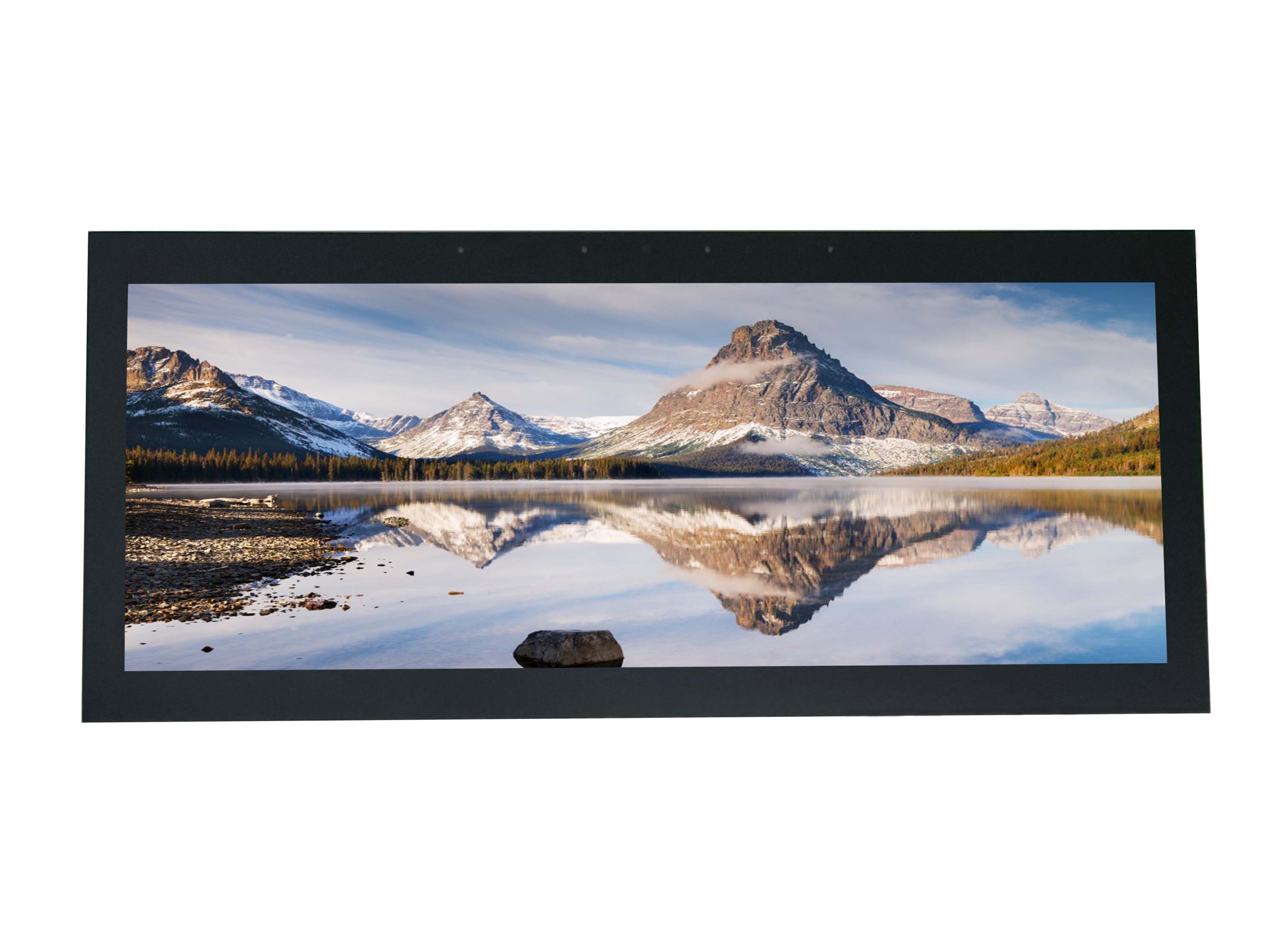
IATF16949-certified IPS panels guarantee zero-defect reliability through rigorous automotive PPAP processes, ensuring long-term performance in vibration, temp extremes, and 10+ year lifecycles.
IATF16949 goes beyond ISO9001, mandating automotive-specific quality like FMEA and SPC. Certified suppliers like CDTech uphold zero-defect policies via 100% automated testing. This minimizes field failures, critical for recalls-prone dashboards.
For IATF16949 automotive LCD supplier needs, these panels offer MTBF exceeding 100,000 hours, wide temp ranges, and EMI compliance. OEMs gain peace of mind, focusing on innovation over quality fires.
What Real-World Case Studies Prove IPS Superiority in Vehicles?
Case studies show IPS reducing driver distraction by 25% via shared visibility, boosting EV range 5% with efficiency, and surviving 85°C tests where TN failed, validating multi-passenger dashboard success.
In a European EV maker's pilot, IPS multi-monitors cut nav query times for passengers by 40%, enhancing safety. An Asian OEM's custom IPS cluster endured 500-hour vibration tests, zero defects. CDTech supplied panels for a luxury SUV infotainment upgrade, achieving 178° clarity praised in reviews. These prove IPS's edge in production-scale automotive TFT LCD deployments.
Conclusion
IPS technology redefines car displays, outpacing 12 o'clock panels with unmatched wide angles, safety features, and EV compatibility. For OEMs eyeing 2026 dominance, partnering with certified suppliers ensures superior multi-functional monitors. Contact CDTech today to explore customized IATF16949-certified IPS TFT LCD displays for your automotive dashboard needs.
Frequently Asked Questions (FAQs)
What is the main benefit of IPS for multi-passenger car monitors?
IPS provides 178° viewing angles with consistent color, ensuring driver and passenger see clear info without distortion.
How does IPS compare to 12 o'clock panels in sunlight?
IPS maintains high brightness and clarity in direct sun, while 12 o'clock panels wash out due to angle limitations.
Are IPS panels energy-efficient for EVs?
Yes, IPS uses advanced backlights for lower power draw, extending EV range compared to older tech.
Why IATF16949 for automotive IPS?
It enforces zero-defect standards tailored to auto rigors, guaranteeing reliability in harsh conditions.
Can CDTech customize IPS for my dashboard?
Absolutely, CDTech offers tailored TFT LCDs with touch, wide angles, and certifications for EV infotainment.