PPAP (Production Part Approval Process) for automotive displays requires 18 elements across 5 levels to ensure supplier parts meet OEM specifications. Key requirements include design records, FMEA, process flow diagrams, MSA studies, capability analysis, and part submission warrants. For TFT LCDs, focus areas include material traceability, optical bonding validation, and IATF16949 compliance. CDTech's quad certifications streamline Level 3 approvals, reducing timelines with zero-defect manufacturing processes and proven automotive export experience.
Check: Why Does IATF 16952 Certification Matter for Vehicle LCD Suppliers?
What Is PPAP and Why Does It Matter for Vehicle Displays?
PPAP is an AIAG-standardized process verifying that production parts match design intent and OEM specifications. For automotive TFT LCDs used in dashboards, infotainment systems, and instrument clusters, PPAP ensures displays withstand vibration, temperature extremes, and optical performance requirements. Non-compliance risks production delays, warranty claims, and supply chain disruptions. The process validates that custom display solutions—including touch integration and OCA optical bonding—perform reliably throughout vehicle lifecycle. CDTech's IATF16949 certification and 13+ years of automotive exports demonstrate understanding of these critical approval pathways.
Which PPAP Levels Apply to New Automotive LCD Launches?
PPAP includes five levels with increasing documentation rigor. Level 1 (warrant only) applies to prototype trials. Level 2 (warrant plus 6 core elements) supports pre-production validation. Level 3 (full 18 elements) is standard for production release and new vehicle launches. Levels 4 and 5 involve on-site audits for high-volume or particularly complex custom displays. Most automotive OEMs require Level 3 minimum for new TFT LCD programs. CDTech's IATF16949 certification accelerates Level 3 submissions by pre-validating manufacturing processes and quality controls.
| PPAP Level | Key Requirements | Use Case for TFT LCDs | Typical Timeline |
|---|
| Level 1 | Warrant only | Prototype validation | 1-2 weeks |
| Level 2 | Warrant + design/process docs | Pre-production trials | 4-6 weeks |
| Level 3 | Full 18 elements | Production release | 8-12 weeks |
| Levels 4-5 | + On-site audit + customer inspection | High-volume/complex custom | 12+ weeks |
What Are the 18 Core PPAP Elements for TFT Display Submissions?
The 18 PPAP elements form the foundation of Level 3 approvals: (1) Design records, (2) Authorized engineering changes, (3) Customer engineering approval, (4) Design FMEA, (5) Process flow diagram, (6) Process FMEA, (7) Control plan, (8) Measurement system analysis (MSA), (9) Dimensional results, (10) Material and performance test results, (11) Initial process capability studies, (12) Qualified laboratory documentation, (13) Appearance approval report, (14) Sample production parts, (15) Master sample, (16) Checking aids, (17) Customer-specific requirements, (18) Part submission warrant (PSW).
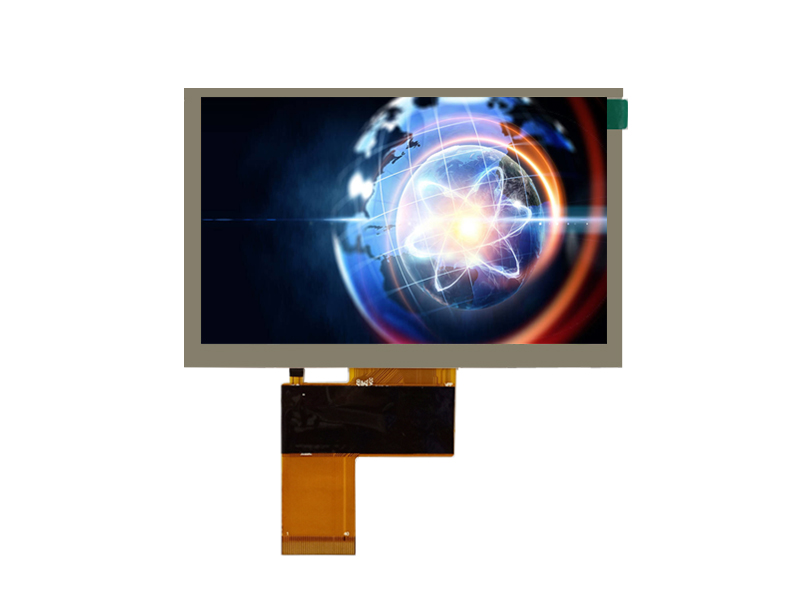
Check: Vehicle LCD Display
For TFT LCD displays, elements 9-10 require particular attention to optical specifications (brightness uniformity, contrast ratio, viewing angles), touch panel integration data, and OCA optical bonding validation certificates. Material traceability throughout the supply chain—especially for glass, adhesives, and backlight components—must be documented. CDTech's 10,000-square-meter factory with 3,500+ square-meter thousand-level dust-free workshop maintains full material traceability, enabling rapid PSW generation and resubmission if design iterations occur.
Vehicle Display PPAP Submission Checklist
Complete design record with LCD specifications (size, resolution, brightness, interface type)
FMEA addressing thermal cycling, vibration, and optical degradation modes
Process FMEA for OCA bonding, CTP assembly, and quality checkpoints
Control plan with SPC charts for brightness, contrast, and color uniformity
MSA study validating touch accuracy and responsiveness measurement systems
Material certificates for glass, polarizers, adhesives, and electronic components
Appearance approval report for color, surface finish, and cosmetic defects
Dimensional sampling data across production batches
Thermal and vibration test reports for vehicle operating conditions
EMI/EMC compliance documentation if applicable
How Does IATF16949 Integration Support PPAP for Display Suppliers?
IATF16949 is the automotive quality management standard mandating PPAP-ready processes, risk management, and traceability systems. It covers design controls, supplier management, production planning, and zero-defect methodologies. Suppliers holding IATF16949 certification demonstrate that their processes, documentation, and audit trails align with PPAP expectations before formal submission. CDTech's quad certifications—ISO9001, ISO14001, ISO13485, and IATF16949—provide an audit-ready foundation for automotive display programs. This certification ecosystem, combined with CDTech's National High-tech Enterprise status and 13+ years of automotive exports to Europe, Japan, and Taiwan, compresses typical PPAP cycles by reducing OEM re-audit frequency and enabling faster approvals.
CDTech Expert Views: "With over 13 years specializing in TFT LCD and touch screen manufacturing for automotive applications, CDTech's approach to PPAP centers on vertical integration and zero-defect philosophy. Our in-house OCA optical bonding workshop (operational since 2020) and fully automatic POL/LCD/CTP equipment (upgraded in 2024) provide complete material traceability and process validation upfront. This eliminates typical resubmission cycles—customers benefit from IATF16949 audit-ready documentation, rapid material certification, and design-freeze-to-PSW timelines compressed from standard 12-16 weeks to 8-10 weeks. Our 10,000-square-meter Shenzhen facility with dedicated dust-free workshop ensures consistency across prototype and production volumes."
What Documentation Is Required for Automotive TFT LCD PPAP Submission?
Critical documentation for vehicle display PPAP includes FMEA analysis identifying failure modes in high-vibration, wide-temperature environments (CDTech vehicle displays operate from -30°C to +85°C). Control plans must specify measurement strategies for OCA bonding thickness, touch responsiveness, and optical uniformity. MSA studies validate that measurement systems can detect parts outside specification with adequate discrimination. Capability studies (CpK > 1.67 minimum) demonstrate process consistency for brightness uniformity, color accuracy, and dimensional tolerances.
Custom vehicle displays require supplemental documentation: thermal cycling reports (typically -40°C to +85°C transitions), EMI compliance testing, glass cutting traceability (CDTech holds a glass cutting patent from 2017), and supply chain certificates for polarizers and backlights. The Part Submission Warrant (PSW) summarizes all 18 elements and confirms that parts are production-ready, meeting all customer specifications without exceptions. CDTech's zero-defect quality policy and material traceability infrastructure support seamless PSW submission with minimal OEM queries or resubmissions.
What Is the Typical PPAP Timeline for Vehicle Display Approval?
A standard PPAP Level 3 cycle spans 12-16 weeks: design freeze (2-4 weeks), trial production and capability studies (4 weeks), documentation compilation (2-3 weeks), OEM initial review (2-4 weeks), and approval decision (1-2 weeks). Timelines compress when suppliers maintain in-house manufacturing, R&D, and testing capabilities. CDTech accelerates this process to 8-10 weeks through vertical integration—custom LCD design, OCA optical bonding, touch panel assembly, and full validation occur within one facility. The company's 24-hour response commitment on design changes and its proven track record with Japanese and European OEMs demonstrates rapid iteration capability essential for automotive timelines.
| PPAP Phase | Key Activities | Timeline (Standard) | CDTech Advantage |
|---|
| Design Freeze | Finalize specs, design review, FMEA | 2-4 weeks | R&D team with 10+ years experience; rapid iteration |
| Trial Production | Run prototypes, capability studies, sampling | 4 weeks | In-house OCA, CTP; automated equipment ensures consistency |
| Documentation | Compile FMEA, control plans, MSA, PSW | 2-3 weeks | IATF16949 audit-ready templates; zero-defect documentation |
| OEM Review | Customer evaluation, technical questions | 2-4 weeks | 24-hour response; proven automotive supplier status |
| Final Approval | Signature, authorization, production clearance | 1-2 weeks | High approval rate due to quad certifications |
How Can Display Manufacturers Ensure PPAP Compliance for Custom LCDs?
Suppliers ensure compliance through vertical integration, pre-PPAP design reviews, and automated testing for consistent output. Strategic approaches include: (1) Control entire supply chain to eliminate third-party variability, (2) Conduct design FMEA with OEM input before prototyping, (3) Implement SPC (statistical process control) on all critical dimensions and optical parameters, (4) Maintain traceable material certifications, (5) Document equipment calibration and MSA studies, (6) Perform accelerated life testing to validate durability under vehicle conditions.
CDTech exemplifies this approach through its 10,000-square-meter Shenzhen facility, in-house touch panel workshop (operational since 2020), fully automatic POL/LCD/CTP equipment, and OCA optical bonding capability. Custom vehicle displays—ranging from 3.6-inch round instrument clusters to 12.8-inch center consoles—are engineered, manufactured, tested, and certified within one controlled environment. This vertical integration reduces supply chain risks, accelerates approvals, and ensures repeatable quality across production volumes. CDTech's exports to Europe, Americas, Middle East, Russia, Japan, and Taiwan validate this PPAP-ready manufacturing philosophy.
Why Should You Choose a PPAP-Ready Automotive Display Manufacturer?
Selecting a PPAP-ready supplier reduces delays, ensures material traceability, and supports scaling from prototypes to high-volume production without disruption. PPAP-certified manufacturers bring pre-validated processes, documented controls, and audit-ready quality systems that shorten OEM approval cycles and minimize resubmission risk. This becomes critical for competitive vehicle launches where display approval delays cascade across entire production timelines.
CDTech differentiates through quad certifications (ISO9001, ISO14001, ISO13485, IATF16949), zero-defect commitment, and 13+ years specializing in TFT LCDs, touch displays, and HDMI solutions for automotive, medical, industrial, and smart-home applications. The company's proven OEM approvals, National High-tech Enterprise recognition, and Shenzhen Software Enterprise status demonstrate credibility in complex vehicle display programs. For PPAP consultations, design reviews, or custom LCD submissions, contact CDTech at sales@cdtech-lcd.com, call +86 0755-23032202, or message +86 13556818296 on WhatsApp. The company's 24-hour response commitment and vertical integration ensure your vehicle display reaches production approval efficiently.
Conclusion
PPAP success for automotive displays depends on supplier expertise, process discipline, and documentation rigor. The 18-element Level 3 submission framework—encompassing design records, FMEA, capability studies, and material traceability—ensures that custom TFT LCDs meet OEM performance and reliability standards for vehicle dashboards, infotainment, and instrument clusters. Partnering with IATF16949-certified manufacturers like CDTech transforms PPAP from a compliance hurdle into an accelerator, leveraging quad certifications, zero-defect processes, and in-house custom LCD manufacturing to achieve faster approvals and dependable vehicle displays. Whether you're launching a new dashboard concept or scaling existing designs, PPAP-ready suppliers provide the infrastructure, documentation, and automotive expertise essential for production success.
FAQs
What is PPAP Level 3 for automotive displays?
PPAP Level 3 is full submission of all 18 elements, including design records, FMEA, process controls, MSA, capability studies, and the Part Submission Warrant. It is required for production release of new or significantly modified TFT LCD displays. CDTech's IATF16949 certification streamlines Level 3 submission by pre-validating manufacturing processes and documentation systems.
How long does PPAP approval typically take for LCD displays?
Standard PPAP Level 3 cycles span 12-16 weeks. CDTech compresses timelines to 8-10 weeks through vertical integration—in-house design, OCA bonding, touch panel assembly, and testing eliminate supplier coordination delays. The company's 24-hour response to design changes further accelerates iteration cycles.
Does IATF16949 certification guarantee PPAP approval for vehicle displays?
IATF16949 certification mandates that suppliers maintain PPAP-ready processes, controls, and traceability systems. While certification doesn't guarantee approval, it demonstrates audit-ready documentation and risk management infrastructure that significantly improves approval likelihood and reduces OEM re-audit frequency.
What LCD-specific documents are needed for PPAP submission?
LCD-specific documentation includes optical performance test results (brightness uniformity, contrast ratio, color accuracy), material certificates for glass and polarizers, OCA optical bonding validation, touch panel accuracy data, thermal cycling test reports, and dimensional sampling across production batches.
Can CDTech handle custom PPAP submissions for new vehicle display programs?
Yes. CDTech offers 13+ years of automotive TFT LCD, touch display, and HDMI manufacturing experience with proven OEM approvals across Europe, Japan, Taiwan, and other markets. The company provides full PPAP support—from design review and FMEA through documentation, testing, and PSW submission—for vehicle display launches of any complexity.


