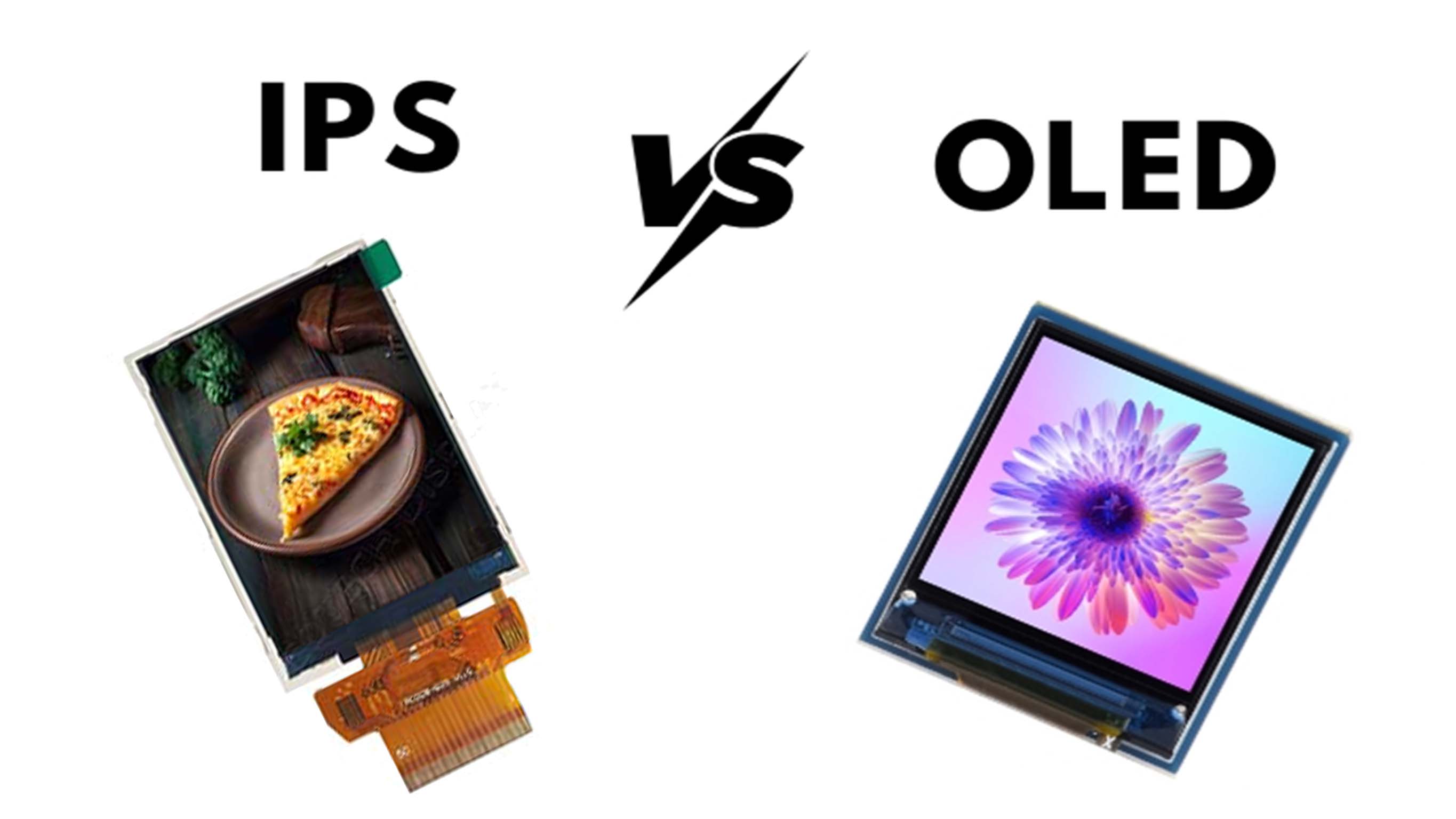
Choosing between an IPS or OLED display has become one of the most important decisions in buying a monitor, laptop, TV, tablet, or professional industrial screen. IPS and OLED displays both deliver excellent image quality, but they behave very differently in brightness, contrast, lifespan, gaming performance, productivity, and power consumption. Understanding how IPS vs OLED works, where each panel type shines, and what trade-offs matter for your specific use case will help you make the right long-term decision instead of just following hype.
What is an IPS display and how does it work?
IPS display technology, short for In-Plane Switching, is a type of LCD panel that uses a constant backlight behind liquid crystals to create an image. The liquid crystals rotate in-plane to control how much light passes through each pixel. Because there is always a backlight, IPS cannot achieve perfect black, but it delivers very consistent brightness and color uniformity across the entire screen. This makes IPS displays popular in office monitors, laptops, industrial control panels, medical devices, and any environment where accurate color and stable viewing angles are more important than extreme contrast.
In practical terms, IPS displays are known for wide viewing angles up to around 178 degrees, so the image looks similar even when viewed from the side. Professional creators rely on IPS monitors because they can be factory-calibrated to deliver very accurate color spaces such as sRGB, Adobe RGB, and DCI-P3. Many IPS monitors feature matte anti-glare coatings, which makes them ideal in bright rooms, open offices, or near windows.
What is an OLED display and how does it work?
An OLED display, or Organic Light-Emitting Diode, uses self-emissive pixels instead of a separate backlight. Every pixel in an OLED screen generates its own light and can switch completely off for true black. This architecture gives OLED displays an effectively infinite contrast ratio, extremely deep blacks, and an incredible sense of depth and pop in dark scenes. Because each pixel responds almost instantly, OLED gaming monitors and OLED TVs deliver superb motion clarity with minimal blur.
Modern OLED panels come in several variants, including standard OLED, WOLED (white OLED with color filters), and QD-OLED (quantum dot OLED) that enhances color saturation and peak brightness. These technologies are used in high-end gaming monitors, flagship smartphones, premium laptops, and home cinema TVs. However, the organic materials in OLED gradually degrade with use, and static on-screen elements can cause image retention and burn-in over time, especially under heavy, static workloads.
IPS vs OLED image quality: color, contrast, and viewing angles
When comparing IPS vs OLED display image quality, the most obvious difference is black level and contrast. IPS can only reach very dark gray because the backlight always leaks a small amount of light through the panel. OLED, by powering pixels completely off, produces true black, which makes bright elements stand out, especially in HDR content and games with dark scenes. This gives OLED displays a huge perceived contrast advantage, making movies, games, and photos look rich and immersive.
Color performance is strong on both panel types, but slightly different in character. IPS displays are often tuned for natural, accurate color reproduction, making them an excellent choice for photo editing, video production, and graphic design where precise color matching to print or industry standards is critical. OLED displays produce very vivid, saturated colors that look impressive to the eye and are ideal for cinematic content and visually rich games. Modern OLED panels can also cover wide color gamuts, though color accuracy can sometimes be more challenging to maintain over time as the panel ages.
Both IPS and OLED offers wide viewing angles, but IPS is historically known for consistent color and brightness off-axis, while some OLED implementations can show slight color tint shifts at extreme angles, depending on the panel type. For most users sitting centered in front of the display, this is not a major concern, but for collaborative work or multi-user viewing in offices and control rooms, IPS still has a solid reputation for color consistency.
Brightness and HDR: IPS or OLED in bright rooms
Brightness is a key deciding factor when choosing IPS or OLED for bright environments. IPS monitors and IPS laptop displays can achieve higher sustained full-screen brightness, which is important when working in a sunlit office, near large windows, or under strong overhead lighting. Their constant backlight and typically matte surface treatment help maintain legibility in direct or indirect sunlight. Many professional IPS monitors exceed 300 nits full-screen, with HDR-oriented IPS panels going even higher.
OLED displays often achieve extremely high peak brightness in small highlights for HDR, which makes specular effects, explosions, and bright reflections look amazing. However, their sustained full-screen brightness is usually lower than IPS, and aggressive automatic brightness limiting may dim the screen when large bright areas are displayed for extended periods. In a dark or dim room, OLED looks spectacular and is ideal for home theater or night gaming. In a very bright office or outdoor kiosk application, IPS typically offers better readability and consistency.
For devices like smartphones and portable consoles, OLED panels with high peak brightness and advanced coatings have closed the gap, but for industrial HMI screens, medical displays, and always-on dashboards exposed to intense ambient light, IPS remains a safer and more predictable choice.
Response time, refresh rate, and gaming performance
For gaming, the IPS vs OLED display debate often centers on response time and refresh rate. OLED pixels can switch state at near-instant speeds, often quoted in fractions of a millisecond. This results in extremely sharp motion, minimal ghosting, and clear visibility of fast-moving objects in competitive games and action-heavy content. Combined with modern variable refresh rate technologies, OLED gaming monitors provide a smooth, responsive feel that is particularly appealing to enthusiasts.
IPS gaming monitors, especially so-called Fast IPS or Nano IPS panels, have dramatically improved over the past few years. Many now offer very low response times and extremely high refresh rates, reaching 240 Hz, 360 Hz, or even higher. While they still cannot fully match OLED’s instantaneous pixel transitions, they come close enough that many esports players happily use IPS displays due to their brightness, lower risk of burn-in, and more affordable pricing.
Input lag is largely dependent on the electronics and processing pipeline rather than panel type, so both IPS and OLED gaming monitors can achieve excellent latency performance. For competitive gamers who prioritize peak frame rates and clarity but also care about long-term durability, a fast IPS display can still be the most balanced option. For immersive single-player gaming, racing simulators, and cinematic experiences, OLED’s black levels and contrast deliver a more dramatic, lifelike image.
Burn-in, image retention, and lifespan differences
One of the most discussed topics when comparing IPS or OLED display technologies is burn-in. OLED panels can suffer from permanent image retention when static elements such as logos, HUDs, taskbars, or UI overlays remain in the same position for thousands of hours. Over time, the organic subpixels in those areas wear more quickly, causing uneven brightness or color. This risk is real but has been reduced significantly by modern mitigation techniques such as pixel shifting, screen savers, panel refresh routines, and UI design changes.
In typical mixed-use scenarios, many users now report three to five years of OLED monitor or TV use before any noticeable issues, and some professional tests show that burn-in progresses fastest in the first months and then slows, with brightness drop remaining relatively small over thousands of hours. Still, for applications with static dashboards, always-on menus, or white backgrounds all day, IPS panels offer much lower risk, because the backlight is separate and the liquid crystals do not suffer localized permanent wear in the same way.
IPS displays can experience issues such as backlight bleed, IPS glow, and color shift after many years, but their typical lifespan in terms of usable backlight hours is longer. Many industrial IPS modules are rated for up to tens of thousands of hours of operation. This makes IPS panels popular in mission-critical systems, kiosks, medical monitors, and digital signage where reliability and predictability are more important than absolute contrast.
Power consumption, heat, and efficiency
Power consumption is another key factor when choosing IPS or OLED display technology, especially for portable devices, PoE-powered equipment, and battery-operated systems. IPS displays use a constant backlight, so their power draw is relatively stable regardless of the content on screen. This can be less efficient when displaying mostly dark content, because the backlight must remain on at a certain level even for black images.
OLED displays can be more power-efficient for dark-themed content, because black pixels are off and draw minimal power. However, when displaying bright white backgrounds, spreadsheets, text editors, or web pages, OLED power consumption can exceed that of a comparable IPS panel, and the display can become warmer. This is one reason dark mode interfaces are often recommended on OLED devices, both to improve lifespan and to reduce power usage.
For smartphones and smartwatches, OLED’s ability to shut off pixels for black backgrounds contributes to excellent battery life, especially with always-on display features. For industrial displays showing mostly bright UI elements in control rooms or production lines, IPS may be more predictable and easier to manage from a thermal design perspective.
Market trends: IPS vs OLED adoption across segments
Market data shows that IPS still holds a large share in several segments, especially gaming monitors, office displays, industrial panels, and medical screens, due to its combination of color accuracy, brightness, price, and longevity. Many analysts forecast IPS to remain the dominant LCD panel type in the monitor market for several more years, particularly in mid-range price tiers and professional use cases where burn-in risk is not acceptable.
OLED displays, however, are growing rapidly in smartphones, premium TVs, and gaming monitors. Shipments of OLED gaming monitors have grown strongly year over year, as panel makers improve yields and lower costs. As more 27-inch, 32-inch, ultrawide, and 4K OLED monitors enter the market and manufacturing scales, prices are slowly decreasing, expanding adoption beyond early adopters and enthusiasts.
In laptops, the IPS or OLED display choice is becoming more common across upper mid-range models, with OLED often positioned as a premium upgrade for users who prioritize vibrant visuals and media consumption. In industrial and automotive markets, OLED’s flexibility and ability to be curved or integrated into unusual form factors opens up new design options, though many manufacturers still prefer IPS for mission-critical interfaces and long-duty-cycle applications.
At CDTech, engineers closely track these panel technology trends to match display modules to real-world requirements. CDTech is a professional LCD display manufacturer and LCD panel supplier established in 2011 in Shenzhen, China, specializing in TFT LCD displays, touch screen displays, and HDMI display solutions for industrial control, medical devices, smart home, automotive, and instrumentation, with a strong focus on zero-defect quality and long-term reliability.
IPS vs OLED for productivity, office work, and text
For office work, coding, spreadsheets, and document editing, the IPS or OLED display decision is less about cinematic contrast and more about clarity, comfort, and long-term usability. IPS monitors typically provide excellent text sharpness with minimal color fringing, especially at common resolutions such as 1080p and 1440p, and they maintain consistent brightness across the screen. This is valuable when viewing large white documents or multi-column spreadsheets for hours at a time.
OLED monitors can offer superb clarity at higher resolutions such as 4K, and many users find text crisp and easy to read once scaling and subpixel rendering are tuned correctly. Some people notice slight fringing or differences in edge sharpness due to the subpixel layout, especially at closer viewing distances on certain OLED panel types. In addition, static white windows and toolbars increase the risk of long-term image retention if brightness is kept high.
If your primary use case is long hours of productivity in bright rooms, with many static UI elements, an IPS display often remains the safer and more cost-effective choice. If you split your time between productivity and media consumption, and you work mostly in dim environments, then an OLED laptop or monitor can deliver both strong productivity performance and outstanding entertainment quality.
IPS vs OLED for creative professionals
Creative professionals in photography, video editing, VFX, graphic design, and color grading face unique requirements when deciding between IPS or OLED display technology. Accurate, repeatable color, stable calibration, and predictable behavior over time are crucial. High-end IPS reference monitors are widely used in studios because they can be finely calibrated, support 10-bit color pipelines, and remain stable in brightness and gamut over thousands of hours.
OLED reference displays are increasingly used in high-end film and post-production due to their ability to show deep blacks and high contrast that better match the viewing experience of premium consumer OLED TVs. However, they can be more expensive, and long-term color stability under heavy use must be managed carefully. Periodic calibration and operating practices that avoid static content are necessary to keep a professional OLED-grade display accurate.
For photographers and general content creators, a high-quality IPS monitor with hardware calibration capabilities and wide gamut support often delivers the best balance of cost, stability, and accuracy. For colorists, cinematographers, and HDR-focused creatives, adding at least one calibrated OLED display to the pipeline can help verify how content will look on modern OLED TVs and mobile devices, while keeping IPS panels as workhorse displays for editing and review.
IPS vs OLED for industrial, medical, and automotive applications
In industrial control, medical imaging, transportation, and automotive dashboards, the IPS or OLED display decision must consider safety, reliability, readability, and environmental conditions. IPS industrial displays are designed to operate for long periods, often 24/7, and they maintain consistent performance over wide temperature ranges. They handle high ambient light, support ruggedization with protective glass, and are easier to specify for mission-critical applications where downtime or distortion cannot be tolerated.
OLED panels can offer unique benefits in specialized industrial or automotive designs. Their ability to bend or curve allows for creative instrument clusters, wraparound dashboards, and compact interfaces. OLED’s high contrast improves visibility in dim cockpits or night modes, and deep blacks reduce light pollution in critical environments. However, burn-in from static gauges or icons must be carefully managed through UI design and operating policies.
In medical devices, where diagnostic accuracy is vital, IPS panels are widely used due to their stable color reproduction and long-term consistency. Medical-grade monitors are often specially calibrated and certified, and they must maintain tight tolerances throughout their life. OLED is being explored for certain high-contrast imaging tasks, but its long-term behavior under static images and high brightness must be clearly understood before broad adoption.
IPS vs OLED price, availability, and size options
Cost remains one of the biggest differences between IPS and OLED displays. IPS monitors and TVs are available across a wide price range, from entry-level office screens to premium calibrated panels. Their manufacturing process is mature and highly optimized, which keeps prices relatively low and panel sizes flexible. As a result, IPS remains the budget-friendly choice for many buyers who need multiple monitors or large-format display walls.
OLED displays are still generally more expensive, especially in monitor form factors where yields and panel availability are more limited. However, the price gap is gradually narrowing, particularly in TVs and some laptop models where OLED is offered as a premium option. For users who value the deepest blacks and cinematic contrast, paying the premium for OLED can be justified, especially if the device is primarily used for entertainment and gaming.
Size and aspect ratio options are more diverse in IPS, from compact 7-inch and 10-inch industrial modules to large desktop monitors and ultra-wide curved panels. OLED size options are expanding, particularly in 27-inch, 32-inch, and ultrawide gaming monitors, as well as 13–16 inch laptop displays and large 55–77 inch TVs. For very small embedded displays or specialized instrumentation, IPS and other LCD variants currently offer more standardized module choices.
Core technology analysis: IPS or OLED display trade-offs
From a core technology standpoint, IPS and OLED represent two different philosophies. IPS, as an LCD variant, uses a uniform backlight behind a shutter system, aiming for predictable brightness, long-term consistency, and balanced performance across environments. It trades perfect black levels and instantaneous pixel response for reliability, value, and flexibility. This makes IPS the default recommendation for many enterprise and industrial applications where screens are tools, not centerpieces.
OLED, as a self-emissive technology, prioritizes pixel-level control, per-pixel dimming, and unmatched contrast. It delivers stunning images and gaming responsiveness, but its organic materials require careful management of brightness and static content. In devices where the display is central to the user experience, such as high-end TVs, flagship smartphones, and enthusiast gaming monitors, OLED offers a visible step up in perceived quality.
Manufacturing cost differences also matter. IPS production lines are well-established and cost-effective for mass-market volumes. OLED lines are more capital-intensive, and yields for larger panels can impact pricing, though continued investment is gradually improving this. As OLED manufacturing scales, we can expect more competitive prices and wider adoption, especially in premium product tiers.
Real user cases and ROI for IPS displays
Consider a financial trading firm that equips a trading floor with multi-monitor setups at every workstation. Traders keep static tickers, charts, and data grids on screen for many hours a day under bright office lighting. An IPS or OLED display decision here strongly favors IPS. IPS monitors provide consistent brightness, minimal burn-in risk, and lower upfront cost per unit. Over a five-year period, the firm can calculate total cost of ownership, including energy use, replacement rates, and productivity impact from any display issues. IPS technology’s long lifespan and stability typically yield a strong return on investment in such environments.
Another real-world case is a hospital using multiple displays for patient monitoring, imaging review, and information dashboards. These screens often run continuously with static UI elements such as waveforms, numbers, and icons. An IPS-based medical display solution helps prevent artifacts that could confuse staff or compromise diagnostic clarity. When screens remain readable and accurate for years, hospitals avoid costly emergency replacements and maintain consistent clinical workflows.
In manufacturing plants, industrial IPS HMI panels are mounted on machinery, exposed to dust, vibration, and variable temperatures. The ability to operate reliably under these conditions while remaining readable in ambient light is crucial. IPS modules designed for industrial use, with reinforced glass and extended-temperature operation, minimize downtime. When a factory calculates efficiency, machine uptime, and maintenance costs, rugged IPS displays contribute positively to overall equipment effectiveness.
Real user cases and ROI for OLED displays
OLED displays shine in scenarios where visual impact directly influences revenue, user engagement, or brand perception. Premium home cinema installations that use large OLED TVs deliver an experience closer to commercial theaters, with deep blacks, rich colors, and excellent HDR performance. In such setups, the enhanced viewing experience can justify the higher price, particularly for enthusiasts who value image quality as a core part of their lifestyle.
In gaming, an esports streamer who uses an OLED gaming monitor can showcase games with vivid contrast and smooth motion, making content more visually appealing to viewers. While IPS monitors can serve this role well, the extra pop from OLED can help differentiate the stream and support a premium brand image. Over time, increased audience engagement and higher subscriber counts may offset the higher hardware cost.
In retail and automotive showrooms, high-end OLED digital signage and dashboards create memorable impressions. Automotive concept cars often use curved OLED displays to present futuristic instrument clusters and infotainment designs. While these panels may have higher initial costs and require careful UI design to mitigate burn-in, the visual impact can be central to product marketing and customer perception, supporting higher sales of premium models.
Top IPS and OLED use-case recommendations
The best way to choose IPS or OLED display technology is to match panel strengths to your primary use case. For office work, data analysis, and long sessions in bright environments, IPS monitors remain the most practical choice. For immersive gaming, movie watching, and creative work that benefits from deep blacks, OLED displays are extremely compelling. Many users benefit from combining both technologies in their ecosystem: IPS on the desk for productivity, OLED in the living room for entertainment, or IPS industrial modules on machines and OLED control panels in select high-contrast interfaces.
When evaluating specific products, pay attention not only to panel type but also to resolution, refresh rate, color gamut coverage, calibration capability, panel coating, and connectivity. A well-tuned IPS monitor can outperform a poorly implemented OLED and vice versa. Look for reviews that measure input lag, uniformity, HDR performance, and long-term reliability rather than focusing only on marketing labels.
IPS vs OLED comparison table for key features
Competitor comparison matrix: IPS vs OLED in real scenarios
Future trends for IPS and OLED display technology
Looking ahead, the IPS vs OLED display landscape will continue to evolve. IPS technology is expected to gain further improvements in contrast ratios through mini-LED or dual-cell backlighting, closing the gap in perceived contrast while keeping burn-in risk essentially non-existent. Higher refresh rates, better energy efficiency, and improved coatings will reinforce IPS’s role in productivity and industrial markets.
OLED technology is likely to benefit from advancements in material science, more efficient blue emitters, and new architectures such as micro lens arrays that increase brightness and reduce power consumption. Burn-in mitigation will keep improving via smarter pixel shifting, dynamic UI design, and panel-level algorithms that equalize wear over time. As manufacturing yields improve and more fabs come online, OLED panel costs should continue to decline, making them more accessible across monitor, laptop, and automotive segments.
We may also see hybrid approaches, including microLED, that combine the self-emissive advantages of OLED with inorganic materials that do not suffer the same degradation characteristics. Until such technologies become mainstream and affordable, IPS and OLED will remain the main choices, each optimized for different priorities.
FAQs: IPS or OLED display
Q: Which is better for gaming, IPS or OLED display?
A: For immersive gaming with deep blacks and cinematic visuals, OLED is usually better. For budget-conscious competitive gaming with very high refresh rates and minimal risk, IPS gaming monitors remain an excellent choice.
Q: Is OLED burn-in still a serious problem?
A: Burn-in is still possible with OLED, especially under heavy static use at high brightness. However, modern panels, firmware features, and usage habits have significantly reduced its impact for typical consumers.
Q: Which is better for office work, IPS or OLED display?
A: IPS is generally better for long office sessions, bright environments, and static content like documents and spreadsheets. It avoids burn-in risks and often offers better full-screen brightness.
Q: Are IPS displays better for color-critical work?
A: High-end IPS monitors are widely used in color-critical workflows because they provide excellent calibration options and stable color over time. However, properly calibrated OLED displays can also serve in demanding creative environments, especially for HDR evaluation.
Q: Which lasts longer, IPS or OLED displays?
A: In many scenarios, IPS displays have a longer usable lifespan with predictable performance because they do not suffer localized pixel wear like OLED. OLED lifespan depends heavily on brightness, content type, and total hours of use.
Three-level conversion funnel CTA: choosing IPS or OLED for your needs
If you are just starting your research, begin by mapping your primary use cases: office work, gaming, content creation, industrial control, or medical applications. Once you know how the display will be used most of the time, compare IPS or OLED display strengths against your top two priorities, such as brightness vs contrast or longevity vs immersion. When you narrow down to a few candidate products, focus on total value instead of panel type alone, weighing price, warranty, calibration options, and long-term reliability so you invest in the screen that will serve you best every day.