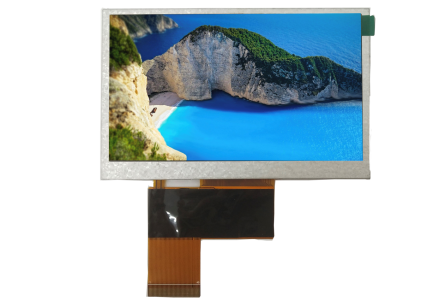
Choosing a TFT LCD for an industrial product is not simply a matter of selecting the right screen size or resolution. An industrial display may need to operate for years inside a machine, control panel, measuring instrument, vehicle, or automation system while dealing with temperature changes, vibration, dust, strong ambient light, and continuous operation.
A display that performs well in an office or consumer device may not be suitable for these conditions. Industrial applications often require a more careful balance between visibility, reliability, electrical compatibility, mechanical design, and long-term availability.
The right TFT LCD should therefore be selected according to the actual working environment and system requirements rather than based on specifications alone.
Start With the Application Requirements
Before comparing TFT LCD models, define where and how the display will be used. This provides a practical framework for evaluating specifications and prevents unnecessary compromises later in the design process.
Consider several basic questions:
Will the display be installed indoors or outdoors?
How much ambient light will it need to handle?
What temperature range will the equipment experience?
Will the display operate continuously?
Is touch functionality required?
What interface does the main control board use?
Are there strict limitations on the display's dimensions?
Does the product need to meet specific environmental or industry requirements?
How long is the expected product lifecycle?
For example, a display installed inside an industrial control cabinet may have relatively stable lighting and temperature conditions. In contrast, a display mounted on outdoor equipment may need high brightness, wide operating temperature capability, and strong optical performance.
Defining these conditions first makes the selection process much more straightforward.
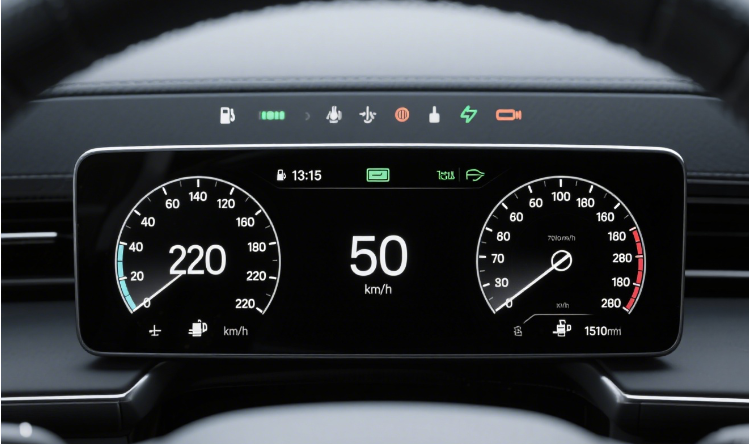
Choose the Right Display Size and Resolution
Screen size is one of the first specifications engineers normally consider, but it should not be evaluated independently from the equipment's mechanical design.
A larger TFT LCD provides more space for displaying information, but it also requires more installation space and may increase power consumption and overall system cost. Smaller displays can be more suitable for compact instruments, meters, handheld equipment, and embedded control panels.
Resolution should be considered in relation to the information being displayed. A high-resolution screen is useful when the interface contains detailed graphics, multiple data fields, technical diagrams, or fine text. However, simply choosing the highest available resolution does not necessarily improve an industrial product.
For industrial HMIs, the important question is whether operators can clearly read the information from the expected viewing distance.
A 7-inch display with moderate resolution may be more practical for a machine interface than a higher-resolution panel that requires more processing power and offers little visible benefit in actual use.
The physical dimensions of the active area, overall module size, mounting holes, bezel structure, and cable position should also be checked before finalizing the display model.
Pay Close Attention to Brightness and Readability
Brightness becomes especially important when an industrial display is used in environments with strong ambient lighting.
A standard TFT LCD designed for indoor equipment may become difficult to read when exposed to sunlight or powerful factory lighting. For outdoor or high-light applications, a high-brightness TFT LCD can significantly improve readability.
However, brightness alone does not determine whether a display is easy to see.
Other factors include:
For equipment installed outdoors, sunlight readability should be evaluated under realistic lighting conditions rather than based solely on the brightness value listed in a datasheet.
Optical bonding can also improve visibility by reducing the air gap between the display and cover glass or touch panel. This can reduce internal reflections and improve perceived image clarity, particularly in bright environments.
Consider the Viewing Angle
Industrial equipment is not always operated from directly in front of the screen.
An operator may view a control panel from the side, stand above a machine, or monitor information while moving around equipment. This makes viewing angle an important consideration.
IPS TFT LCD technology is often selected for industrial applications because it can provide wide viewing angles while maintaining relatively consistent image quality when viewed away from the center.
TN TFT LCDs can still be suitable for applications where the operator normally looks directly at the screen and cost or response characteristics are more important.
The key is to match the display technology to the actual viewing conditions rather than assuming that one panel technology is universally better.
Select a Suitable TFT Panel Technology
Different TFT technologies offer different combinations of viewing angle, contrast, color performance, response time, and cost.
IPS panels are widely used when wide viewing angles and stable image reproduction are important. They are particularly useful for industrial interfaces where multiple operators may view the same screen from different positions.
TN panels can be appropriate for simpler industrial instruments where viewing angle requirements are limited and cost efficiency is a priority.
Other panel characteristics should also be considered depending on the application, including color depth, response time, contrast ratio, and backlight configuration.
For industrial products, the most important point is consistency. The display should provide predictable performance throughout the expected operating conditions.
Check the Operating Temperature Range
Temperature is one of the biggest differences between consumer and industrial display requirements.
Industrial equipment may be installed in factories, warehouses, vehicles, outdoor cabinets, or machinery where temperatures vary significantly. A display that works normally at room temperature may experience degraded performance when exposed to extreme heat or cold.
Before choosing a TFT LCD, check both the operating temperature and storage temperature specifications.
Also consider how the display behaves near the limits of its operating range. Depending on the panel and application, extreme temperatures can affect:
Backlight performance
Response time
Image stability
Startup behavior
Contrast
Touch performance
Overall service life
If the equipment operates in a particularly demanding environment, it is worth discussing the actual temperature profile with the display manufacturer rather than selecting a module solely from a standard catalog.
Make Sure the Interface Matches Your System
Electrical compatibility is just as important as optical performance.
Common TFT LCD interfaces include RGB, LVDS, MIPI DSI, SPI, and other serial or parallel interfaces. The appropriate choice depends on the processor, controller, communication architecture, and required data bandwidth.
For example, a display may have excellent optical specifications but still be unsuitable if its interface is incompatible with the customer's mainboard.
Engineers should verify:
Interface type
Pin definition
Signal voltage
Logic level
Data format
Timing requirements
Connector type
Cable length
Backlight control method
The display controller and driver IC should also be considered when integrating the module into a new system.
It is much easier to identify these requirements during the early design stage than after the hardware has already been developed.
Evaluate Power Consumption
Power consumption can become an important design constraint, especially in battery-powered or compact industrial equipment.
The TFT panel itself consumes power, but the backlight is often a major contributor to total display power consumption. Increasing brightness can therefore affect the system's overall energy requirements.
When comparing displays, look beyond a single power figure and consider the complete operating condition.
For example, a display that operates at high brightness continuously may consume significantly more power than one using a lower-brightness setting or an adaptive backlight strategy.
For fixed industrial installations, power consumption may be less critical than visibility and reliability. For portable instruments, remote monitoring equipment, and battery-powered devices, however, it can become a major selection factor.
Think About Touchscreen Integration
Many modern industrial interfaces combine a TFT LCD with a touch panel, but touchscreen requirements vary considerably between applications.
Projected capacitive touchscreens are commonly used when users need a responsive interface with multi-touch capability. Resistive touchscreens can still be valuable in industrial environments where users operate equipment with gloves or require a deliberate pressure-based input method.
The touch panel should not be treated as a completely separate component. Its integration with the TFT LCD can affect optical performance, thickness, mechanical design, and durability.
If a cover lens is required, engineers should also consider:
For industrial HMI products, a customized TFT LCD and touch solution can often provide a better fit than combining unrelated off-the-shelf components.

Consider Mechanical Integration
A display can meet every electrical and optical requirement and still fail to fit the equipment.
Mechanical specifications should therefore be reviewed early in the selection process.
Important dimensions include the active area, viewing area, overall module dimensions, thickness, mounting position, connector location, and cable routing.
The mounting method also matters. Depending on the equipment design, the display may need mounting brackets, screw holes, adhesive bonding, or a custom frame.
If the product has strict dimensional limitations, a custom TFT LCD module may be more appropriate than trying to modify the surrounding structure around a standard display.
Evaluate Reliability and Expected Lifetime
Industrial equipment is often designed for a much longer service life than consumer electronics. A machine control panel may remain in production for many years, and replacing the display with a different model after a short period can create significant engineering and maintenance costs.
This makes long-term product availability an important consideration.
When evaluating a TFT LCD supplier, ask about:
Product lifecycle
Long-term availability
Component sourcing
Quality control
Reliability testing
Failure rate
Replacement strategy
Engineering support
A low-cost display is not necessarily the most economical option if it becomes unavailable shortly after the equipment enters production.
For industrial applications, stable supply and consistent specifications can be just as important as the initial purchase price.
Standard TFT LCD or Custom Display?
Off-the-shelf TFT LCD modules can be an efficient choice when the required size, resolution, interface, brightness, and mechanical dimensions already match the equipment.
They can shorten development time and reduce initial engineering costs.
However, industrial equipment often has requirements that do not fit neatly into standard display specifications. Customization may be necessary when the product requires a specific:
A custom TFT LCD does not necessarily mean developing an entirely new display from scratch. In many cases, manufacturers can modify an existing platform to meet specific mechanical, electrical, or optical requirements.
The right approach depends on production volume, development schedule, technical requirements, and expected product lifetime.
Work With the Display Manufacturer Early
One of the most effective ways to avoid display integration problems is to involve the TFT LCD manufacturer during the design stage.
Instead of sending only a screen size and resolution, provide the manufacturer with the complete application requirements. This may include environmental conditions, viewing distance, brightness requirements, operating temperature, interface specifications, mechanical drawings, touch requirements, and expected production volume.
This allows the supplier's engineering team to recommend a more suitable display configuration.
For custom industrial displays, early communication can also help identify potential problems involving connector placement, backlight power, enclosure design, thermal management, and touch integration before prototypes are produced.
A Practical TFT LCD Selection Checklist
Before placing an order, it is useful to review the display against the actual application requirements:
| Specification | What to Check |
|---|
| Screen size | Does it fit the available installation space? |
| Resolution | Is the displayed information sufficiently clear? |
| Panel technology | Does it provide the required viewing angle and image performance? |
| Brightness | Can the display remain readable under actual lighting conditions? |
| Viewing angle | Can operators view the screen from the required positions? |
| Operating temperature | Can it withstand the equipment's environmental conditions? |
| Interface | Is it compatible with the mainboard and processor? |
| Power consumption | Does it meet the system's power budget? |
| Touchscreen | Is the touch technology appropriate for the operating environment? |
| Mechanical design | Do dimensions, thickness, connectors, and mounting points fit? |
| Reliability | Is the module suitable for continuous industrial operation? |
| Availability | Can the supplier support the expected product lifecycle? |
| Customization | Can the manufacturer modify the module if required? |
Final Considerations
Choosing the right TFT LCD for industrial applications is ultimately a system-level decision. Screen size and resolution are only the starting point. The display must work reliably within the equipment's electrical, mechanical, optical, thermal, and environmental constraints.
For relatively simple indoor equipment, a standard TFT LCD may provide everything required. More demanding applications may require high brightness, wide viewing angles, extended temperature ranges, optical bonding, touch integration, or other customization.
The best display is not necessarily the one with the highest specification. It is the one that provides the right combination of visibility, reliability, compatibility, service life, and cost for the application.
By defining the operating environment first and discussing the requirements with an experienced TFT LCD manufacturer early in the development process, industrial equipment manufacturers can reduce integration risks and build a display solution that remains dependable throughout the product lifecycle.
Industrial HMI Selection and Lifecycle