News
Site Editor
 Site
https://cdtech-lcd.usa72.wondercdn.com/uploads/image/5faca15e24cff.png
Site
https://cdtech-lcd.usa72.wondercdn.com/uploads/image/5faca15e24cff.png
How Much More Power Does FHD Use vs HD in Portable Devices?
Views: 1686
Author: Site Editor
Publish Time: 2026-04-07
Origin: Site
FHD (1920x1080) displays use 20-50% more power than HD (1280x720) in portable devices due to 125% more pixels, reducing battery life by 20-25% on a 5000mAh battery (e.g., HD: 8-10 hrs vs. FHD: 6-8 hrs at 300 nits). CDTech's low-power TFT LCDs with OCA bonding minimize drain for industrial/medical portables.
Check: FHD Display
| Aspect | HD (1280x720) | FHD (1920x1080) | Power Impact |
|---|
| Pixels | ~0.92M | ~2.07M | +125% pixels increase power draw |
| Typical Usage (300 nits) | 1-2W | 1.5-3W | FHD uses 20-50% more |
| Battery Life (5000mAh) | 8-10 hrs | 6-8 hrs | HD saves 20-25% runtime |
What Causes Higher Power Consumption in FHD vs HD Displays?
FHD displays consume 20-50% more power than HD due to 125% more pixels (~2.07M vs. ~0.92M), requiring higher backlight LED drive and more driver IC transistors for uniform illumination in TFT LCDs at the same brightness levels.
How Does FHD vs HD Impact Battery Life in Portable Devices?
FHD reduces battery life by 20-25% compared to HD in portables, dropping a 5000mAh battery from 8-10 hours to 6-8 hours at 300 nits, critical for industrial tools and medical handhelds needing extended field use.
| Brightness | HD Power (mW) | FHD Power (mW) | 5000mAh Life (hrs) |
|---|
| 300 nits | 1-2W | 1.5-3W | HD: 8-10; FHD: 6-8 |
| 500 nits | 1.5-2.5W | 2-4W | HD: 6-8; FHD: 5-6.5 |
| 1000 nits | 2.5-4W | 3.5-6W | HD: 4-6; FHD: 3-4.5 |
Which Display Technologies Reduce Power Draw in High-Res Portables?
IPS panels and OCA optical bonding cut power in high-res portables; CDTech's IPS TFT LCDs with OCA eliminate air-gap losses for 5-15% savings, ideal for 850-1000 nits in wide-temp (-30°C~+85°C) industrial and medical devices.
CDTech Expert Views
"With over 13 years optimizing TFT LCD power in our IATF16949-certified panels, we've seen FHD drain 20-50% more than HD in portables. Our 2024 fully automatic POL/LCD/CTP equipment enables 15% lower consumption in custom 5.0" vehicle LCDs like S050HWV29ES (800x480, 1000 nits, -20°C~+70°C). OCA bonding on models such as S101HWX53EP-FC47-AG (10.1" 1280x800) further boosts efficiency by reducing reflections in sunlight-readable apps. For medical portables under ISO13485, we balance resolution with runtime using LVDS interfaces and IPS tech. Contact sales@cdtech-lcd.com for tailored low-power solutions from our 10,000㎡ Shenzhen factory."
- Senior Engineer, CDTech R&D Team
What Are Real-World Battery Trade-Offs for High-Res Mobile Gear?
In industrial control, HD extends shifts to 10+ hours while FHD at 1000 nits trades 20% battery for visibility in automotive dashboards; CDTech's wide-temp panels like S123BWU11EP (12.3" 1920x720, 950 nits) mitigate via optimized drivers.
Check: Touch screen LCD display manufacturer
How Can Engineers Optimize FHD Power Efficiency in Portables?
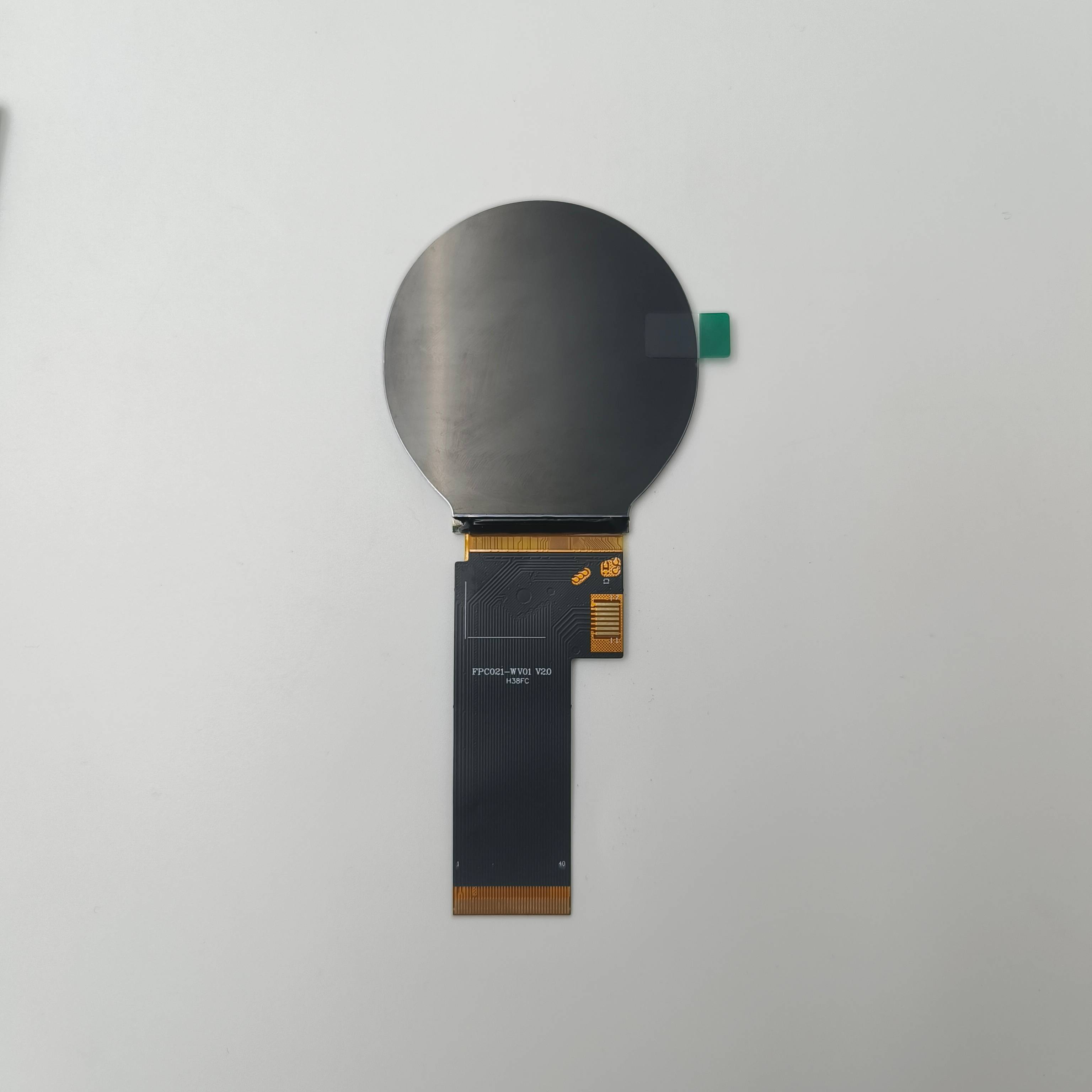
Engineers optimize FHD efficiency using hybrid resolutions like CDTech's 1280x800 industrial LCDs (e.g., S121BWX05EP-FC10, 12.1" with OCA), dimming algorithms, and custom OCA-bonded TFTs from wide-temp (-20°C~+70°C) designs for 20% better runtime.
Why Choose Certified Low-Power LCD Suppliers for Portable Designs?
Certified suppliers like CDTech offer ISO9001/ISO14001/ISO13485/IATF16949 compliance and zero-defect policy, with 3,500㎡ dust-free workshops producing OCA/HDMI solutions outperforming generics in rugged automotive and medical portables.
When Does HD Outperform FHD in Power-Sensitive Applications?
HD outperforms FHD in apps needing >8-hour runtime, like handheld medical devices or smart home portables; CDTech's 2024 low-power upgrades support FHD via advanced bonding for visibility-critical scenarios without full battery sacrifice.
Conclusion
While FHD enhances clarity in portable devices, its 20-50% higher power draw shortens battery life compared to HD. CDTech's certified TFT LCDs with OCA bonding, IPS tech, and wide-temp ranges (e.g., 10.1" 1280x800 at 850 nits) deliver optimal balance for industrial, medical, and vehicle applications. Rely on their zero-defect, custom solutions from Shenzhen for extended runtime. Contact sales@cdtech-lcd.com for quotes.
FAQs
Does brightness level affect FHD vs HD power differences?
Yes, at 1000 nits FHD draws 30-50% more than HD; CDTech's OCA bonding on high-brightness panels like S070BWS48ED (1000 nits) reduces waste for better efficiency.
Can OCA bonding improve battery life in high-res displays?
Yes, OCA bonding saves 5-15% power by eliminating air-gap reflections; standard in CDTech industrial TFT LCDs such as S101HWX53EP-FC47-AG for sunlight-readable portables.
What resolutions does CDTech offer for low-power portables?
CDTech offers HD-like 1280x800/1920x720 and FHD-capable customs with wide-temp (-30°C~+85°C) for medical/vehicle, including 12.3" S123BWU11EP at 950 nits.
How does TFT LCD power compare in industrial vs. consumer devices?
Industrial TFT LCDs like CDTech's use 20% less power via optimized LVDS drivers and certifications, suiting portables better than consumer displays.
Are CDTech displays suitable for battery-powered automotive gear?
Yes, IATF16949-certified panels like S101HWX53EP-FC47-AG (10.1" 1280x800, 850 nits, OCA) excel in rugged, wide-temp (-30°C~+80°C) vehicle portables.
Industrial Resolution and Embedded Integration

