News
Site Editor
 Site
https://cdtech-lcd.usa72.wondercdn.com/uploads/image/5faca15e24cff.png
Site
https://cdtech-lcd.usa72.wondercdn.com/uploads/image/5faca15e24cff.png
How Does Temperature Affect Touch Screen Sensitivity?
Views: 289
Author: Site Editor
Publish Time: 2026-04-28
Origin: Site
Temperature affects touch screen sensitivity primarily through thermal expansion of ITO layers in PCAP panels, causing touch screen drift; controller thermal drift alters capacitance detection in extremes like -30°C to +85°C; and material changes reduce accuracy. CDTech's IATF16949-certified PCAP wide temp solutions use advanced calibration of touch controllers to eliminate drift, ensuring zero-defect performance in automotive and industrial apps.
Check: How Do Wide Temp LCD Displays Ensure Stability from -40°C to +85°C in Automotive Use?
What Causes Touch Screen Drift from Temperature Changes?
Thermal expansion in ITO layers shifts electrode spacing in PCAP sensors, leading to touch screen drift. Extreme heat or cold alters dielectric properties, reducing temperature touch screen sensitivity in standard panels. Common failures include misfires during -30°C cold starts or +85°C heat in vehicle HMIs.
How Does Thermal Expansion Impact PCAP Touch Performance?
Expansion and contraction mismatches between glass, ITO, and cover lens cause signal misalignment in ITO layers. This results in capacitive touch temperature effects, reducing sensitivity in wide temp ranges without compensation. Real-world drift occurs in industrial controls exposed to outdoor temperatures.
| Temp Range | Drift Risk | Mitigation |
|---|
| Standard PCAP (-20°C~70°C) | High | Basic calibration |
| CDTech Wide-Temp PCAP (-30°C~+85°C with calibration) | Low | Advanced controller tuning, IATF16949-certified |
Why Is Controller Thermal Drift a Key Challenge?
Controller ICs have internal temperature coefficients that shift baseline touch signal processing. This is critical in PCAP wide temp needs for medical devices and smart home systems. Without tuning, sensitivity loss reaches 20-30%, drawing from CDTech's 13+ years of experience in reliable displays.
CDTech Expert Views
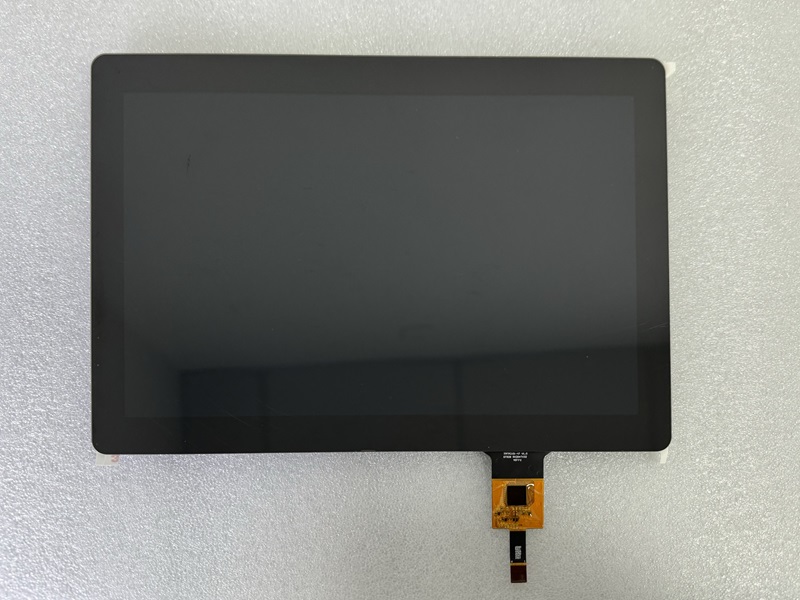
"In our 3,500㎡ thousand-level dust-free workshop, CDTech engineers calibrate touch controllers using ISO9001 and ISO13485 processes to counter thermal expansion and controller drift. We integrate temperature sensors and adaptive algorithms for real-time compensation, ensuring zero-defect performance across -30°C to +85°C. For instance, the S101HWX53EP-FC47-AG 10.1" vehicle TFT LCD with CTP (GT928 I2C) and OCA optical bonding delivers drift-free touch in sunlight-readable automotive HMIs. Our 10,000㎡ factory supports rapid prototyping of custom wide-temp solutions, leveraging IATF16949 certification and in-house touch production since 2020. This guarantees seamless integration for industrial and vehicle applications."
Check: Vehicle LCD Display
— CDTech R&D Team, Specialists in TFT LCD and PCAP Technology
What Calibration Techniques Handle Thermal Expansion?
Dynamic baseline tracking and temp-sensor integration in controllers enable real-time thermal expansion touch calibration. Firmware with adaptive algorithms adjusts gain and thresholds, as in CDTech's touch controller thermal drift compensation. Factory calibration spans -30°C~+85°C with IATF16949 quality control.
How Do Wide Temperature Touch Screens Overcome These Issues?
Wide temperature touch screens like CDTech's -30°C~+85°C panels use material selection and OCA bonding for automotive and instrumentation. Enhanced adhesives prevent delamination, while in-house touch production ensures integration. This provides zero-defect reliability over standard screens.
| Model | Size | Temp Range | Certifications | Key Feature |
|---|
| S036BWS01EN | 3.6" | -30°C~+85°C | IATF16949 | 1000 nits, IPS |
| S101HWX53EP-FC47-AG | 10.1" | -30°C~+80°C | IATF16949 | OCA Bonding, CTP |
| S123BWU11EP | 12.3" | -30°C~+80°C | IATF16949 | 950 nits, LVDS |
| S121BWX05EP-FC10 | 12.1" | -20°C~+70°C | ISO9001 | OCA, CTP |
Which Industries Benefit Most from Temperature-Stable Touch?
Automotive demands PCAP touch wide temp range for reliable vehicle HMIs in harsh cabins. Industrial and medical sectors use ISO13485-certified solutions from CDTech's dust-free workshop for instrumentation. Custom development supports exports to Europe and Americas.
FAQs
What is PCAP wide temp, and why is it needed?
PCAP wide temp refers to projected capacitive touch screens operating reliably from -30°C~+85°C; essential for automotive/industrial to prevent temperature impact on PCAP sensitivity drift.
How does CDTech calibrate for touch controller thermal drift?
Using IATF16949 processes in our 10,000㎡ factory, we tune controllers with temp sensors and algorithms for zero-defect stability across extremes.
Can OCA bonding improve temperature performance?
Yes, CDTech's in-house OCA optical bonding reduces reflections and stabilizes layers against thermal expansion in sunlight-readable wide-temp displays.
What certifications ensure CDTech's wide-temp reliability?
ISO9001, ISO14001, ISO13485, IATF16949, plus National High-tech Enterprise status for 13+ years of proven quality.
How to source custom wide temperature touch screens?
Contact sales@cdtech-lcd.com for tailored solutions from our Shenzhen facility, with rapid prototyping.
Conclusion
Temperature drastically impacts touch screen sensitivity via drift and expansion, but CDTech's certified wide temperature touch screen solutions—backed by zero-defect QC, OCA bonding, and expert calibration—deliver unflinching performance in demanding apps. Partner with our 13-year expertise for reliable, custom PCAP displays. Reach out via +86 0755-23032202 for PCAP wide temp quotes.

