Industrial touch screen noise reduction eliminates false touches from motors and radio interference through EMI shielding films at the PCAP sensor layer, noise-filtering driver circuits for capacitive touch immunity, OCA optical bonding sealing gaps for rugged operation (-30°C to +85°C), and grounding layers in custom PCB assemblies. CDTech's IATF16949-certified custom solutions deliver zero-defect performance in automotive and industrial HMI applications.
Check: How Does Custom PCAP Touch Integration Add Value to TFT LCD Displays?
What Is EMI and Why Does It Disrupt Touch Screens?
Electromagnetic interference (EMI) includes conducted noise through wires and radiated noise through air, disrupting projected capacitive (PCAP) touch screens by injecting false signals into sub-picofarad capacitance changes detected by electrodes. Motors, variable frequency drives (VFDs), and radio transmitters emit 10 MHz–2 GHz broadband noise, causing false touches in vehicle dashboards, industrial HMI panels near equipment, and medical interfaces.
Capacitive sensors rely on precise finger-induced capacitance shifts; EMI mimics these, leading to unreliable inputs in harsh environments like automotive systems with motor brushes or factory panels beside wireless devices.
How Do EMI Shielding Films Protect PCAP Sensors?
EMI shielding films use conductive coatings or metalized layers to form a Faraday cage, blocking electromagnetic fields from reaching PCAP sensors, with grounding via controlled impedance paths redirecting noise. Placement options include front-of-glass, behind-display, or flex cable integration for optimal protection in custom assemblies.
| Shielding Type | Material | Attenuation (dB) | Cost | Best For |
|---|
| Conductive Coating (AgPd) | Silver-palladium | 20–30 | Low | Budget HMI |
| Metalized Polyester | Aluminum deposit | 25–35 | Medium | Automotive PCAP |
| Full Faraday Mesh | Copper grid + adhesive | 35–50 | High | High-EMI industrial |
| Integrated EMI Shield (OCA-bonded) | Custom PCB layer + optical bond | 30–45 | Medium-High | Sealed, rugged displays |
CDTech integrates metalized polyester and EMI layers in OCA-bonded PCAP for automotive displays like the 10.1" S101HWX53EP-FC47-AG, ensuring robust protection.
What Role Do Noise-Filtering Driver Circuits Play?
Noise-filtering driver circuits use analog front-end (AFE) low-pass filters and RC networks with 10–20 Hz cutoffs for human touch while rejecting 100 MHz+ EMI, plus firmware algorithms with hysteresis to ignore false events. Advanced PCAP ICs like those with integrated rejection enhance reliability.
Multi-stage filtering—analog RC, digital decimation, software debounce—cuts EMI false positives by over 90%. CDTech matches drivers in OCA-bonded PCAP solutions like industrial 12.1" S121BWX05EP-FC10 for zero-defect operation.
Why Is OCA Optical Bonding Essential for EMI Immunity?
OCA optical bonding uses optically clear adhesive to eliminate air gaps between PCAP, display, and cover glass, preventing gaps from acting as EMI antennas that couple noise by up to 50%. It enables hermetic sealing for -30°C to +85°C ruggedness in automotive and industrial use.
Air-gap designs show 2–5× higher EMI susceptibility; CDTech's in-house OCA workshop in its 3,500㎡ dust-free facility produces sealed assemblies like vehicle 10.1" S101HWX53EP-FC47-AG, minimizing supply-chain risks.
How Do Grounding and PCB Layout Strategies Minimize Noise Coupling?
Grounding uses multi-layer PCBs with dedicated planes and via stitching around nodes, while layout keeps PCAP traces from high-speed lines like LVDS or RGB, ensuring low-impedance return paths for EMI currents.
Poor layouts reduce shielding by 50%; CDTech's custom reviews follow IPC-A-610, as in automotive LVDS designs like 12.3" S123BWU11EP, routing traces perpendicular with 10 mm ground vias to drop coupling from 15 pF to under 2 pF.
What Certifications Ensure EMI Compliance in Custom Touch Screens?
Certifications like ISO 11452 for automotive radiated immunity, IEC 61000-4-3 for industrial, and IATF16949 for processes ensure compliance. CDTech holds ISO9001, ISO14001, ISO13485, and IATF16949, mandating EMI FMEA for custom PCAP.
IATF16949 requires pre-compliance testing; CDTech's zero-defect policy applies this to all automotive solutions, supporting wide-temp PCAP in products like -30°C~+85°C vehicle displays.
CDTech Expert Views
"Our IATF16949 certification commits to EMI robustness from design to delivery. Every custom PCAP undergoes ISO 11452 radiated immunity testing, and OCA bonding eliminates antenna effects plaguing generic screens. In 13+ years, we've resolved motor-induced false touches in 500+ automotive HMI programs across Europe, China, and North America." — CDTech Engineering Team
What Are Real-World Case Studies of EMI-Resistant Custom Touch Screens?
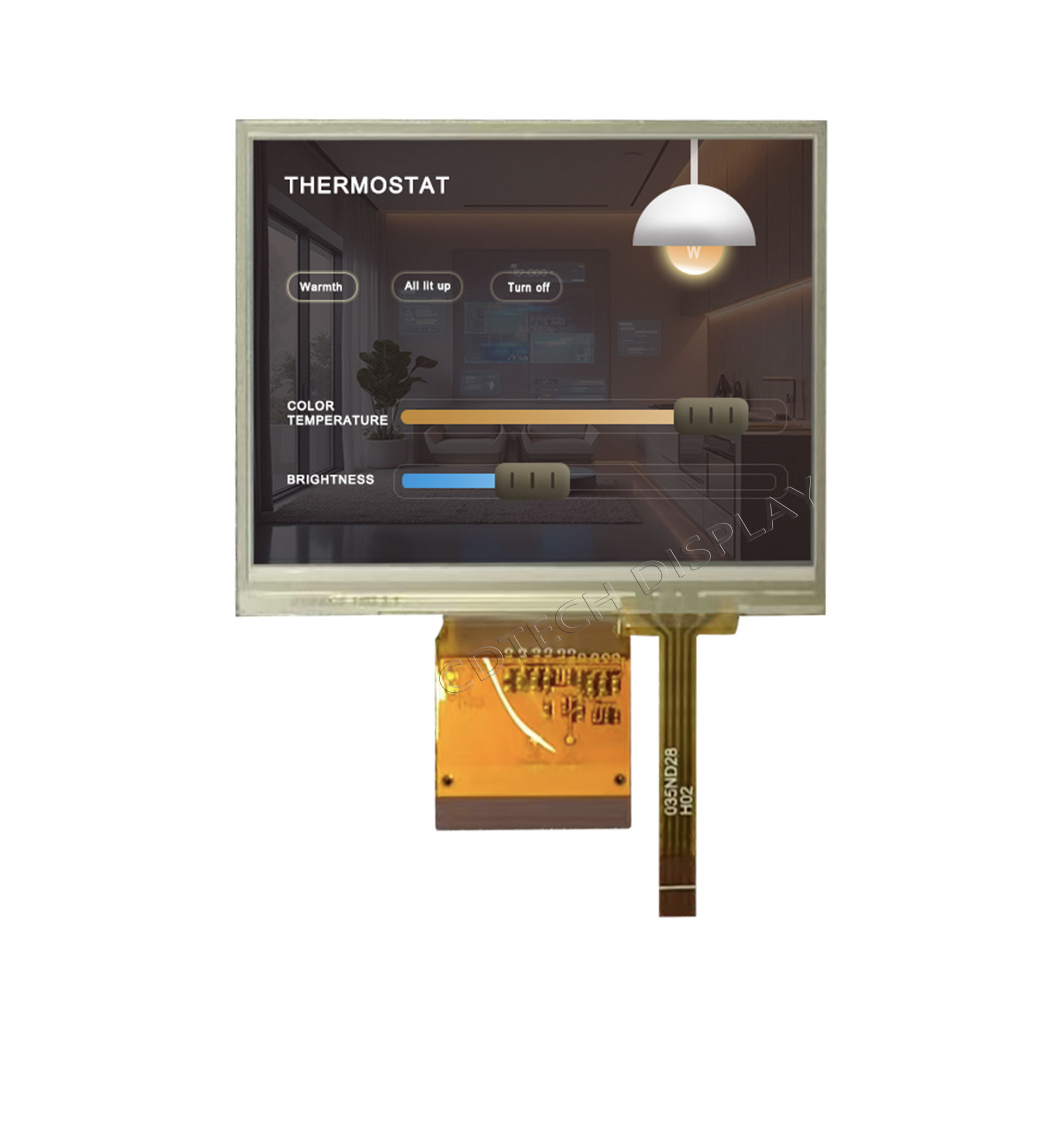
Case studies include a 10.1" PCAP automotive dashboard (S101HWX53EP-FC47-AG equivalent) with EMI shielding and OCA bonding thriving amid 12V motor loads; a 5" industrial upgrade to PCAP near VFDs achieving zero false touches over 50,000 cycles; and a 3.5" medical handheld with EMI tuning for ISO13485 compliance.
Check: Custom LCD Display
CDTech's 4-week prototyping iterates EMI solutions, including AFE reviews and testing, for products like 7.0" S070BWS48ED in harsh environments.
How Can Engineers Integrate EMI Solutions During Product Design?
Integrate by specifying PCAP, shielding, and ICs early; collaborate on PCB layout and EMI simulation; test immunity at assembly. CDTech offers free assessments, saving 6 weeks and 30% NRE costs.
For custom projects like BAR-type 12.3" S123BWU09NP-FC19-AF with PCAP and OCA, CDTech provides layout optimization and rapid reviews.
Conclusion
Capacitive touch screens falter in high-EMI settings from motor and radio noise, but industrial touch screen noise reduction via shielding films, filtering circuits, OCA bonding, and PCB strategies ensures reliability. CDTech's 13+ years, IATF16949 certification, zero-defect policy, and in-house OCA deliver EMI-hardened solutions for automotive, industrial, and medical uses. Don't let noise compromise HMIs—contact CDTech at sales@cdtech-lcd.com or +86 0755-23032202 for a free EMI risk assessment.
FAQs
Can standard PCAP touch screens operate reliably in high-EMI environments, or do I need custom shielding?
Standard PCAP fails in motor or RF-heavy areas; custom EMI shielding, drivers, and OCA bonding are vital. CDTech's IATF16949 custom solutions target these for zero defects.
What is the typical cost premium for EMI-hardened PCAP vs. standard capacitive touch?
15–25% premium for shielding, IC tuning, OCA; offset by fewer failures. CDTech amortizes over volume with zero-defect guarantees.
How long does it take to develop a custom EMI-resistant touch screen?
CDTech delivers in 4–6 weeks, covering shielding, OCA, and testing. Expedited for automotive/medical.
Are EMI shielding films permanent or do they degrade over time?
Metalized polyester and AgPd last 10+ years at -30°C to +85°C; OCA protects from stress in CDTech assemblies.
Can I retrofit EMI shielding to an existing touch screen design?
Possible but less effective (60–70%); redesign with integrated OCA is best. CDTech assesses retrofits.


