News
Site Editor
 Site
https://cdtech-lcd.usa72.wondercdn.com/uploads/image/5faca15e24cff.png
Site
https://cdtech-lcd.usa72.wondercdn.com/uploads/image/5faca15e24cff.png
How Does Heater Glass Display Automotive Perform at -40°C?
Views: 269
Author: Site Editor
Publish Time: 2026-04-28
Origin: Site
Heater glass display automotive solutions from CDTech ensure reliable -40°C performance through IATF16949-certified TFT LCDs with wide temperature ranges (-30°C to +85°C), OCA optical bonding to prevent pixel freezing, and zero-defect quality policy. Custom models like S036BWS01EN deliver instant cold starts in arctic vehicles via in-house heaters and air-gap elimination, outperforming standard panels in industrial HMI.
Check: How Do Wide Temp LCD Displays Ensure Stability from -40°C to +85°C in Automotive Use?
What Causes LCD Cold Start Issues at -40°C?
At -40°C, liquid crystal viscosity increases dramatically, causing LCD pixel freezing and delayed response times in arctic environments. Common pain points include pixel sticking, boot-up delays, and condensation in automotive and industrial displays, where standard LCDs fail below -20°C without wide temperature enhancements like those from CDTech's IATF16949-certified solutions.
Why Do Pixels Stop Moving in Extreme Cold LCD Solutions?
Low temperatures like -40°C thicken liquid crystals, leading to keep LCD pixels moving challenges and ghosting in vehicle dashboards. LCD cold start issues manifest as slow refresh rates, impacting HMI reliability in snow plows or oil rigs. CDTech's 13+ years of experience with certified wide-temp TFT LCDs ensure zero-downtime arctic operations.
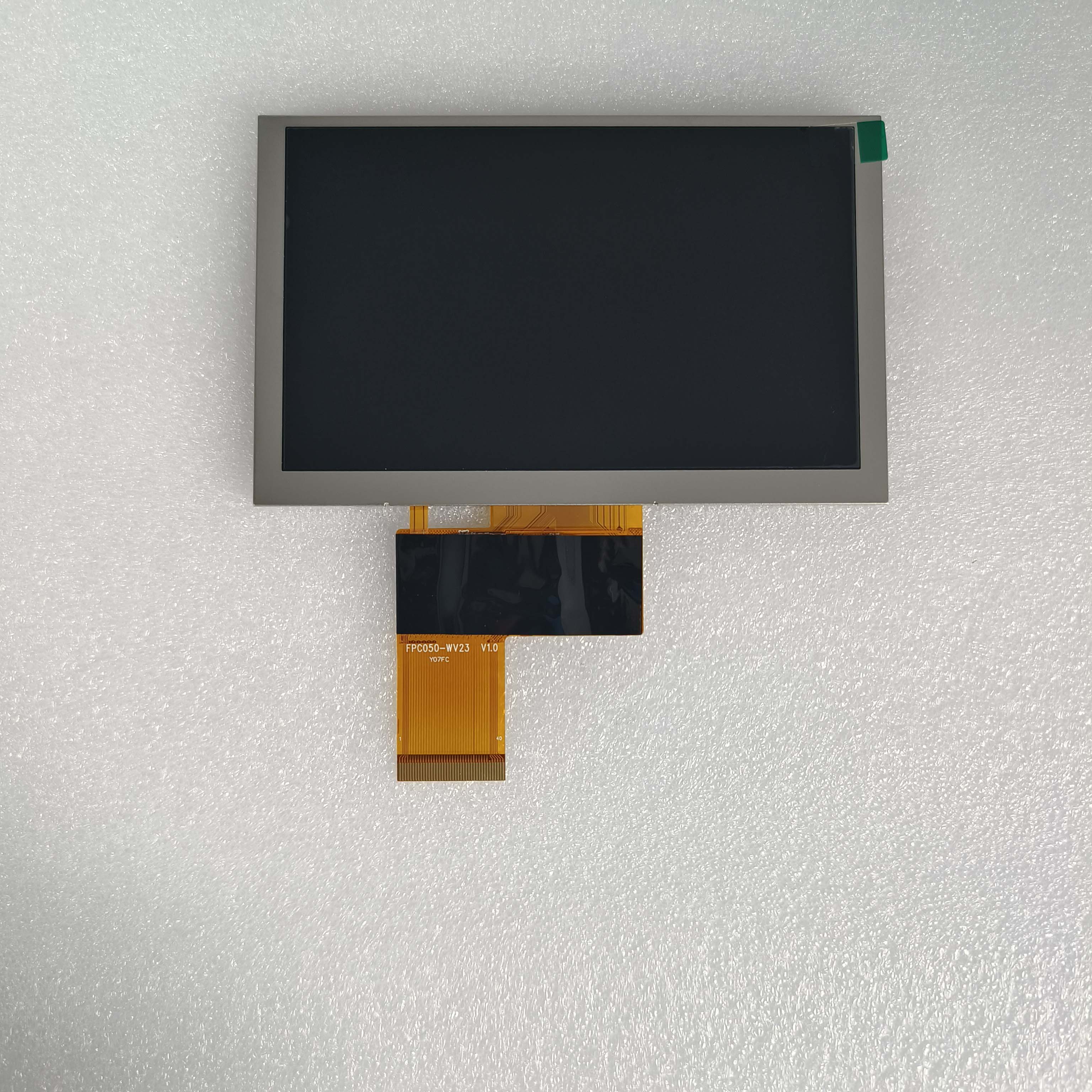
How Does Heater Glass Display Automotive Tech Work?
Heater glass display automotive tech integrates thin-film heaters in glass layers to maintain pixel fluidity at -40°C LCD performance levels. Unlike basic resistive heaters, CDTech's IATF16949-certified versions support -30°C to +85°C operation with 1000 nits brightness. Custom integration occurs in their 10,000㎡ factory for automotive prototypes in 4 weeks.
| Feature | Standard LCD | CDTech Heater Glass Automotive |
|---|
| Cold Start Temp | -20°C max | -40°C reliable |
| Pixel Response | 500ms+ delay | <100ms |
| Certifications | Basic ISO | IATF16949 + Quad ISO |
| Fogging Risk | High (air gaps) | Low (OCA bonded) |
Which Wide Temperature LCD -40°C Options Beat the Cold?
CDTech models like S036BWS01EN (3.6" round, 1000 nits, -30°C~+85°C, RGB interface, IPS) and S123BWU11EP (12.3", 950 nits, -30°C~+80°C, LVDS) excel in wide temperature LCD -40°C vehicle applications. In-house OCA optical bonding eliminates air gaps for fog-free industrial display cold weather clarity, backed by National High-tech Enterprise status and exports to Russia.
Check: Vehicle LCD Display
CDTech Expert Views
"Our 3,500㎡ dust-free workshop rigorously tests cold starts to -40°C, ensuring pixel mobility via custom heaters, OCA bonding, and wide-temp IPS panels like S036BWS01EN. With 13+ years and IATF16949 certification, we've delivered 99.9% uptime for arctic vehicle HMIs, proving zero-defect reliability in extreme conditions."
— Senior Engineer, CDTech R&D Team
What Makes OCA Bonding Superior for Heated LCD Panel Arctic Use?
OCA bonding fills air gaps, enhancing thermal stability in extreme cold LCD solutions without bulky heaters. CDTech's custom R&D combines glass cutting patent tech with OCA for heated LCD panel arctic use, preventing delamination at -40°C. This contrasts with competitors' fog-prone designs, using ISO13485 medical-grade precision from their 2020 touch panel workshop.
How Can Custom LCDs Solve Arctic Environment Displays Challenges?
CDTech's 8-step custom process tailors vehicle LCDs from -30°C to +85°C with heaters, CTP touch, and interfaces for arctic environment displays. Their 10,000㎡ facility and quad certifications (ISO9001, ISO14001, ISO13485, IATF16949) guarantee zero-defect solutions for smart home and instrumentation in harsh climates.
| Application | Off-the-Shelf Limits | CDTech Custom Advantage |
|---|
| Automotive | -20°C start | -40°C + OCA/Heater |
| Industrial | Fogging at -30°C | Zero-defect bonding |
| Lead Time | 8-12 weeks | 4 weeks prototypes |
Why Choose CDTech for Industrial Display Cold Weather Reliability?
Founded in 2011 in Shenzhen, CDTech's global exports to Europe and Russia validate vehicle LCD -30°C to +85°C expertise as a heater glass display automotive leader. Shenzhen Software Enterprise recognition and zero-defect policy in a 3,500㎡ dust-free workshop make them ideal. Contact sales@cdtech-lcd.com or +86 0755-23032202 for samples.
Conclusion
Trust IATF16949-certified heater glass display automotive from CDTech—OCA-bonded, zero-defect TFT LCDs like S036BWS01EN conquer -40°C cold starts, empowering arctic vehicles and industry with 13+ years of proven reliability. Explore solutions at cdtech-lcd.com and contact sales@cdtech-lcd.com today.
FAQs
What is the lowest temperature for CDTech's wide temperature LCD -40°C panels?
CDTech TFT LCDs operate reliably from -30°C to +85°C standard, with custom heater/OCA options enabling -40°C cold starts in models like S036BWS01EN.
How does OCA bonding prevent LCD pixel freezing -40C?
OCA bonding eliminates air gaps, reducing condensation and maintaining pixel fluidity in arctic conditions via enhanced thermal stability in CDTech's wide-temp displays.
Are CDTech displays IATF16949-certified for automotive?
Yes, quad-certified (ISO9001, ISO14001, ISO13485, IATF16949) with zero-defect policy for vehicle and industrial applications, including -30°C~+85°C operation.
What is the lead time for custom heated LCD panel arctic solutions?
4 weeks for prototypes from CDTech's 10,000㎡ factory, including cold-start testing in their thousand-level dust-free workshop.
How to test -40C LCD performance in-house?
Use CDTech's dust-free workshop-validated specs on models like S123BWU11EP; request samples via sales@cdtech-lcd.com for your arctic HMI validation.

