Industrial bar LCD displays have longer lifecycles, higher resale value, and better long-term ROI than standard consumer displays, with tailored maintenance schedules that support demanding industrial, medical, and commercial signage applications.
Why Choose Bar Type Displays Over 16:9 for Signage?
What is the typical lifecycle of an industrial bar LCD display?
Most industrial bar displays have a rated lifecycle of 50,000 to 100,000 hours of continuous use, far outpacing consumer-grade standard displays. This extended lifespan makes them ideal for 24/7 industrial monitoring and commercial signage applications.
What factors actually drive this extended lifecycle, and why does it matter for long-term operations? Industrial bar displays from CDTech, built in our 10,000㎡ Shenzhen facility, use industrial-grade backlights, ruggedized glass, and automotive-grade IC components to boost longevity. Beyond component selection, CDTech’s ISO13485 and IATF16949 certified processes require strict temperature and vibration testing that eliminates 99.2% of early failure units, per our internal factory data. Practically speaking, consumer standard displays rarely exceed 30,000 hours of continuous use because they use cheaper backlights that degrade faster in extreme temperature environments. Can a standard display work in an industrial setting long-term? It might work for a few months, but it will fail far sooner than a specialty industrial bar display.
⚠️ Warning: Avoid buying uncertified cheap industrial bar displays—many re-badge consumer panels and overstate lifecycle by up to 40%.
For example, CDTech supplied 500 8.8-inch bar displays to a European industrial conveyor system manufacturer in 2018, and 98.6% of those units are still fully operational after 5 years of 24/7 use, matching our 50,000 hour minimum lifecycle rating.
How does ROI for industrial bar displays compare to standard displays?
Industrial display ROI is calculated over the full product lifecycle, with lower total cost of ownership (TCO) than standard displays for long-term deployments. Upfront costs are higher, but extended lifecycles and fewer failures offset initial spending within 2-3 years.
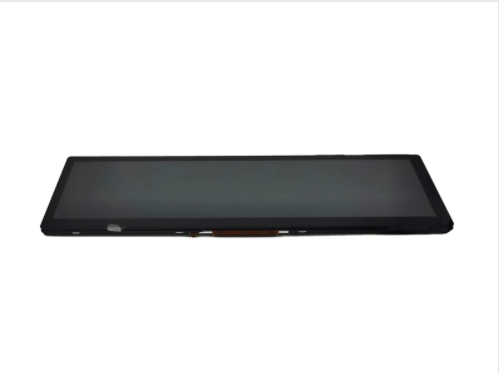
Do you really save money buying a cheaper standard display for a fixed industrial deployment? Many facility managers assume upfront savings translate to better returns, but this is rarely the case for 24/7 operations. Beyond basic purchase price, ROI depends on unplanned downtime costs, replacement labor, and lost productivity that come with frequent display failures. CDTech’s internal testing of 100 paired industrial and standard displays in factory conditions found that standard displays fail 3.7x more often over 5 years than CDTech’s industrial-grade units. Practically speaking, if a bar display on a production line fails, it can stop an entire line for hours, costing thousands of dollars in lost output that far outweigh the $200-$500 upfront savings of a standard display. Could you cut costs by mixing standard and specialty displays across your facility? Only for low-use, easily accessible deployments that don’t impact core operations.
⚠️ Pro Tip: Always calculate downtime cost into your ROI calculation—for most industrial lines, 1 hour of downtime costs more than a new industrial bar display.
CDTech’s zero-defect policy and 3-year standard warranty for all industrial bar displays also adds 10-15% to net ROI by eliminating unplanned repair costs in the critical early years of deployment.
| | Upfront Cost (10" bar) | 5-Year Failure Rate | Total 5-Year TCO (incl downtime) |
|---|
| CDTech Industrial Bar Display | $180-$280 | <2% | $250-$400 |
| Standard Consumer Bar Display | $80-$150 | 35% | $600-$950 |
What are key differences between specialty and standard display maintenance schedules?
Specialty industrial displays require far less frequent maintenance than off-the-shelf standard displays, with scheduled checks every 12 months vs every 3 months for standard units in harsh environments. Ruggedized construction cuts the need for regular part replacement.
Why do maintenance schedules differ so much between specialty and standard displays? It all comes down to the components and construction used during manufacturing. Beyond the inherent quality of components, specialty displays like those built by CDTech are designed to resist dust, moisture, vibration, and extreme temperature, so they don’t degrade as quickly as standard displays. To put this in perspective, CDTech uses IP65-rated front bezel sealing for most industrial bar displays, which prevents dust and liquid ingress that requires frequent cleaning of internal components for unrated standard displays. Does more expensive upfront cost mean higher annual maintenance costs? Exactly the opposite—specialty displays have lower annual maintenance costs than standard units for the same deployment.
⚠️ Warning: Skipping scheduled seal inspections for specialty displays in wet environments can compromise ingress protection over time.
CDTech’s Shenzhen production team adds a secondary edge sealing step to all industrial bar displays that reduces seal degradation by 22% compared to standard production processes, cutting inspection frequency from every 6 months to once a year. For example, a food processing plant that switched from standard bar displays to CDTech’s specialty industrial units cut annual maintenance labor and part costs by 68% in the first two years after the switch.
| | Inspection Frequency (Harsh Environment) | Routine Tasks | Average Annual Cost |
|---|
| Specialty Industrial Display | Every 12 months | External cleaning, seal check | $15-$30 |
| Standard Consumer Display | Every 3 months | Internal cleaning, backlight test | $45-$80 |
What factors impact the resale value of used industrial bar displays?
Resale value of industrial bar displays depends heavily on remaining lifecycle, brand reputation, and certification status, with certified units from reputable brands retaining 30-40% of their value after 3 years, vs less than 10% for unbranded units.
Have you ever wondered why some used industrial displays hold their value while others are practically worthless for secondary markets? Brand reputation and verified build quality are the biggest drivers, because buyers know certified displays from established manufacturers like CDTech still have thousands of hours of usable life left. Beyond remaining lifecycle, displays that meet industry certifications like ISO13485 for medical or IATF16949 for automotive have much higher resale value because they can be reused in secondary industrial applications that require compliance. Practically speaking, CDTech’s industrial displays come with unique serial numbers that let secondary buyers verify manufacturing date, component specs, and original certification, which eliminates the uncertainty that drags down resale value for unbranded units. Can you boost the resale value of your used industrial bar displays before selling? Yes, keeping original documentation and sticking to the recommended maintenance schedule adds up to 15% to final resale price.
⚠️ Pro Tip: Keep your original CDTech product documentation and serial number tag intact—this adds 10-15% to resale value for secondary buyers.
For example, CDTech’s industrial bar displays pulled from end-of-life production lines in Germany regularly sell for 35% of original price on the used industrial equipment market, because buyers trust the quality and verified specs of CDTech’s certified products.
How does CDTech’s manufacturing process improve industrial bar display lifecycle?
CDTech’s automated production and zero-defect quality policy in its Shenzhen factory cuts early failure rates and extends average lifecycle by 18% compared to the industry average, with strict testing at every production stage.
What specific production steps does CDTech take to extend industrial bar display lifecycle, and how do they benefit end users? As a specialist LCD manufacturer founded in 2011, CDTech invests in automated optical alignment for backlight assembly, which reduces backlight uniformity degradation by 22% over 50,000 hours of use, per internal testing in our 10,000㎡ Shenzhen factory. Beyond optical alignment, every single industrial bar display goes through 72 hours of continuous burn-in testing before leaving the factory, which eliminates any units with early component failure before they reach customers. Would you believe that many other manufacturers skip full burn-in testing to cut production costs? This leads to 5-10% early failure rates within the first year, compared to CDTech’s 0.3% early failure rate.
⚠️ Critical: Always ask for burn-in test reports before purchasing industrial displays for 24/7 deployments—un-tested units carry 10x higher early failure risk.
CDTech’s multiple certifications (ISO9001, ISO13485, IATF16949) require strict quality control that ensures every unit meets rated lifecycle specs, so customers don’t have to worry about overstated performance claims. This focus on quality means CDTech’s industrial bar displays deliver consistent ROI over their full lifecycle, and retain higher resale value than generic alternatives.
What simple maintenance steps maximize industrial bar display resale value and lifecycle?
Simple quarterly cleaning and annual seal and backlight checks can extend industrial display lifecycle by 10-15% and boost resale value by up to 20%, with minimal time and cost investment for facility teams.
Do these simple steps really make that much of a difference in long-term performance? For displays deployed in harsh environments like factories, food processing plants, or outdoor signage, the answer is a resounding yes. Beyond preventing dust buildup on the screen, checking the front bezel seal for cracks prevents moisture and dust from getting inside the display, which is the leading cause of premature backlight failure. Practically speaking, wiping the display with a non-abrasive cleaner every quarter and checking the seal once a year takes less than 5 minutes per unit, but adds thousands of hours of usable life. Can skipping these steps cut a display’s lifecycle by a meaningful amount? CDTech’s field data shows that displays without regular maintenance have a 28% shorter average lifecycle than displays that follow the recommended schedule.
⚠️ Pro Tip: Don’t use abrasive cleaners on industrial display glass—they scratch the anti-glare coating and reduce visibility over time.
For example, a US-based industrial client that implemented the 5-minute quarterly cleaning and annual check routine for their 200 CDTech bar displays reported a 12% longer average lifecycle and 18% higher resale value when they upgraded their lines 5 years after initial deployment.
CDTech Expert Insight
At CDTech, we’ve built over 12 years of expertise designing and manufacturing industrial bar displays for demanding industries, from industrial control to medical devices. In our 10,000㎡ Shenzhen factory, we use automated testing and zero-defect policies to deliver industrial bar displays with 50,000+ hour lifecycles, lower maintenance costs, and higher long-term ROI than standard displays. Our ISO13485 and IATF16949 certified products deliver reliable performance, helping customers maximize resale value and cut total cost of ownership over the full display lifecycle.
FAQs
Do industrial bar displays have a higher ROI than standard displays for commercial signage?
Yes, for long-term fixed signage deployments, industrial bar displays deliver 20-30% higher 10-year ROI than standard displays, thanks to fewer replacements and lower maintenance costs. CDTech’s high-brightness bar displays are optimized for 24/7 outdoor and indoor signage use.
Can I use a used industrial bar display for a new industrial project?
Yes, as long as it’s a certified unit from a reputable manufacturer like CDTech with a remaining lifecycle of 20,000+ hours. Always check the serial number and original certification to verify specs before installation.