News
Site Editor
 Site
https://cdtech-lcd.usa72.wondercdn.com/uploads/image/5faca15e24cff.png
Site
https://cdtech-lcd.usa72.wondercdn.com/uploads/image/5faca15e24cff.png
How Do LVDS and MIPI Interfaces Power Modern Vehicle LCD Displays?
Views: 695
Author: Site Editor
Publish Time: 2026-03-24
Origin: Site
LVDS and MIPI are the two dominant interface technologies driving vehicle LCD displays today. LVDS (Low-Voltage Differential Signaling) remains the industry standard for proven automotive dashboards, offering excellent EMI shielding in high-noise environments. MIPI DSI (Mobile Industry Processor Interface) is emerging as the next-generation solution, delivering higher bandwidth and lower power consumption for next-gen in-vehicle displays.
Check: Vehicle LCD Display
What Are LVDS and MIPI Interfaces, and Why Do They Matter in Automotive?
LVDS is a mature, point-to-point differential signaling standard proven in automotive since the early 2000s, excelling in noise rejection. MIPI DSI is a high-speed serial interface increasingly adopted for modern vehicle infotainment and cluster displays, supporting higher resolutions. Interface selection impacts cost, power efficiency, EMI performance, and design complexity. CDTech's 13+ years of automotive LCD manufacturing includes proven LVDS portfolio from 3.6" to 12.3" range plus emerging MIPI solutions like 7" MIPI DSI IPS displays with 400–900 nits brightness.
How Do LVDS and MIPI Differ in Data Transmission Speed and Bandwidth?
LVDS supports up to 1.5 Gbps per pair, typically using 4–7 data pairs for automotive applications. MIPI DSI offers 2–6 Gbps per lane with 1–4 lanes, enabling higher resolution without proportional pin increases. LVDS suits legacy dashboards; MIPI excels for high-res 720p+ displays in EVs and premium vehicles. CDTech's 7" MIPI DSI displays leverage high bandwidth for sharp visuals in automotive embedded systems.
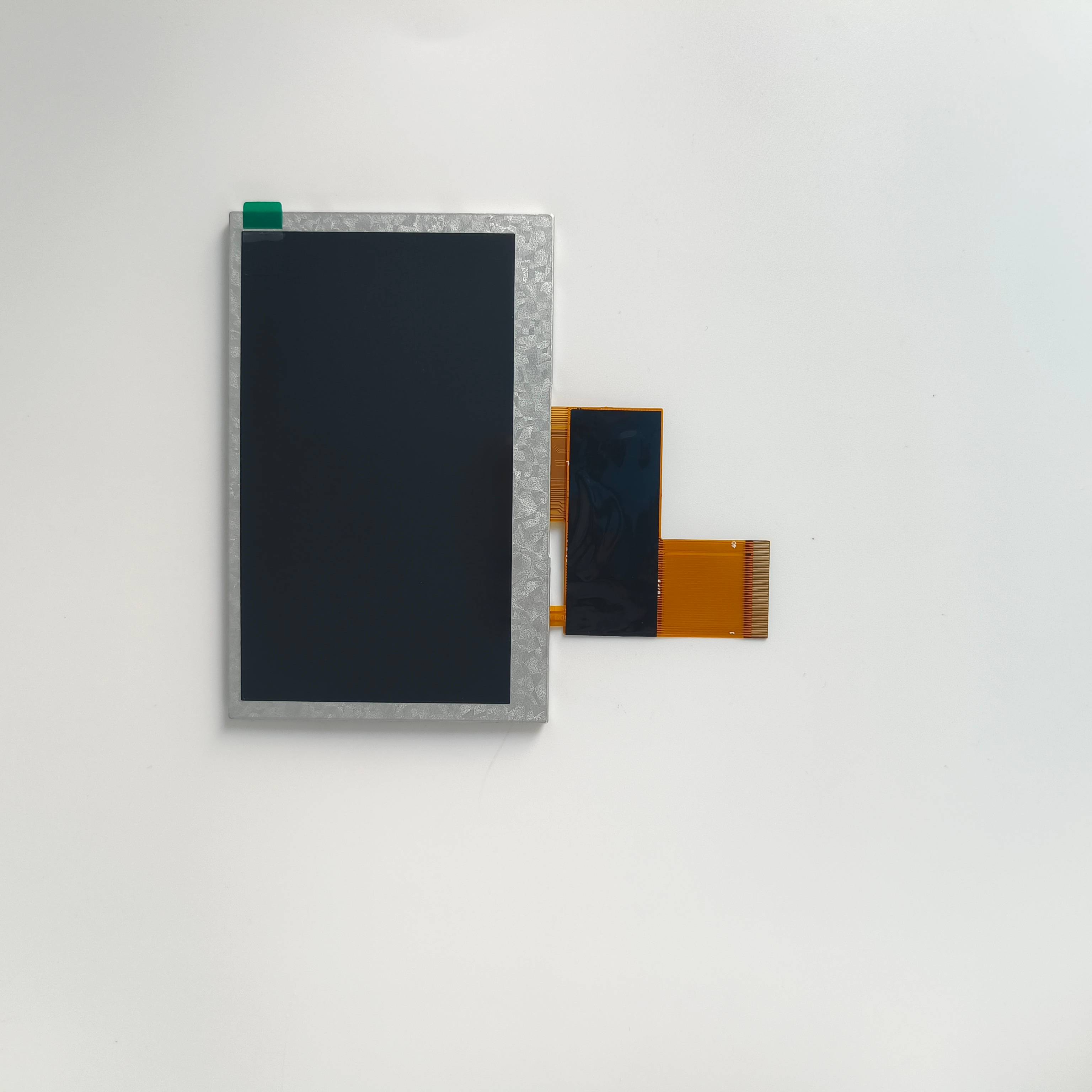
| Feature | LVDS | MIPI DSI |
|---|
| Data Rate (per channel) | Up to 1.5 Gbps/pair | 2–6 Gbps/lane |
| Typical Pin Count | 18–30 pins (4–7 data pairs) | 4–8 pins (1–4 lanes) |
| Power Consumption | Higher (dedicated drivers) | Lower (serial architecture) |
| EMI Shielding | Excellent (differential signaling) | Good (requires careful design) |
| Thermal Stability (-30°C to +85°C) | Proven over 13+ years | Emerging; requires validation |
| Cost (legacy production) | Lower (mature ecosystem) | Higher (fewer suppliers) |
| Best Automotive Use Case | Dashboards, cluster displays, legacy platforms | Infotainment, high-res displays, EVs, next-gen vehicles |
| CDTech Offering | 3.6"–12.3" LVDS TFT LCDs (IATF 16949) | 7" MIPI DSI IPS displays (400–900 nits) |
What Makes EMI Shielding Critical in High-Noise Vehicle Environments?
Electromagnetic interference in vehicles comes from engine ignition, wireless modules, and high-voltage EV powertrains. LVDS's differential signaling rejects common-mode noise with established shielding. MIPI requires careful PCB layout, shielding, and termination to mitigate susceptibility. Strategies include ferrite shielding, twisted-pair routing, and OCA optical bonding. CDTech's zero-defect policy and in-house OCA capability ensure EMI resilience in its 3,500㎡ dust-free workshop.
Which Interface Offers Better Power Efficiency for Modern Vehicles?
LVDS consumes more power due to point-to-point drivers and higher static current. MIPI DSI's serial, low-pin design reduces draw, ideal for battery-powered EVs. LVDS prioritizes stability; MIPI emphasizes efficiency with cost trade-offs in power circuits. MIPI adoption rises in EV dashboards and infotainment. CDTech's 7" MIPI DSI IPS displays optimize low power for automotive systems, backed by ISO 14001 certification.
How Should You Choose Between LVDS and MIPI for Your Vehicle Display Project?
Consider screen size, resolution, thermal range, cost, and supply chain. LVDS fits existing platforms, cost-sensitive segments, and -30°C to +85°C reliability. MIPI suits premium high-res infotainment and EV future-proofing. Factor controller availability and validation timelines. CDTech's IATF 16949 and ISO 13485 certifications enable custom LVDS or MIPI selection for OEMs.
What Role Does OCA Optical Bonding Play in Interface Performance?
OCA eliminates air gaps between touch panel, LCD, and cover lens, reducing electromagnetic coupling and reflections for better LVDS/MIPI signal integrity. It enhances thermal cycling and vibration resistance for dashboards. Automatic equipment ensures quality. CDTech's in-house OCA bonding, with fully automatic POL/LCD/CTP equipment since 2024, optimizes touch, display, and interface integration.
What Are Real-World Thermal and Vibration Performance Considerations?
Automotive displays endure -30°C to +85°C and vibrations from 10–200 Hz. LVDS offers proven thermal cycling over 13+ years with mature ICs. MIPI needs rigorous EOL testing. Cable routing and connectors are key. CDTech's automotive production includes thermal/vibration protocols and zero-defect standards for extreme conditions.
How Does CDTech Support LVDS and MIPI Automotive Display Solutions?
CDTech offers LVDS LCDs from 3.6" to 12.3" for production vehicles and 7" MIPI DSI IPS displays with high brightness. Certifications include IATF 16949, ISO 9001, ISO 14001, and ISO 13485. Capabilities cover custom design, OCA bonding, testing, and OEM/ODM services in a 10,000㎡ factory. Contact sales@cdtech-lcd.com or +86 0755-23032202.
CDTech Expert Views
"At CDTech, we've leveraged our 13+ years in TFT LCD manufacturing to master both LVDS and MIPI for automotive applications. Our IATF 16949-certified vehicle displays, like the 12.3" S123BWU11EP with LVDS and -30°C to +80°C range, deliver proven EMI shielding. Emerging MIPI solutions, such as our 7" portrait and square IPS panels, support high-bandwidth needs for EVs. In-house OCA bonding and our 2024 automatic equipment ensure zero-defect signal integrity in harsh environments. OEMs trust our global exports and 24-hour response for seamless integration."
— CDTech R&D Team Lead
Conclusion
LVDS remains the proven workhorse for stable, cost-effective dashboards, while MIPI DSI emerges as the standard for high-res infotainment and EV displays. Choice depends on platform maturity, resolution, thermal needs, and power constraints. CDTech's unique position—with quad certifications, zero-defect policy, in-house OCA, and 10,000㎡ factory—bridges both technologies. Contact sales@cdtech-lcd.com or +86 0755-23032202 for custom consultations.
FAQs
Can I retrofit a LVDS vehicle display with MIPI without changing the vehicle's main controller?
No. LVDS and MIPI require different driver ICs, firmware, and timing. Retrofitting needs controller changes, but CDTech can design custom adapters. Consult for OEM projects.
Which interface is more reliable for electric vehicles (EVs) with high-voltage powertrains?
Both are reliable when shielded. MIPI offers lower power for batteries, but LVDS excels in EMI resilience. CDTech's IATF 16949 designs address both for EVs.
How does OCA optical bonding improve LVDS/MIPI interface performance?
OCA eliminates air gaps that reflect EMI, boosting signal integrity, readability, and durability under thermal/vibration stress. CDTech's in-house process ensures quality.
What is the typical lead time for a custom LVDS or MIPI automotive display?
Custom LVDS: 8–12 weeks; MIPI: 12–16 weeks, varying by volume. Contact sales@cdtech-lcd.com for OEM timelines.
Does CDTech offer thermal and vibration testing for automotive displays?
Yes. Protocols under ISO 13485 and IATF 16949 include -30°C to +85°C cycling and vibration tests, meeting zero-defect standards.

