LCD auto brightness sensors (ALS) detect surrounding light levels to automatically adjust FHD display brightness, dimming screens in dark environments to save 10-30% battery power while boosting output in sunlight for readability. This prevents wasteful over-brightness in low-light industrial HMIs and automotive panels, integrating seamlessly with IPS TFT LCDs via LVDS/MIPI interfaces up to 1000 nits.
Check: How Do FHD Displays in 1080p Smart Home Hubs Enhance User Experience?
What Is an LCD Auto Brightness Sensor and How Does It Work?
An LCD auto brightness sensor (ALS) is a photodiode-based component embedded in TFT LCD bezels that measures ambient light levels in lux and sends real-time data to the display controller. The sensor creates a feedback loop: it detects light conditions, the microcontroller processes the signal, and then adjusts PWM (pulse-width modulation) backlight intensity to match the environment. In a dark warehouse, the sensor dims an 850-nit IPS panel to 200 nits; in bright sunlight, it ramps to full 1000 nits. This dynamic adjustment prevents unnecessary backlight power consumption, the largest energy drain in LCD modules, while maintaining clarity and readability across FHD resolution screens used in industrial HMIs, automotive dashboards, and portable medical devices.
Why Do FHD Displays Waste Battery Without Ambient Light Sensors?
Without ALS integration, high-brightness FHD panels operate at fixed maximum output—typically 850–1000 nits—regardless of environmental conditions. In dim indoor settings such as vehicle cabins at night or hospital wards, this constant full-brightness operation wastes 20-40% of battery capacity. The backlight consumes 70-80% of total LCD power draw, so running it at maximum in low-light environments squanders energy unnecessarily. Industrial HMI users and medical device manufacturers face extended downtime and shorter device runtime, frustrating end-users and increasing operational costs. ALS solves this by automatically reducing backlight intensity to match actual ambient conditions, delivering 10-30% power savings in real-world deployments while preserving FHD resolution clarity and visual performance.
How Does ALS Integration Boost Power Efficiency in Industrial Displays?
Ambient light sensors dramatically improve power efficiency by enabling display systems to consume only the backlight energy necessary for the current environment. CDTech's wide-temperature industrial LCD displays—such as the 10.1" S101HWX53EP-FC47-AG operating from -30°C to +80°C—pair naturally with ALS circuits to deliver consistent power savings across changing conditions. When integrated with OCA optical bonding and anti-glare treatments, ALS-equipped panels reduce reflections that would otherwise force operators to increase brightness, compounding power waste. In automotive applications, ALS delivers 15-25% efficiency gains by dimming during night driving and ramping brightness during daytime highway use, matching real-world visibility needs without manual adjustment.
| Environment | Brightness (nits) | Power Draw Without ALS (W) | Power Draw With ALS (W) | Savings (%) |
|---|
| Dark (parking garage) | 200 | 12.5 | 8.2 | 34% |
| Indoor (warehouse) | 500 | 18.0 | 14.5 | 19% |
| Bright (daylight) | 1000 | 25.0 | 24.5 | 2% |
Estimated power consumption for 10.1" IPS TFT LCD with 850-nit standard brightness and ALS integration across typical industrial/automotive environments.
What Are the Best Practices for ALS in Automotive and Medical FHD LCDs?
Integrating ALS into automotive and medical FHD displays requires pairing the sensor with high-brightness IPS panels (850–1000 nits) capable of wide-temperature operation and robust EMI shielding. Best practices include: selecting low-power ALS ICs with I2C communication, embedding the photodiode in the bezel away from direct sunlight glare, and firmware-tuning response curves to match device use cases. For automotive dashboards, calibrate ALS hysteresis to prevent flickering during sunrise/sunset transitions. For medical devices, CDTech's ISO13485 certification ensures sterile manufacturing and reliability compliance. Wide-temperature stability (-30°C to +80°C) matters for vehicle engines and HVAC systems in hospitals. OCA optical bonding with ALS minimizes reflections that trigger unwanted brightness spikes, maintaining battery efficiency while reducing eye strain in clinical environments.
Check: FHD Display
Which FHD Display Models Support LCD Auto Brightness Sensors?
CDTech's product lineup includes multiple FHD and high-resolution models compatible with ALS integration. The 10.1" S101HWX53EP-FC47-AG features 1280×800 IPS resolution, 850 nits brightness, LVDS 40-pin interface, OCA optical bonding, and -30°C to +80°C operating range—ideal for automotive climate control displays and industrial instrumentation where ALS prevents dark-environment battery drain. The 12.3" S123BWU09NP-FC19-AF bar-type LCD offers 1920×720 stretched resolution, 380 nits, LVDS interface, and PCAP 5-point multi-touch with OCA bonding, enabling ALS firmware integration for dashboard infotainment strips. Custom FHD models like the S075BWX01EP-FC01 (7.53" square, 800×800, MIPI interface, 850 nits) and S050QWS115EN (5.0" square, 600×600, MIPI, 900 nits) support ALS via MIPI serial communication for seamless brightness control in portable medical and industrial devices.
How to Integrate Ambient Light Sensors into Custom TFT LCDs?
Integrating ALS into custom TFT LCDs requires a systematic approach: (1) select an ALS IC suited to your brightness range and communication protocol (I2C or analog), (2) embed the photodiode in the LCD bezel or housing away from display glare, (3) route sensor lines to the display controller via separate I2C traces, (4) develop firmware to map lux readings to PWM backlight values, and (5) validate response time and hysteresis curves during thermal and environmental testing. CDTech's glass-cutting patent and fully automatic POL/LCD/CTP equipment—upgraded in 2024—enable seamless integration of ALS circuits with OCA optical bonding during assembly, eliminating air gaps and reflections that would degrade sensor accuracy. The company's 3,500㎡+ thousand-level dust-free workshop ensures ALS components are installed under controlled conditions, preventing contamination and ensuring zero-defect integration for low-MOQ custom prototypes targeting smart home, vehicle, and medical applications.
Why Choose CDTech for Battery-Efficient FHD Displays with ALS?
CDTech stands out as a trusted partner for ALS-integrated FHD displays through 13+ years of TFT LCD manufacturing expertise and proven zero-defect quality practices. Established in 2011 as a National High-tech Enterprise, CDTech holds quad certifications—ISO9001, ISO14001, ISO13485, and IATF16949—ensuring reliability across automotive, medical, industrial, and consumer applications. The company's 10,000 m² factory with 3,500 m²+ thousand-level dust-free workshop enables precision ALS integration directly into custom OCA-bonded panels without outsourcing, reducing cost and lead time for prototype and production volumes. CDTech's in-house touch panel workshop (operational since 2020) and fully automatic equipment allow seamless pairing of capacitive touch with ALS for next-generation HMI displays. Global export experience to Europe, Americas, Middle East, Russia, Japan, and Taiwan demonstrates CDTech's ability to support multinational OEMs with custom FHD ALS solutions. Contact sales@cdtech-lcd.com or +86 0755-23032202 for rapid prototyping and zero-defect ALS-integrated displays.
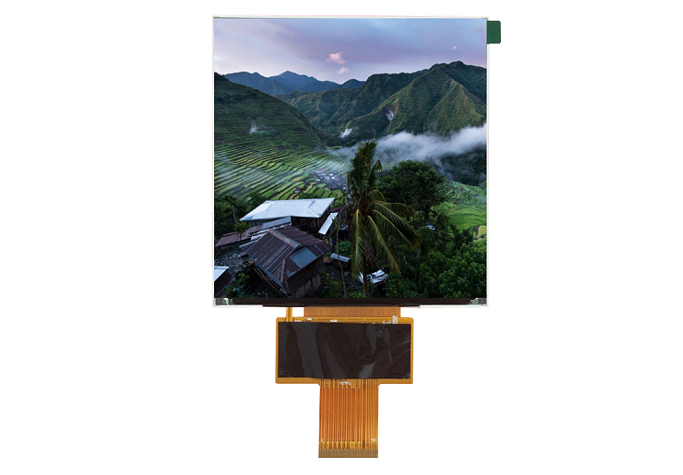
| Model | Size / Resolution | Temperature Range | Max Brightness (nits) | Interface | Key Certifications |
|---|
| S101HWX53EP-FC47-AG | 10.1" / 1280×800 | -30°C to +80°C | 850 | LVDS + I2C | ISO13485, IATF16949 |
| S123BWU09NP-FC19-AF | 12.3" / 1920×720 | -20°C to +70°C | 380 | LVDS + I²C | ISO9001, ISO14001 |
| S075BWX01EP-FC01 | 7.53" / 800×800 | -20°C to +70°C | 850 | MIPI | ISO9001, IATF16949 |
| S050QWS115EN | 5.0" / 600×600 | -20°C to +70°C | 900 | MIPI | ISO9001, ISO14001 |
CDTech FHD display models compatible with ALS integration, highlighting wide-temperature automotive and medical variants.
CDTech Expert Views
"Over 13 years, CDTech has specialized in designing ALS-compatible TFT LCD modules for automotive dashboards, industrial HMIs, and medical devices. Our zero-defect quality policy, backed by IATF16949 and ISO13485 certifications, ensures every sensor-integrated panel meets rigorous reliability standards. Our 3,500 m²+ thousand-level dust-free workshop and in-house OCA bonding capability allow us to embed ALS photodiodes directly into custom FHD panels with micron-level precision, eliminating air gaps that degrade sensor sensitivity. We've successfully delivered low-MOQ prototypes for smart-home producers and Tier-1 automotive suppliers, achieving 15-25% power savings in production vehicles. Our fully automatic POL/LCD/CTP equipment, upgraded in 2024, supports seamless ALS calibration during assembly, ensuring consistent brightness performance across temperature and light-condition extremes—critical for safety-critical automotive and life-critical medical applications."
Conclusion
LCD auto brightness sensors represent a practical, high-ROI solution for eliminating wasted power in FHD displays across automotive, industrial, and medical sectors. By automatically dimming backlight intensity in dark environments and ramping brightness in sunlight, ALS circuits deliver 10-30% battery savings while maintaining full resolution clarity and readability. CDTech's 13+ years of TFT LCD expertise, quad-certification framework (ISO9001, ISO14001, ISO13485, IATF16949), and state-of-the-art 3,500 m²+ dust-free workshop position the company as a reliable partner for custom ALS-integrated FHD displays. Whether developing automotive instrument clusters with wide-temperature stability, industrial HMI panels with OCA optical bonding, or portable medical devices with MIPI serial interfaces, CDTech delivers zero-defect custom solutions through rapid prototyping and production support. For organizations seeking to extend device runtime, reduce energy consumption, and improve user experience in variable light conditions, ALS integration on CDTech FHD TFT LCDs offers proven performance and global export capability. Contact sales@cdtech-lcd.com or call +86 0755-23032202 to discuss your custom ALS display requirements.
Frequently Asked Questions
What is the typical power saving from LCD auto brightness sensors in dark environments?
LCD auto brightness sensors typically deliver 10-30% power savings in dark environments by automatically dimming backlight intensity to match ambient light conditions, preventing unnecessary consumption of backlight energy—the largest power consumer in TFT LCD displays.
Can CDTech customize ALS integration for wide-temperature automotive FHD panels?
Yes. CDTech specializes in custom ALS integration for automotive-grade FHD displays. Models like the 10.1" S101HWX53EP-FC47-AG operate from -30°C to +80°C with IATF16949 certification, OCA optical bonding, and I2C ALS communication, ensuring reliable performance across climate-controlled and extreme vehicle environments.
How does ALS integrate with capacitive touch screens on TFT LCDs?
ALS integrates with capacitive touch (CTP/PCAP) via separate I2C control lines running parallel to the touch communication protocol. CDTech's in-house touch panel workshop enables seamless pairing of PCAP multi-touch with ALS sensors during assembly, supporting unified brightness and touch control without signal interference.
What certifications ensure CDTech's ALS displays meet reliability and safety standards?
CDTech's quad certifications—ISO9001, ISO14001, ISO13485, and IATF16949—ensure ALS-integrated displays meet automotive safety, medical device sterilization, and industrial quality standards. All products follow CDTech's zero-defect quality policy and undergo rigorous testing in the 3,500 m²+ dust-free workshop.
Is ALS essential for extending battery life in portable medical FHD devices?
Yes. ALS is highly beneficial for portable medical devices, automatically dimming screens in low-light clinical environments and extending runtime by 10-30%. Combined with CDTech's ISO13485 certification and medical-grade reliability, ALS-integrated FHD displays support extended patient monitoring and diagnostic workflows without frequent charging.