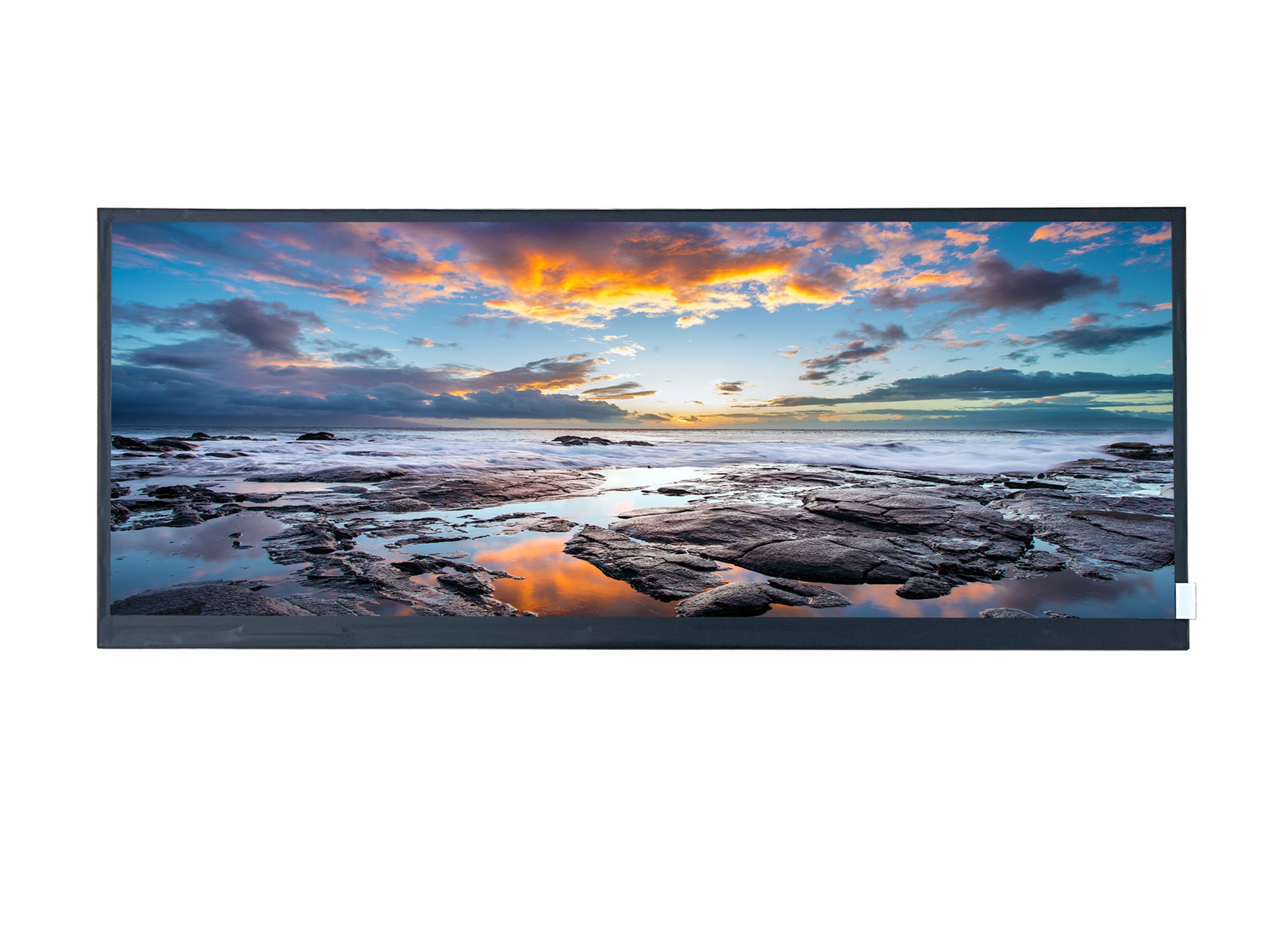
High-saturation LED backlights enhance produce display vibrancy through specialized color gamuts and high color rendering index (CRI 90+) technology, delivering 95%+ NTSC saturation for lifelike fruit and vegetable colors. Combined with brightness levels of 800–1,000 nits and wide temperature stability, these backlights ensure vibrant, glare-free shelf displays in 24/7 grocery retail environments, directly boosting perceived freshness and consumer appeal.
Check: How Do Ultra-Wide Shelf-Edge Bar Displays Revolutionize Retail?
What Is Color Saturation and Why Does It Matter in Grocery Retail?
Color saturation measures the intensity and purity of colors displayed on a screen. In grocery retail, saturation directly impacts how consumers perceive produce freshness. Low-saturation standard backlights (CRI below 80) cause color washout, making apples appear dull, lettuce look pale, and tomatoes seem less vibrant. This diminishes perceived freshness and reduces purchasing intent. High-saturation LED backlights restore natural color vibrancy, triggering consumer psychology that associates bright, rich colors with premium quality and superior freshness, ultimately driving sales in fresh zone displays.
How Do High-Saturation LED Backlights Achieve 95%+ NTSC Color Gamut?
High-saturation LED backlights achieve 95%+ NTSC gamut through precision RGB LED array design, optimized spectral distribution, and specialized phosphor coatings. This architecture enables wavelength tuning for produce-specific colors: enhanced reds for apples and tomatoes, vivid greens for leafy vegetables, and warm yellows for bananas. NTSC gamut (95%+) significantly exceeds standard sRGB (72%) and approaches Adobe RGB performance, delivering superior color richness. CDTech's R&D team specializes in custom gamut engineering, tailoring backlight specifications to OEM integrators' retail fixture requirements for maximum produce appeal.
| Color Standard | Gamut Coverage | Typical CRI | Retail Application |
|---|
| Standard LED Backlight | 70–75% NTSC | 70–80 | General retail (color washout) |
| sRGB Standard | 72% NTSC | 82–85 | Basic digital displays |
| High-Saturation LED | 95%+ NTSC | 90–95 | Premium grocery fresh zones |
| Adobe RGB | 100% NTSC | 98+ | Professional photo/video (specialized) |
What Role Does High CRI (90+) Play in Fresh Zone Display Systems?
Color Rendering Index (CRI) measures how accurately a light source reproduces natural daylight wavelengths on a 0–100 scale. CRI 90+ eliminates artificial color casts, rendering produce under conditions that mimic natural sunlight. Standard CRI 80 backlights create a yellowish or bluish tint, distorting fruit and vegetable appearance. CDTech's IATF16949-certified LED backlight modules are engineered for consistent CRI 90+ performance across 24/7 operations, ensuring produce colors remain authentic and appetizing. This technical precision directly reduces perceived spoilage and drives consumer confidence in fresh zone purchasing decisions.
Check: BAR Type LCD Display
How Do Brightness and Sunlight Readability Support Grocery Display Vibrancy?
Brightness levels of 800–1,000 nits eliminate glare and maintain color saturation under intense retail lighting and natural sunlight near storefront windows. OCA optical bonding technology further enhances readability by eliminating air gaps between LCD panels and cover glass, reducing reflections while preserving color vibrancy. CDTech's in-house OCA bonding workshop enables custom adhesive solutions optimized for 24/7 durability and thermal stability in grocery environments. High-brightness modules combined with OCA bonding deliver sunlight-readable displays that maintain visual impact throughout continuous retail operations, even in challenging lighting conditions.
Which Display Technologies Pair Best With High-Saturation LED Backlights?
IPS (In-Plane Switching) LCD panels deliver superior color uniformity and wide viewing angles—critical for grocery shelves where customers view displays from multiple sightlines. IPS technology maintains consistent color saturation at angles up to 85° from center, ensuring produce colors remain vibrant regardless of customer position. CDTech's industrial-grade IPS modules reach 1,000 nits brightness with IPS full-view architecture, supporting LVDS and RGB interfaces for seamless OEM integration. VA and TN panels offer cost savings but sacrifice color accuracy and viewing angle consistency, making IPS the preferred choice for premium fresh zone displays demanding maximum perceived produce appeal.
| Panel Technology | Color Accuracy | Viewing Angles | Grocery Suitability |
|---|
| IPS (In-Plane Switching) | Excellent (±5% color shift) | 85° L/R, 85° U/D | Premium—recommended for fresh zones |
| VA (Vertical Alignment) | Good (±8% color shift) | 70° L/R, 75° U/D | Good—budget-conscious deployments |
| TN (Twisted Nematic) | Fair (±15% color shift) | 50° L/R, 60° U/D | Poor—color distortion unacceptable |
CDTech Expert Views
"CDTech's zero-defect manufacturing philosophy ensures retail LCD displays maintain high-saturation color consistency across 24/7 grocery operations—a critical requirement for chains managing produce perception at scale. With 13+ years of industrial display expertise, IATF16949 certification, and in-house OCA bonding capabilities, CDTech delivers custom high-saturation solutions specifically engineered for the thermal, brightness, and color stability demands of fresh zone retail environments. Our 3,500+ square-meter dust-free workshop and automatic POL/LCD/CTP equipment guarantee that every high-CRI backlight module meets production standards without compromise. This reliability translates directly into retailer margin recovery through consistent, vibrant produce presentation."
What Are the Key Performance Metrics for High-Saturation Grocery Displays?
Essential specifications for high-saturation grocery displays include CRI 90+, 95%+ NTSC gamut, 800–1,000 nits brightness, and wide operating temperature stability (-20°C to +60°C). Lifespan expectations range from 30,000 to 50,000 hours under continuous use. Thermal compensation and LED current optimization maintain color stability across 24/7 cycles, while IATF16949 reliability testing ensures durability under retail conditions. Procurement checklists should verify brightness uniformity across the display surface, gamut retention over operational lifespan, and certifications (ISO9001, ISO14001, IATF16949) confirming zero-defect manufacturing standards critical for mission-critical fresh zone applications.
How Can Retailers and OEMs Implement High-Saturation Display Solutions?
Implementation begins with display selection and custom backlight module specification aligned to existing shelf-edge LCD dimensions and interface requirements (LVDS, RGB, or MIPI). OCA bonding customization and anti-glare/anti-fingerprint coatings optimize optical performance in bright retail settings. CDTech offers both retrofit solutions for existing systems and new-build configurations, with fast-turnaround custom engineering and 24-hour response commitment. Power efficiency optimization ensures LED current settings maximize saturation without thermal buildup. Global supply chain capabilities—exporting across Europe, Americas, Middle East, Russia, Japan, and Taiwan—support retailers planning multi-location fresh zone upgrades with consistent display performance worldwide.
What Is the ROI of Upgrading to High-Saturation Backlights for Produce Zones?
High-saturation displays directly reduce perceived produce spoilage through vibrant color rendering, lowering markdown rates and improving fresh section margins. Consumer psychology research demonstrates that vibrant, lifelike colors increase purchase intent for produce categories by an average of 12–18%. Display investment payback periods typically range from 18–36 months, driven by margin recovery from reduced product waste perception and increased customer basket size in fresh zones. Competitive differentiation through premium visual presentation positions early adopters as quality leaders, strengthening brand positioning in crowded grocery markets. CDTech's custom engineering ensures retailers maximize ROI through displays engineered specifically for their store lighting, product mix, and sales objectives.
Conclusion
High-saturation LED backlights represent a strategic investment for grocery retailers and OEM display integrators seeking to maximize produce appeal and consumer purchasing intent. By combining CRI 90+, 95%+ NTSC gamut, and 800–1,000 nits brightness with IPS LCD panel technology, fresh zone displays deliver lifelike, vibrant produce rendering that directly impacts retailer margin recovery. CDTech's 13+ years of industrial display expertise, quad certifications (ISO9001, ISO14001, ISO13485, IATF16949), zero-defect manufacturing philosophy, and in-house OCA bonding capabilities distinguish the company as a reliable partner for custom high-saturation display integration. Retailers and OEMs planning fresh zone upgrades should prioritize vendors offering thermal stability, gamut consistency, and proven performance in 24/7 retail environments—capabilities where CDTech's specialized manufacturing infrastructure and technical expertise deliver measurable competitive advantage.
Frequently Asked Questions
What is the difference between CRI and color gamut in high-saturation LED backlights?
CRI (Color Rendering Index) measures how accurately colors are reproduced compared to natural daylight, using a 0–100 scale where 90+ indicates excellent color fidelity. Color gamut measures the range of colors a display can achieve, expressed as a percentage of the NTSC standard (95%+ for high-saturation backlights). High-saturation backlights combine both: CRI 90+ ensures natural, undistorted tones while 95%+ NTSC gamut expands the color richness and vibrancy available. Together, they deliver both authentic appearance and vivid intensity—essential for making grocery produce appear simultaneously natural and appealing.
Can high-saturation LED backlights be retrofitted into existing shelf-edge LCD systems?
Yes, retrofit is possible if the existing LCD panel supports full RGB or wide LVDS dynamic range. CDTech engineers custom LED backlight modules compatible with standard display sizes (2.4" to 12.3") and interfaces (RGB, LVDS, MCU), with OCA bonding customization for existing frames and mechanical compatibility. Retrofit projects require evaluation of current thermal management, power supply capacity, and cover glass specifications. CDTech's 24-hour response commitment enables rapid feasibility assessment and custom module development, making retrofit upgrades practical for retailers seeking high-saturation performance without complete fixture replacement.
How do high-saturation backlights perform in 24/7 grocery retail environments?
CDTech's IATF16949-certified LED backlight modules include advanced thermal management, wide operating temperature stability (-20°C to +60°C), and optimized LED current regulation to maintain color saturation across continuous operations. Module lifespan testing confirms 30,000–50,000 hours of reliable performance under retail conditions. Thermal compensation circuitry adjusts LED output automatically, preventing color drift as ambient temperatures fluctuate throughout daily retail cycles. This reliability ensures fresh zone displays maintain consistent, vibrant produce rendering across seasonal variations and 24/7 operational demands—critical for retailers requiring predictable visual performance and minimal maintenance interruptions.
What certifications ensure high-saturation display reliability for grocery chains?
ISO9001 (quality management) ensures consistent manufacturing processes; ISO14001 confirms environmental responsibility; ISO13485 (medical-grade standards) applies stricter quality controls applicable to food retail safety proximity; IATF16949 (automotive-grade reliability) establishes zero-defect manufacturing standards and rigorous testing protocols. Combined, these certifications ensure durability, consistency, and performance reliability critical for mission-critical 24/7 retail deployments. CDTech holds all four certifications, demonstrating commitment to manufacturing excellence and supply chain accountability that grocery retailers demand when integrating displays into high-visibility fresh zones affecting brand perception and sales performance.
How does OCA optical bonding improve high-saturation display vibrancy in bright retail settings?
OCA (Optically Clear Adhesive) bonding eliminates air gaps between LCD panels and cover glass, reducing glare and internal reflections that diminish color saturation under bright store lighting. This optical clarity maintains high-saturation color vibrancy even near storefront windows or under intense LED retail lighting. CDTech's in-house OCA bonding workshop enables custom adhesive formulations optimized for thermal cycling stability, durability across 24/7 operations, and optical clarity preservation over extended product lifespan. The result is sunlight-readable fresh zone displays that maintain full color impact and perceived produce vibrancy—essential for differentiating premium retail fresh sections in competitive grocery environments.
Backlight Power, Dimming and Thermal Design


