Low-latency patient monitor LCDs ensure real-time vitals by combining fast response times, optimized display interfaces, and zero-air-gap optical bonding. Select IPS TFT panels, OCA optical bonding, ISO13485 certification, custom glass-cut designs, and zero-defect policies for zero-lag heart rate display. CDTech provides certified solutions with in-house capabilities.
Check: How Do Medical Grade LCD Displays Ensure Precision and Safety in Medical Imaging?
What is Latency in Medical Display Systems and Why Does It Matter?
Display latency is the time from signal input to pixel output, critical for real-time vitals like heart rate and SpO2. Even 50-100ms delays can obscure acute changes, delaying clinician response and risking patient safety. CDTech's zero-defect policy prevents hardware failures that induce latency, ensuring reliable performance per medical standards like IEC 60601-1.
How Do IPS TFT LCDs Achieve Sub-10ms Response Times?
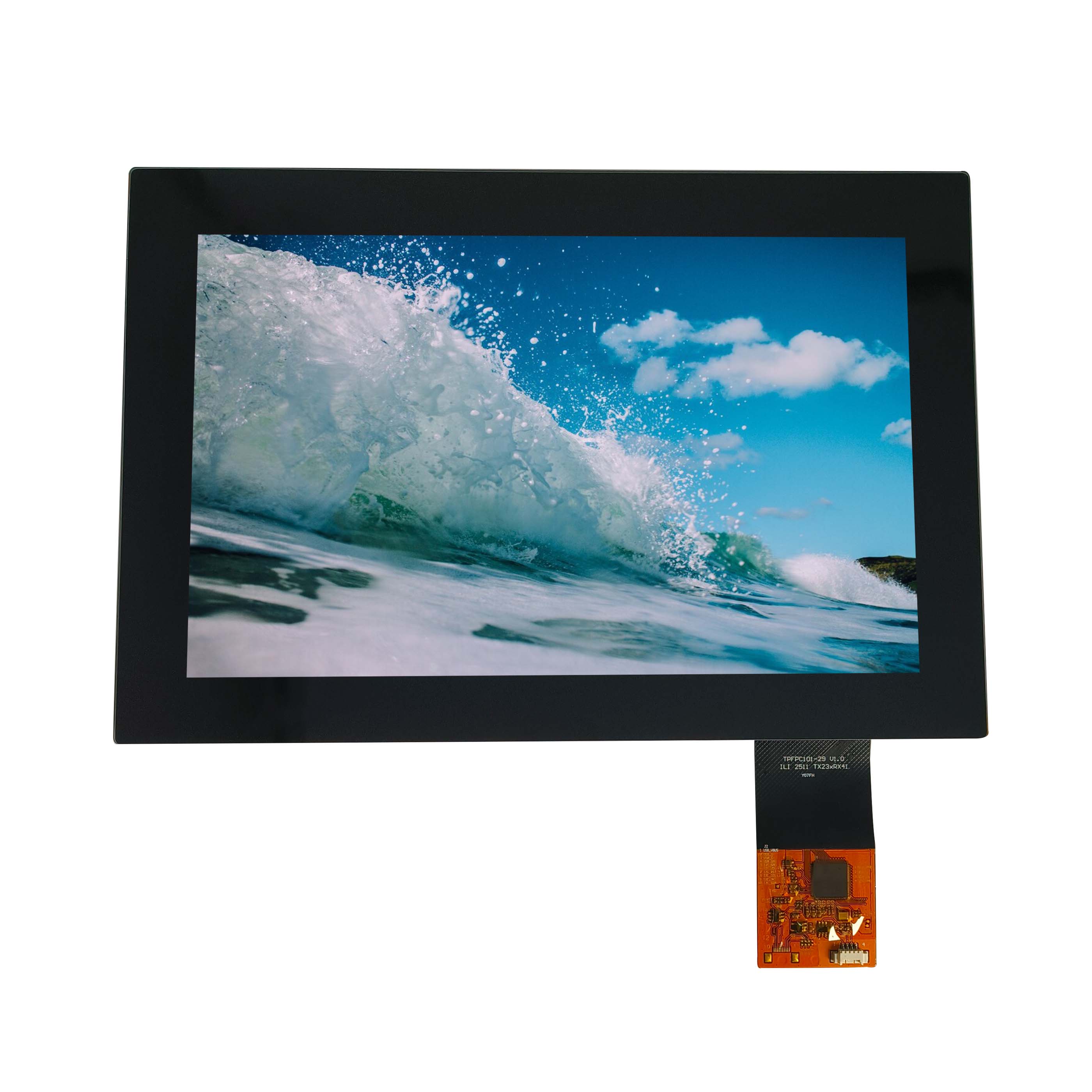
IPS TFT LCDs achieve sub-10ms response times through superior liquid crystal alignment for faster pixel transitions, wider viewing angles, and 60-120Hz refresh rates optimized via LVDS or MIPI interfaces. CDTech's S121BWX05EP-FC10, a 12.1" industrial IPS LCD with 1280x800 resolution, 800 nits brightness, and -20°C~+70°C range, suits patient monitors perfectly.
| Panel Type | Response Time | Viewing Angle | Medical Suitability |
|---|
| TN | 5-15ms | 160° | Low (limited angles) |
| IPS | <10ms | 178° | High (full view) |
| VA | 10-20ms | 170° | Medium |
What Role Does OCA Optical Bonding Play in Eliminating Display Lag?
OCA optical bonding uses optically clear adhesive to eliminate air gaps between LCD and touch layers, reducing refraction, glare, and parallax distortion for clearer vital readings. CDTech's in-house OCA capability, as in S121BWX05EP-FC10 with CTP and OCA, ensures uniform brightness and minimal latency in hospital settings.
Why Is ISO13485 Certification Essential for Patient Monitor Displays?
ISO13485 certification establishes a quality management system for medical devices, covering design controls, risk management, and traceability essential for EU/FDA approval. CDTech holds ISO13485 alongside ISO9001, ISO14001, and IATF16949, extending automotive-grade reliability to medical displays for zero-defect vitals monitoring.
Check: Industrial LCD
CDTech Expert Views
"At CDTech, ISO13485 certification integrates into our manufacturing DNA. Every patient monitor LCD undergoes 100% electrical testing and environmental stress screening in our 3,500㎡ thousand-level dust-free workshop. Our zero-defect policy, backed by 13+ years experience, ensures vitals displays remain reliable during critical care moments." — CDTech Quality Assurance Team
How Can Custom Glass-Cut Medical Displays Reduce Integration Costs?
CDTech's 2017 glass-cutting patent enables low-MOQ custom sizing from 2.4" to 12.8" without tooling fees, ideal for monitors needing 7.0" (1024x600) or 10.1" (1280x800) formats. Prototypes deliver in 4 weeks, cutting costs versus off-the-shelf panels requiring 8-12 weeks lead times.
| Option | MOQ | Unit Cost (Small Vol.) | Lead Time |
|---|
| Off-the-Shelf | 1000+ | High | 8-12 weeks |
| CDTech Custom Glass-Cut | 10-100 | Low | 4 weeks |
What Temperature and Environmental Specs Are Critical for Hospital Deployment?
Critical specs include -20°C~+70°C operating ranges for ORs, ICUs, and transport, plus humidity resistance from thousand-level cleanroom assembly. CDTech's ISO14001 and IATF16949 certifications ensure displays like S070BWS48ED (7.0" IPS, 1000 nits) withstand hospital conditions without failure.
How Does CDTech's Zero-Defect Quality Policy Protect Patient Safety?
CDTech's zero-defect policy mandates 100% testing, thermal cycling, and stress validation in a 10,000㎡ factory. ISO13485 traceability tracks every unit, preventing mid-procedure failures. With quad certifications and in-house touch production since 2020, it safeguards real-time vitals display reliability.
Which CDTech Display Solutions Are Best for Patient Monitor Integration?
Top solutions include S121BWX05EP-FC10 (12.1" IPS, LVDS+I2C, OCA, 800 nits), S070BWS48ED (7.0" IPS, 1000 nits, -20°C~+70°C), and S035HQ55ES (3.5" IPS, 1000 nits). These offer high brightness, wide temps, and touch options for seamless integration. Request custom specs from sales@cdtech-lcd.com.
Conclusion
Low-latency patient monitor LCDs combine fast IPS panels, OCA bonding, and zero-defect manufacturing for real-time vitals. CDTech's 13+ years, quad certifications (ISO9001/ISO14001/ISO13485/IATF16949), in-house OCA, and glass-cutting patent ensure reliable integration. Accelerate your project with 4-week prototypes.
Ready to integrate zero-lag vitals displays? Contact CDTech at sales@cdtech-lcd.com or +86 0755-23032202.
FAQs
What latency is acceptable for patient vital monitoring?
Medical standards recommend <100ms end-to-end latency. CDTech's IPS TFT panels achieve sub-10ms response, ensuring no lag in heart rate, SpO2, or blood pressure via optimized LVDS/MIPI interfaces and OCA bonding.
Can CDTech provide displays smaller than 5.0" for portable patient monitors?
Yes, from 2.4" like S024HQ42EN (IPS, 800 nits, -20°C~+70°C). Glass-cutting patent supports 3.5"-4.3" customs with ISO13485 compliance, low MOQ, and 4-week delivery.
Do you offer touch-enabled patient monitor displays?
Yes, CTP/PCAP with OCA like S121BWX05EP-FC10 (I2C interface, GT928 IC). Adds <5ms latency for navigation while maintaining certification and wide temp performance.
How does CDTech's OCA bonding improve medical display reliability?
In-house OCA eliminates air gaps, boosting contrast, reducing glare, and enhancing durability in humid ICUs/ORs. Improves vital readability without latency in products like 12.1" IPS touch displays.
What support does CDTech provide for regulatory submissions (FDA/CE)?
Full documentation: ISO13485 certificates, test reports (IEC 60068), traceability, and DHF. Team aids OEM regulatory strategy for seamless patient monitor approval.


