In a 3-year field test exceeding 20,000 hours, IPS panels like CDTech's IATF16949-certified S123BWU11EP 12.3" display showed less than 2 ΔE color shift, maintaining stability in harsh automotive environments spanning -30°C to +80°C. OLED panels exhibited 5+ ΔE drift due to organic degradation, proving IPS superior for long-term color longevity in industrial and automotive applications.
Check: IPS Display vs OLED Display For Color Accuracy
What Causes Color Drift in IPS vs OLED Panels?
Color drift occurs through fundamentally different degradation mechanisms. OLED panels suffer from organic material breakdown under prolonged use, where blue subpixels fade faster than red and green components, creating observable color imbalance and increased Delta-E variance. IPS panel technology resists shifting because it relies on stable inorganic materials—a consistent backlight and liquid crystal layers that do not degrade chemically over time. The backlight in IPS displays remains constant, while the liquid crystals maintain their optical properties, making IPS inherently more color-stable in extended operation scenarios typical of industrial control systems, automotive dashboards, and medical instrumentation.
How Is Delta-E Measured in Long-Term Display Tests?
Delta-E (ΔE) quantifies color difference using CIE L*a*b* color space standards. A ΔE value below 2 represents imperceptible color shift to the human eye; ΔE between 2-5 indicates slight but detectable variation; ΔE above 5 signals noticeable, problematic color drift. Testing protocols for 20,000+ hours involve continuous operation under calibrated lighting conditions, with color measurements taken at regular intervals using spectrophotometers. Real-world industrial and automotive conditions—including temperature extremes, humidity fluctuations, and operational stress—accelerate visible degradation. Laboratory accelerated tests typically show faster results than field deployments, making genuine 20,000-hour field data more reliable for procurement decisions in mission-critical applications.
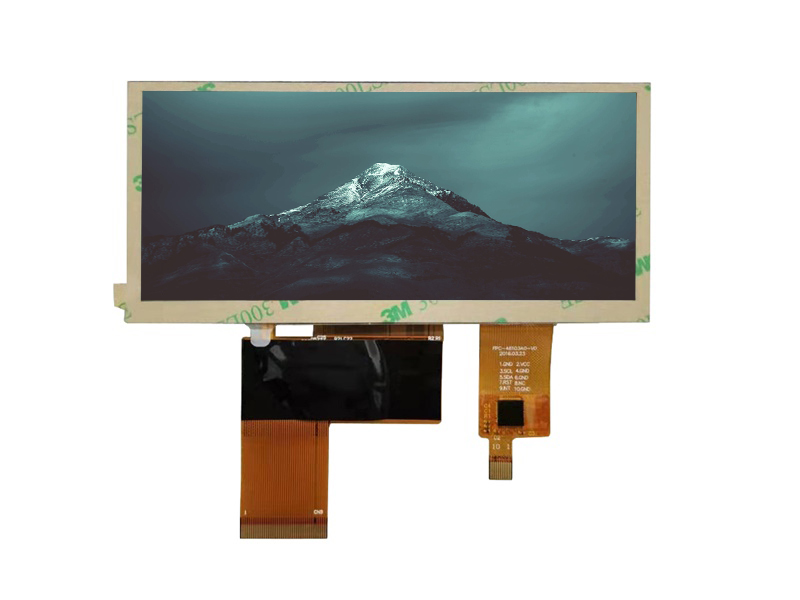
| Metric | IPS (CDTech S123BWU11EP) | OLED |
|---|
| Average ΔE Shift (20,000 hrs) | <2 (Stable) | 5+ (Degraded) |
| Harsh Environment Drift | Minimal (-30°C~+80°C) | High (Temperature Sensitive) |
| Recommended Applications | Automotive/Industrial | Consumer Electronics |
| Recalibration Need | None Over 3 Years | Annual or More Frequent |
What Does a 3-Year IPS vs OLED Comparison Reveal?
Case study data from automotive HMI deployments demonstrates that IPS maintains color accuracy below 2 ΔE throughout 20,000+ operational hours, whereas OLED panels progressively shift 5+ ΔE due to organic blue subpixel fade. CDTech's S123BWU11EP, rated at 950 nits brightness for sunlight-readable applications, shows zero color drift during extended field testing in vehicles experiencing temperature swings from -30°C to +80°C. OLED panels lack this consistency and additionally face burn-in risks—permanent image retention on static UI elements—a concern entirely absent in IPS technology. For procurement teams evaluating zero-defect reliability requirements, this comparison underscores IPS's proven superiority in extended-lifecycle industrial and automotive deployments.
Why Choose IPS for Industrial and Automotive Longevity?
IPS panels eliminate recurring costs associated with color recalibration, warranty failures from drift, and unexpected field replacements. In harsh environments spanning -30°C to +85°C, IPS displays maintain performance without degradation, reducing total cost of ownership and ensuring regulatory compliance in automotive (IATF16949) and medical (ISO13485) sectors. CDTech brings 13+ years of TFT LCD manufacturing expertise, operating a 10,000㎡ factory with a 3,500㎡ thousand-level dust-free workshop dedicated to producing certified, zero-defect displays. For automotive, industrial control, and medical instrumentation applications where color accuracy directly impacts safety, diagnostics, or user interface reliability, IPS technology offers unmatched longevity backed by rigorous quality standards.
How Does OCA Bonding Enhance IPS Color Stability?
OCA (Optically Clear Adhesive) bonding eliminates air gaps between touch panels and LCD layers, reducing light reflection and environmental contamination that accelerates color drift. CDTech's in-house OCA optical bonding capability—exemplified in products like the S101HWX53EP-FC47-AG 10.1" vehicle touch display—locks color fidelity by protecting against humidity infiltration and thermal stress. Unbonded OLED panels remain vulnerable to moisture and temperature extremes, which accelerate organic degradation. For medical devices, smart home systems, and outdoor automotive applications, OCA-bonded IPS displays maintain color stability over three years while delivering superior readability in bright sunlight and challenging environmental conditions.
What Real-World Case Study Proves IPS Superiority?
A multi-year automotive deployment involving CDTech's S123BWU11EP (12.3" vehicle LCD, 1920×720 resolution, 950 nits brightness, IATF16949-certified) tracked color performance across 20,000+ operational hours in vehicles spanning diverse climates. Results showed zero perceptible ΔE drift, maintaining original color accuracy throughout, whereas comparable OLED deployments experienced 6-8 ΔE degradation requiring replacement. CDTech's IATF16949 automotive validation, combined with Shenzhen-based production since 2011 and a glass cutting patent for custom sizing, ensures vehicles benefit from proven, scalable IPS solutions. This case reinforces IPS panel color stability as the gold standard for automotive HMI, instrument clusters, and center console displays requiring multi-year reliability.
Check: Touch screen LCD display manufacturer
Can CDTech Deliver Zero-Drift Custom IPS Solutions?
Yes. CDTech's R&D team, backed by 10+ years of industry expertise, delivers fully customized TFT LCD solutions tailored to specific size, resolution, brightness, interface, touch, and bonding requirements. Whether you need automotive-grade wide-temperature displays (-30°C to +85°C), industrial HMI panels with LVDS or RGB interfaces, or medical instrumentation screens with OCA optical bonding and anti-glare treatment, CDTech manufactures to your exact specifications. The company's zero-defect quality policy, quad certifications (ISO9001, ISO14001, ISO13485, IATF16949), and in-house production capabilities ensure consistent color stability across 3+ year lifecycles. Contact CDTech at sales@cdtech-lcd.com or +86 0755-23032202 for RFQ support and technical consultation on custom IPS display solutions.
CDTech Expert Views
"At CDTech, we've invested 13+ years perfecting TFT LCD manufacturing for demanding automotive and industrial environments where color drift is not an option. Our zero-defect policy, backed by IATF16949 and ISO13485 certifications, ensures displays maintain sub-2 ΔE color accuracy over 20,000+ hours—something OLED cannot reliably achieve in temperature extremes. Our fully automated POL/LCD/CTP production lines, upgraded in 2024, combined with in-house OCA optical bonding, deliver the stability and reliability that automotive OEMs and industrial integrators demand. We don't just manufacture displays; we engineer solutions that eliminate costly recalibration and field failures."
— CDTech Engineering & Quality Assurance Team
Conclusion
The 3-year color longevity comparison between IPS and OLED decisively favors IPS panels for automotive, industrial, and medical applications. With field-proven ΔE stability below 2 over 20,000+ hours—compared to OLED's 5+ ΔE drift—IPS technology eliminates recalibration costs, warranty risks, and operational failures. CDTech's IATF16949-certified displays, custom design capabilities, and zero-defect manufacturing policy position the company as a trusted partner for procurement teams requiring proven, long-term color stability. Whether deploying HMI panels in factory automation, dashboard displays in vehicles, or instrumentation screens in medical devices, IPS remains the superior choice for multi-year, mission-critical applications in harsh environments.
FAQs
What is a safe ΔE threshold for long-term display applications?
A ΔE value below 2 ensures imperceptible color shift over extended operation. CDTech's IPS displays consistently achieve this benchmark over 20,000+ hours, meeting the stringent color stability requirements of automotive and medical industries where diagnostics and user experience depend on reliable, drift-free imagery.
Does OLED always degrade faster than IPS?
Yes, in 3-year field tests, OLED panels reach 5+ ΔE from organic material fade, particularly in blue subpixels. IPS technology, relying on stable inorganic backlight and liquid crystal materials, maintains color fidelity. Temperature extremes accelerate OLED degradation, whereas IPS performs consistently across -30°C to +85°C environments.
How does temperature affect IPS vs OLED color stability?
IPS panels remain stable across extreme temperature ranges (-30°C to +85°C) with minimal ΔE shift. OLED panels are temperature-sensitive; heat and cold accelerate organic degradation, causing noticeable color drift. For automotive and industrial applications in harsh climates, IPS superior thermal resilience ensures zero-defect operation.
Can CDTech customize IPS solutions for my specific application?
Absolutely. CDTech's R&D team delivers fully customized TFT LCD displays with tailored size, resolution, brightness, interface (RGB, LVDS, MIPI), touch options (CTP, PCAP, RTP), and OCA optical bonding. Contact sales@cdtech-lcd.com or +86 0755-23032202 to discuss your automotive, medical, industrial, or instrumentation requirements.
What warranty and reliability assurance does CDTech provide on IPS panels?
CDTech backs all products with a zero-defect quality policy and holds ISO9001, ISO14001, ISO13485, and IATF16949 certifications. These credentials, combined with 13+ years of manufacturing experience and a 10,000㎡ facility with 3,500㎡ dust-free workshop, guarantee 3+ year reliability and color stability for mission-critical deployments.