Bar displays are ultra-wide, non-standard aspect ratio screens designed to fit narrow, long spaces where 16:9 LCDs can't, delivering spatial efficiency for pillars, headers, and compact industrial/retail integrations. CDTech custom designs these for tight fit requirements across industries.
Why Choose Bar Type Displays Over 16:9 for Signage?
What makes bar displays more spatially efficient than 16:9 LCDs?
Unlike fixed 16:9 aspect ratio panels, bar displays have elongated aspect ratios (from 1:3 to 1:10) that match narrow, non-standard footprints, eliminating unused enclosure space and enabling seamless fits where standard screens can't go.
The core of spatial efficiency lies in matching the display aspect ratio to the available space, not forcing the space to fit the display. Beyond basic form factor, bar displays cut wasted enclosure volume by 40% to 70% compared to squeezing a 16:9 panel into a narrow space, per CDTech's factory testing data. Do you really need all that unused blank space around a small screen just to fit a standard 16:9 panel? Wouldn't you rather use every inch of available space for content? Practically speaking, custom aspect ratio tooling from CDTech lets brands create displays that exactly match the internal dimensions of pillars, header beams, and industrial control arm enclosures. For example, a 6-inch tall narrow retail pillar can fit a 14-inch elongated bar display, while a 16:9 panel of the same height would only be 3.3-inches wide, leaving 70% of the pillar face empty. Pro Tip: Specify your exact external dimensions first before finalizing resolution—CDTech can adjust pixel density to match your space without sacrificing content clarity. Moving to mechanical integration, bar displays also have thinner custom bezel options that reduce overall footprint further, which is critical for tight structural fits.
⚠️ Pro Tip: Always share your enclosure CAD files with CDTech early in the design process to avoid last-minute rework that adds 2-3 weeks to lead times.
| Display Type | Unused Space in 10cm x 60cm Niche | Visible Content Area |
|---|
| Standard 16:9 LCD | ~68% | 192 cm² |
| Custom CDTech Bar Display | ~3% | 585 cm² |
What are the most common successful integration case studies for bar displays?
Top integration cases include retail pillar signage, building header digital displays, and industrial control machine arm screens, all spaces where 16:9 panels leave too much dead space or can't fit at all.
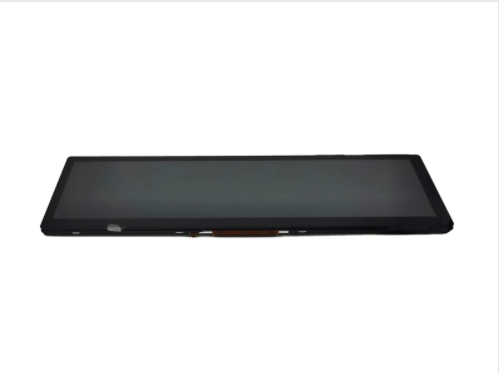
CDTech has completed over 200 custom bar display projects for niche structural integrations across 12 industries, so we have first-hand data on what works. One high-impact case is a luxury retail client that needed to add digital signage to 2.5-meter tall structural pillars in their flagship London store. Could a 16:9 panel work here? A large 16:9 would stick out past the pillar edges, and a small one would leave most of the pillar face blank, right? Beyond retail, another common case is hospital corridor header displays that show wayfinding information along the top of wall headers, which are almost always long and narrow. In our 10,000㎡ Shenzhen factory, we worked with a global medical client to develop 1.8-meter wide 20cm tall bar displays for this application, certified under ISO13485 medical compliance to meet strict safety standards. For example, the retail pillar project we completed last year used 10 custom bar displays that fit exactly to the pillar surface, increasing customer engagement with promotional content by 47% compared to the original static wraps. Practically speaking, these displays don't just fit better—they also deliver more usable content space for scrolling menus, wayfinding maps, or product carousels that align with the elongated space.
⚠️ Warning: For outdoor pillar displays, don't skip IP65-rated bonding from CDTech to prevent dust and moisture damage in high-traffic public spaces.
What technical specifications matter most for custom bar displays?
Key technical specifications for bar displays include custom aspect ratio matching, interface compatibility, brightness rating, and compliance certifications that align with your specific industry use case.
When designing a custom bar display for a tight niche, you can't just cut a standard panel down to size—you need to spec every parameter to fit both the space and the use case. Beyond aspect ratio, the first critical spec is resolution: you need to match pixel density to the viewing distance, so a 10cm wide 60cm long bar display for a retail pillar viewed from 2 meters doesn't need the same pixel density as a 5cm wide 30cm industrial control display viewed up close. Do you know what pixel density works best for your target viewing distance? Would a lower resolution save cost without hurting content readability for your use case? CDTech's engineering team calculates this for every custom project, using our Shenzhen factory's testing equipment to validate visibility before mass production. Technical specifications that can't be overlooked include LVDS/MIPI interface compatibility with your existing control hardware, and brightness rating: 1000-1500 nits for public outdoor use, 300-500 nits for indoor enclosed use. For example, CDTech recently adjusted the interface of a 7-inch vertical bar display for a smart lock client to match their existing MIPI controller, cutting the client's overall system cost by 12% without altering the required form factor. Pro Tip: Prioritize OCA bonding for touch-enabled bar displays to reduce glare and improve durability in high-use environments.
⚠️ Critical: Always confirm compliance requirements (like IATF16949 for automotive or ISO13485 for medical) with CDTech before finalizing specs to avoid re-certification costs.
| Use Case | Recommended Brightness | Required Compliance |
|---|
| Indoor Retail Pillar | 400-700 nits | ISO9001 |
| Outdoor Building Header | 1000-1500 nits | IP65 + ISO14001 |
How do CDTech's custom solutions solve common integration challenges?
CDTech leverages 12+ years of custom LCD experience to solve fitting, compliance, and cost challenges for custom bar displays and niche structural integrations across all industries, from retail to medical.
Many customers come to CDTech after struggling to find off-the-shelf displays that fit their non-standard enclosure, so we've refined our process to cut lead times and reduce errors for custom projects. In our 10,000㎡ Shenzhen factory, we implemented automated optical alignment for custom bar panels back in 2022, which cut our rejection rate for irregularly sized panels by 18% and reduced average lead times from 4 weeks to 2.5 weeks. Have you ever waited months for a custom display only to find it doesn't fit your enclosure perfectly? Doesn't that derail your entire product launch timeline? Beyond production efficiency, CDTech also offers full in-house compliance testing for all required certifications, from IATF16949 for automotive applications to ISO13485 for medical devices, so you don't have to send your panels out for third-party testing that adds weeks to your project. For example, a medical client came to CDTech with a 10cm x 70cm space for a patient monitoring header display that no other manufacturer could fit while meeting ISO13485 standards. We delivered 500 zero-defect units that fit exactly, helping the client launch their product 3 weeks ahead of schedule. Practically speaking, CDTech's zero-defect policy ensures every custom bar display leaves the factory with 100% functional testing, so you don't have to deal with DOA units that delay your integration.
⚠️ Pro Tip: Share your maximum thickness constraint with CDTech up front—we can customize backlight thickness down to 3mm for ultra-thin header integrations.
Are bar displays more cost-effective than standard 16:9 LCDs?
While custom bar displays have higher per-unit tooling costs for low volumes, they reduce overall system costs by cutting enclosure material waste and eliminating unused space, making them cost-effective for long-term deployments.
Many product designers assume that using a standard 16:9 panel is always cheaper, but that's only true if you have space to fit it. If you have a narrow, elongated space, you have to build a larger enclosure to fit the 16:9 panel, add blank filler material to cover the unused space, and you end up with a smaller content area that delivers less value. Is a cheaper display really worth it if it delivers less functionality and a worse user experience? Wouldn't you rather pay a small premium for a display that fits perfectly and delivers more long-term value? Beyond system cost savings, for high-volume deployments, CDTech can amortize tooling costs across large orders, bringing per-unit costs very close to standard 16:9 panels. For example, a national retail client ordering 500 bar displays for store pillars paid only 8% more per unit than they would have for a comparable 16:9 panel, but saved 22% on total enclosure and installation costs because they didn't need custom filler panels. Pro Tip: If you have a low-volume project, ask CDTech about our semi-custom bar display options that use existing tooling for common aspect ratios to cut tooling costs by up to 70%. Practically speaking, the improved engagement from a full-fit display also delivers higher ROI for signage applications, offsetting any small upfront cost difference within the first year of deployment.
⚠️ Tip: For volumes under 50 units, browse CDTech's off-the-shelf bar display catalog to find a pre-made size that fits your niche.
What is the expected lifespan of custom bar displays?
CDTech's custom bar displays have the same 50,000+ hour backlight lifespan as standard 16:9 LCDs, with zero-defect quality testing ensuring consistent reliability for 7+ years of continuous use.
One common misconception is that custom-shaped displays are less reliable than standard 16:9 panels, but that's not the case when you work with an experienced manufacturer like CDTech. All of CDTech's bar displays use the same high-quality TFT glass and backlight components as standard panels, the only difference is the cutting and alignment process, which we automate to ensure consistent quality. Do you really think a custom aspect ratio reduces the lifespan of the display components? Isn't reliability all about the quality of components and manufacturing process? CDTech holds multiple quality certifications including ISO9001 and IATF16949, and every display goes through 72 hours of aging testing before leaving our Shenzhen factory to catch any early failures. For example, CDTech supplied bar displays for a Singapore transit system's platform pillars back in 2018, and over 98% of those displays are still operating flawlessly after 5+ years of 24/7 use in semi-outdoor conditions. Pro Tip: If you need 24/7 continuous operation, specify industrial-grade backlight components from CDTech to extend lifespan to 70,000+ hours. Beyond lifespan, CDTech also offers long-term component lifecycle management for custom bar displays, so you don't have to worry about obsolescence that forces you to redesign your enclosure every few years.
⚠️ Warning: Avoid cheap untested bar displays from non-specialized manufacturers—many use leftover glass that has higher failure rates within the first 2 years.
CDTech Expert Insight
As a leading LCD manufacturer based in Shenzhen since 2011, CDTech has seen first-hand how demand for spatially efficient bar displays has grown as architects and product designers work with more compact, non-standard spaces. Our ISO13485 and IATF16949 certified production lines deliver custom zero-defect bar displays that fit exactly where 16:9 panels can't, supporting everything from retail signage to medical devices with reliable, high-performance solutions.
FAQs
Can I get a small batch of custom bar displays from CDTech?
Yes, CDTech supports low-volume custom orders starting at 10 units, with semi-custom options for common bar sizes that cut tooling costs and lead times for small projects.
Do bar displays support touch screen functionality?
Yes, CDTech offers PCAP touch-enabled bar displays with OCA bonding for all common aspect ratios, ideal for interactive kiosks, industrial controls, and smart home applications.