Copyright © 2020-2021 Shenzhen CDTech Electronics LTD. All rights reserved. Site Map Powered by iwonder.cn

display / touch / bonding solutions
display / touch / bonding solutions
Almost every display decision assumes a backlight, which is why the exceptions are so often specified by accident. An instrument that must run for a year on a battery, a meter read in direct sun, a label that must not glow at night: each of those puts the backlight at the centre of the problem. Reflective and transflective panels answer it, but they change the contrast, the colour and the operating window in ways that have to be designed for.
Reflective displays, and transflective panels when lit.
A reflective display has no backlight and forms its image from ambient light returned through the front. A transflective panel keeps a backlight but adds a reflective layer so that it can also work on ambient light alone. Beyond those, electrophoretic and other e-paper technologies are reflective by nature. A conventional transmissive LCD without a backlight is not a usable display; it is a dark panel, which is the confusion this article addresses.
The difference is what path the light takes.
A transmissive panel modulates light from the backlight that passes through it, which gives high and controllable brightness in any ambient condition at the cost of continuous power and of contrast in bright sun. A reflective panel modulates light that enters from the front and returns from a rear reflector, so it consumes almost nothing and improves as the surrounding light rises, but it is unreadable in the dark. A transflective panel carries both paths in one cell, using a partially reflective layer, and switches between them. The three constructions and the panel options that surround them are collected in the display and touch solutions centre.
Ambient light in, modulated light out.
Light enters through the front polariser and the cell, reflects from a rear reflector and returns through the front again, so the liquid crystal modulates the beam twice. That double pass improves the contrast ratio available from a given cell, and it also means every optical element in the path costs light twice, which is why an anti-glare treatment and a cover glass have a larger effect on a reflective panel than on a transmissive one. Because the panel can only return what falls on it, brightness is a property of the environment rather than of the panel.
Two modes, each slightly compromised.
Adding a reflective layer to a transmissive cell divides the available aperture between the two paths, so a transflective panel is dimmer than a transmissive panel of the same backlight and lower in contrast than a purely reflective panel in bright light. In exchange it works in a dark room and in direct sunlight with a single part number, which for a portable instrument is often decisive. The division ratio between the two paths is the design parameter, and it should be chosen from the light levels the product will actually meet rather than from a general preference.
Opposite directions, one specification.
A transmissive panel loses contrast as ambient light rises because surface reflections add to both the white and the black. A reflective panel gains contrast as ambient light rises, because more light is available to modulate while the black state stays dark. The practical consequence is that a specification quoting a single contrast ratio is unhelpful for this choice: the number has to be tied to an illuminance. The measurement discipline that keeps the comparison honest is described in measuring sunlight readability under real ambient light and in bar display brightness and contrast for outdoor use.
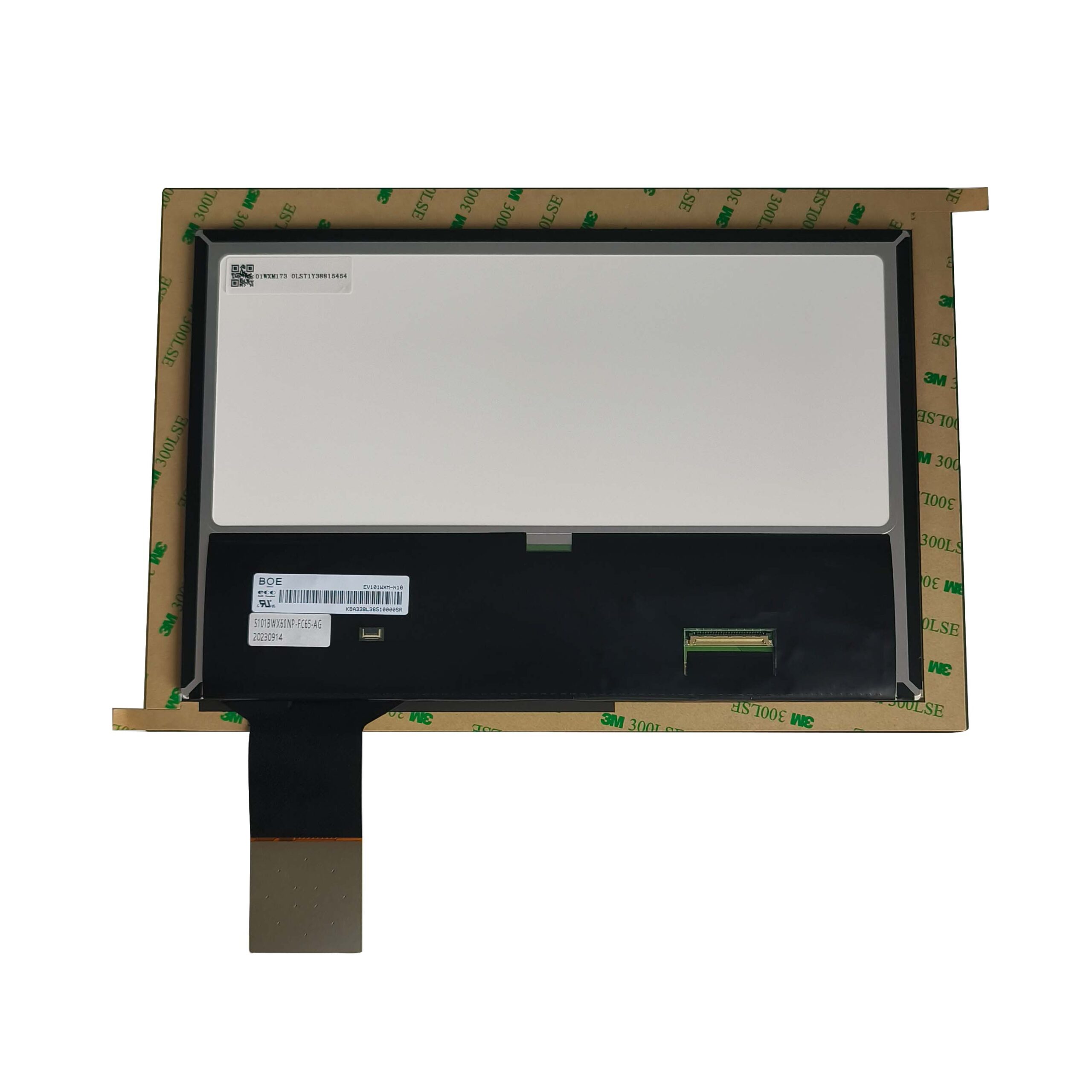
The backlight is the largest consumer and the first to age.
Removing the backlight from a battery-powered product removes the dominant load, the main heat source and the component whose output decays fastest with time. A reflective panel therefore improves not only the power budget but the predicted service life and the thermal design of a sealed enclosure. The trade is that a reflective panel has no dimming range to manage and no night reading unless a front light is added, and a front light reintroduces the power and lifetime question in a less efficient form.
Colour filters throw away most of the light.
A colour reflective panel has to pass ambient light through red, green and blue filters twice, so only a small fraction of the incident light survives each path. That is why reflective colour displays look muted compared with a transmissive panel, and why many instruments choose monochrome for reflective designs. Where colour is essential, the answer is usually a brighter ambient requirement, a larger and more contrasty glyph, or a hybrid approach such as a transmissive panel with a high-brightness backlight and careful optical bonding.
Match the panel class to the information.
A segmented display shows fixed symbols and consumes almost nothing; a character module shows a few lines of text; a graphic panel shows icons and simple plots. Because the drive electronics are simpler and the aperture ratio is higher, the lower classes often deliver a better reflective result for the same ambient light, and they are cheaper and longer-lived. Choosing a graphic panel where a segmented one would do is a common way to spend power and contrast for no benefit, and the sizing question that follows is covered in custom LCD panel sizes.
Bistable, reflective and slow.
Electrophoretic displays are reflective and bistable: they hold an image with no power at all, which suits a label, a shelf edge or a status panel that changes occasionally. The cost is refresh rate, a narrower temperature range in some versions and a smaller colour gamut. For a monochrome grayscale instrument that updates slowly and must run for months on a cell, e-paper is often the right answer, and the selection is treated together with reflective LCDs in e-paper and reflective displays for battery-powered devices.
Possible, but the stack takes more of the light.
A capacitive touch sensor is transparent, so it can sit in front of a reflective panel, but each transparent layer reduces the light that reaches the reflector, and the front surface becomes the dominant reflection. Where a reflective product needs input, a resistive overlay or a front-mounted sensor with an anti-glare finish usually serves better. The stack is built in the same way as any other touch module, as described in custom touch panel manufacturing from sensor to module, and where the product must show calibrated grayscale the requirements in custom medical displays, DICOM and grayscale apply as well.
Answer three questions, then pick the class.
With those answered, the remaining decisions are mechanical and optical, and the transparency of the interface itself is a separate question from the display’s, with packet-level detail in the MIPI DSI specification and reach considerations in LVDS application guidance.
What screen does not have a backlight?
A reflective liquid crystal display and an electrophoretic or e-paper display have no backlight. They form the image from ambient light, which makes them unreadable in a dark room unless a front light is fitted.
How do non-backlit screens work?
Ambient light enters through the front, is modulated by the liquid crystal or the electrophoretic layer and returns to the viewer from a rear reflector. Because the light is not generated, brightness depends on the environment rather than on the panel.
Which display type does not require a backlight?
Reflective LCD, transflective LCD when it is running on ambient light, and e-paper. A standard transmissive TFT LCD is not usable without a backlight, even though it can be ordered without one.
What should I do if a monitor shows no light?
Treat it as a fault and check the backlight driver, the enable signal and the connector before the panel. If the design was intended to be readable without a backlight, verify that a reflective or transflective panel was actually fitted rather than a transmissive one.
Send the ambient light range, the battery budget, the information to be shown and the operating temperature to CDTech; the reply will state whether reflective, transflective or a front-lit panel meets the requirement and what contrast to expect.
Contact [email protected] or use the contact page, or start from the sample and quote request page.
By continuing to use the site you agree to our privacy policy Terms and Conditions.