Copyright © 2020-2021 Shenzhen CDTech Electronics LTD. All rights reserved. Site Map Powered by iwonder.cn

display / touch / bonding solutions
display / touch / bonding solutions
A procurement team receives a display ISO 13485 certificate and a datasheet that says medical grade. The certificate is real, the module works, and the project moves on. Months later, a device reviewer asks which site and which processes the certificate covers, and whether the display change that occurred in between was assessed. The certificate answered a question nobody had asked: it described a quality system, not the module. This guide sets out how to verify the certificate’s site and scope, which product claims need separate evidence, and what a device manufacturer should retain from a display supplier.
It covers the supplier’s quality system, not the module.
An ISO 13485 certificate shows the supplier’s medical-device QMS was audited for a defined scope; it does not certify the panel or approve the finished device.
ISO 13485 is a quality-management-system standard for medical devices. The ISO 13485 standard page describes its scope as the requirements for a quality management system where an organisation needs to demonstrate its ability to provide medical devices and related services that consistently meet customer and applicable regulatory requirements. That is a system claim. It says the organisation has defined processes for design, purchasing, production, inspection, traceability and corrective action within the certificate’s scope.
It does not say that a particular TFT module meets a luminance specification, that a touch panel survives a cleaning agent, or that a finished device complies with IEC 60601-1. Those are product and device claims, and they need their own evidence. The distinction matters because a certificate is often the only document a buyer reads, while the engineering questions are answered by drawings, test reports and change records.
A display supplier with a certified system can still produce a module outside the certified scope if the site, the product family or a subcontracted process is excluded. That is why the next question is not whether a certificate exists, but what it covers.
Match the certificate site, scope and status to the build.
Check legal manufacturer, site address, product categories and validity dates, then confirm the producing factory and its processes fall inside that scope.
Identify the legal entity, the address of the certified site, the standard edition, the scope statement and the validity dates. Then compare those with the quotation, the drawing and the shipping documents. If the certificate names a sales office while the module is produced in another city, the certificate does not automatically cover production. If a critical process such as bonding, touch lamination or final inspection is subcontracted, confirm whether it is inside the scope and how it is controlled.
Check the status, not just the date. A certificate can be suspended, withdrawn or superseded, and a scanned copy may be years old. Ask for a current copy from the certification body or a verification link, and record the date on which it was checked. Where a supplier holds several certificates, match the one that covers the relevant product family and site rather than accepting the first document in the pack.
Ask the supplier to state in writing which entity manufactures, which site performs critical processes, and which certificate covers each. A written statement is easier to audit than an address on a letterhead.
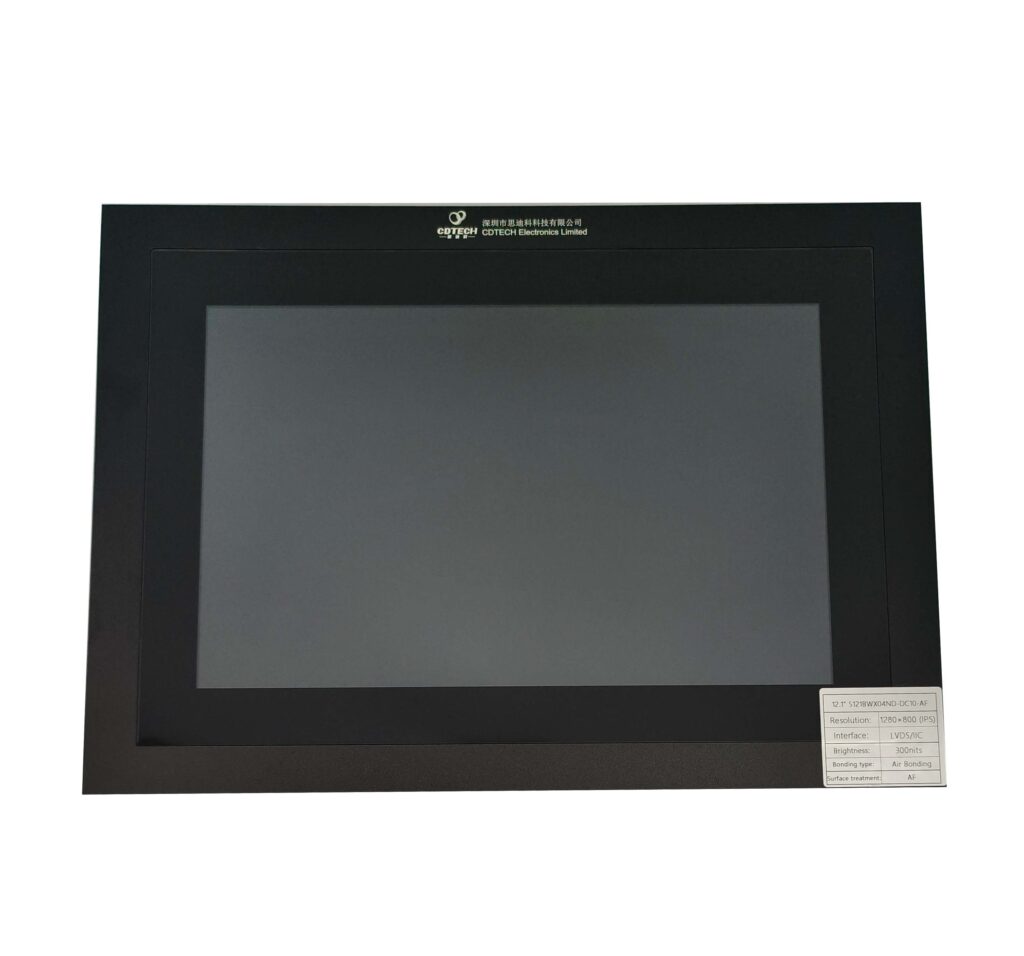
A QMS certificate is not product test evidence.
Luminance, contrast, colour, touch, ESD, thermal and lifetime claims need their own reports for the exact module and build; the certificate says nothing about those values.
Every performance claim in a medical display specification should point to a document that tests that claim on that build. Luminance and contrast need a measurement report with the instrument, pattern, warm-up and points defined. Colour needs chromaticity and a stated tolerance. Touch needs accuracy, repeatability and the glove, water and grounding conditions. ESD, thermal shock, vibration, humidity and lifetime need test methods, sample sizes and acceptance criteria. None of these is established by a management-system certificate.
The same rule applies to material and cleaning claims. A device may be cleaned with a specified agent, and the display’s front stack may be exposed to it. Compatibility is a property of the cover glass, coating, adhesive and bezel together, tested under defined exposure and inspection conditions. The FDA guidance on reprocessing quality factors describes device-level cleaning and reprocessing validation; it does not turn a material compatibility test into a device validation.
Ask for the report, not the sentence. If no report exists, remove the claim or reword it as a design target.
IEC 60601 applies to the finished device, not the display.
The display is a component inside a medical electrical system; leakage, isolation, EMC and alarm behaviour are assessed at the device boundary, including the display interface.
IEC 60601-1 and its collateral standards describe requirements for medical electrical equipment and systems. The display contributes to those requirements through its power architecture, its isolation boundary, its emissions and immunity, and its role in presenting alarms and measurements. But the assessment is made on the device, in its enclosure, with its power supply, its cables and its intended use. A display supplier can provide interface data, insulation ratings, leakage-relevant construction details and test reports for the component, and the device manufacturer decides how those fit the system.
A panel that is powered from a low-voltage rail inside a double-insulated enclosure has a different isolation question from a panel connected to a mains-referenced circuit. A touch sensor that is accessible to the patient or operator may need a different creepage and clearance analysis from one behind a sealed cover. The device risk file should state which functions the display performs, which failure modes matter and how the interface is protected.
Human factors belong to the same device-level review. The FDA human factors guidance addresses intended users, use environments and interface risks, and the FDA human factors considerations page adds the use-environment factors that belong in the same review. A display that is readable in a laboratory may fail in a bright clinical room, and a touch target that works with a bare finger may fail with gloves. Those are device usability findings, even when the panel meets its own specification.
Every display change needs a risk-management review.
A panel, firmware, backlight or bonding change can alter visual performance, latency or failure behaviour, so it must enter device change control and the risk file.
Display changes arrive in several forms: a panel revision, a new LED bin, a different polarizer, a bonding process change, a touch controller firmware update or a new cover-glass coating. Each can change something the device relies on. A brightness change affects alarm visibility. A latency change affects waveform or numeric display. A touch change affects input accuracy. A bonding change affects haze, reflection and mechanical robustness.
The review should ask three questions. Does the change alter a characteristic that the device’s risk analysis depends on? Does it require a new verification or validation activity? Does it need customer or regulatory notification? The answers belong in the change record, not in an email thread. A change that is invisible in the supplier’s datasheet can still be significant to the device.
Link the display change to the device’s own change-control process and to the supplier’s notification terms. If the supplier’s process notifies customers of product changes, confirm the lead time, the content of the notice and the contact route. If it does not, the component agreement should create one. The 21 CFR Part 820 current text is the US quality-system regulation at the recorded date; its applicability depends on the device and the jurisdiction, so the review should confirm the current requirement rather than assume it.
Traceability must link the module to its build and lot.
The agreement should define the serial or lot identifier, build revision, inspection record and change-notification route, so a complaint traces back to a display population.
A medical device complaint is investigated at the device level, but the display population matters when the cause is optical, mechanical or electrical. The component agreement should define what identifier the module carries, at what level it is recorded, and how that identifier maps to the build revision, the panel lot, the touch controller firmware and the bonding lot. If the module has no serial, the lot and date code become the traceability key.
The agreement should define which records the supplier retains, for how long, and how they are produced in an audit. Inspection records, calibration records for test equipment and nonconformance records are part of the evidence. So is the record of approved deviations: a module that was shipped under a deviation is not the same as one built to the released drawing.
Traceability has to survive the production flow. If the identifier is applied at final packing but the panel lot is not linked to it, a field failure cannot be narrowed to a panel population. The earlier the identifier is assigned and the more process steps it follows, the more useful the record becomes.
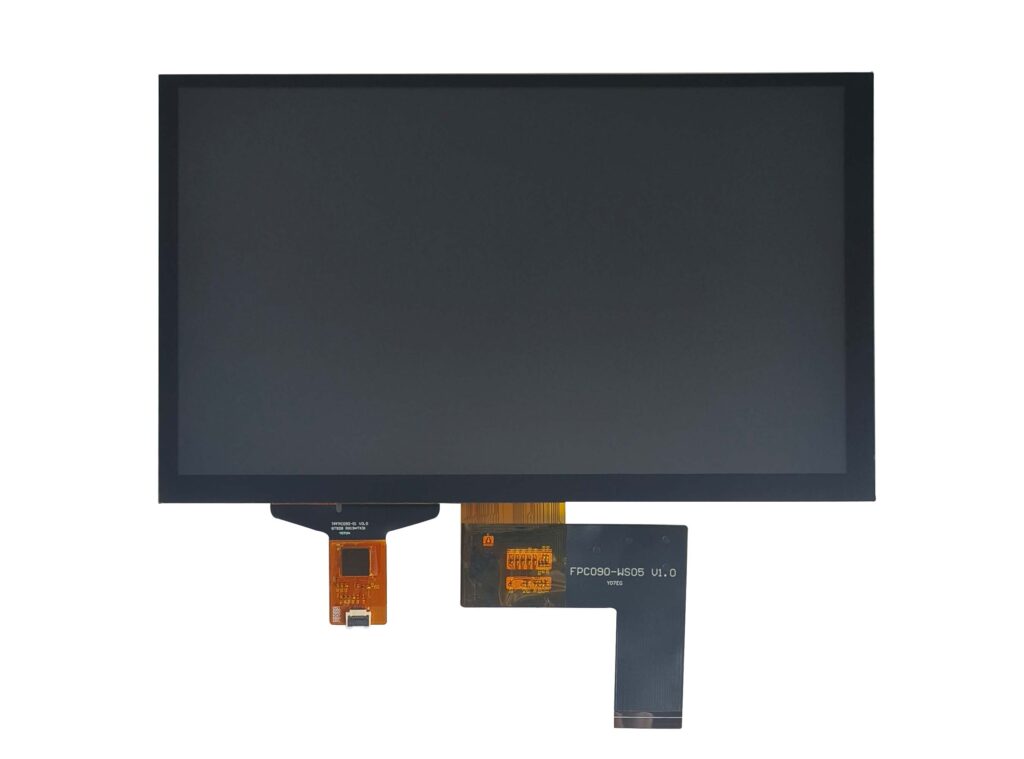
Give the supplier the intended use and interface envelope.
The supplier needs the operating environment, viewing requirements, interface, power sequence, expected life and cleaning exposure to judge whether a change matters.
A display supplier cannot assess the significance of a change without knowing how the module is used. The intended use, the viewing distance and angle, the ambient light, the operating temperature, the power architecture, the interface and the expected service life are all inputs to the module definition. So are the cleaning agents, the disinfection cycle and the mechanical mounting. Without them, the supplier can meet a generic specification but cannot tell whether a substitution is safe for the device.
Provide the interface drawing and the power sequence as well. A display that is compatible at the connector may still have a different reset timing or rail order, and that difference matters to the host. State which functions are safety-related, which alarms are displayed and what happens when the display fails. A blank screen may be a nuisance in a consumer product and a hazard in a medical device.
The supplier’s response should be a specification review, not a catalogue selection. A useful review identifies the module, interface, inspection plan and open questions. It also states what the supplier will notify and what it needs from the device manufacturer before a change can be assessed.
Keep the certificate, scope, reports and change records.
Keep the certificate with scope and dates, site evidence, module test reports, agreed change-notification terms and the record of every approved revision.
The procurement file should be usable years later, by someone who did not attend the meetings. That means the certificate copy, the scope statement, the site list, the verification date and the certification body’s details. It also means the module specification, the drawing revision, the test reports, the inspection plan and the deviation record. A certificate alone is not a supplier qualification.
Change control evidence should show the sequence: what changed, when the supplier notified, who assessed it, what testing was performed and who approved the revised build. If a change was judged not to affect the device, record the rationale. If it required customer approval, record the approval. The table below shows the structure of that record by component boundary.
| Intended use or interface | Component boundary | Required device evidence | Responsible party | Change trigger |
|---|---|---|---|---|
| Display behind a sealed front panel | Bare TFT module with FPC | Optical report, interface timing, inspection plan | Display supplier | Panel revision, LED bin |
| Touch-operated user interface | Module with touch sensor and cover glass | Touch accuracy, glove and cleaning compatibility | Supplier and device maker | Adhesive, sensor or coating change |
| Alarm and numeric display | Display plus host firmware | Legibility, latency, failure-state behaviour | Device maker | Firmware, brightness or gamma change |
| Mains-powered enclosure | Display inside the device isolation boundary | Leakage, isolation and EMC evidence at device level | Device maker | Power architecture or grounding change |
| Reprocessed reusable device | Front stack exposed to cleaning | Cleaning validation and material compatibility | Device maker with supplier data | Cleaner, cycle or cover material change |
Keep the evidence indexed by module revision. A folder organised by date is difficult to audit; a folder organised by build revision shows immediately which report belongs to which shipment. CDTech’s medical display programme documentation can be reviewed alongside the module drawing and inspection record, but the certificate still describes the quality system rather than the finished device. The ISO 13485 medical display programme guide covers how the programme is structured; this page covers what procurement should verify.
Can an ISO 13485 certificate be described as FDA product approval?
No. ISO 13485 is a quality-management-system standard, and a certificate shows that an auditor found the supplier’s system conformant within a stated scope. FDA product clearance or approval is a separate regulatory decision about a specific device. Describing a display certificate as FDA approval misstates both the document and the evidence behind the product.
Should a certificate be accepted if its site address differs from the producing factory?
It should not be accepted without an explanation. A certificate is tied to a legal entity, a site and a scope. If the producing factory or a critical process sits outside that scope, the certificate does not cover the work. Ask for the site list, the process coverage and a written statement of which entity manufactures and ships the module.
Does a supplier QMS certificate replace finished-device electrical safety testing?
No. IEC 60601-1 and the related collateral standards apply to the finished medical electrical system, including its enclosure, isolation, leakage paths, alarms and electromagnetic behaviour. The display is a component within that assessment. A supplier quality certificate does not test the device and does not establish compliance with those requirements.
Do you need ISO 13485 to manufacture medical devices?
It depends on the market and the role in the supply chain. Several regulators expect a quality system appropriate to the device, and ISO 13485 is the widely used medical-device QMS standard, but the legal requirement comes from the applicable regulation, not from the standard alone. Confirm the obligation for the specific jurisdiction and the company’s role before treating certification as mandatory or sufficient.
If a medical display project needs the certificate scope, module drawing and inspection evidence reviewed together, send the intended use, interface and current supplier documents to the CDTech engineering team for a specification review.
By continuing to use the site you agree to our privacy policy Terms and Conditions.