Copyright © 2020-2021 Shenzhen CDTech Electronics LTD. All rights reserved. Site Map Powered by iwonder.cn

display / touch / bonding solutions
display / touch / bonding solutions
A display module bound for the US usually arrives with FCC paperwork attached, and that paperwork is read as permission to ship the finished product. It is not. Part 15 authorises a device, and the device that matters is the one in the enclosure. This guide separates the two authorisations, shows where Class A stops being defensible, and what survives a re-housing.
The grant covers the tested subassembly, not your cabinet.
The filing describes a specific board, shield, harness and firmware; once any of those change inside a new housing, the tested configuration no longer exists.
Part 15 Subpart B authorises a device as tested and as described in the filing. When a display module is authorised on its own, that description is narrow: a controller board, a shield, a flex of a stated length, an input filter and a firmware build that fixes the pixel clock. The radiated result belongs to that arrangement.
Re-housing replaces the parts that shaped it. A vented steel cabinet alters the seam geometry, a longer harness alters the common-mode path, and a different DC-DC converter alters the conducted spectrum. The module report still describes what the module did in its own fixture. Both kinds of file carry limits and distances, as 47 CFR Part 15 sets out; only one covers the box the customer receives.
Class B applies once the public can operate the unit.
Class A assumes a commercial or industrial buyer; the rules turn on how the unit is marketed and who operates it, not on the building.
Part 15 draws the line by marketing and by who operates the unit, not by the room it stands in. A display sold to an integrator for a factory floor or a back-of-house office is a commercial product, and Class A is written for that setting.
The same assembly changes case when it is sold through distribution for retail, installed where the public stands, or advertised for home and small-office use. Clinic waiting areas and showrooms are where that shift goes unnoticed.
The Class A notice concedes the weakness: it warns that residential operation is likely to cause interference and that the user must correct it at their own expense. A facilities customer may read that as a defect rather than a notice.
Only the evidence whose conditions the host reproduces.
Reports tied to the original mechanical stack or to a host board the OEM did not design expire with the change, however good the numbers were.
The surviving file is smaller: it keeps results whose conditions can be recreated in the new enclosure and loses those tied to parts that no longer exist.
| Evidence | What it still proves | Where it stops |
|---|---|---|
| Module radiated report | The module in its named fixture | Host seams and cable routing |
| Module FCC ID or grant | Which subassembly, under what terms | The enclosure and host label |
| Conducted input data | Input filtering as tested | A new adapter or DC-DC stage |
| Clock and firmware setting | Pixel clock, refresh rate, spread spectrum | A host board with different timing |
| Gasket, glass and bracket | The seam and ground path measured | Any change of part or torque |
Ask the supplier which conditions the host reproduces and which have changed, then treat the answer as the first page of the host file.
Yes, when it changes the seam, the bond or the aperture.
Glass is nearly transparent below 1 GHz, but the adhesive, frame gasket and the compression that closes the seam are not, so a gasket change can matter more.
Plain glass adds little: a thin dielectric sheet barely disturbs the field between 30 MHz and 1 GHz. What moves a result is the metal and its contact: a conductive frame, an indium tin oxide coating left floating, or a plated bezel that replaced a plastic one. Bond that coating to the chassis and it shields; floating, it is a plate.
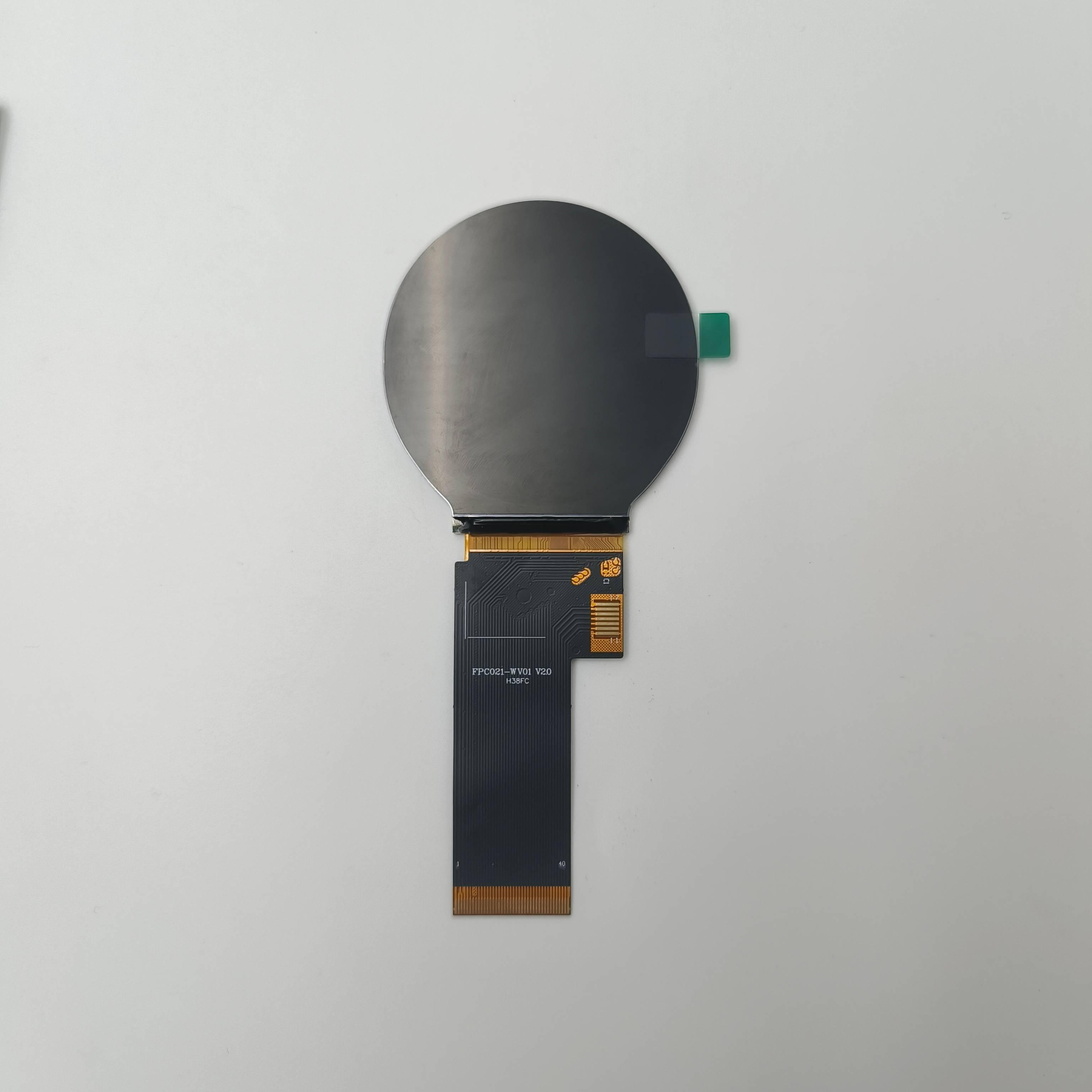
A gasket is a spring whose behaviour depends on compression. A foam gasket that closes a seam at prototype torque may open it at production torque, and an over-compressed conductive one may crack its plating. Measure with the final parts and screw sequence, per the IEC Webstore methods.
Two questions sit inside that comparison. One asks what has been authorised; the other asks who is responsible for the delivered unit. A module ID answers the first and says nothing about the second.
Section 15.101 sets the authorisation procedures for unintentional radiators, and the route follows from what the product is and how it is marketed. Some hosts are certified and carry an ID; others are verified, with records produced on request. UL Solutions can confirm which route applies.
A host cannot adopt a module ID as its own, nor print it on a finished unit as though the host were certified. It may cite the module report in its own technical file while the conditions still describe the hardware, with the evidence held under its quality and certifications records.
Authorisation is a starting condition, not a handover. Four obligations stay with the integrator, each cheap to meet while a drawing is open.
Use the module inside the conditions of its filing: input range, harness length, shield and firmware. Leave it unmodified, since the user notice warns that changes not approved by the responsible party can void the user's authority to operate the equipment. Demonstrate the class limits for the finished product in its own enclosure. Keep the records, because a verification file that cannot be produced is a file that does not exist.
None of it is onerous when planned.
The label set is decided after the route, not before. A certified host carries an FCC ID on the product or in an electronic label the user can reach. A host authorised by verification carries no ID and must not imply one. Both carry the user information the rules require for their class.
The Class A notice and the Class B notice are different texts, and the class in the manual has to match the class in the test file. The modification warning belongs in the manual whether or not the product carries an ID. California's Proposition 65 obligations sit outside Part 15 but share the artwork review.
The module's own label does not transfer: its ID identifies the subassembly, not the host.
Most retest decisions are made late, once a change is in the tool. The triggers cluster around what a Part 15 result depends on: enclosure, harness, power and clock.
Any one can be assessed alone; three together mean a new scan. Each can be priced before the tool is cut.
Documentation is what makes a no-retest decision defensible. The record needs the parts that changed, the emissions mechanisms they touch, what was measured afterwards, and who accepted the residual risk.
A workable record pairs the change note with the module's worst-case frequencies. If the report shows the least margin at 120 MHz and the new housing adds an unshielded slot, the assessment names that frequency and states what was done about it.
Where the host is verified, this file is the compliance evidence, so its quality is the compliance. Where the host holds a grant, a change affecting radio-frequency characteristics is not the manufacturer's to make silently. Either way, the record is written before the product ships, not after the first complaint.
Three routes are open, differing in who holds the evidence. Verification keeps it in-house: the manufacturer tests, keeps records and declares compliance without a filing or an ID.
Certification puts a test body between the design and the market, producing a grant, a public listing and an ID that retail and telecom buyers expect. CSA Group can scope that work before a slot is booked.
Supplier reliance is not a route but an input: the module report shortens the host's work and never replaces it. The deciding factors are the device category, the sales channel, the contract and who carries the liability. The sourcing side is covered in the guide to custom display sourcing, and the clock and harness questions start with display interfaces and controllers.
Subassemblies and incidental radiators usually do.
Authorisation follows the electromagnetic behaviour of the finished product, so the real question is rarely whether a module needs a filing. It is what has already been authorised and what changes when the module is installed. A subassembly intended for a host is treated differently from a unit sold as a complete device.
Incidental radiators, and equipment whose emissions are inherently below the applicable thresholds, fall outside the intentional-radiator framework. The practical test is to identify what the existing filing covers, what the installation changes, and whether that change stays inside the authorisation. That analysis belongs in the purchase specification, because it decides whether the OEM inherits a document or an entire test programme.
If the host configuration is still open, the least expensive moment to settle the FCC question is before the enclosure drawing is released. CDTech can share the interface and documentation details for the panel concerned, so the host file starts from what the module was tested as. Write to [email protected] or use the contact page.
Can a module carry its own FCC ID?
Yes, where the module is a complete unintentional radiator that can be tested as a unit and the filing describes its conditions of use. The ID belongs to that subassembly and to the configuration in the grant. It does not extend to an enclosure the module was never tested in, and it cannot stand in as the finished product's ID. An integrator re-housing the panel should read the grant conditions and treat them as the boundary of what the ID proves.
Does adding a cover glass require retesting?
Not automatically. Glass is largely transparent to fields below 1 GHz, so a plain sheet usually moves results by little. What matters is everything added with it: an indium tin oxide coating left unbonded, a conductive frame, a new adhesive that changes the gap, or a gasket compressed differently to make room. Measure with the glass fitted and compare the harmonic families. If the change is confined to the glass and the seam is unchanged, a documented delta assessment is often enough.
Is Class A acceptable for equipment sold to offices?
For business-to-business office equipment, usually yes, because Part 15 treats commercial and business premises as the Class A environment. The test is how the product is marketed and who operates it. A unit sold to facilities teams and installed behind a reception desk is a different case from one advertised for home offices or placed in a public showroom where customers press the buttons. Customer contracts decide the question in practice, since many buyers specify Class B regardless of the rule.
What label goes on the finished unit?
It depends on the authorisation route. A certified host carries its own FCC ID, on the product or in an electronic label the user can access. A host authorised by verification carries no ID and must not suggest that it has one. Both need the user notice that matches their class, and both need the modification warning. The module's ID, if it has one, stays with the subassembly and is not reprinted as the host's.
By continuing to use the site you agree to our privacy policy Terms and Conditions.