Copyright © 2020-2021 Shenzhen CDTech Electronics LTD. All rights reserved. Site Map Powered by iwonder.cn

display / touch / bonding solutions
display / touch / bonding solutions
A display sold into the EU can be regulated as an electronic display, treated as a component of something else, or fall outside the rules entirely. Which applies is decided by definitions in the regulation and by how the product is placed on the market, not by panel technology or by the sector the end product serves.
This guide maps the boundaries rather than quoting the thresholds, because the limits and their dates belong to the current consolidated text. Treat each statement as a route to the right question, then confirm it against the official wording.
Prove the exemption in the product file, not the datasheet.
An exemption is a position you assert and must support, so the evidence has to sit in the technical file before the first shipment rather than in an email thread.
Exemptions come in three flavours and fail in different ways. Product scope: the item is not an electronic display as defined, which is a reading of definitions that has to be written down. Placement: the display never reaches the market as a separate product, which turns on what the customer receives. A named exclusion: usually conditional on intended use.
Each route needs the same three artefacts: the clause relied on, quoted with its version; the product description that shows why it applies; and the commercial evidence of how it is sold. A distributor listing and a photograph of the nameplate do more for an exemption than a technical argument.
The limits are mode-specific, so one power measurement rarely settles compliance. Off mode, standby and networked standby are defined separately, and a display that sleeps with a live network port is judged against a different requirement.
| Mode | What the text constrains | What usually decides the case |
|---|---|---|
| Off mode | Power drawn when off but still connected | Standby indicator and remote receiver |
| Standby mode | Power in the lowest reactivatable state | Wake source and status display |
| Networked standby | Power with a network interface available | Whether the port can be disabled |
| On mode | Efficiency index in the active state | Brightness setting used for the test |
Read values and dates from the regulation as published rather than from a summary, since the limits carry application dates. The official text is Regulation (EU) 2019/2021.
When the display itself reaches the market as a product.
Embedding removes the obligation only while the display is genuinely a component, so the question is about the customer and the shipment, not about the enclosure.
The practical test is what your customer receives. A panel shipped to an equipment builder that fits it behind a sealed front and never sells it separately is a component. The same panel shipped to a distributor as a module with an interface board and a part number is much harder to describe that way.
Industrial use is not a general exclusion, because scope is written around the product rather than the sector. Assembly does not confer exemption either: if the product your customer places on the market is itself an electronic display, the rules look through the chain. Ecodesign scope also says nothing about substance restrictions, which apply separately under RoHS.
Usually once it is sold as a display in its own right.
A stretched panel built into a shelf rail for a retailer is closer to a display product than to a spare part, and the label question follows the product definition.
Bar-type formats are awkward because their function is signage and their shape suggests a component. What matters is whether the unit has its own housing, interface and power supply, and whether it presents images for viewing.
A shelf-edge unit sold to an integrator as a building block sits on one side; the same unit in a retail catalogue with a model number sits on the other, and the formats are covered in the bar-stretched display guide.
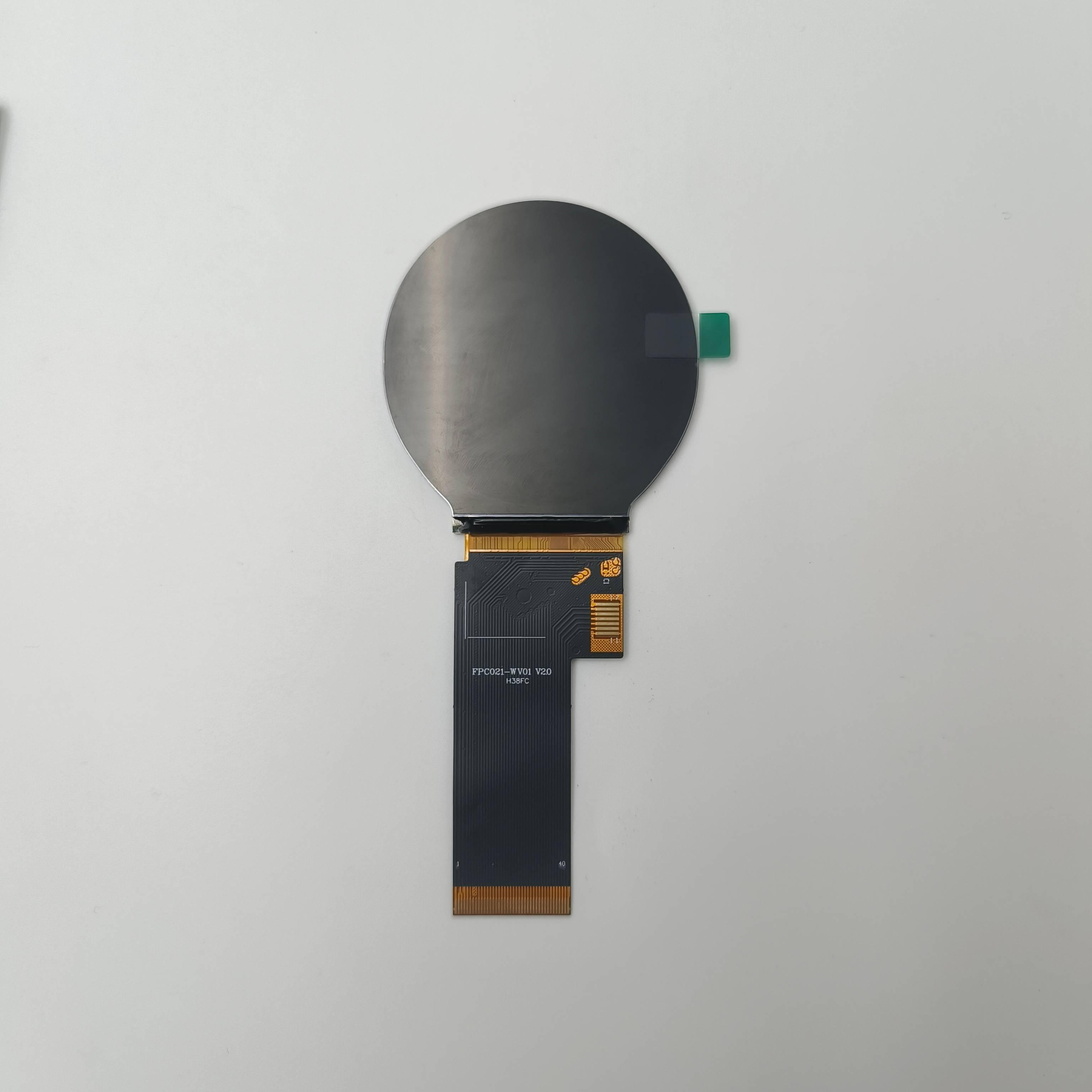
The index is a ratio rather than a power limit, which is what catches teams out. It compares measured on-mode power with a reference value derived from the screen, so two displays drawing the same power can have different indices when their areas differ.
Efficiency index = measured on-mode power / reference power derived from screen area and pixel count
The reference expression and any correction factors are defined in the regulation and should be taken from the current annex. What a supplier can do without quoting constants is supply the inputs: measured power at the specified brightness, active area, pixel count and test conditions, each traceable to an instrument record. Measure at the brightness the method specifies, not the shipping default, which is why IEC test methods matter.
Inputs can move a product into a different category.
The number and type of inputs is one of the attributes that separates a signage appliance from a general display, so a second port can change the file that has to exist.
Classification arguments rest on intended function, and function is inferred from features a buyer can see. A unit with a single network or serial control path reads as an appliance that receives content from a system. Add two HDMI inputs, an on-screen menu and a remote, and the same hardware reads as a display intended for general viewing.
This is definitional, and the answer depends on the wording in force when the product is placed on the market. Write the argument at specification stage and revisit it if marketing asks for another input. A product that drifts across a boundary between revisions is the case market surveillance finds easiest to challenge.
The manufacturer, or the importer placing it on the market.
Responsibility attaches to whoever puts the product on the EU market under their name, which is rarely the panel supplier and often the brand owner.
For displays the route is normally self-assessment through internal production control: build the technical documentation, apply the procedure, draw up the EU declaration of conformity and affix the marking. No notified body is usually involved, which is why the file has to stand alone. Safety and EMC approvals sit alongside, under the Low Voltage Directive and the EMC Directive.
Where the product carries a private brand, the brand owner is the manufacturer for these purposes, even if hardware and label artwork come from a supplier. The supplier provides inputs: power measurements, construction description, software version. That inventory usually sits with the other market approvals, and the quality certifications page is where it starts.
The label is generated from the product's own data, so a brand owner cannot inherit artwork from a supplier. The content follows the model: efficiency class from the index, on-mode power, standby power where applicable, and the resolution and diagonal that the registration records.
Registration comes before sale, and the product information sheet has to match the technical documentation. A private-label range built from several panel sources needs a model-by-model decision, because a family registered on one construction does not cover a variant built on another. Wider product-information duties under the GPSR apply at the same time.
An exemption claim is only as strong as the file behind it, so write it for a reader who does not know the product. Keep the clause relied on with its citation and version, a description of the product as placed on the market, the commercial evidence of how it is sold, and a statement of what would change the conclusion. Name an owner for the file, because an exemption with no owner is reviewed only when it fails.
Review it when the product changes, when the regulation is amended, and when the sales channel changes. An exemption written for direct sales to equipment builders does not survive a move to catalogue distribution, which is the most common failure in this area.
When a display sits just outside the limits there are two routes: change the product so it meets them, or change the classification so they do not apply. Both are legitimate, and both should be decided deliberately.
Redesign is cleaner when the gap is small. Lowering standby consumption, making the network port disable by default or selecting a more efficient backlight moves the measured value without changing the product's identity. Reclassification is faster but narrower: it works only where the product genuinely sits on the other side of a definition. Record the reasoning, the date and who approved it, and note what would reopen the question, since a revision that adds an input usually does.
Next step. If your team is deciding whether an EU-bound display is in scope, CDTech can supply the construction, power and interface information a technical file needs.
Ask about documentation for an EU product file · [email protected]
Are embedded industrial displays exempt?
Often they are out of scope, but the reason is placement rather than the industrial label. A display supplied as a component to an equipment builder, and never placed on the market as a separate product, is not the product the rules address. The moment the same module is catalogued with its own model number and sold to distributors as a display, the argument weakens. Keep the commercial evidence either way.
What standby power must a display meet?
The limits are set in the regulation and differ by mode, so there is no single figure to design against. Off mode, standby mode and networked standby are defined separately, and a live network port usually puts a product in the networked category with its own requirement. Read the values and application dates from the current consolidated text, then measure at the configuration the test method specifies.
Does a bar-type shelf display need a label?
If it is placed on the market as a display in its own right, it normally does. The shape does not settle the question; the commercial presentation does. A housing, an interface, a power supply and a model number marketed to end users point one way, while a bare panel sold to an integrator as a building block points the other. Register the model before sale if the label route applies.
Who performs the conformity assessment?
Normally the manufacturer, using internal production control rather than a notified body. That means the technical documentation, the declaration and the label are the evidence, and the brand owner is the manufacturer even when the hardware comes from a supplier. Ask the supplier for measured power, construction and interface data, then keep the assessment in a file a reviewer can follow without your help.
By continuing to use the site you agree to our privacy policy Terms and Conditions.